
The 7 Levels of Language Learner: A Complete CEFR Guide (2026)
If you’ve ever asked a student “what’s your English level?” and received a vague answer like “intermediate,” you already know the challenge. Without a shared framework, “intermediate” can mean anything from navigating a menu to watching CNN without subtitles — making it hard to recognize and celebrate the real progress students have already made.
That’s where the 7-level model comes in. It maps directly onto the CEFR (Common European Framework of Reference for Languages) — adding a crucial Pre-A1 (Level 0) stage that the official framework omits — giving teachers and learners a precise, actionable roadmap from the very first words to near-native mastery.
The video above by LangLox is an excellent classroom-ready introduction to all 7 levels. Worth bookmarking for student orientation sessions.
Why the 7-Level Framework Empowers Teachers
The CEFR’s six levels (A1–C2) are widely recognized, but they leave out the reality of the true beginner — a student who is starting fresh with zero prior productive language ability and brings enormous potential. The 7-level model inserts Level 0 (Pre-A1) to address this gap, making the framework more useful for teaching contexts like adult ESL, immigrant education, and young learner programs.
For practitioners, knowing a student’s precise level allows you to:
- Select materials that match exactly where learners are — building confidence through appropriate challenge
- Set measurable can-do milestones that let students see and celebrate their own progress
- Communicate growth clearly to students, parents, and institutions
- Align with internationally recognized tests (IELTS, TOEIC, Cambridge)
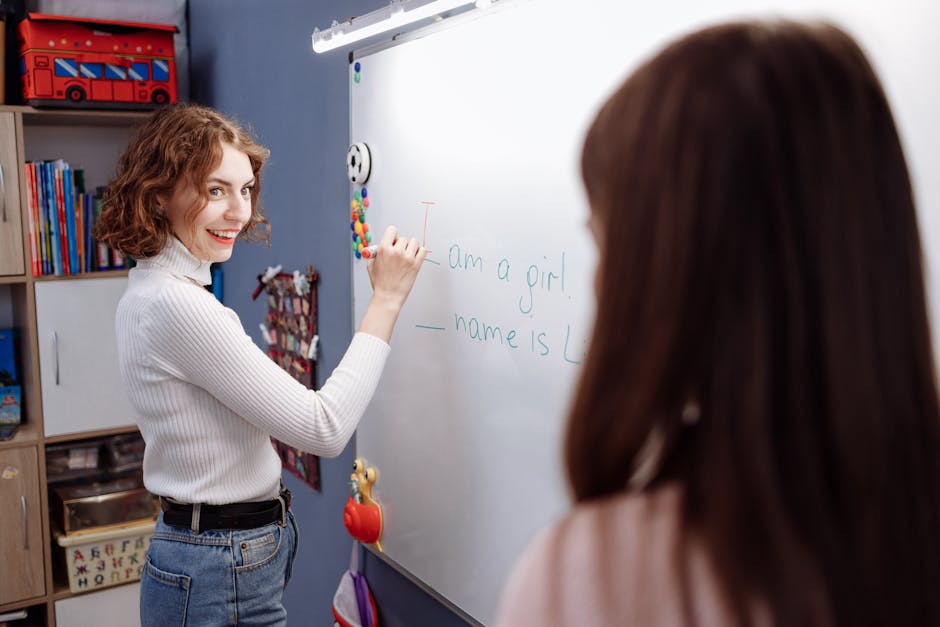
Photo: Thirdman / Pexels
Level 0 — Pre-A1: The Foundation Builder
그만큼 fresh starter — every expert was once here. This student is building their very first foundations in English. They already recognize isolated words — numbers, greetings, brand names — from passive environmental exposure, and they’re bringing that receptive awareness into the classroom for the first time.
Classroom approach: Focus on comprehensible input that builds genuine confidence. Phonics awareness, high-frequency vocabulary (Dolch/Fry lists), and pattern-building through TPR (Total Physical Response) are highly effective. Celebrate every new word recognized — the receptive vocabulary is growing, and that’s the essential foundation for everything ahead.
Common context: True adult beginners, heritage speakers beginning formal study, young learners entering English instruction for the first time — all ready for their English journey to begin.

Photo: Gustavo Fring / Pexels
Level 1 — A1: Breakthrough
At A1, students have mastered approximately 700 words and are handling their first real communicative acts: introductions, greetings, and simple questions about age, family, and daily life. Grammar is anchored in present tense structures — a solid, growing base.
Can-do statements:
- Can introduce themselves and others with confidence
- Can ask and answer simple personal questions
- Can understand very clear, rehearsed speech on familiar topics
Classroom approach: Controlled practice with high repetition builds the automaticity that becomes real fluency. Visuals and realia make language tangible and memorable. Sentence frames (“My name is ___. I am from ___.”) give students the tools to succeed in real communication from day one. Each correct exchange is a genuine breakthrough worth acknowledging.
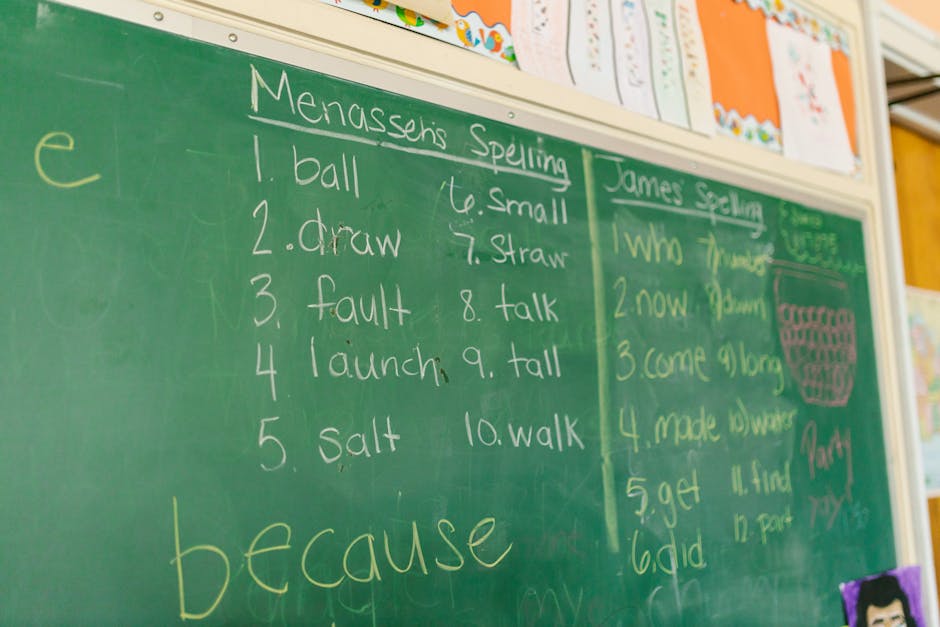
Photo: RDNE Stock project / Pexels
Level 2 — A2: Waystage — Real-World Ready
Vocabulary has grown to around 1,500 words — more than double A1! The A2 learner is excelling at transactional language: shopping, giving directions, writing simple messages. They’re beginning to use past tense and simple connectors, showing real grammatical development.
Can-do statements:
- Can manage routine exchanges (shops, restaurants, travel) independently
- Can write short, purposeful messages and notes
- Can understand the gist of clear audio on familiar topics
Classroom approach: Role-plays built around real-world scenarios let A2 students experience communicative success — a powerful motivator. Task-based learning (TBL) works beautifully here because students achieve meaningful goals in English. Graded readers at “Level 1” make extensive reading accessible and enjoyable from the start.
Level 3 — B1: Threshold — Conversational Independence Achieved
B1 is the milestone where learners achieve conversational independence — a moment worth celebrating together. With roughly 2,500 words, they’re sustaining real conversations with native speakers, following the main points of spoken English, and writing connected texts with growing confidence.
Can-do statements:
- Can sustain conversation on familiar topics (travel, work, family, current events)
- Can watch movies in English with subtitles and follow the plot
- Can write personal emails and short essays with clear cohesion
Classroom approach: At B1, the shift from accuracy 에게 fluency focus becomes genuinely productive. Extensive reading and listening begin yielding major returns. Encourage self-directed exposure — podcasts, TV series with subtitles, graded news articles. Error correction becomes more selective, freeing students to experience the joy of authentic communication in English.
The Grammar Myth: Why Over-Correcting Slows Your Students Down
One of the most powerful shifts an ESL teacher can make — and one the LangLox video above illustrates clearly — is recognizing that grammar is an advanced-stage refinement, not a prerequisite for communication. At Levels 0–3, learners are building vocabulary, listening instincts, and the courage to speak. Constant grammar correction at these stages creates anxiety and stifles the very fluency you’re trying to build.
Students can communicate meaningfully, hold real conversations, and connect with native speakers long before they have mastered grammar rules. Communicative confidence consistently develops ~ 전에 grammatical accuracy — and attempting to reverse that order is one of the most common sources of learner frustration and stall-out.
The practical rule: At Levels 0–3, prioritize fluency and communicative confidence. Use recasting (natural corrections woven into your response) rather than explicit error correction. Save targeted grammar instruction for Level 4 (B2) and above, where learners have the vocabulary base and contextual exposure to make grammar rules genuinely stick. At that point, grammar doesn’t teach the language — it refines fluency that’s already there.

Photo: RDNE Stock project / Pexels
Level 4 — B2: Vantage — True Functional Fluency
B2 represents the achievement of true functional fluency. Vocabulary has reached approximately 4,000 words. Learners are now arguing positions, explaining complex ideas, and following authentic spoken English at natural speed — communicating as genuine English users.
Can-do statements:
- Can understand TV news broadcasts, documentaries, and lectures without subtitles
- Can make and defend arguments confidently in written and spoken form
- Can read authentic English texts (novels, newspapers, academic articles) independently
Classroom approach: B2 is a landmark stage for long-term retention. Acquisition research shows that vocabulary encountered at this level tends to stick permanently — the learner’s mental lexicon is rich enough to reinforce new words across authentic contexts. Debate, academic writing, and content-based instruction (CLIL) are highly effective and deeply engaging here.
Testing benchmarks: IELTS 5.5–6.5 | TOEIC 785–900 | Cambridge B2 First (FCE)

Photo: SHVETS production / Pexels
Level 5 — C1: Effective Operational Proficiency — Advanced Mastery
At C1, the learner has mastered roughly 8,000 words and is communicating on virtually any topic with flexibility, precision, and natural ease. They’re understanding implicit meaning — humor, irony, sarcasm, and idioms — effortlessly and spontaneously.
Can-do statements:
- Can hold extended, spontaneous conversations on abstract and complex topics
- Can recognize and enjoy humor, cultural references, and indirect language
- Can produce clear, well-structured academic and professional writing with sophistication
Classroom approach: At C1, instruction works best when it celebrates precision, register, and style. Learners thrive with authentic academic or professional content, constructive peer feedback on writing, and conscious exploration of low-frequency and domain-specific vocabulary. For most learners, C1 represents a highly functional, impressive level of achievement that opens doors to global opportunities.
Testing benchmarks: IELTS 7.0–8.0 | TOEFL iBT 95–120 | Cambridge C1 Advanced (CAE)
Level 6 — C2: Mastery — The Summit of the Journey
C2 represents near-native proficiency — an extraordinary achievement — with a receptive vocabulary of approximately 16,000 words. The learner reads complex literary and academic texts, understands all registers of spoken English, and thinks in the language with full automaticity.
Can-do statements:
- Can read and understand complex literature, legal texts, and dense academic writing with ease
- Can express nuance, ambiguity, and personal style with precision
- Processes English automatically — the language is fully internalized
C2 is typically achieved through significant immersion (extended time abroad, academic study, or professional immersion) and represents a pinnacle to aspire toward. C1 is itself a remarkable, highly functional achievement — and many learners who reach it go on to use English as a true professional and academic tool throughout their lives.
Testing benchmarks: IELTS 8.5–9.0 | Cambridge C2 Proficiency (CPE)

Photo: This And No Internet 25 / Pexels
How Long Does Progress Take? (And Why Every Hour Counts)
The CEFR and related research (including work from Cambridge Assessment) suggests approximately 200 guided learning hours to move up one level — though this varies by learner background, motivation, and exposure outside the classroom. Every hour of quality input adds up.
- A1 → A2: ~200 hours
- A2 → B1: ~200 hours
- B1 → B2: ~200 hours
- B2 → C1: ~200 hours
- C1 → C2: ~200+ hours (often more, with immersion)
A student starting from zero is building toward 800–1,000+ instructed hours to reach B2 — roughly 3–5 years of consistent study. This is exactly why vocabulary-rich, high-exposure environments are so powerful: every hour of independent reading or listening outside class counts toward that total and accelerates the journey. Helping students value their out-of-class input is one of the highest-impact things a teacher can do.

Photo: Andy Barbour / Pexels
CEFR vs. Other Frameworks
The CEFR doesn’t exist in isolation. Here’s how it maps to the most common tests your students may encounter:
- IELTS: Band 4 ≈ B1 | Band 5.5–6.5 ≈ B2 | Band 7–8 ≈ C1 | Band 8.5–9 ≈ C2
- TOEIC: 550–780 ≈ B1 | 785–900 ≈ B2 | 905–990 ≈ C1
- Cambridge: KET ≈ A2 | PET ≈ B1 | FCE ≈ B2 | CAE ≈ C1 | CPE ≈ C2
- TOEFL iBT: 42–71 ≈ B1 | 72–94 ≈ B2 | 95–120 ≈ C1
Understanding these equivalencies helps when guiding students toward the right qualification, or when communicating the level requirements of university admission or visa applications — turning test prep into a concrete, achievable goal.
Teaching younger learners? Visit 18K English for beginner-friendly resources designed for children and parents in Taiwan.
Sources & Further Reading
- Council of Europe — CEFR Level Descriptions
- MyLinguistics — A1 to C2 CEFR Guide
- StoryLearning — Language Levels Explained
- LangLox — The 7 Levels of Language Learner (YouTube)
Looking for free ESL worksheets? Browse our full collection — printable resources for every level and age group. Browse Free Worksheets →








 KO
KO  EN
EN  ZH
ZH  ZH_CN
ZH_CN  VI
VI  FR
FR  AR
AR  ES
ES  HI
HI  PT
PT  BN
BN  RU
RU  JA
JA  TR
TR  DE
DE  IT
IT  PL
PL  ID
ID  TH
TH  FA
FA  UK
UK  TL
TL  HE
HE  UR
UR  SW
SW  RO
RO  NL
NL  MS
MS  TA
TA  PS
PS  HU
HU  EL
EL  SV
SV  NB
NB  NN
NN  DA
DA  CS
CS  SR
SR  AM
AM