
Mysterious Martian Rocks — Organic Molecules on Mars
Mysterious Martian Rocks: Organic Molecules on Mars
Petikan Membaca
Mars has fascinated scientists for generations, but recent discoveries have pushed the question of Martian life closer to the center of scientific debate than ever before. NASA’s robotic explorers — the Curiosity and Perseverance rovers — have identified chemical and geological evidence that forces researchers to ask a serious question: did life once exist on Mars, or do the planet’s rocks merely imitate its signatures?
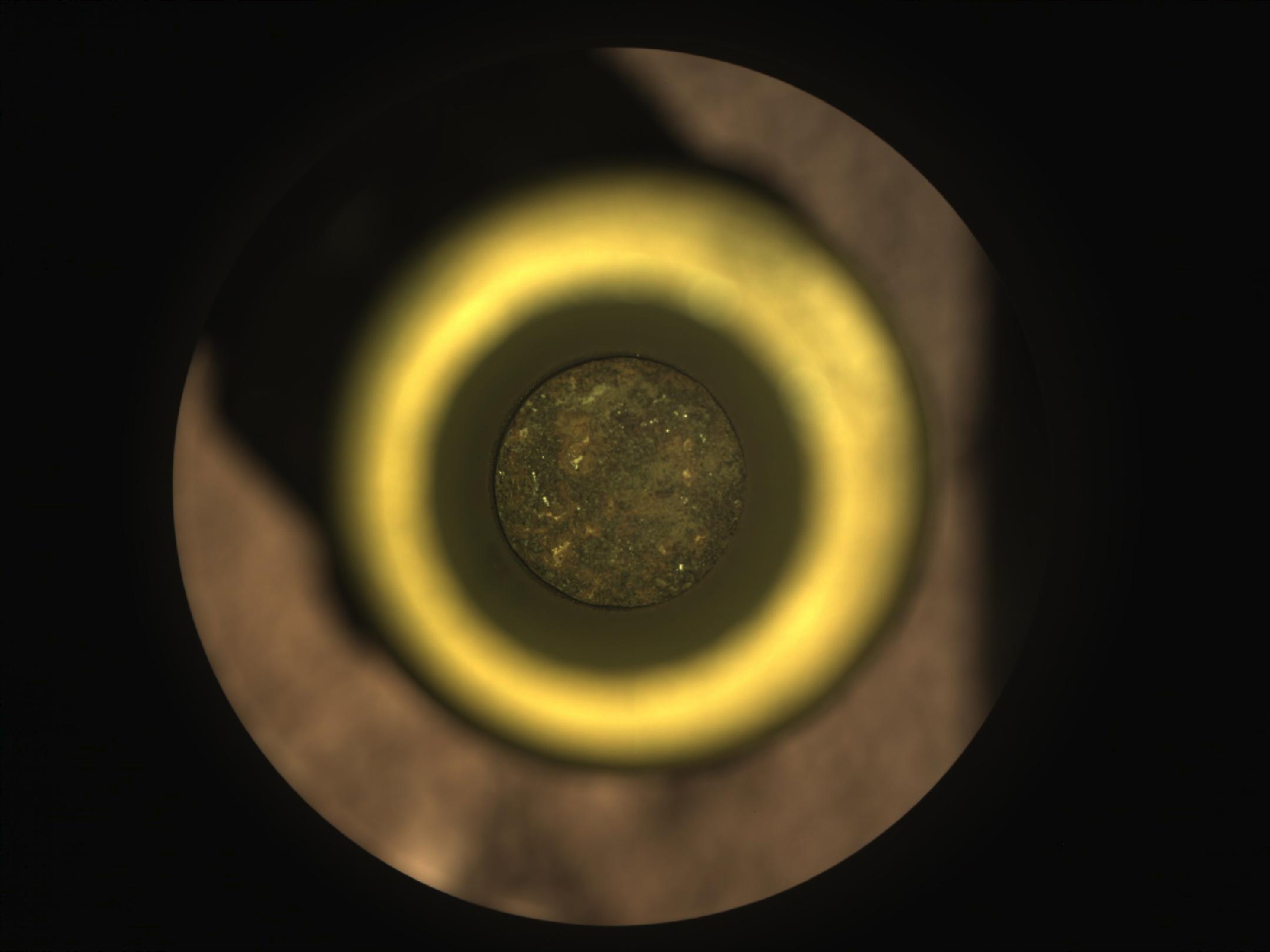
In 2024 and 2025, the Curiosity rover detected seven new organic molecules in Martian rocks — the most diverse collection of organic compounds ever found on another planet. The molecules identified include decane, undecane, and dodecane, which belong to a family of carbon-based chemicals called hydrocarbons. On Earth, these specific compounds are often fragments of fatty acids, which are the building blocks of the membranes surrounding living cells. Their presence on Mars does not prove that life ever existed there, but it raises the possibility that the chemistry required for life may have once been active on the planet’s surface.
Organic molecules are carbon-containing compounds. The term “organic” does not automatically mean biological — organic chemistry can occur through purely non-living, or abiotic, processes. Volcanic activity, meteorite impacts, and ultraviolet radiation acting on simple carbon compounds can all produce organic molecules without any involvement from living organisms. Scientists must therefore carefully distinguish between organic chemistry that results from life (biotic) and organic chemistry that arises through physical or chemical processes alone (abiotic).
Meanwhile, the Perseverance rover has been exploring Jezero Crater, an ancient lake basin where water likely existed billions of years ago. In mudstone rock samples collected from the crater floor, scientists identified unusual patterns of pigmentation — irregular reddish spots surrounded by lighter rings, resembling the markings on a leopard’s coat. Researchers informally nicknamed this sample “Cheyava Falls.” The pattern is strikingly similar to structures left behind by microbial life in ancient rocks on Earth. These potential biosignatures — physical or chemical signs that life may have produced — have generated significant scientific discussion, though no consensus has been reached.
Adding to the intrigue, satellite imagery has revealed what appears to be an ancient beach shoreline within Jezero Crater. This geological feature suggests that the crater was once the edge of a large body of standing water, where sediment accumulated over long periods. On Earth, such environments — where water, sediment, and chemistry intersect — are precisely where early microbial life tends to flourish.
The field of astrobiology — the scientific study of the origin, evolution, and possibility of life in the universe — uses all of these findings to evaluate Mars’s past habitability. A planet is considered habitable if it could, in principle, support life as we understand it: liquid water, organic chemistry, and a stable energy source are the key requirements.
One compelling reason scientists do not dismiss the Martian organics as a simple meteorite delivery is quantity. The amount of organic material detected on Mars exceeds what meteorite impacts alone could reasonably explain. Something — whether biological or geochemical — appears to have been producing or concentrating these molecules on Mars’s surface or just below it.
The question remains open: was Mars once alive? The rocks are speaking, but science has not yet decoded their full message.
Perbendaharaan Kata
- Organic molecules — chemical compounds that contain carbon atoms, which are the foundation of all known life
- Biosignatures — physical, chemical, or structural signs preserved in rock or atmosphere that may indicate the former presence of life
- Mudstone — a fine-grained sedimentary rock formed from mud, often preserving ancient environmental conditions and potential fossils
- Fatty acids — carbon-chain molecules that form the structural membranes of living cells; their fragments can be detected in rock samples
- Habitability — the capacity of an environment to support life, based on factors such as liquid water, chemical energy, and stable conditions
- Jezero Crater — a large impact crater on Mars that once contained a lake; currently being explored by the Perseverance rover
- Hydrocarbons — organic compounds composed entirely of hydrogen and carbon atoms; include decane, undecane, and dodecane
- Abiotic — occurring without the involvement of living organisms; produced by physical or chemical processes alone
- Astrobiology — the scientific discipline that studies the potential for life to exist elsewhere in the universe
- Rover — a robotic vehicle designed to travel across the surface of a planet or moon and collect scientific data
Soalan Pemahaman
1. What did the Curiosity rover detect on Mars that made scientists excited? (Short answer)
2. Which of the following best describes decane, undecane, and dodecane?
- A) Radioactive minerals found in Martian soil
- B) Hydrocarbon molecules that may be fragments of fatty acids
- C) Bacteria discovered inside Martian mudstone
- D) Volcanic gases detected by satellite
3. What does the term “abiotic” mean in the context of this passage?
- A) Produced by living organisms
- B) Detected only in outer space
- C) Occurring without the involvement of living organisms
- D) Related to the surface of a rocky planet
4. Where is Jezero Crater, and why is it scientifically important? (Short answer)
5. What were the “leopard spots” found in the Cheyava Falls sample?
- A) Actual fossilized bacteria visible under a microscope
- B) Unusual reddish pigmentation patterns in mudstone that resemble biological structures on Earth
- C) Satellite images of Martian surface erosion
- D) Chemical residue from the rover’s instruments
6. Why do scientists think the organic molecules on Mars cannot be explained by meteorite impacts alone? (Short answer)
7. What does the ancient beach shoreline found in Jezero Crater suggest about Mars’s past?
- A) Mars once had a thin hydrogen atmosphere
- B) The crater was formed by a large asteroid
- C) The crater was once the edge of a body of standing water
- D) Volcanic lava once covered the crater floor
8. What is astrobiology? (Short answer)
9. Which of the following is NOT listed as a key requirement for habitability?
- A) Liquid water
- B) A stable energy source
- C) A magnetic field
- D) Organic chemistry
10. What is the main unanswered question discussed in this passage? (Short answer)
Critical Thinking
- The passage states that organic molecules can form through both biotic and abiotic processes. Why is this distinction so important for scientists studying Mars? What evidence would help confirm which process produced the molecules found?
- Scientists have not yet reached a consensus on whether the “Cheyava Falls” biosignatures indicate past life. What does this tell us about how scientific conclusions are made? Why might researchers avoid stating a definitive answer?
- The ancient shoreline in Jezero Crater suggests Mars once had liquid water. How does this change or support the argument for Mars’s past habitability? What other conditions would also need to have existed?
- If the organic molecules on Mars are eventually confirmed to be biological in origin, how might this discovery change humanity’s view of its place in the universe? Consider scientific, philosophical, and cultural impacts.
- Some scientists argue that sending humans to Mars could contaminate the planet with Earth organisms, making it harder to study Martian life. Do you think this concern should limit human exploration of Mars? Explain your reasoning.
Fill in the Blank
- The Curiosity rover detected seven new ______ on Mars, including decane, undecane, and dodecane, which may be fragments of fatty acids.
- Jezero Crater is believed to be an ancient lake basin, making it a strong candidate for studying Mars’s past ______.
- When organic compounds form without the involvement of living organisms, scientists describe the process as ______.
Extended Response
Prompt 1: Using evidence from the passage, explain why scientists cannot yet conclude whether life ever existed on Mars. Discuss at least two specific pieces of evidence and explain why each one is suggestive but not conclusive. In your response, refer to the difference between biotic and abiotic processes.
Prompt 2: The passage describes multiple types of evidence for past habitability on Mars: organic molecules, potential biosignatures, and geological features like the ancient shoreline. Write a structured argument either supporting or challenging the following claim: “The available evidence makes it more likely than not that Mars was once a habitable environment.” Use specific examples from the passage and explain your reasoning clearly.






 MS
MS  EN
EN  ZH
ZH  ZH_CN
ZH_CN  KO
KO  VI
VI  FR
FR  AR
AR  ES
ES  HI
HI  PT
PT  BN
BN  RU
RU  JA
JA  TR
TR  DE
DE  IT
IT  PL
PL  ID
ID  TH
TH  FA
FA  UK
UK  TL
TL  HE
HE  UR
UR  SW
SW  RO
RO  NL
NL  TA
TA  PS
PS  HU
HU  EL
EL  SV
SV  NB
NB  NN
NN  DA
DA  CS
CS  SR
SR  AM
AM