

ESL Reading Comprehension Strategies | 10 Proven Techniques for English Learners
Your ESL students can read every word on the page and still have no idea what the passage actually says. Sound familiar? Reading comprehension is one of the biggest challenges English learners face, and it goes far beyond simple decoding. Understanding a text requires vocabulary knowledge, cultural context, grammatical awareness, and a toolbox of active reading strategies.
After more than 20 years of teaching English in Taiwan, I’ve watched thousands of students struggle with reading — and I’ve figured out what actually works. These aren’t textbook theories. They’re battle-tested techniques that transform confused readers into confident ones.
Whether you’re an ESL teacher looking for classroom strategies or a self-studying learner trying to level up, these 10 reading comprehension techniques will change how you approach English texts.
Why Reading Comprehension Is So Difficult for ESL Students
Before diving into strategies, it helps to understand why reading in a second language feels so different from reading in your native one. Research from the Cambridge Annual Review of Applied Linguistics highlights several key barriers:
- Limited vocabulary depth: Knowing a word’s basic meaning isn’t enough. ESL readers often miss connotations, collocations, and multiple meanings.
- Sentence structure overload: Complex English syntax (relative clauses, passive voice, inverted structures) can turn a simple idea into a brain-twisting puzzle.
- Cultural knowledge gaps: Texts assume shared cultural references that international learners may not have.
- Translation habit: Many learners mentally translate every sentence into their first language, which slows them down and disrupts comprehension flow.
- Lack of reading stamina: Sustained focus on a second language is mentally exhausting. Students often lose the thread after a few paragraphs.
The good news? Every one of these barriers can be addressed with the right strategies. Let’s break them down.

1. Pre-Reading Activation: Set the Stage Before They Read
Jumping straight into a text without preparation is like walking into a movie 30 minutes late. Pre-reading activities give students the context they need to make sense of what’s coming.
How to do it:
- Show students the title, headings, and any images. Ask them to predict what the text is about.
- Discuss the topic briefly in pairs or small groups. Activate whatever background knowledge already exists.
- Pre-teach 5-8 critical vocabulary words that appear in the text. Don’t overwhelm them — focus on words they absolutely need to follow the main ideas.
Research from TESOL International Association consistently shows that pre-reading activities significantly improve comprehension scores, especially for lower-proficiency learners.
2. Vocabulary Mapping: Build Word Knowledge in Context
Vocabulary is the engine of reading comprehension. You can teach every reading strategy in the world, but if students don’t know enough words, they’ll still struggle. The key is teaching vocabulary in context, not through isolated word lists.
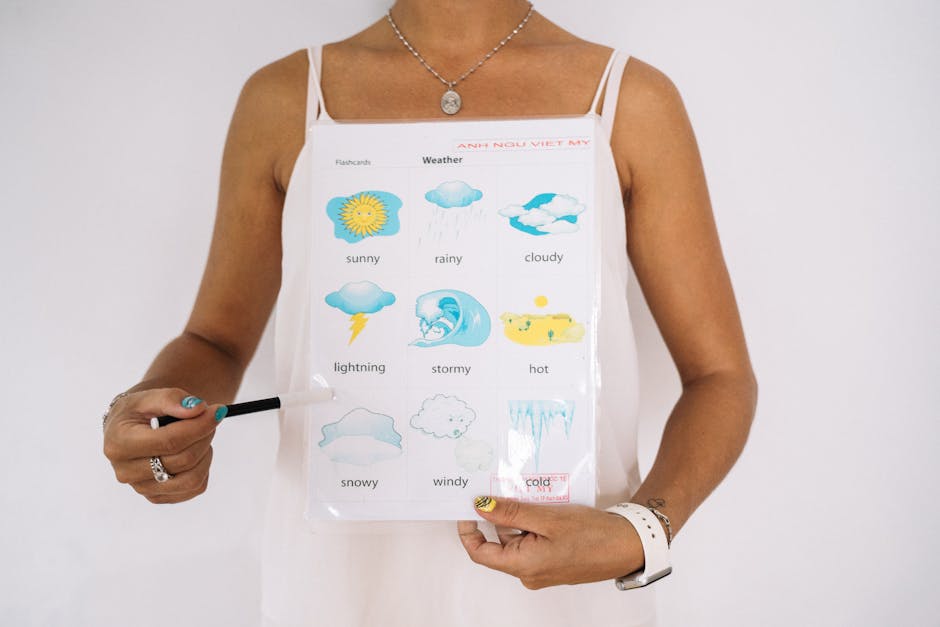
Practical techniques:
- Word walls: Display key vocabulary from current reading units where students can see them daily.
- Context clues practice: Teach students to use surrounding sentences to guess unknown word meanings before reaching for a dictionary.
- Vocabulary journals: Have students record new words with the sentence they found them in, a definition, and a personal example sentence.
- Word families: When you teach “comprehend,” also introduce “comprehension,” “comprehensive,” and “comprehensible.”
A good benchmark: students need to understand roughly 95-98% of the words in a text to comprehend it independently. That’s why graded readers at appropriate levels are so valuable for building both vocabulary and reading confidence. For more vocabulary-building activities, check out our guide to ESL vocabulary games that actually work in the classroom.
3. Skimming and Scanning: Read Smart, Not Slow
Many ESL students default to reading every single word at the same speed. This is exhausting and inefficient. Teaching skimming (reading quickly for the general idea) and scanning (searching for specific information) gives students control over their reading pace.
Skimming practice:
- Give students 60 seconds to read a full-page text. Then ask: “What is this text about?” They only need the main topic, not details.
- Teach them to focus on: the title, first sentences of each paragraph, and any bold or highlighted words.
Scanning practice:
- Give students specific questions before they read. “What year did this happen?” or “How many reasons does the author give?”
- Time them. Make it a game. Scanning should feel fast and purposeful, not stressful.
4. Annotation and Active Reading: Engage With the Text
Passive reading — eyes moving over words without processing — is the silent killer of comprehension. Active reading forces students to interact with the text physically and mentally.

Annotation symbols to teach:
- Underline the main idea of each paragraph
- Circle unknown words (but keep reading — don’t stop to look them up immediately)
- Write a ? next to confusing parts
- Write a ! next to surprising or interesting information
- Summarize each paragraph in 3-5 words in the margin
This works equally well with printed texts (pen in hand) or digital readings (using highlight tools). The physical act of marking up a text keeps the brain engaged and creates a visual map students can return to for review.
5. Chunking: Break Long Texts Into Manageable Pieces
A two-page article might seem short to a native speaker, but for an intermediate ESL student, it can feel like a marathon. Chunking means breaking the text into smaller sections and checking comprehension along the way.
In practice:
- Assign one paragraph at a time. After each, ask a quick comprehension question or have students summarize in one sentence.
- Use “stop and think” markers throughout the text — physical stopping points where students pause and process before continuing.
- For longer texts, provide a graphic organizer that students fill in section by section.
Chunking builds reading stamina gradually. Students who can handle one paragraph confidently will eventually handle full articles without the scaffolding.
6. Graphic Organizers: Visualize the Text Structure
Many ESL students struggle not because they can’t understand individual sentences, but because they can’t see how the pieces fit together. Graphic organizers make text structure visible.
Types to use:
- Story maps: Characters, setting, problem, events, resolution — perfect for narratives
- Cause and effect charts: Great for science and social studies readings
- Venn diagrams: Ideal for compare/contrast passages
- Timeline sequences: Works for historical or process texts
- Main idea webs: Central idea in the middle, supporting details branching out
According to the British Council’s teaching resources, graphic organizers are particularly effective for visual learners and students whose first language uses different text organizational patterns than English.

7. Question Generation: Let Students Drive the Inquiry
Instead of always asking students questions about a text, flip it. Have them generate questions. This shifts reading from a passive reception task to an active analysis task.
Three-level questioning:
- Level 1 — Right there: The answer is directly stated in the text. (“What color was the car?”)
- Level 2 — Think and search: Students need to combine information from different parts of the text. (“Why did the character change their mind?”)
- Level 3 — On my own: Students connect the text to their own knowledge or opinions. (“Do you agree with the author’s argument?”)
Start with Level 1 for beginners and gradually push toward Levels 2 and 3. When students can ask deep questions about a text, they’ve truly understood it. For engaging ways to get students producing language around texts, see our ESL speaking activities for beginners.
8. Reciprocal Teaching: Four Roles, One Powerful Framework
Reciprocal teaching is one of the most research-backed reading strategies in education. It gives students four specific roles to practice while reading in small groups:
- Summarizer: Restates the main points in their own words
- Questioner: Creates comprehension questions for the group
- Clarifier: Identifies confusing parts and tries to explain them
- Predictor: Guesses what will come next based on clues in the text

Students rotate roles with each section of text. It feels like a structured conversation about reading, which is exactly what it is. The approach was developed by Palincsar and Brown (1984) and has decades of positive results in both L1 and L2 reading contexts.
9. Think-Alouds: Model Your Own Reading Process
Students don’t know what skilled reading sounds like on the inside. Think-alouds let you open up your mental process and show them.
How to run a think-aloud:
- Project a text on the board. Read it aloud.
- Stop at key moments and say what you’re thinking: “Hmm, I don’t know this word, but from the sentence I think it means…” or “This paragraph is saying the opposite of the last one, so the author is comparing two views.”
- Show them that even skilled readers encounter confusion — the difference is having strategies to work through it.
After modeling, have students practice think-alouds in pairs. One reads, the other listens and gives feedback. This builds metacognitive awareness — the ability to monitor your own understanding as you read.
Here’s an excellent video demonstrating reading comprehension strategies in action:
10. Post-Reading Reflection: Make It Stick
Comprehension doesn’t end when students finish the last sentence. Post-reading activities cement understanding and help transfer knowledge to long-term memory.
Effective post-reading tasks:
- Retelling: Students explain the text to a partner without looking at it. Forces them to organize and articulate key ideas.
- Written summaries: A 3-5 sentence summary requires students to identify what truly matters and discard the rest.
- Discussion circles: Small groups discuss their reactions, questions, and connections to the text.
- Connection journals: Students write about how the text connects to their own experience, another text they’ve read, or the world.

The key is that post-reading activities should require students to do something with the information, not just answer factual recall questions. The deeper the processing, the better the retention.
Putting It All Together: A Reading Lesson Framework
You don’t need to use all 10 strategies in every lesson. Here’s a practical framework for a 50-minute reading class:
- Pre-reading (10 min): Topic prediction, vocabulary pre-teach, background activation
- First read — skim (5 min): Quick read for overall meaning, then share predictions
- Second read — detailed (15 min): Annotation, chunking, or graphic organizer
- Group work (10 min): Reciprocal teaching roles or question generation
- Post-reading (10 min): Summary writing, discussion, or retelling
Vary the strategies week to week. Once students have practiced each one independently, let them choose which strategies work best for them. That’s when real reading independence begins.
For more ways to get your students warmed up and ready to engage with texts, don’t miss our collection of no-prep ESL warm-up activities that get students talking fast.
Choosing the Right Strategy for the Right Student
Not every strategy works for every learner. Beginners benefit most from pre-reading activation, vocabulary mapping, and chunking — these build the foundation. Intermediate learners are ready for annotation, graphic organizers, and reciprocal teaching. Advanced students thrive with question generation, think-alouds, and independent post-reading reflection.
The goal isn’t to create students who can answer comprehension questions on a test. It’s to develop readers who can pick up any English text — a news article, a novel, a work email — and understand it confidently on their own. These 10 strategies are the toolkit that gets them there.
References
- Palincsar, A. S., & Brown, A. L. (1984). Reciprocal Teaching of Comprehension-Fostering and Comprehension-Monitoring Activities. Cognition and Instruction, 1(2), 117-175.
- Grabe, W. (2009). Reading in a Second Language: Moving from Theory to Practice. Cambridge University Press.
- Nation, I. S. P. (2001). Learning Vocabulary in Another Language. Cambridge University Press.




 MS
MS  EN
EN  ZH
ZH  ZH_CN
ZH_CN  KO
KO  VI
VI  FR
FR  AR
AR  ES
ES  HI
HI  PT
PT  BN
BN  RU
RU  JA
JA  TR
TR  DE
DE  IT
IT  PL
PL  ID
ID  TH
TH  FA
FA  UK
UK  TL
TL  HE
HE  UR
UR  SW
SW  RO
RO  NL
NL  TA
TA  PS
PS  HU
HU  EL
EL  SV
SV  NB
NB  NN
NN  DA
DA  CS
CS  SR
SR  AM
AM