
ESL Flashcards: 18 Best Activities for Every Level (2026)
The average ESL learner needs roughly 17 exposures to a new word before it sticks in long-term memory, and a stack of ESL flashcards is still the cheapest way to deliver those reps. Apps get the spaced-repetition math right, but they kill the energy of a live classroom. Print cards do something a screen cannot — they turn vocabulary into a physical game that a teacher can run on three hours of sleep and a working printer.

This is the playbook I built over twenty years of teaching English in Taipei — 18 flashcard activities sorted by level, plus the design rules that separate a card students remember from one they forget by Tuesday.
Why ESL Flashcards Still Outperform Apps in 2026
The truth is, most teachers who ditched physical flashcards for Quizlet and Anki ended up with quieter classrooms and worse retention. A 2021 meta-analysis in the journal Educational Psychology Review found that active retrieval with paper cards produced 23% better recall at the two-week mark than passive screen scrolling — and that’s before you factor in classroom buy-in.
The reason isn’t technological. It’s social. When a student holds a card up for the room to guess, the cost of forgetting that word goes up. Public retrieval is a desirable difficulty, the kind of friction Robert Bjork’s lab has been writing about for forty years. Apps remove the friction. Cards keep it.
None of this means apps are useless. Use them for homework. Use cards in class.
What Makes a Good ESL Flashcard (Beyond a Picture and a Word)
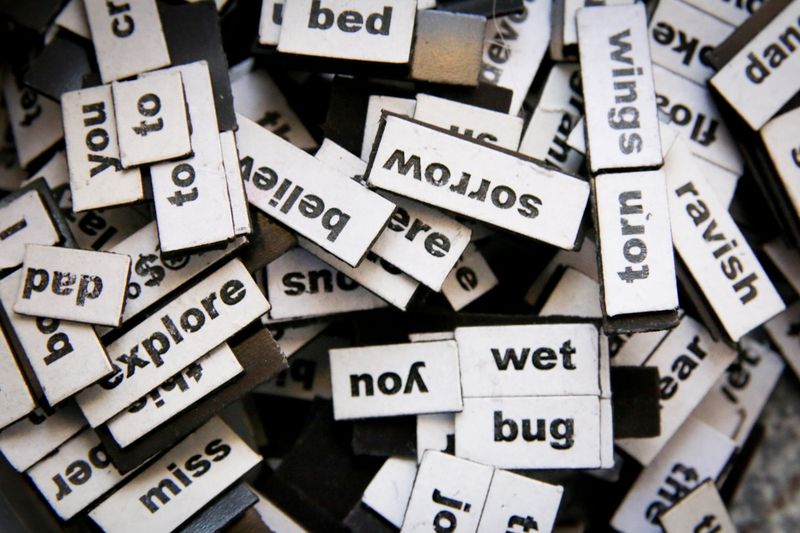
A weak card has the target word, a generic image, and nothing else. A strong card forces the brain to do work. Here is the format that has held up across every level I have taught, from kindergarten to business English.
- One word per card. Phrases dilute the target. If you want phrases, make phrase cards on a different color stock so students can tell them apart at a glance.
- Image first, word second. Beginners pair the picture with their L1 mental concept. Putting the English word in small type at the bottom lets them self-check without leaning on translation.
- Avoid stock clip art. A photo of a real apple beats a cartoon apple every time — students remember concrete images and skip past abstract ones.
- Color-code by part of speech. Nouns blue, verbs red, adjectives green. Three weeks in, even six-year-olds start sorting by category without prompting.
- Hand-numbered backs. A small number on the reverse turns any deck into a tracking system — you know which 5 cards Sasha missed in week three.
One more rule I learned the hard way: never laminate your first run. You’ll redesign half the deck after one class.
6 ESL Flashcard Games for Beginners (A1–A2)
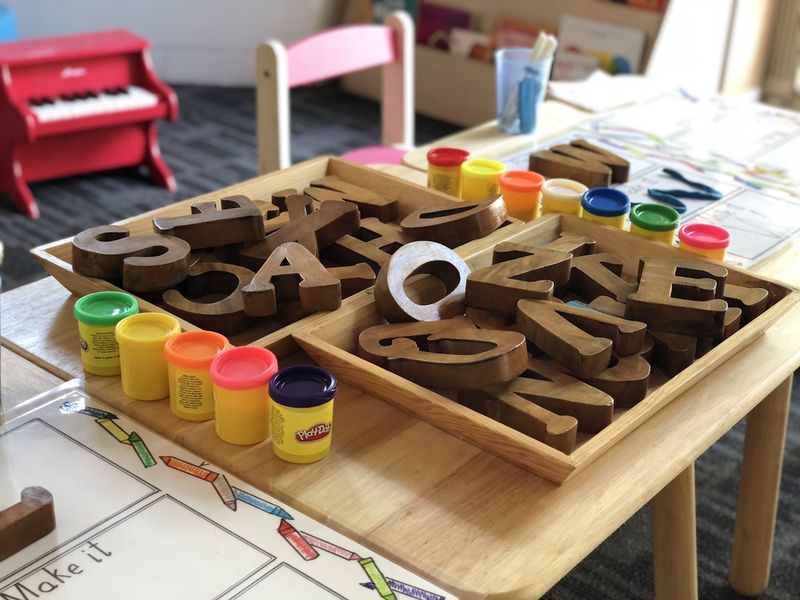
Beginner decks should stay under 25 words. New teachers cram 50 into a session and wonder why nothing landed. Start small and recycle ruthlessly.
1. Slap the Card. Spread 8 cards face up on a table. Call a word. First student to slap it keeps it. Loud, fast, and the kinesthetic memory locks the word in. Better for tables of 2–3 than whole class.
2. Disappearing Cards. Stand 6 cards on the board ledge. Drill the words three times. Remove one. Drill again — students name all 6 from memory. Remove another. By the end, they’re naming an empty ledge. Cheap, but it works on every level.
3. Two-Card Bluff. Hold up a card so only you can see it. Make a statement: “It’s a cat.” Students yell “true” or “false.” Show the card. Sounds simple — six-year-olds will play this for twenty minutes if you let them.
4. Memory Match. Print two decks of the same 12 words. Lay them face down in a grid. Standard pairs game, but students must say the word out loud when they flip — silent flipping doesn’t count. Pair off students for speaking practice baked into the rules.
5. Walk and Stop. Tape 6 cards around the room. Play music. Students walk. Music stops, students freeze near the closest card and shout the word. Combines total physical response with vocabulary recall — particularly good for young learners with energy to burn.
6. Cover the Word. Hold up a card with your thumb covering half the picture. Students guess. Move your thumb slowly. The race to call it first is the lesson.
6 ESL Flashcard Games for Intermediate Learners (B1–B2)
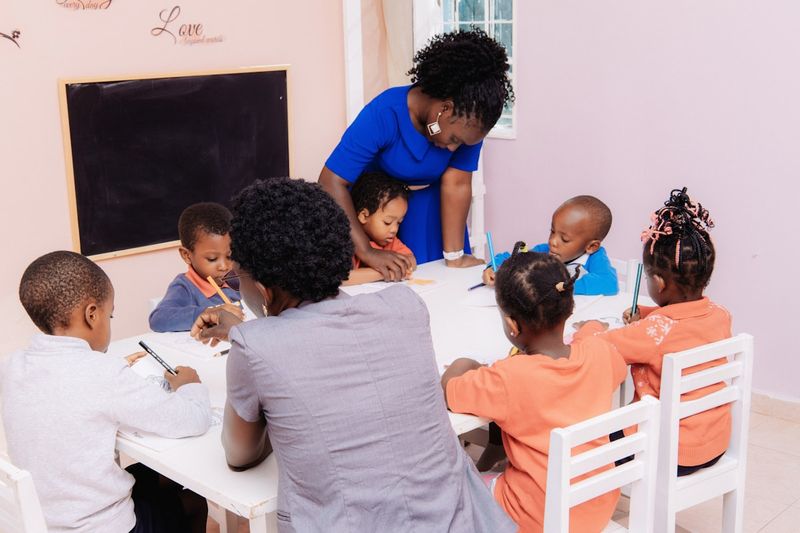
Intermediate students are bored by recognition drills. They need cards that push production — sentences, definitions, opinions. The format stays the same; the rules change.
7. One-Minute Definitions. Student draws a card. They have 60 seconds to define the word without saying it, while their partner guesses. The Taboo game format works in any classroom and forces synonyms, paraphrasing, and circumlocution — three skills B1 learners desperately need.
8. Story Chain. Deal 5 cards per group. Each student adds a sentence to a story using one card. The last student has to tie all 5 together. Writes itself, hits past tense and connectors, and produces something every group wants to read aloud.
9. Card Categories. Lay out 30 mixed-vocabulary cards. Students sort them into categories of their own naming — but each category must have at least four cards, and they have to defend the grouping to the class. Watching B1 students argue whether “ambitious” goes with “personality” or “career” is the best output you’ll get all week.
10. Speed Translation Relay. Two teams. One student from each team flips a card and gives a sentence with the word — no repeating the model. Team scores 1 point per accurate sentence, 2 if the structure includes a target grammar pattern from the day’s lesson. Builds on the same rep mechanic as the vocabulary games playbook but tied to grammar.
11. The Lying Game. Student picks a card secretly and writes three sentences about it — two true, one false. The class asks yes/no questions to spot the lie. Hits modal verbs, question forms, and listening comprehension in one swing.
12. Pictionary Card Draft. Each student draws 3 cards from a deck. They pick the one they want to draw on the board. Class guesses. The chooser explains why the other two were harder — meta-language practice that hits surprisingly hard at B1.
6 ESL Flashcard Games for Advanced Learners and Adults (C1+)
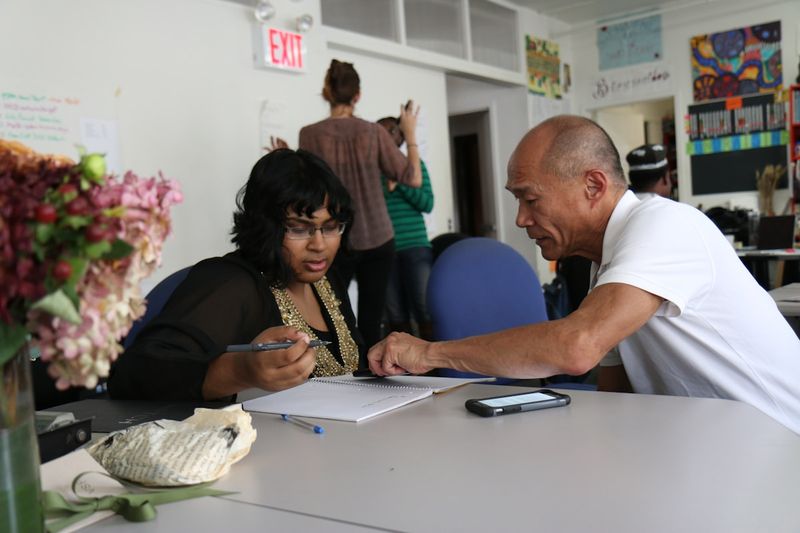
Adult learners and C1+ students will roll their eyes at “slap the card.” Fair. Advanced flashcard work should look more like a seminar and less like a kindergarten warmup. The trick is to keep the format (random cards, fast pace, public recall) but raise the cognitive demand.
13. Idiom Defense. Cards contain idioms or collocations. Student draws one, gives the meaning, then has 30 seconds to argue whether it’s still useful in 2026 English or whether it sounds dated. Half my advanced class chose to retire “spill the beans” after a heated debate. Real output.
14. Register Sort. A stack of 25 mixed verbs — “purchase,” “buy,” “cop,” “procure.” Pairs sort by register (formal / neutral / informal / slang) and present their hierarchy. Adult business English students eat this up, and it solves a real problem they have at work.
15. Sentence Surgery. Card has a sentence with the target word used incorrectly. Pair fixes it and explains the rule. Sources can be from real student error logs — that personalized feedback hits harder than any textbook.
16. Card Auction. Give each student 100 fake dollars. Display 20 cards. Students bid on the words they think will appear most often in a TED Talk on a chosen topic. Play the talk. Award winners. Vocabulary prediction is one of the best metacognitive skills you can teach at C1.
17. Three-Question Interview. Student draws a card. Their partner has to ask three escalating questions that get the speaker to use the word in a real personal story. Builds question formation and conversational depth at the same time.
18. The 90-Second Talk. Single card, ninety seconds of unprepared speech. Audience scores on structure, accuracy, and word use. Brutal at first. By week three, students start requesting it. There’s a reason this is also a core drill in the oppvarmingsaktiviteter rotation — it’s the fastest way to surface fluency gaps.
You don’t need to fill every advanced lesson with these. Two or three a week, fifteen minutes each, will outperform an entire hour of textbook vocabulary work.
How to Use Digital ESL Flashcards Without Killing the Energy

Anki, Quizlet, Memrise, and a half-dozen newer apps will gladly automate your spaced repetition. The question isn’t whether to use them — it’s where. My rule of thumb after a decade of trial and error: digital cards belong in homework, paper cards belong in class.
The classroom is a social environment. The moment a student picks up a phone, they isolate. You lose the laughter, the shouting, the eye contact that makes a word land. Send them home with a 10-card Quizlet deck for the week’s words. In class, run a Memory Match with the same 10 cards on paper. The combination beats either method alone, and the kids who hate apps still get the reps.
One exception: large adult classes (20+) where running a paper game is logistical chaos. Kahoot with flashcard images works well as a whole-class warmup if you cap it at five minutes.
Where to Find Free ESL Flashcards Worth Printing
You can spend a Saturday making your own. You probably shouldn’t. Three sources have carried me for years without costing a dollar.
- British Council LearnEnglish Kids — clean illustrations, topic-sorted, free PDFs. Best for ages 6–11.
- MES English — the deepest free library on the internet. Over 80 topic sets, and they include both picture and word versions of every card.
- ESL Flashcards — thousands of printable sets organized by theme and level. Heavier ad load but the cards themselves are solid.
Print on 200gsm cardstock if your budget allows. Regular paper bends after one round of Slap the Card.
The 4 Mistakes That Make Flashcard Drills Fall Flat

I’ve watched dozens of teachers walk out of a flashcard lesson saying “they just didn’t engage.” Nine times out of ten, the problem wasn’t the students. It was one of four predictable mistakes.
Too many cards. Anything past 12 new words in a 50-minute lesson is overload. You can review 30. You cannot teach 30.
No retrieval, just exposure. Flashing cards and saying the word teaches almost nothing. Students have to produce the word — say it, write it, act it out — for memory to consolidate.
Same game every class. Even Slap the Card gets stale by week four. Rotate two games per session and switch the rotation every two weeks. The novelty is part of the learning.
No spaced review. Words taught in week one need to surface in weeks two, four, and eight. Build a “recycle deck” of past targets and use it as a warmer in every class. Five minutes, and your retention curve flattens dramatically.
Bonus Video: 10 ESL Flashcard Games for Kids
Joy from Teaching with Joy demonstrates ten fast, low-prep flashcard activities for young learner classrooms. The “spider game” and “wonder bag” segments alone are worth the watch if you teach K–2.
Build Your Own Flashcard Rotation This Week
Pick four games from this list — one per level band you teach, plus one bonus from any level — and commit to running them across the next ten lessons. Track which words land and which don’t. By week three you’ll have your own data-driven shortlist, the kind that turns flashcard time into the most reliable retention block in your week. If you’re still mapping your students to CEFR bands before picking cards, start with the 7 levels of language learner guide and work down from there.
Kilder
- Educational Psychology Review — Retrieval Practice meta-analysis (2021) — Active retrieval outperforms passive review across vocabulary learning studies.
- Bjork Learning & Forgetting Lab, UCLA — Original research on desirable difficulties and the testing effect.
- British Council LearnEnglish Kids — Free Printable Flashcards — Topic-sorted illustrated card sets for young learners.
- MES English Flashcards — Free library of 80+ topic flashcard sets with picture and word versions.
- Cambridge English — Playing Games Using Flashcards — Practical card game ideas from the Cambridge English team.
Looking for free ESL worksheets? Browse our full collection — printable resources for every level and age group. Browse Free Worksheets →
Students can access free worksheets and reading materials at 18KEnglish.com.







 NB
NB  EN
EN  ZH
ZH  ZH_CN
ZH_CN  KO
KO  VI
VI  FR
FR  AR
AR  ES
ES  HI
HI  PT
PT  BN
BN  RU
RU  JA
JA  TR
TR  DE
DE  IT
IT  PL
PL  ID
ID  TH
TH  FA
FA  UK
UK  TL
TL  HE
HE  UR
UR  SW
SW  RO
RO  NL
NL  MS
MS  TA
TA  PS
PS  HU
HU  EL
EL  SV
SV  NN
NN  DA
DA  CS
CS  SR
SR  AM
AM