

ESL Parent Communication: 8 Proven Strategies
A Wyoming Department of Education survey of 48 districts found that of the schools reporting on English language learner families, barely one in twenty administrators described those families as involved “a great deal” in school life. The same study found 42% of respondents said barriers — not apathy — were the reason trust never formed between ELL families and the school. Those barriers rarely start with language. They start with a note home that assumes a reading level nobody checked, a conference that needed a hallway interpreter, or a new security system that asks for a government ID at drop-off.
Fixing ESL parent communication is less about hiring a translator and more about rebuilding the handful of moments where families decide whether the school is worth trusting. Here’s where that breaks down, and what closes the gap.
Why ELL Families Go Quiet
Most teachers assume silence from an ESL parent means disinterest. The data says otherwise. Researchers Matthew Parsons and Jenna Shim interviewed administrators across a rural Wyoming district and found the loudest barriers weren’t linguistic — they were about trust and fear. One high-achieving district had recently installed a visitor ID-scanning system at the front office. Staff reported that families without legal status stopped coming inside the building entirely, even for events explicitly designed for them, because the system asked for a government-issued ID before anyone could enter.
That’s not a translation problem. A parent who reads perfectly well in Spanish or Tagalog will still skip a conference if the building itself feels like a risk. Before teachers pick a communication tool, the more useful question is: what does this family need to feel safe walking through the door, or opening an email from the school at all?
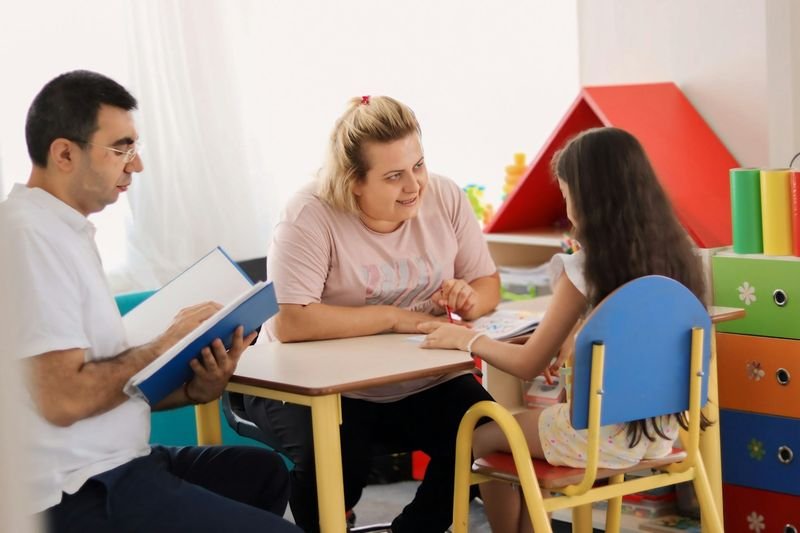
Not every barrier is about immigration status. Work schedules matter just as much — a conference slot at 3:30pm excludes any parent working a shift job. So does a family’s own school history. A parent who left school in another country under difficult circumstances brings that memory into every interaction with a teacher, whether the teacher knows it or not.
Build a Translation System Parents Actually Trust
The single worst habit in ESL parent communication is using the student as the translator. It puts a ten-year-old in charge of explaining his own behavior report to his parents, and it tells the family that the school didn’t think their understanding was worth the effort. Colorín Colorado, the bilingual literacy project backed by WETA and the U.S. Department of Education, recommends building a translation process that’s “formal, steady, and reliable” — not one teachers improvise with whoever happens to speak the language that day.
In practice that means three tiers. For anything routine — a schedule change, a reminder about picture day — a translation app built into your messaging platform (TalkingPoints and ClassDojo both auto-translate messages both directions) is good enough. For anything involving academic progress or behavior, use a trained staff interpreter, not a bilingual parent volunteer who happens to be in the building. For anything legal or disciplinary, bring in a professional interpreter every time, even if it slows the meeting down. The families most likely to disengage are the ones who got the first version of a difficult conversation filtered through an eight-year-old or a well-meaning but untrained translator.

Pick the Channels Parents Will Actually Open
Email is the default for most schools and the least effective channel for ESL families. A weekly newsletter written at a tenth-grade reading level, auto-translated by a browser plugin that mangles idioms, gets deleted unread more often than it gets understood. Phone and text consistently outperform email for ELL households — not because parents dislike reading, but because a text can be answered from a factory floor or a kitchen in a way a formatted newsletter can’t.
Apps with built-in two-way translation solve the back-and-forth problem that email never could. A parent typing in Vietnamese or Amharic gets a response the teacher can actually read, and vice versa, without either side waiting on a staff interpreter’s schedule. That matters because parent-teacher communication at its best isn’t a broadcast — it’s a conversation, and conversations need both people able to speak.

Offering a virtual option for conferences removes two barriers at once: the transportation problem and the scheduling conflict with a job that doesn’t allow time off. It doesn’t replace in-person relationship-building entirely, but for a family juggling two jobs and no car, a 15-minute video call is the difference between attending and not.
Make First Contact Positive, Not a Warning
Ask any veteran teacher what the first call home usually is about, and the honest answer is almost always a problem. For ESL families already uncertain about how the school views their child, that pattern confirms a fear rather than building trust. Teachers who deliberately call three or four families a week with something specific and positive — not “doing great,” but “today Mai asked a question in English for the first time without being prompted” — change what a phone call from school means before anything goes wrong.
This costs almost nothing and it compounds. A parent who has received one good-news call is far more likely to pick up the next time the school calls, and far less likely to assume the worst before the teacher has said a word.

Keep a simple log of who’s been called and why — a shared spreadsheet works fine. Without one, the same two or three families with the squeakiest-wheel kids get all the contact, while the quiet, well-behaved ESL student whose parents never hear anything from the school goes a full semester with zero relationship built. That student is usually the one who needed it most, precisely because nobody was worried about him.
Run a Conference That Doesn’t Need a Hallway Interpreter
A 15-minute parent-teacher conference slot, with no interpreter scheduled and a stack of forms in English, isn’t really an invitation — it’s a formality. Book interpreters in advance rather than hoping a bilingual staff member is free that day. Translate the handouts before the meeting, not after. And build in time for the parent to ask questions, because a conference that’s entirely teacher-to-parent in one direction isn’t the partnership it’s supposed to be.
The strongest conferences treat the family as the expert on their own child’s history, not just the audience for a progress report. Asking what the child was like learning their first language, what worked at home, or what the family is worried about gives a teacher information no assessment data will ever show.
Bring Families Into the Classroom, Not Just the Office
Most parent engagement plans stop at the conference and the occasional note home. Family literacy nights, bilingual story time, or a classroom open house built around a student project give ESL parents a reason to be in the building that isn’t tied to a problem or a formality. These events work best when they explicitly welcome the family’s home language rather than treating it as something to set aside at the door — an idea covered in more depth in our guide to translanguaging techniques, which looks at how valuing a student’s first language actually accelerates English acquisition rather than slowing it down.

A single well-run literacy night, with food, translated signage, and activities that don’t require much spoken English to join, will often pull in families who’ve skipped every conference invitation that year. Attendance isn’t the metric that matters — it’s whether a family who showed up once comes back the second time.
Address the Fears Behind the Silence
Immigration status is the barrier teachers are least equipped to talk about and most likely to encounter. Families who fear that engaging with the school could expose their status to a government system will stay away from events, decline to fill out forms, and avoid conferences entirely — not out of disinterest, but out of calculated risk. Schools can’t control federal policy, but they can be explicit, in writing and in the family’s language, about what information is collected, who sees it, and that enrollment and attendance records are not shared with immigration enforcement.

This isn’t a conversation to have once, in a single handout. It’s one worth repeating at the start of every school year, through a trusted bilingual staff member rather than a form letter, because the fear doesn’t reset just because the calendar does.
Turn What You Learn Into the Lesson Plan
Every conversation with a family is wasted if the information stops at the conference notes. What a parent says about a child’s strengths in their first language, their routine at home, or what motivated them in a previous school should feed directly into how that student is grouped, assessed, and supported — the same logic behind a proper ESL needs analysis, which treats student and family input as data, not small talk.

A family who mentions their child reads confidently in Korean but freezes up reading aloud in English has just told a teacher something a standardized test won’t: the issue isn’t literacy, it’s language transfer and confidence. That’s the kind of detail that only surfaces once a family trusts the conversation enough to have it. Pair strong communication with the kind of consistent strategier for klasseromsledelse that make a student’s day predictable, and the two reinforce each other — a calm, well-run classroom gives parents less to worry about, and an informed, engaged family gives the teacher a head start every single unit.
None of this requires a bigger budget or a new hire. It requires treating the first phone call home as the opening of a relationship instead of the start of damage control — and doing that consistently enough that families stop bracing for bad news every time the school’s number shows up on their phone.
Kilder
- Colorín Colorado — Communicating Important Information with ELL Families — bilingual literacy initiative backed by WETA and the U.S. Department of Education on reliable translation systems and family outreach.
- Parsons, M. & Shim, J. (2019), “Increasing ELL Parental Involvement and Engagement,” English Language Teaching, Vol. 12, No. 10 — survey and interview study of K-12 administrators in a rural state on ELL parent engagement barriers.
- Institute of Education Sciences, REL West — Engaging and Empowering Diverse Families — federal research brief on effective family engagement strategies for diverse student populations.








 NB
 EN
 ZH
 ZH_CN
 KO
 VI
 FR
 AR
 ES
 HI
 PT
 BN
 RU
 JA
 TR
 DE
 IT
 PL
 ID
 TH
 FA
 UK
 TL
 HE
 UR
 SW
 RO
 NL
 MS
 TA
 PS
 HU
 EL
 SV
 NN
 DA
 CS
 SR
 AM