

Task-Based Learning: 7 Proven Steps for ESL Success
In a standard grammar lesson, the teacher usually talks for the first twenty minutes. In a well-run task-based lesson, the students are talking within five. That single difference is why task-based learning has become one of the most requested methods in ESL job listings — and why teachers who can run it well tend to hold classes that feel alive instead of quiet.
The idea is simple to state and harder to trust: give students a task worth completing, get out of the way, and teach the language they actually reached for once the task is done. This guide walks through what the method is, how it compares to the lesson format most of us were trained on, and the seven steps that turn the theory into a lesson you can teach tomorrow.
What Is Task-Based Learning?
Task-based learning is an approach where a meaningful task sits at the centre of the lesson and the language is taught in service of that task. Instead of presenting a grammar point and hoping students use it, you set a goal — agree on the three best gifts for a friend, spot ten differences between two pictures, plan a weekend on a fixed budget — and let the language surface naturally as students work toward it.
The term was popularised by researcher Jane Willis, whose 1996 book A Framework for Task-Based Learning still anchors most teacher training on the subject. Her definition of a task is useful and strict: it has to have a clear outcome, it has to require communication, and success is measured by whether the goal was reached — not by whether a particular tense was used correctly.

A genuine task gives learners a reason to negotiate meaning with each other, not just with the teacher.
That last point is what separates a real task from a disguised drill. “Practise the past tense by telling your partner what you did yesterday” is not a task — there is no outcome, and no reason to listen. “Find three things you both did last weekend and report the strangest one to the class” is a task, because the pair has to reach an agreement and produce something. The grammar comes along for the ride.
Task-Based Learning vs. PPP: Which Actually Works?
Most of us learned to teach with PPP — Present, Practise, Produce. You present a structure, drill it in controlled exercises, then let students use it in a freer activity at the end. It is tidy, easy to plan, and easy to observe, which is why teacher-training courses lean on it so heavily.
The honest problem with PPP is that the “produce” stage, where the real learning is supposed to happen, is usually the part that gets cut when time runs short. Students spend the bulk of the lesson repeating a form in isolation and rarely get to the messy, useful business of actually communicating. Task-based learning flips that order: the communication comes first, and the language work is targeted at what students genuinely struggled with.

My position, after years of watching both play out: PPP is safer for absolute beginners who have almost no language to build a task on, and TBL wins the moment students have enough English to attempt something real. The two are not enemies. A lot of strong teachers run PPP with lower levels and shift to task-based lessons as classes gain confidence. If you want to compare planning structures, our guide to ESL-leksjonsplanlegging breaks down where each format fits.
The 7 Steps of a Task-Based Learning Lesson
Willis’s framework has three broad phases — pre-task, task cycle, and language focus — but in practice a lesson breaks down into seven concrete steps. Follow them in order and the method stops feeling abstract. The short video below walks through the same cycle if you prefer to see it in action.
Step 1: Choose a task with a real outcome
Everything depends on this. A good task produces something — a decision, a ranked list, a solved problem, a short presentation — and it cannot be finished without talking. If a student could complete it silently on paper, it is a worksheet, not a task. Start from the outcome and work backward: what do you want them holding at the end?
Step 2: Prime students in the pre-task
Before students start, spend five to ten minutes activating the topic. Introduce the situation, feed in a handful of useful words, and show a model of a finished task if you have one. You are not pre-teaching the grammar you expect them to use — you are lowering the barrier to entry so nobody freezes. This is also where a little comprehensible input pays off, giving learners language they can borrow.

Step 3: Set the task and step back
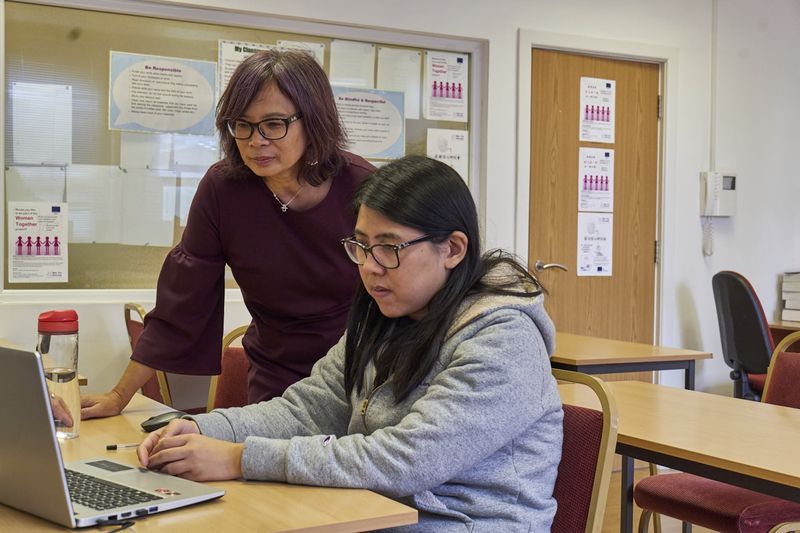
Give clear instructions, set a time limit, put students in pairs or small groups, and then genuinely step back. This is the hardest part for new teachers. The instinct is to hover and help, but the whole point is that students wrestle with the gap between what they want to say and what they can say. That struggle is the engine of the lesson.
Step 4: Monitor, don’t correct
While students work, move around and listen — but keep your pen capped. Jot down errors and good language you hear for later; do not interrupt to fix a verb mid-sentence. Correcting during the task kills the flow and trains students to wait for your rescue. Learning to hold back is closely tied to reducing your teacher talk time, and it is a skill worth drilling in yourself.
Step 5: Give planning and rehearsal time
Once the task is done, students prepare to report it to the class. This is the quiet, precise stage: they draft what they will say, ask you for the words they were missing, and polish their language. Because they now have a reason to get it right — an audience — they care about accuracy in a way no drill can force. This planning stage is what pushes fluency toward accuracy.
Step 6: Let students report
Groups present their outcome to the class, either as a short spoken report or a comparison of results. Keep it brief and genuine — the class should be listening to find out what others decided, not enduring a performance. A simple “which group’s plan was cheapest?” gives everyone a reason to pay attention.

Step 7: Close with a language focus
Now, and only now, you teach. Pull out the errors and useful phrases you noted while monitoring and turn them into a short focused stage — a bit of correction, a quick grammar point, some vocabulary the task revealed everyone was missing. Because the language is tied to something students just tried to say, it lands far harder than the same point presented cold.
Task-Based Learning Activities That Work
The method lives or dies on the quality of the task, so it helps to keep a bank of reliable ones. These four travel well across levels and class sizes.
- Spot the difference: Two students describe near-identical pictures and find the differences without looking at each other’s copy. Pure negotiation of meaning, and it forces question forms naturally.
- Plan a trip on a budget: Groups get a fixed amount of money and a list of prices, and must agree on an itinerary. Numbers, opinions, agreeing and disagreeing — all of it surfaces on its own.
- Rank and justify: Give students a list — jobs, gifts, survival items — and have them rank it as a group. The justification is where the language happens.
- Class survey: Students design a few questions, poll their classmates, and report the results. This builds naturally on informasjonsgap principles, since nobody has the answers until they ask.
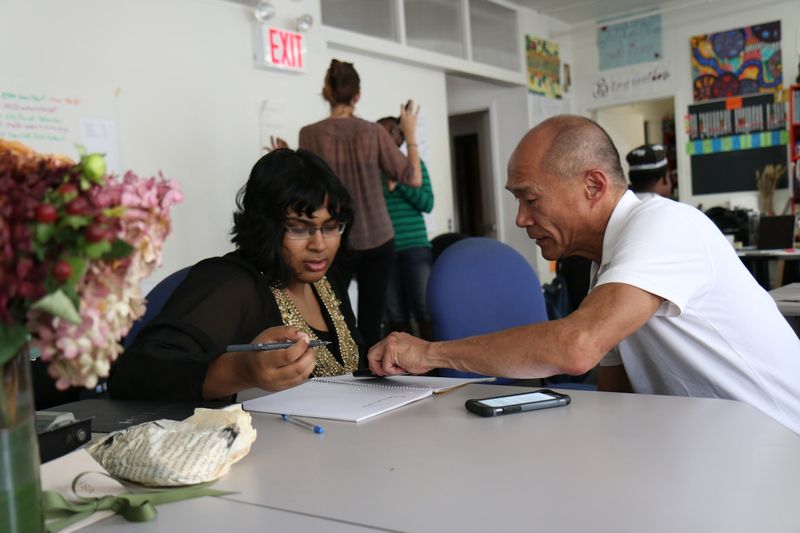
Notice the pattern: each task has a gap that only communication can close, and each ends with something concrete. If you can describe the finished product in one sentence before class, the task is probably solid.
Common Mistakes Teachers Make with Task-Based Learning
The method fails in predictable ways, and almost all of them come from the teacher not trusting the process. The most common is turning the task into a grammar exercise in disguise — if you tell students exactly which structure to use, you have quietly gone back to PPP and lost the point.

The second is skipping the language focus at the end because time ran out. Without step seven, students communicate but never sharpen, and over months their errors fossilise. The third is over-monitoring — jumping in to correct kills the risk-taking that makes the whole approach work. And the fourth is choosing tasks that are too open for the level; a beginner class handed “discuss the economy” will collapse into silence or their first language. Match the task to what students can nearly do, not what you wish they could.
Is Task-Based Learning Right for Your Classroom?
TBL shines with teenagers and adults who have some English and need to actually use it — conversation classes, business English, exam-prep speaking. It handles mixed-ability groups gracefully too, because a good task lets stronger and weaker students contribute at their own level within the same activity, something we cover more in our guide to differensiert undervisning.
Where it needs adapting is with very low levels and with rigid exam syllabuses that demand specific grammar coverage. Even there, most teachers find they can run a task-based lesson once a week alongside their regular format and watch speaking confidence climb. You do not have to convert your whole timetable to feel the difference — pick one lesson next week, choose one solid task, and hold your pen still while your students talk. That single lesson usually sells the method better than any article can.
Kilder
- TBL – Task-based Learning, TeachingEnglish (British Council) — overview of the approach and its place in ELT.
- Jane and Dave Willis, willis-elt.co.uk — the framework and definition of a task that underpins modern TBL.
- What Is Task-Based Learning? A Guide to the Popular Teaching Method, Bridge — practical teacher-facing introduction and examples.
Looking for free ESL worksheets? Browse our full collection — printable resources for every level and age group. Browse Free Worksheets →
Students can access free worksheets and reading materials at 18KEnglish.com.
Shop on Amazon
ESL Teaching Resources on Amazon →
As an Amazon Associate we earn from qualifying purchases.









 NB
NB  EN
EN  ZH
ZH  ZH_CN
ZH_CN  KO
KO  VI
VI  FR
FR  AR
AR  ES
ES  HI
HI  PT
PT  BN
BN  RU
RU  JA
JA  TR
TR  DE
DE  IT
IT  PL
PL  ID
ID  TH
TH  FA
FA  UK
UK  TL
TL  HE
HE  UR
UR  SW
SW  RO
RO  NL
NL  MS
MS  TA
TA  PS
PS  HU
HU  EL
EL  SV
SV  NN
NN  DA
DA  CS
CS  SR
SR  AM
AM