
Solar Energy | Advanced ESL Worksheet
Free, classroom-ready, one click — includes answer key on page 3.
Reading Worksheet — Advanced (F) | tahricteaches.com
For most of the twentieth century, electricity generation depended almost entirely on fossil fuels such as coal, oil, and natural gas. These resources, however, are finite, meaning that the planet’s reserves will eventually be exhausted no matter how carefully they are managed. This looming scarcity, combined with growing concern over climate change, has pushed governments and corporations alike to search for cleaner, renewable alternatives capable of meeting rising global energy demand.
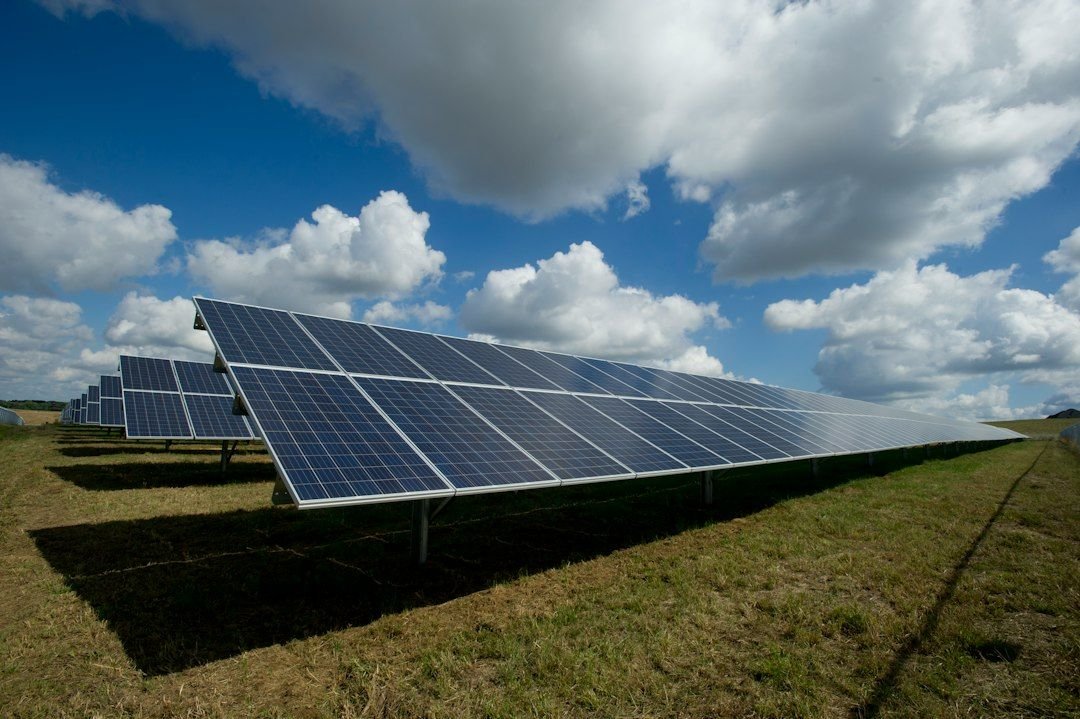
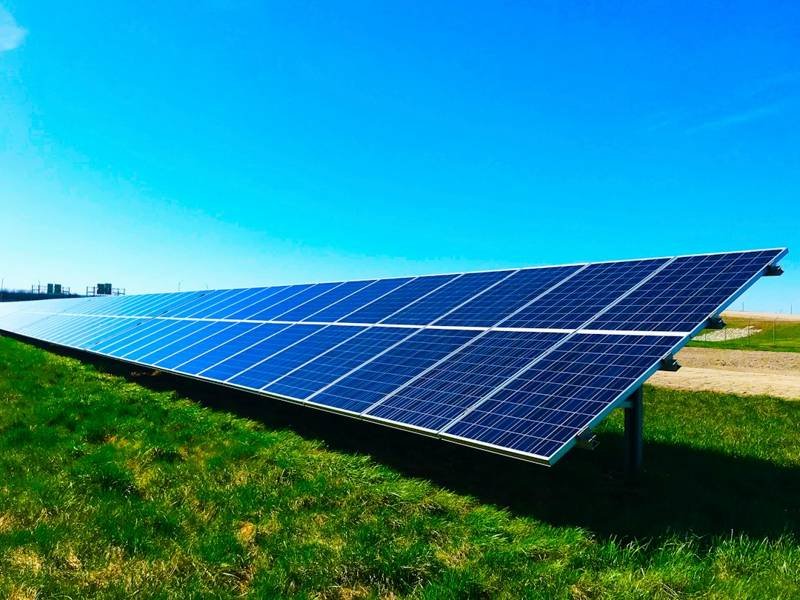
Solar power has emerged as one of the most promising solutions. Photovoltaic cells, typically made from silicon, convert sunlight directly into electrical current through a process first observed in the nineteenth century. When photons strike the semiconducting material, they dislodge electrons, generating a flow of electricity. Modern manufacturing techniques have dramatically reduced the cost of these cells, making rooftop and utility-scale installations increasingly common across both wealthy and developing nations.
Despite these advances, solar generation remains intermittent by nature, since panels produce no electricity after sunset and far less output during cloudy weather. Engineers have responded by developing large battery arrays and smart grid technologies that store excess daytime power for use during periods of low sunlight. Without such storage solutions, utilities cannot guarantee a stable supply, which is why grid reliability remains one of the central technical challenges facing widespread adoption.
Financial support has also played a decisive role in solar’s growth. Many national governments offer a subsidy or tax credit to homeowners and businesses that install panels, lowering the upfront cost and shortening the payback period considerably. These incentive programs, paired with falling equipment prices, have transformed solar from a niche technology into a mainstream investment option for millions of property owners worldwide.
Looking ahead, many architects now design new buildings with integrated solar roofing, while older structures can be economically upgraded through a straightforward retrofit. Such efforts form part of a broader shift toward a more sustainable energy system, one that reduces dependence on imported fuel and lowers carbon emissions. If current cost trends continue, solar power could soon become the cheapest source of electricity in most regions of the world.
A. Woordenschat
- finite ____
- photovoltaic ____
- intermittent ____
- subsidy ____
- retrofit ____
- sustainable ____
- emission ____
- viable ____
- infrastructure ____
- incentive ____
- a. something that motivates or encourages action
- b. financial aid given by a government to support an activity
- c. basic physical systems needed for a society to function, such as roads or power grids
- d. capable of succeeding or working in practice
- e. add new parts or technology to something built earlier
- f. occurring at irregular intervals; stopping and starting
- g. limited in size or extent; not endless
- h. gas or substance released into the air
- i. able to continue over time without harming resources or the environment
- j. relating to the direct conversion of light into electricity
B. Waar of onwaar
- ____ Fossil fuel reserves are considered finite.
- ____ Photovoltaic cells convert sunlight directly into electricity.
- ____ Solar panels generate the same amount of power at night as during the day.
- ____ Battery storage helps address the intermittent nature of solar power.
- ____ Government subsidies have made solar installation more affordable for many households.
- ____ Solar panel costs have risen sharply over the past decade.
- ____ Retrofitting older buildings with solar panels is impossible.
- ____ The passage suggests solar power could become the cheapest electricity source in many regions.
- ____ According to the passage, climate change concerns have had no influence on the shift to renewable energy.
- ____ Smart grid technologies are mentioned as a way to manage solar power’s variability.
C. Vul de lege plekken in
- Because oil and coal are ___, scientists are seeking renewable replacements.
- The ___ cell converts sunlight into usable electrical current.
- Because sunlight is ___, engineers rely on batteries to store power for nighttime use.
- A government ___ can significantly lower the cost of installing solar panels.
- Many old buildings can undergo a ___ to add solar panels without major reconstruction.
D. Begripsvragen
- Why are fossil fuels considered an unreliable long-term energy source?
- How do photovoltaic cells generate electricity?
- What role do government subsidies play in the growth of solar energy?
E. Discussievragen
- Do you think governments should continue offering subsidies for solar energy, or should the market develop without financial support? Why?
- What are some challenges your country might face in switching from fossil fuels to solar power?
Answer Key (click to reveal)
A. Woordenschat: 1-g, 2-j, 3-f, 4-b, 5-e, 6-i, 7-h, 8-d, 9-c, 10-a
B. Waar/Onwaar: 1-T, 2-T, 3-F, 4-T, 5-T, 6-F, 7-F, 8-T, 9-F, 10-T
C. Vul de lege plekken in: 1-finite, 2-photovoltaic, 3-intermittent, 4-subsidy, 5-retrofit
D. Begrip:
- Because they are finite resources that will eventually run out, and burning them contributes to climate change.
- Sunlight striking the semiconducting material dislodges electrons, creating a flow of electrical current.
- They lower the upfront cost of installing panels, making solar power more affordable and shortening the payback period for property owners.
© Tahric Teaches | tahricteaches.com







 NL
NL  EN
EN  ZH
ZH  ZH_CN
ZH_CN  KO
KO  VI
VI  FR
FR  AR
AR  ES
ES  HI
HI  PT
PT  BN
BN  RU
RU  JA
JA  TR
TR  DE
DE  IT
IT  PL
PL  ID
ID  TH
TH  FA
FA  UK
UK  TL
TL  HE
HE  UR
UR  SW
SW  RO
RO  MS
MS  TA
TA  PS
PS  HU
HU  EL
EL  SV
SV  NB
NB  NN
NN  DA
DA  CS
CS  SR
SR  AM
AM