
Did My Student Use AI? A Teacher’s Detection Guide
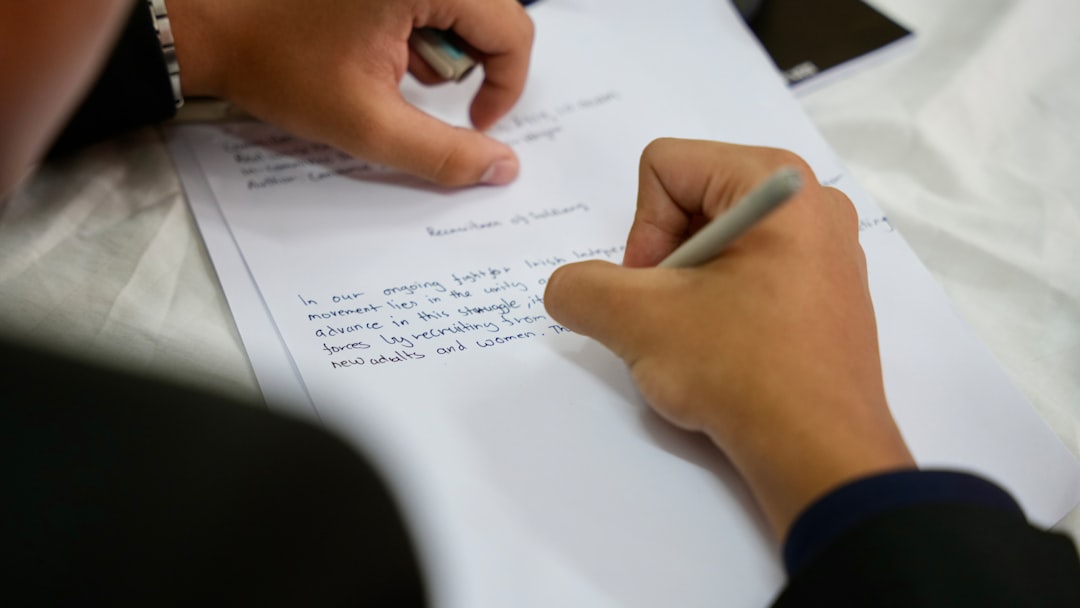
You collect the writing assignment, start reading, and something feels off. The grammar is perfect. The vocabulary is varied and sophisticated. The structure is textbook clean. But there is no voice — no awkward phrasing, no half-formed idea that struggled to the surface, no personal fingerprint. You have been teaching long enough to know what your B2 students write like. This is not it.
You are probably not wrong. AI-generated student writing is now a daily reality in English language classrooms worldwide, and the question every ESL teacher is asking has shifted from whether it could happen to how to know when it does. This guide gives you practical answers — not algorithms to run, but frameworks to think with.
The Detection Dilemma ESL Teachers Now Face
For most of academic history, plagiarism detection meant checking whether a student had copied someone else’s existing text. Tools like Turnitin worked well for that. Now a student can generate entirely original text — original in the sense that it has never existed before — in under ten seconds, and no detection algorithm can flag it with certainty.

ESL teachers occupy an unusual position in this new landscape. Unlike their counterparts teaching native-speaking students, they are already accustomed to measuring a wide gap between a student’s productive and receptive ability. A B1 student can understand sophisticated input but writes at a much lower level — that gap is normal, even healthy. But when a student submits writing that sits squarely at C1 and you have watched them struggle at B2 in class for three months, something has changed.
The challenge is figuring out what changed, and why.
Why ESL Students Present a Unique Detection Challenge
AI detection in ESL classrooms is harder than in L1 contexts, for reasons that pull in opposite directions at the same time.
First, non-native speaker writing already contains patterns that AI detection tools associate with human writing: grammatical errors, non-standard sentence structures, direct translations from the L1, and unexpected register shifts. A lower-level student who uses AI and then manually edits the result — introducing their own mistakes back in — can inadvertently make the text look more human to a detection algorithm.
Second, some students use AI in genuinely grey-zone ways: to check grammar after writing a draft, to look up vocabulary, or to get feedback on their structure before revising. Whether these uses constitute academic dishonesty depends on the teacher’s policy, not on any detection tool.
Third, and most critically, many AI detection tools flag non-native writing as AI-generated even when it is entirely the student’s own work. Research from multiple universities has found that tools like GPTZero and Turnitin’s AI detector disproportionately flag ESL writing as machine-generated — because formal, hedged, textbook-influenced English reads as artificially constructed to these systems. This false-positive problem is significant enough that a detection tool alone cannot be the basis for an accusation.

Linguistic Patterns That Reveal AI-Generated Writing
The most reliable detection still runs through your own trained eye. After years of reading student writing, you have built an implicit model of what your students’ productive range looks like at each level. Trust that instinct — and then verify it against specific signals.
The Register Problem
AI-generated text defaults to a formal, hedged, mildly academic register regardless of the prompt. Ask a student to write a personal reflection on their learning experience and AI will produce something that reads like a policy brief. Notice the verbs: AI uses words like facilitate, demonstrate, indicate, and highlight where a B2 student would write help, show, mean, and point to. Pay attention to hedging phrases: it is important to note that, it is worth considering, in this context. These are AI default patterns. A sudden concentration of them in a student who has never hedged before is a meaningful signal.
The Missing Error Signature
Every developing L2 writer has what you might call an error signature — a characteristic pattern of mistakes that reflects their L1 background, their current interlanguage stage, and their specific knowledge gaps. A Mandarin-speaking student typically struggles with articles, aspect markers, and certain subject-verb agreement structures. A Korean speaker makes different errors. A Japanese speaker, different again.
When a piece of writing has no error signature — when it is grammatically clean across the board, with no traces of the student’s usual transfer patterns — that absence is data. AI does not have an L1. It does not confuse article systems. It does not drop the copula in the wrong places. If your student’s submitted work shows none of their characteristic errors, you are right to look more closely.

Generic Examples and Hollow Specificity
Ask students to write about a challenge they have faced learning English, and AI will produce generic struggles: difficulty understanding native speakers, complex grammar rules. Ask a real student the same question and you get specifics — a particular movie, a conversation that went wrong, a teacher they remember. Personal writing has texture: embarrassing details, emotional weight, moments only that person could know.
AI examples are instructive but hollow. The evidence is generic (many learners find pronunciation challenging) rather than evidential (a specific mispronunciation in a job interview that went unnoticed for two days). When a student’s personal essay contains no actual personal content, you have found something worth addressing.
Beyond the Text: Behavioral Signals Worth Noting
Good detection is not only about the document — it is about the process that produced it.
Watch for a sudden performance gap: the student who answers at B1 level in class discussions submits writing that reads at C1. This mismatch is not impossible — some students genuinely perform better in writing than in speech — but a consistent gap across multiple assignments carries more weight than a single outlier.
Watch the drafting timeline. If you collect process work — pre-writing notes, outlines, rough drafts — you have natural checkpoints. A student who shows you a half-formed paragraph one week and submits a polished 600-word essay the next has either worked very hard or had help. The drafts themselves tell you something: AI-generated text does not come with scribbled-out ideas and margin notes.
If you have the option, a brief oral follow-up is one of the most reliable verification methods available to you. Ask the student to explain a claim they made in their essay, describe what they meant by a particular word choice, or walk you through how they developed their argument. A student who wrote the essay can do this. A student who submitted output they do not understand cannot.

AI Detection Tools — Useful, But Not Infallible
Several AI detection tools are now in active use across educational institutions. The major names include Turnitin’s AI writing detection feature, GPTZero, Originality.ai, and Copyleaks. All of them work by identifying statistical patterns in text — specifically, the predictability and uniformity of word choices that characterize AI output.
These tools are better than nothing. A consistently high confidence score across multiple assignments from the same student is a meaningful data point. But treat them as one signal among several, not as a verdict. The documented false-positive rate for ESL writers is significant, and no tool should be the sole basis for a disciplinary conversation with a student.
If your institution uses Turnitin, check whether the AI detection feature is enabled and whether threshold settings have been calibrated for an ESL population. Default sensitivity settings developed for native-speaker writing may generate unacceptably high false-positive rates in your context. Before flagging a student, run the same text through two different tools. If the scores diverge substantially, that divergence is itself information.
Designing Your Way Out of the Problem
The most effective long-term response to AI use in student writing is assessment design — building assignments that are harder to outsource in the first place. Detection is reactive. Design is preventive.
Personalization is your most powerful lever. AI cannot write about the conversation you had with your class last Tuesday. It cannot reference the specific feedback you gave during a peer review session. It cannot describe what happened when your class watched a video together and someone asked a question that changed the direction of the lesson. Assignments that require direct engagement with classroom-specific content are structurally AI-resistant — not because AI could not produce something plausible, but because plausible is not specific enough to pass your scrutiny.
In-class writing tasks remain the most reliable baseline. Even a single timed 20-minute paragraph on a topic related to your assignment gives you a reference sample in the student’s authentic hand. When a student’s out-of-class writing is dramatically stronger than their in-class writing, you have a concrete, defensible data point — and a conversation you can ground in evidence rather than suspicion.
Process-oriented assessment shifts the grade away from a polished final product toward the thinking that went into it. Grade the annotated bibliography. Grade the outline with a brief rationale for each section. Grade peer review comments. Grade a recorded think-aloud while the student reads their own draft. When the process is the object of assessment, submitting AI output provides no advantage because the process itself was never outsourced.
Finally, consider oral components. A brief two-minute verbal summary of a submitted essay, conducted at the start of the following class, takes almost no additional class time and immediately reveals whether a student understands what they submitted. Frame it as a natural extension of the writing — because that is what it is.

The Conversation You Need to Have
If you have strong reason to believe a student submitted AI-generated work without authorization, how you handle that conversation matters as much as what you say.
Start by assuming you might be wrong. Come in with questions, not accusations. Something like: I noticed some differences between your usual writing and this submission — can you walk me through how you approached this assignment? That question works for both the innocent student and the one who needs to acknowledge something. It creates space without closing options.
Be explicit in your course documentation about what AI use is and is not permitted. Many students are genuinely uncertain about where the line falls. Using ChatGPT to check grammar after writing a draft feels different from using it to generate a full draft and submitting it as their own work. Using it to brainstorm ideas and then writing from scratch feels different still. A clear policy — stated at the start of the course and returned to when you assign writing tasks — prevents a significant portion of the problem from arising.
When you do have the difficult conversation, keep the focus on the learning rather than the infraction: the concern here is not the tool, it is that you do not know what the student learned from the assignment. That framing is more productive than a punitive one, and it redirects to what actually matters in a language classroom: the student’s developing competence, not the score on a single task. A student who used AI to avoid writing will eventually face an exam or an interview or a workplace where AI cannot speak for them. The goal is to make sure they know how to get there.
Bronnen
- Turnitin — AI writing detection documentation and institutional guidance for educators
- GPTZero — AI text detection tool widely used in educational settings
- TESOL Internationale Vereniging — Professional resources for ESL/EFL educators including ongoing guidance on AI in language teaching








 NL
NL  EN
EN  ZH
ZH  ZH_CN
ZH_CN  KO
KO  VI
VI  FR
FR  AR
AR  ES
ES  HI
HI  PT
PT  BN
BN  RU
RU  JA
JA  TR
TR  DE
DE  IT
IT  PL
PL  ID
ID  TH
TH  FA
FA  UK
UK  TL
TL  HE
HE  UR
UR  SW
SW  RO
RO  MS
MS  TA
TA  PS
PS  HU
HU  EL
EL  SV
SV  NB
NB  NN
NN  DA
DA  CS
CS  SR
SR  AM
AM