
Why Some ESL Activities Work and Others Fall Flat
Every teacher has a shelf of activities that looked brilliant on paper and died the moment they hit the classroom. The card game that dissolved into first-language chatter. The “fun” role-play that three confident students hijacked while the rest hid behind their notebooks. After enough of these, you start to notice a pattern: the activity itself is rarely the problem. What separates ESL activities that actually work from the ones that fall flat is almost never the topic or the materials — it is the thinking underneath them.
This guide is not another numbered list to print and forget. Instead, it walks through the design principles that make any activity earn its place in your lesson, so you can look at the fifty ideas already floating around your staffroom and instantly tell which ones will land. Once you see the underlying logic, you stop collecting activities and start engineering them.

The Line Between Busywork and Real Practice
The first question to ask of any activity is brutally simple: what does a student have to produceren to finish it? If the answer is “copy a sentence” or “circle the correct word fifty times,” you are looking at busywork. It keeps hands moving and rooms quiet, but it rarely builds the ability to use language under real conditions. Real practice forces a learner to make choices — which word, which tense, which register — and to do so quickly enough that the language has to come from somewhere closer to instinct than to a grammar chart.
This is the heart of communicative and task-based language teaching: learners acquire language by using it to accomplish something, not by drilling it in isolation. A worksheet asking students to fill in twenty gaps with the past simple trains recognition. A task asking them to interview a partner about last weekend and report the three most surprising answers trains production. Both have a place, but only the second resembles what students will actually do outside the room. When you evaluate an activity, picture the busiest, most uncertain learner in your class and ask whether the activity makes them generate language or merely shuffle it.
Activities Work When the Goal Is Visible
An activity that works has a goal students can see and reach. Vague instructions like “practice the vocabulary” leave learners guessing, and guessing learners default to silence or to their first language. Compare that to a goal with a clear finish line: “In four minutes, find three classmates who have done something you have never done.” The grammar target (present perfect) is baked in, the outcome is concrete, and everyone knows when they are done.
This is why information-gap activities are so durable. When Student A holds half the train timetable and Student B holds the other half, neither can complete the task without genuinely communicating. The gap creates a real reason to speak, and a real reason to listen carefully to the answer. The same logic powers “find the differences” picture tasks, ranking discussions where pairs must agree on an order, and surveys where each student owns a unique question. The activity works because the language is the bridge to the goal, not a hoop to jump through on the way to nothing.
Match the Activity to the Stage of the Lesson
Even a strong activity fails if it shows up at the wrong moment. A lesson has a natural arc, and each stage asks for a different kind of task. Dropping a free-flowing debate on students before they have the language to fuel it produces frustration; saving a tightly controlled drill for the end of class wastes the energy you spent building toward fluency.
Openers that wake the brain up
The first five minutes set the temperature for everything after. Effective warmers are low-stakes, fast, and they recycle language students nearly have. A quick board race, a two-truths-and-a-lie round, or a “guess the question” game where you give the answer and students reverse-engineer it all do the same job: they shift the room from passive to active before the real lesson begins. The trick is to keep the cognitive load light so confidence, not accuracy, is the point.
Controlled practice that builds safety
After you present new language, students need a protected space to handle it before the stakes rise. This is where matching tasks, sentence transformations, and structured pair drills earn their keep. They are not glamorous, but they let learners rehearse form with a high chance of success, which is exactly what a nervous beginner needs. The key is to keep this stage short. Controlled practice is a warm-up for production, not the destination.
Production that lets language fly
The payoff stage is where students use the language freely to do something real: solve a problem, tell a story, negotiate a plan, persuade a partner. Role-plays, simulations, project tasks, and open discussions belong here. By now learners have the tools, so the activity can afford to be messy and learner-led. Mistakes at this stage are data, not disasters — note them for later feedback rather than interrupting the flow.

Getting Every Student Talking, Not Just the Brave Ones
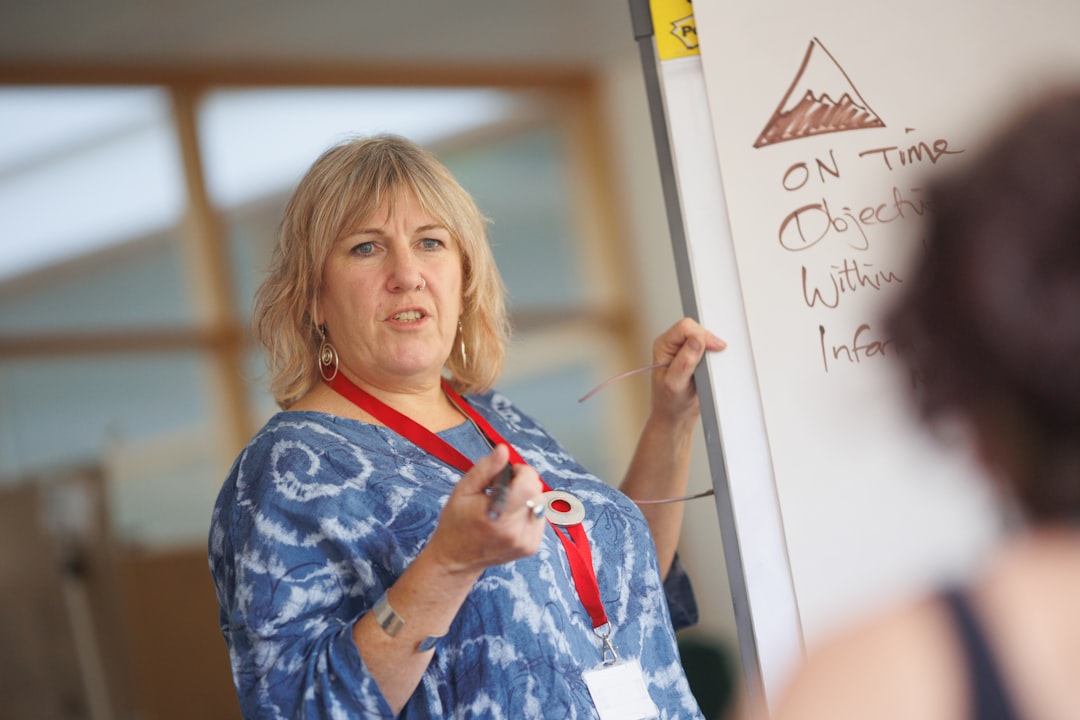
The single biggest reason activities fall flat is uneven participation. A whole-class question-and-answer feels productive from the front of the room, but do the math: in a forty-minute lesson with twenty students, open-class discussion gives each learner well under a minute of speaking time. The fix is structural, not motivational. You do not need more enthusiastic students; you need a design that makes silence impossible.
Pair and small-group formats multiply talk time instantly, because four conversations of two beat one conversation of eight. Assigning genuine roles — a timekeeper, a note-taker, a reporter — means everyone owns a piece of the outcome. Techniques like “think-pair-share” give learners a moment to rehearse privately before speaking, which dramatically lowers the anxiety that keeps weaker students quiet. And rotating partners through a mingle or a “speed-friending” format means students repeat the same language several times with fresh listeners, building fluency through low-pressure repetition.
If you can answer “what is every single student doing right now?” with a specific verb, the activity is built well. If the honest answer is “watching,” redesign it.

Low-Prep Ideas That Punch Above Their Weight
The activities that survive in real teaching are rarely the elaborate ones with laminated cards and a forty-minute setup. They are the flexible workhorses you can deploy with nothing but a whiteboard and a question. A handful of formats can be re-skinned endlessly to fit any topic or level:
- Running dictation — pairs split into a reader and a writer; the reader crosses the room, memorizes a line of text, and dictates it back, hitting reading, memory, speaking, and writing in one loop.
- Board races — teams sprint to write as many words, collocations, or correct sentences as they can in two minutes, turning revision into adrenaline.
- Hot seat — one student faces away from the board and guesses the word their team describes, forcing real-time circumlocution.
- Four corners — label corners with opinions and have students physically move to defend their stance, fusing movement with persuasion.
- Disappearing text — a short dialogue on the board is erased word by word as students reread it, until they are reciting from memory.
None of these need printing, and each one scales from absolute beginners to advanced exam classes by swapping the language inside it. That adaptability is exactly why they last while the single-use novelty games gather dust.

Adapting One Activity for a Mixed-Level Class
Most classrooms are not level-flat, and an activity that works for the middle of the class can bore the strong students and drown the weak ones. The solution is not to run three different activities; it is to build flexibility into one. Differentiation by task means everyone does the same activity but the bar moves: in a survey task, stronger students might be required to add follow-up questions, while emerging learners work from a sentence frame.
Support scaffolds — word banks, sentence starters, model dialogues — let weaker students join the same task without being exposed. Strategic pairing matters too: sometimes you want a stronger student to model for a weaker one, and sometimes you want like-with-like so confident learners can stretch. The activity stays the same; what changes is the amount of support each learner leans on, which keeps everyone in their productive zone of challenge rather than coasting or shutting down.
Knowing Whether It Actually Worked
An activity that looks lively is not the same as an activity that taught something. The room can hum with energy while students happily produce the same three errors for ten minutes. To know whether an activity worked, you need a quick read on output, not just engagement. Monitoring is the unglamorous core of this: while students work, you circulate quietly, listening for the target language and noting both wins and recurring slips on a scrap of paper.
That note becomes your feedback stage. Reformulating a few common errors on the board after the task — without naming names — closes the loop and tells students the activity had a point beyond filling time. A fast exit check, where each learner produces one sentence using the target language as they pack up, gives you a final pulse on whether the learning stuck. If most of the class can produce it cleanly, the activity worked. If not, you know exactly what to revisit tomorrow.
Building Your Own Activity Bank
Once you can read activities through these lenses — clear goal, right stage, maximum participation, adaptable, measurable — you stop hunting for new ones and start building a personal bank of formats you trust. The smartest move is to organize that bank not by topic but by function: a folder of warmers, a set of information-gap frames, a few reliable production tasks. Topics change every lesson; the structures stay the same. A “find someone who” frame works equally well for present perfect, hobbies, or job interviews — you just refill it.
This is also where commercial resources earn their place. A well-designed activity book or a deck of conversation cards is worth the money when it gives you ready-made frames you can adapt, not scripts you follow blindly. If you want to stock your shelf, browse ESL classroom activity books or a set of ESL conversation cards and judge each one against the same questions you now ask of everything: does it make students produce, can I move the bar for mixed levels, and will I actually reach for it on a Tuesday morning?
The fifty activities that “actually work” in any classroom are not a fixed list someone hands you. They are whatever survives this filter in your hands, with your students, on a real teaching day. Master the filter, and you will never again stand in front of a class watching a great idea quietly fall apart.
Bronnen
- TeachingEnglish — British Council / BBC
- Cambridge University Press — ELT resources and research
- Communicative Language Teaching — Wikipedia
- Task-Based Language Learning — Wikipedia








 NL
NL  EN
EN  ZH
ZH  ZH_CN
ZH_CN  KO
KO  VI
VI  FR
FR  AR
AR  ES
ES  HI
HI  PT
PT  BN
BN  RU
RU  JA
JA  TR
TR  DE
DE  IT
IT  PL
PL  ID
ID  TH
TH  FA
FA  UK
UK  TL
TL  HE
HE  UR
UR  SW
SW  RO
RO  MS
MS  TA
TA  PS
PS  HU
HU  EL
EL  SV
SV  NB
NB  NN
NN  DA
DA  CS
CS  SR
SR  AM
AM