ESL Teaching Strategies That Actually Work: A Practical Guide for Modern Classrooms
Walk into any ESL classroom on any continent and you’ll see the same fundamental challenge: a teacher trying to bridge the gap between a textbook and a living, breathing language. The strategies that actually close that gap aren’t always the flashiest ones. They’re the methods that respect how learners acquire language, leverage what motivates students, and adapt to the real constraints of a 50-minute lesson with 25 mixed-level learners.
This guide pulls together the ESL teaching strategies that consistently produce results across age groups, proficiency levels, and contexts — from cram schools in Taipei to community colleges in Toronto. Whether you’re prepping students for TOEIC, IELTS, or simply trying to get a quiet teen to ask for the bathroom in English, the principles below will sharpen your practice this week.
What Makes an ESL Teaching Strategy Effective?
Before listing techniques, it helps to define what we mean by “effective.” A good ESL strategy does three things: it maximizes student talk time, it provides comprehensible input that’s just slightly above the learner’s current level, and it gives students a reason to communicate that goes beyond getting a checkmark from the teacher.
Stephen Krashen’s input hypothesis — sometimes called the i+1 principle — remains one of the most useful frameworks in the field. Pair that with Swain’s output hypothesis (learners need to produce language, not just receive it) and you have the backbone of nearly every modern ESL methodology worth using.
Three Filters for Choosing a Strategy
- Engagement: Will students lean in or check out?
- Output: How much will each student speak, write, or produce?
- Transfer: Can they use this language outside the classroom tomorrow?
If a strategy fails any of these three, it’s a candidate for retirement, no matter how clever it looks on paper.
Communicative Language Teaching (CLT): The Foundation
Communicative Language Teaching has dominated ESL methodology for over four decades, and for good reason. CLT prioritizes meaning over form, fluency over accuracy in the early stages, and authentic communication over rote drills. The teacher becomes a facilitator rather than a lecturer.
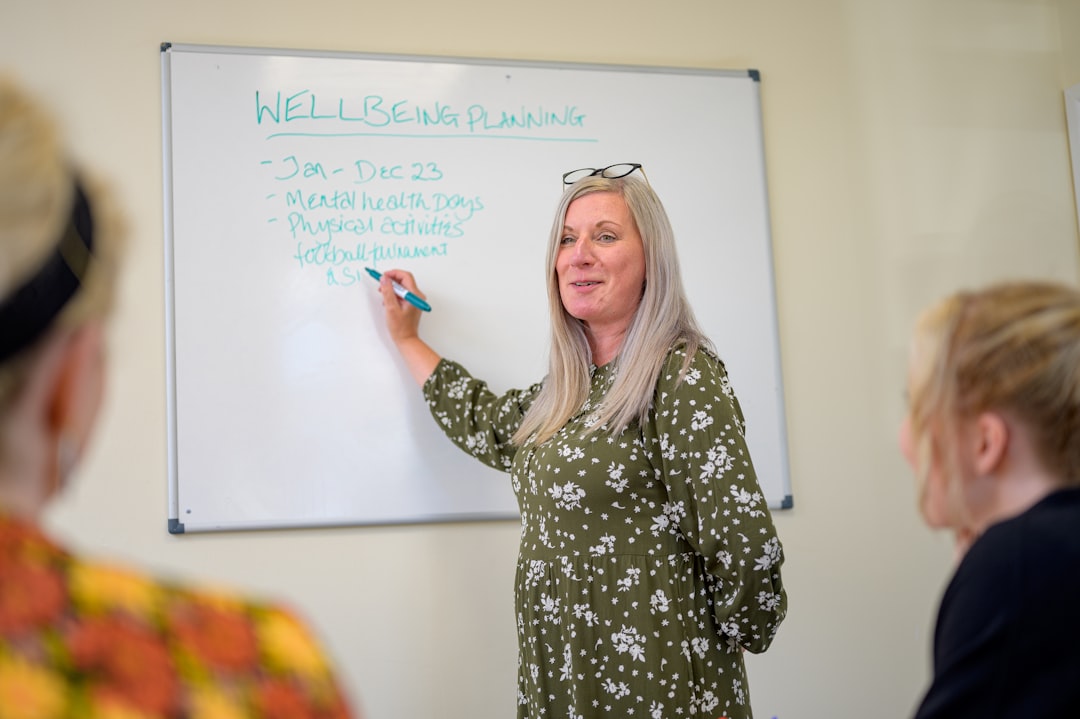
In practice, CLT looks like information-gap activities, role plays, problem-solving tasks, and discussions tied to learners’ real lives. A CLT lesson on past tense doesn’t begin with a verb chart — it begins with students interviewing each other about what they did last weekend, then surfacing the grammar inductively.
Quick Wins With CLT
- Find Someone Who: A grid of statements (“…has eaten sushi,” “…lived abroad”) that students complete by mingling and asking questions.
- Two Truths and a Lie: Generates spontaneous questions, follow-ups, and reactions — exactly what survival English requires.
- Information Gap: Pair A has half the data, Pair B has the other half. They must speak to complete the task.
Task-Based Language Teaching (TBLT)
Task-Based Language Teaching takes CLT a step further by organizing entire lessons around a meaningful task with a tangible outcome. Instead of “today we’ll study the present perfect,” the lesson becomes “today you’ll plan a weekend trip with your partner and present it to the class.” The grammar emerges from the task rather than the other way around.
TBLT works because it mirrors how adults actually use language outside the classroom. Nobody walks into a Starbucks thinking about modal verbs — they think about getting coffee. A well-designed task locks students into a communicative goal, and language becomes the tool, not the goal.
A Sample TBLT Sequence
- Pre-task: Activate vocabulary and schemata. Show a menu, brainstorm food words, model useful phrases.
- Taak: Pairs role-play ordering at a restaurant, with one student as customer and one as server.
- Post-task: Focus on form. Surface errors you heard, drill problem structures, then run the task again with new partners.
Total Physical Response (TPR) for Young Learners and Beginners
Developed by James Asher in the 1970s, Total Physical Response remains one of the most powerful strategies for absolute beginners and young learners. The core idea: learners acquire language faster when they physically respond to it before they’re asked to produce it.
TPR isn’t just “stand up, sit down.” Skilled teachers use it to teach prepositions (put the pencil under the book), action verbs (jump, swim, climb), classroom commands, and even abstract sequences through chained instructions. The silent period it permits is exactly what nervous beginners need.

The Presentation-Practice-Production (PPP) Model
PPP gets criticized in academic circles, but in the trenches of an actual classroom — especially with exam-prep students — it remains a workhorse. Done well, PPP gives students structure, repetition, and gradual release of responsibility.
- Presentation: Introduce the target language in context. A short reading, dialogue, or video clip works better than a grammar rule on the board.
- Practice: Controlled drills, gap-fills, sentence transformations. Accuracy matters here.
- Production: Free-form output where students use the new structure in personalized contexts. Fluency takes the lead.
The mistake most new teachers make is spending 80% of class time on Presentation and Practice, leaving Production as a rushed afterthought. Flip that ratio.
Strategies for TOEIC and IELTS Preparation
Exam-prep classes have a different gravity than general English lessons. Students want measurable score gains, and they want them yesterday. The strategies below balance test-specific skills with the underlying language competence that score gains actually require.
TOEIC: Listening and Reading at Speed
- Timed micro-practice: 10-question listening sets at full speed, every single class. Build stamina through repetition.
- Distractor analysis: Don’t just review correct answers. Have students explain why each wrong option is wrong. This is where the real test-taking skill lives.
- Part 7 chunking: Teach students to read questions first, then scan the passage for relevant chunks. Reading every word kills time.
IELTS: Productive Skills Under Pressure
- Speaking Part 2 timing drills: Two-minute monologues with a stopwatch, recorded and reviewed. The cue card structure must become second nature.
- Writing Task 2 templates with flexibility: Give students a paragraph skeleton, then push them to vary it across topics. Rigid templates score band 6; flexible structures score band 7+.
- Lexical resource expansion: Build topic-specific word banks (environment, technology, education) over weeks, not the night before the test.
Differentiation: Teaching Mixed-Level Classes
Almost every ESL classroom is mixed-level, even when the placement test says otherwise. The teacher who pretends everyone is on the same page loses half the room within ten minutes. Differentiation isn’t a luxury — it’s survival.
Practical Differentiation Moves
- Tiered tasks: Same topic, three difficulty levels. Stronger students tackle the analytical version; weaker students get a scaffolded version with sentence starters.
- Strategic pairing: Pair stronger with weaker for some tasks (peer teaching), and same-level for others (so weaker students get to lead too).
- Extension menus: Fast finishers grab a card from a menu of optional challenges. No more “I’m done” boredom.
Vocabulary Acquisition: Beyond the Word List
Telling students to “memorize 20 words by Friday” is the academic equivalent of telling someone to lose weight by eating less. Technically correct, completely useless. Effective vocabulary instruction works on encounter frequency, depth of processing, and retrieval practice.
Paul Nation’s research suggests learners need 10–16 meaningful encounters with a word before it sticks. That means recycling vocabulary across multiple lessons, in multiple modalities, and crucially, requiring students to retrieve it (not just recognize it).

Vocabulary Tactics That Stick
- Spaced retrieval: Quick warm-up quizzes pulling from last week, last month, and yesterday. Apps like Quizlet or Anki automate this.
- Word walls with categories: Living, breathing classroom displays organized by topic, not alphabet.
- Lexical chunks over single words: Teach “make a decision,” “take responsibility,” “on the other hand” — collocations students can plug into speaking and writing immediately.
Using Technology Without Becoming Its Hostage
Edtech can amplify good teaching or paper over bad teaching. The strategy isn’t “use more apps” — it’s “use the right tool for the right outcome.” A few categories worth integrating:
- AI conversation partners: Tools like ChatGPT or specialized ESL apps give shy students unlimited speaking practice without judgment.
- Authentic listening sources: YouTube, podcasts, TED-Ed clips. Far better than scripted textbook audio for intermediate-plus learners.
- Asynchronous video feedback: Have students record speaking tasks and submit them. You give voice feedback in your own time, students get personalized coaching.
Classroom Management for Language Learning
Discipline issues in ESL classrooms often trace back to one of three sources: the task is too easy, the task is too hard, or students don’t see why they’re doing it. Address those root causes and most behavior problems evaporate.

Routines That Reduce Friction
- Consistent lesson openers: The same 5-minute warmer every class lowers anxiety and signals “English mode on.”
- Visible task instructions: Always written, always with a time limit, always with a clear endpoint. Verbal-only instructions get lost in translation.
- Quick transitions: Have a signal (clap pattern, music cue) that means “finish your sentence and look up.” Saves five minutes per lesson.
Assessment That Drives Learning
The best assessment isn’t the one with the most decimal points — it’s the one that tells students exactly what to do next. Formative assessment, woven into every lesson, beats high-stakes summative testing for actual language gains.
- Uitgangstickets: Three sentences using today’s target language, written on a slip and handed in. Five minutes, enormous data.
- Self-assessment rubrics: Students rate their own performance against can-do statements. Builds metacognition.
- Error correction codes: Instead of marking everything red, use symbols (T for tense, WO for word order, sp for spelling). Students do the cognitive work of fixing.
Building Student Motivation Long-Term
The single biggest predictor of language learning success isn’t intelligence, age, or class size. It’s sustained motivation. Zoltán Dörnyei’s L2 Motivational Self System gives teachers a useful frame: students learn faster when they have a vivid “ideal L2 self” — a clear vision of who they’ll be when they speak English well.

Help students build that vision. Ask them to write a letter to themselves five years from now, fluent. Show them learners from similar backgrounds who succeeded. Connect classroom work to concrete future moments — a job interview, a study-abroad placement, a conversation with a future colleague.
Alles samenvoegen
No single ESL teaching strategy wins every classroom. The teachers who consistently produce strong results aren’t the ones with the most exotic methodology — they’re the ones who diagnose what their specific students need and pull the right tool from a deep toolkit.
Start with one strategy from this guide that you don’t currently use. Run it for two weeks. Track what changes — student talk time, engagement, output quality. Then add another. Strategy stacking, done deliberately, is how teaching practice compounds over years.
The students in front of you don’t need a perfect lesson. They need a teacher who’s still curious about getting better. Pick one thing this week, and run it.





 NL
NL  EN
EN  ZH
ZH  ZH_CN
ZH_CN  KO
KO  VI
VI  FR
FR  AR
AR  ES
ES  HI
HI  PT
PT  BN
BN  RU
RU  JA
JA  TR
TR  DE
DE  IT
IT  PL
PL  ID
ID  TH
TH  FA
FA  UK
UK  TL
TL  HE
HE  UR
UR  SW
SW  RO
RO  MS
MS  TA
TA  PS
PS  HU
HU  EL
EL  SV
SV  NB
NB  NN
NN  DA
DA  CS
CS  SR
SR  AM
AM