
Visually Impaired ESL Students: 8 Strategies
A student who lost most of his sight to retinitis pigmentosa at age nine spent his first ESL semester failing every vocabulary quiz built around flashcard pictures — not because the words were too hard, but because the test format assumed a working visual channel he didn’t have. Once his teacher switched to real objects and audio drills, his scores matched the class average within six weeks. That gap between what a visually impaired student knows and what a sighted-default classroom can measure is the problem these eight strategies are built to close.
Roughly 11% of general education students in the US are English language learners, and Teachers of the Visually Impaired (TVIs) routinely report low confidence working with that overlap — blind or low-vision students who are also acquiring English as a second language.[1] Most ESL training never covers it, so the strategies below pull from actual TVI and bilingual-literacy practice rather than generic classroom advice.

1. Teach Vocabulary With Real Objects, Not Pictures
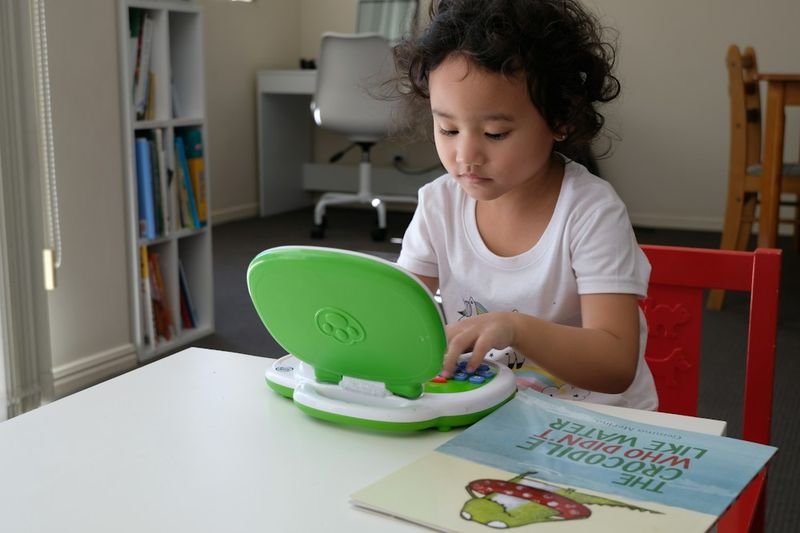
Every ESL vocabulary lesson that leans on flashcards, photos, or “match the picture to the word” worksheets needs a tactile substitute for a visually impaired student. Bring an actual pot, not a laminated photo of one, when teaching kitchen vocabulary — by touching and exploring the object, the student forms the same word-to-concept link a sighted student gets from a glance.[2] Plastic toy versions are a weak substitute; use the real thing whenever size and safety allow.
This matters more in ESL than in general education because the student isn’t just missing a visual channel — they’re building a brand-new vocabulary system without it. Skip activities built entirely around sight: “spot the difference,” “describe the photo,” and “label the diagram” all need a tactile or verbal rework, not a verbal description bolted on as an afterthought.

2. Build Literacy Through Braille, Not Just Audio
Audio-only instruction feels like the obvious accommodation, but it quietly skips the literacy half of language learning. TVI and bilingual literacy specialist Conchita Hernandez developed I-M-ABLE — Individualized Meaning-centered Approach to Braille Literacy Education — specifically for this gap: students start with vocabulary that’s already meaningful to them, then move from whole words down to individual letters and dot patterns, rather than drilling the braille alphabet in isolation.[1]
If the student already reads braille in their home language, teach the TVI the numbers 1 through 6 in that language first — it shortcuts a lot of confused instruction later. Reading fluency research on this population recommends a full hour of daily braille reading practice, using leveled, accessible text sources rather than grade-level print that’s been scanned and converted.[1]
Home language matters more here than in most ESL settings. Spanish is the home language for roughly 77% of English language learners in the US — about 3.7 million students — and a student’s existing braille literacy in that language is a resource to build on, not a detour from English.[1] Lean on it: a word already anchored in one language transfers faster than one taught cold in a second.

3. Make Every Technique Multisensory
Total Physical Response works unusually well with visually impaired ESL students, but only once you adapt the “response” part. A sighted TPR class has students watch the teacher mime an action and copy it; a blind student needs hand-under-hand or hand-over-hand guidance the first few times instead, so the movement is felt, not seen.[2] Once the motion is encoded physically, most students pick it up as fast as their sighted peers on repeat drills.
Stack sound onto the movement wherever possible — a word paired with a specific physical action and a specific sound (a bell for “stop,” a tap for “go”) gives the brain three retrieval paths instead of one. Dictation, structured role-play, and rhyme-based drills all transfer well here because none of them depend on a visual cue to work.

4. Let Listening Lead, Not Speaking
A common mistake in mainstream ESL classrooms is pushing students to produce spoken English before they’ve built a strong auditory base — and it’s a bigger mistake with visually impaired learners, who rely on listening as a primary information channel in every other subject too. Auditory comprehension reliably develops ahead of spoken production in second-language acquisition, so give students more time to just listen before asking them to answer.[1]
Don’t ask a student to repeat a word back simply to confirm pronunciation — it tells you nothing about comprehension and can feel like a trap. Ask them to explain what the word means in their own words instead. That single swap exposes real gaps that a parrot-back drill hides completely.

5. Narrate What Sighted Students Pick Up for Free
Sighted ESL students absorb a surprising amount of classroom language incidentally — gestures, facial expressions, who’s talking to whom, what’s written on the board — without ever being taught it directly. Visually impaired students need that incidental layer made explicit: identify yourself before you speak, have classmates do the same before answering, and read aloud anything you write on the board instead of assuming it’s “just for reference.”[2]
This isn’t about narrating constantly — it’s about not assuming anything communicated visually has landed. Idioms are a specific trap here: expressions built on a visual image (“see eye to eye,” “in the blink of an eye”) need a plain explanation, not a bigger gesture.
6. Build an Assistive Tech Stack Early
Screen readers, braille displays, and speech-to-text tools aren’t an add-on for visually impaired ESL students — they’re how the student accesses the same curriculum everyone else gets on paper. Loop in an assistive technology specialist in the first week, not after the student has already fallen behind on reading assignments, to match the right device to the student’s current literacy stage rather than their grade level.[1]
Low-vision students specifically benefit from digital text they can resize and adjust for contrast, which is a different accommodation from the braille or audio path a fully blind student needs — don’t assume “visually impaired” means one fixed set of tools.[2] Budget leveled digital reading platforms into the plan; they’re often the fastest way to get a student reading independently in English outside class.
7. Design the Room Around Mobility, Not Just Sightlines
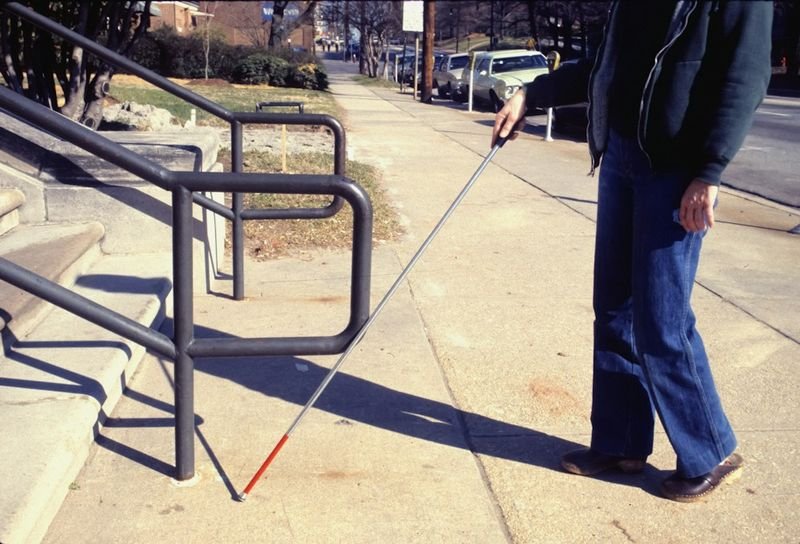
Classroom accommodations for visually impaired students usually focus on where they sit, but mobility and material access matter just as much for an ESL learner who’s also still learning the room’s vocabulary. Keep furniture layout consistent, announce when it changes, and seat the student within a peer cluster rather than isolated at the front — proximity to classmates matters more for language practice than proximity to the board.[2]
Lighting and contrast settings should be checked individually rather than standardized across the class — a low-vision student’s needs can be the opposite of another student’s in the same room. A five-minute room orientation at the start of term, done in English, doubles as a free vocabulary lesson on spatial language: left, right, behind, across from.
Keep a simple habit: narrate layout changes the moment they happen, not at the next lesson. Moving a bookshelf or swapping desk groups without a heads-up costs a visually impaired student a navigation reset that a sighted classmate never notices — and that lost time comes directly out of language practice, not just mobility.
8. Replace Isolation With Structured Peer Support
It’s tempting to pair a visually impaired ESL student with a one-on-one aide and call the accommodation complete, but that setup quietly removes them from the peer interaction that second-language acquisition depends on. Structured peer partnerships — a rotating “describe and confirm” buddy system during group work — give the student repeated, low-stakes speaking practice instead of a single adult relationship that doesn’t model peer-level English.
Seat the student inside group clusters by default and only pull them out for accessibility reasons that genuinely require it. The goal is a student who can function in group work with the same expectations as everyone else, not a student who’s been accommodated into a separate track.

None of these eight strategies require a special-education degree — they require treating sight as one input channel among several, not the default one. Start with real objects and explicit narration this week; the braille and assistive-tech pieces can follow once you know which path a specific student actually needs. If you’re also building out support for other access needs, the approach for deaf ESL students and for students with selective mutism follows the same principle: identify the one channel doing too much work, and redistribute the load across the others. Pairing this with a broader Universal Design for Learning framework makes the accommodation stick for the whole class, not just one student.
Sources
- Paths to Literacy — Tips for Teaching English Language Learners Who Are Blind or Visually Impaired — Conchita Hernandez’s I-M-ABLE framework and ELL/TVI statistics.
- TTAC Online — English Instructional Strategies for Students Who Are Blind/Visually Impaired — hand-under-hand modeling, real-object vocabulary, and classroom environment guidance.
- British Council TeachingEnglish — How to Teach Visually Impaired Learners — classroom video walkthrough of multisensory ESL techniques.






 NN
NN  EN
EN  ZH
ZH  ZH_CN
ZH_CN  KO
KO  VI
VI  FR
FR  AR
AR  ES
ES  HI
HI  PT
PT  BN
BN  RU
RU  JA
JA  TR
TR  DE
DE  IT
IT  PL
PL  ID
ID  TH
TH  FA
FA  UK
UK  TL
TL  HE
HE  UR
UR  SW
SW  RO
RO  NL
NL  MS
MS  TA
TA  PS
PS  HU
HU  EL
EL  SV
SV  NB
NB  DA
DA  CS
CS  SR
SR  AM
AM