
Tajwan Gorące Źródła Średniozaawansowany
Fragment do czytania
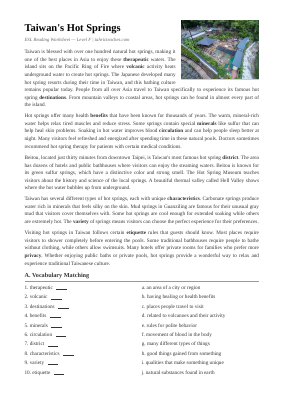
Taiwan is blessed with over one hundred natural hot springs, making it one of the best places in Asia to enjoy these therapeutic waters. The island sits on the Pacific Ring of Fire where volcanic activity heats underground water to create hot springs. The Japanese developed many hot spring resorts during their time in Taiwan, and this bathing culture remains popular today. People from all over Asia travel to Taiwan specifically to experience its famous hot spring destinations. From mountain valleys to coastal areas, hot springs can be found in almost every part of the island.
Hot springs offer many health benefits that have been known for thousands of years. The warm, mineral-rich water helps relax tired muscles and reduce stress. Some springs contain special minerały like sulfur that can help heal skin problems. Soaking in hot water improves blood circulation and can help people sleep better at night. Many visitors feel refreshed and energized after spending time in these natural pools. Doctors sometimes recommend hot spring therapy for patients with certain medical conditions.

Beitou, located just thirty minutes from downtown Taipei, is Taiwan’s most famous hot spring district. The area has dozens of hotels and public bathhouses where visitors can enjoy the steaming waters. Beitou is known for its green sulfur springs, which have a distinctive color and strong smell. The Hot Spring Museum teaches visitors about the history and science of the local springs. A beautiful thermal valley called Hell Valley shows where the hot water bubbles up from underground.
Taiwan has several different types of hot springs, each with unique cechy. Carbonate springs produce water rich in minerals that feels silky on the skin. Mud springs in Guanziling are famous for their unusual gray mud that visitors cover themselves with. Some hot springs are cool enough for extended soaking while others are extremely hot. The variety of springs means visitors can choose the perfect experience for their preferences.
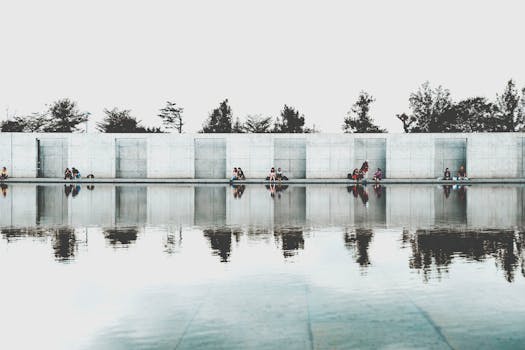
Visiting hot springs in Taiwan follows certain etiquette rules that guests should know. Most places require visitors to shower completely before entering the pools. Some traditional bathhouses require people to bathe without clothing, while others allow swimsuits. Many hotels offer private rooms for families who prefer more privacy. Whether enjoying public baths or private pools, hot springs provide a wonderful way to relax and experience traditional Taiwanese culture.
Poziom: Poziom F
A. Dopasowywanie słownictwa
Dopasuj każde słowo do jego definicji.
1. therapeutic ______
2. volcanic ______
3. destinations ______
4. benefits ______
5. minerały ______
6. circulation ______
7. district ______
8. cechy ______
9. variety ______
10. etiquette ______
a. an area of a city or region
b. having healing or health benefits
c. places people travel to visit
d. related to volcanoes and their activity
e. rules for polite behavior
f. movement of blood in the body
g. many different types of things
h. good things gained from something
i. qualities that make something unique
j. natural substances found in earth
B. Prawda czy fałsz
Wpisz P (Prawda) lub F (Fałsz) dla każdego stwierdzenia.
- Taiwan has over 100 natural hot springs. ______
- The Japanese closed all hot spring resorts. ______
- Hot springs help relax tired muscles. ______
- Beitou is far from Taipei city center. ______
- Some springs contain healing sulfur minerals. ______
- All Taiwan hot springs are the same type. ______
- Visitors must shower before entering pools. ______
- Guanziling is famous for its mud springs. ______
- Hot springs can improve blood circulation. ______
C. Uzupełnij luki
Bank słów: therapeutic | volcanic | benefits | minerals | circulation | variety | etiquette
- Taiwan’s hot springs are known for their _______________ healing properties.
- The island’s _______________ activity heats underground water naturally.
- Hot springs offer many health _______________ that help people feel better.
- Soaking in hot water improves blood _______________ throughout the body.
- Visitors should learn the proper _______________ rules before entering bathhouses.
D. Pytania sprawdzające zrozumienie tekstu
- Why does Taiwan have so many natural hot springs?
- What health benefits can hot springs provide?
- Where is Beitou located and what is it famous for?
- What makes Guanziling hot springs unique?
- What must visitors do before entering hot spring pools?
E. Pytania do dyskusji
Porozmawiaj na te pytania z partnerem lub zapisz swoje odpowiedzi.
- Have you ever visited a hot spring? What was the experience like?
- Would you prefer a public bathhouse or private hot spring? Why?
- Why do you think bathing culture is so important in some Asian countries?
Klucz odpowiedzi
Sprawdź swoje odpowiedzi poniżej.
A. Słownictwo: 1-b, 2-d, 3-c, 4-h, 5-j, 6-f, 7-a, 8-i, 9-g, 10-e
B. Prawda/Fałsz: 1-T, 2-F, 3-T, 4-F, 5-T, 6-F, 7-T, 8-T, 9-T
C. Uzupełnij luki: 1-therapeutic, 2-volcanic, 3-benefits, 4-circulation, 5-etiquette
D. Zrozumienie: 1. Because Taiwan sits on the Pacific Ring of Fire with volcanic activity; 2. Relaxes muscles, reduces stress, heals skin, improves circulation, helps sleep; 3. 30 minutes from Taipei, famous for green sulfur springs; 4. They have unusual gray mud that visitors cover themselves with; 5. Shower completely before entering
Przeglądaj naszą kompletną kolekcję bezpłatne arkusze ćwiczeń i materiały do nauki języka angielskiego jako obcego obejmujące kulturę Tajwanu, naukę, historię świata i wiele więcej.



 PL
PL  EN
EN  ZH
ZH  ZH_CN
ZH_CN  KO
KO  VI
VI  FR
FR  AR
AR  ES
ES  HI
HI  PT
PT  BN
BN  RU
RU  JA
JA  TR
TR  DE
DE  IT
IT  ID
ID  TH
TH  FA
FA  UK
UK  TL
TL  HE
HE  UR
UR  SW
SW  RO
RO  NL
NL  MS
MS  TA
TA  PS
PS  HU
HU  EL
EL  SV
SV  NB
NB  NN
NN  DA
DA  CS
CS  SR
SR  AM
AM