

Minimal Pairs Activities: 14 ESL Ideas for Clear Speech (2026)
If a Taiwanese teenager says he wants to خوب when he means slip, the issue isn’t his vocabulary, his confidence, or his motivation. It’s that his ears stopped hearing the difference between /iː/ and /ɪ/ before he ever picked up a pencil. Minimal pairs activities are how teachers rebuild that distinction — one phoneme at a time, in 8-minute classroom drills that fit at the end of any lesson. After two decades teaching pronunciation in Taipei classrooms, this is what I’ve seen actually move the needle.
This guide walks through 14 classroom-tested minimal pairs activities, the L1 interference table I use to plan each lesson, and the small mistakes that quietly sabotage most pronunciation drills.
What a Minimal Pair Actually Is
A minimal pair is two words that differ in exactly one phoneme — بېړۍ او sheep, rice او lice, thin او tin. The two words share every other sound, so the only thing your student’s brain has to do is detect the one phoneme that changed. That tight isolation is what makes the drill work. Take it wider and you’re back to teaching whole words.
The pedagogical point of running minimal pairs is not memorising the wordlist. It is rebuilding the perceptual category — getting a Mandarin speaker’s auditory system to register /l/ او /r/ as two different sounds again, instead of folding them into one category the way adult L1 phonology does by default. Without that perceptual fix, accuracy in production will never stick.

Diagnose Before You Drill: The L1 Interference Map
Walking into a class and running “ship/sheep” with students who don’t struggle with that pair is a waste of 10 minutes. Before you plan any minimal pairs activities, map the problem pairs onto the L1 of the room. This is what I keep printed on the inside of my lesson binder:
| L1 group | Trouble pairs (high-frequency) |
|---|---|
| Mandarin / Taiwanese | ship/sheep, rice/lice, thin/sin, vine/wine, fail/fell |
| Japanese | rice/lice, glass/grass, base/vase, hat/hut |
| Korean | rice/lice, file/pile, vine/bine, zoo/Sue |
| Spanish | ship/sheep, beach/bitch, yes/jess, vow/bow |
| Arabic | bat/pat, van/fan, big/pig, very/berry |
| Vietnamese | think/sink, three/tree, ride/right, ship/sip |
Five minutes of diagnostic listening — say each pair, students write A or B — tells you exactly which pairs to drill that month. The University of Iowa’s Phonetics archive remains the cleanest free source for hearing the target articulations modelled by trained phoneticians, and it’s still where I send teachers when they ask where to start.1
1. The Hand Signal Sort
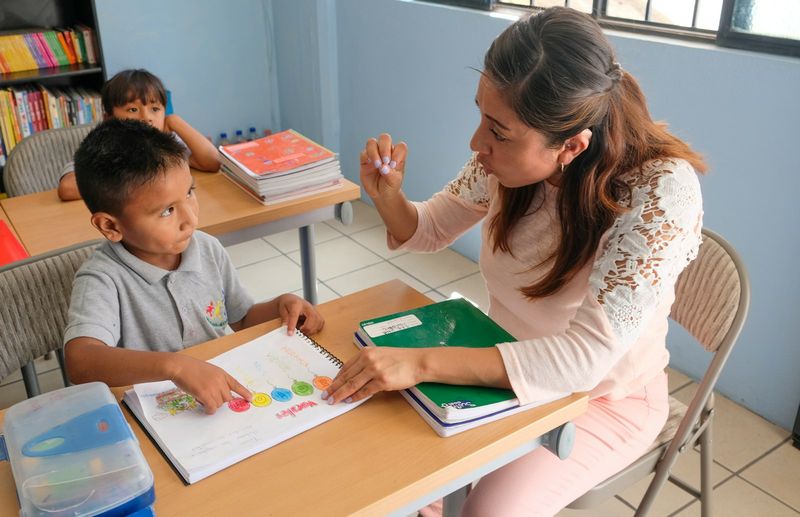
Assign each member of the pair a gesture — left hand for بېړۍ, right hand for sheep. Say one word at a time and students raise the matching hand. Twenty reps in ninety seconds. It looks like a kids’ game and works at every level because it offloads the answer from speech onto motion, which means the slow processors aren’t shamed by faster classmates. This is a discrimination drill, not a production drill — keep that distinction clean.
2. Listen-and-Run
Tape two large cards to opposite walls. Say a word. Students run to the wall matching what they heard. You’ll find out within three rounds which students are guessing on visual cues from classmates and which ones are actually hearing the difference. The body movement also burns off the static energy that builds up during sit-still drills, especially with teens.
3. The “Hide Your Mouth” Drill
Cover your mouth with a piece of paper or your hand. Say one word from the pair. Students write what they heard. Reveal the answer. The hidden mouth forces them to use their ears — students who normally lip-read for the answer suddenly have to do the actual perceptual work. The U.S. State Department’s American English programme demonstrates this exact technique with a class of beginners in the short video below, and it’s worth showing your students once so they understand why you’re being mysterious about your face.2

4. Three-Card Race
Give each student three cards — one labelled A, one B, one “same”. Read out either a word, its pair, or the same word twice. They flash a card. This adds the third option that catches the students who are silently bluffing through the binary drills. Round time: thirty seconds per word. Run it for five minutes and you’ll have ranked every student in the room by perceptual accuracy without ever saying so out loud.
5. Bingo With a Twist
Standard pronunciation bingo cards include both halves of the pair scattered across the grid. The twist is that you don’t read words — you read short sentences containing the target word. “My grandmother knits a beautiful ____ each winter.” The sentence frame gives a clue but the contrast still has to be heard. The reward is real bingo, with stickers or candy. Adults play just as hard as kids when there’s candy on the line.

6. Silent Mouthing Recognition
Mouth the word with no sound. Students guess which one you said. This is the inverse of activity 3 — instead of removing the mouth, you’re removing the audio. It forces students to learn what the articulation looks like, which they need anyway for self-monitoring later. This is especially useful for /θ/ vs /s/ (thin/sin) where the tongue position is the visible cue.
7. Tongue Twister Stack
Build short tongue twisters that hammer one pair: “The thin tin twin sat on the thirty-third bench.” Start at half speed, run three times, then speed up. The repeated near-collisions train the mouth to maintain articulation under pressure. Save your favourites in a notebook — when one click I know works, I want it available next term too.
8. AI-Generated Custom Pairs
For the trouble pairs your textbook doesn’t cover, ask ChatGPT or Claude for “fifteen minimal pairs at A2 vocabulary level contrasting /v/ and /w/, with a sample sentence for each”. The output isn’t perfect — verify the pairs against a phonetic source, since AI occasionally invents pairings that aren’t truly minimal. But for the seventh round of practice on the same contrast, freshly worded sentences keep students engaged. If you want a deeper workflow for using AI to build classroom materials, my guide to common AI mistakes in ESL materials covers the verification steps that prevent garbage from sneaking into your lesson.

9. Record and Self-Score
Each student records themselves saying ten word pairs into their phone, then listens back the next day with the answer key in hand. The 24-hour delay is the trick — by the time they play it back, the muscle memory has faded and they hear themselves as another person would. Most students are shocked, in a productive way, by the gap between what they thought they said and what’s on the recording. This single activity has reshaped more student attitudes toward pronunciation work than any drill I’ve ever run.
10. Pair-Sentence Translation Race
Print eight sentences in the L1 that translate into English using one of the words from a target pair. Students translate aloud in pairs. The cognitive load of translation forces them to commit to a sound choice without thinking too hard about pronunciation, which exposes the under-trained pair faster than any isolated drill. Marker phrases like “the boat is full” versus “the boot is full” reveal a lot about whether the long-vowel/short-vowel pair has landed.
11. Spot-the-Pair Tongue Reading
Put a list of fifteen word pairs on the board. Read a short paragraph aloud that contains several of them and have students tick the ones they heard. The paragraph route catches the students who can drill perfectly in isolation but fall apart in connected speech, which is most of them. Connected speech is where most pronunciation work either matures or quietly fails.

12. Online Pairs With Forvo or Quizlet
For homework, send students to Forvo to hear native speakers pronounce each word in their target pairs in multiple accents. They pick two recordings per word and write what they noticed. The accent variety is the point — students who only hear their teacher’s voice start treating the teacher’s accent as the only correct version, which fails them the moment they meet a different native speaker. The British Council’s Teaching English archive has additional structured listening drills that pair well with this.3
13. Backchain Word Builder
Start at the end of the word and add one sound at a time backwards: “-eep, -heep, sheep”. Then do the pair: “-ip, -hip, ship”. This forces a clean re-articulation each time and stops students from running both halves of the pair into one sloppy half-word. Backchaining is borrowed from theatre voice work for a reason — it builds new motor patterns when the old one has gone stale.
14. Production Test With Word Cards
End the cycle with a production check. Students draw a card with one word from the pair printed on it, say it, and the teacher (or a classmate) writes down what they heard. If the listener writes the correct word, the speaker has produced the contrast clearly enough. If the listener writes the partner word, the contrast didn’t land. This is the only honest measure of whether the lesson worked. Aim for an 80% accuracy threshold before moving on. My broader pronunciation activities guide covers the production-test framework in more detail.

Common Mistakes That Quietly Wreck Pronunciation Drills
The most expensive mistake is running production before perception. If students can’t reliably hear the difference, asking them to produce it just stamps in random guessing. Run discrimination activities (1, 3, 4, 6, 11) until accuracy hits 80% before moving to production (5, 7, 14).
The second is over-drilling one pair in a single session. Ten minutes is the ceiling for any one minimal pair. After that, fatigue masks real progress and you’re just teaching students to dislike pronunciation work. Cycle three pairs across a week instead. Spacing wins.
The third is correcting too softly. When a student says sip for بېړۍ, a polite nod followed by “good try” trains them to ignore the contrast. A neutral repetition of the word they actually said, followed by the target word, is more useful — they hear the gap themselves. Pair this with the 10 ESL error correction methods I rate highest for in-the-moment feedback.
How to Tell If It’s Working
Run the same diagnostic drill from week one again in week six. If the class is now at 85% accuracy on pairs that started at 40%, the activities are doing their job. If the numbers haven’t moved, the pair you chose probably isn’t the actual problem pair — re-diagnose, drop the dead pair, swap in something the L1 map predicts will hurt more.
The real signal, though, isn’t a worksheet number. It’s the moment a student spontaneously self-corrects mid-sentence in free conversation — they say خوب, hear themselves, glance at you, and re-say slip. That feedback loop is the actual goal. Drills aren’t the destination; they’re the rebar.
Pick Two and Run Them Tomorrow
If you’ve never used minimal pairs in your classroom, don’t try fourteen activities this week. Pick the Hand Signal Sort and the Hide Your Mouth Drill, run them for ten minutes each, on two pairs your L1 map predicts will hurt. Repeat for three lessons in a row. Then add a production test in the fourth lesson and measure. The point of any pronunciation routine is the boring middle — six weeks of steady, low-volume work — not the dramatic single lesson. Build the rebar.
سرچینې
- University of Iowa, Sounds of Speech — interactive English phonetics archive with animations and audio for every phoneme.
- U.S. Department of State, American English — official “Hide Your Mouth” classroom demonstration.
- British Council Teaching English — minimal pairs teaching resource for adults.







 PS
PS  EN
EN  ZH
ZH  ZH_CN
ZH_CN  KO
KO  VI
VI  FR
FR  AR
AR  ES
ES  HI
HI  PT
PT  BN
BN  RU
RU  JA
JA  TR
TR  DE
DE  IT
IT  PL
PL  ID
ID  TH
TH  FA
FA  UK
UK  TL
TL  HE
HE  UR
UR  SW
SW  RO
RO  NL
NL  MS
MS  TA
TA  HU
HU  EL
EL  SV
SV  NB
NB  NN
NN  DA
DA  CS
CS  SR
SR  AM
AM