
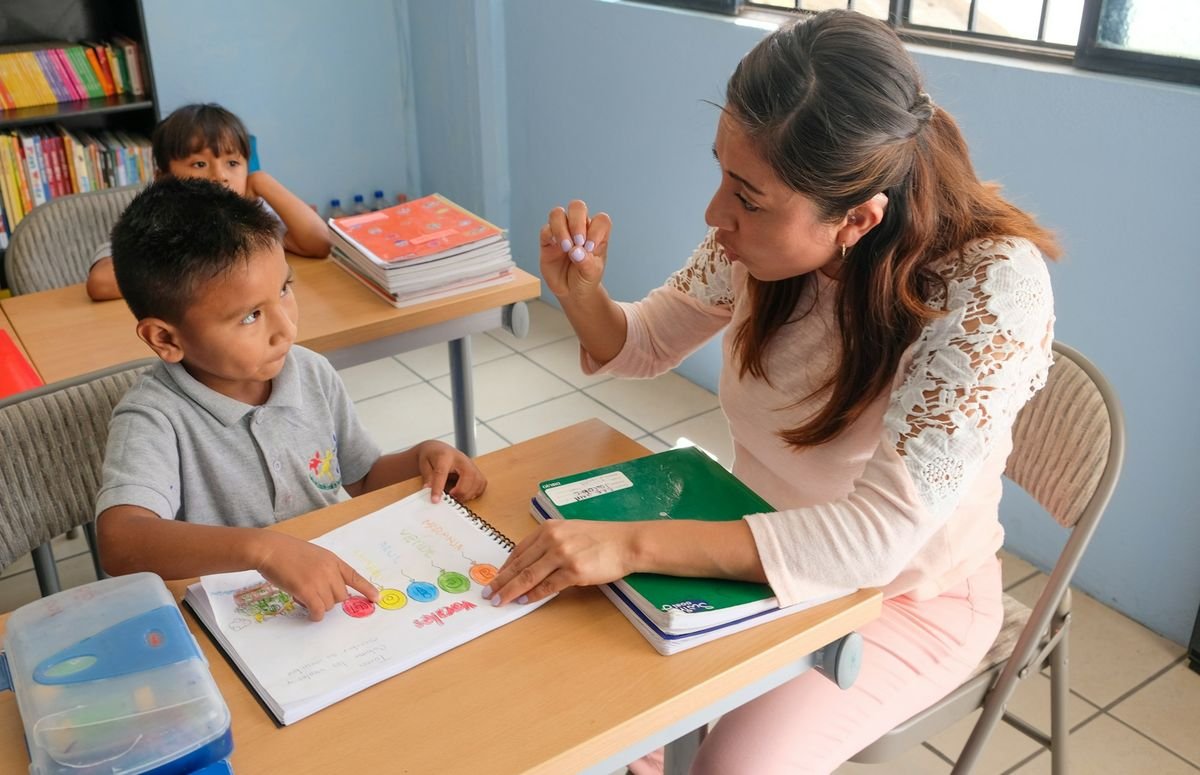
Speech Delay ESL Students: 8 Strategies
Roughly 5 to 12 percent of children between ages 2 and 5 have an isolated speech or language delay, according to a 2023 clinical review in the Singapore Medical Journal — and in a classroom full of ESL learners, that baseline rate doesn’t disappear just because a student is also acquiring a second language. The problem for most ESL teachers is that normal second-language struggle and an actual delay can look almost identical from the front of the room: a student who doesn’t talk much, mixes up sounds, or answers a question a beat too slow. Treat every quiet student like a delay case and you’ll misdiagnose half of them. Treat every real delay like a Silent Period and a student who needed a referral goes months without one.
1. Speech Delay Shows Up in Both Languages — Second-Language Struggle Doesn’t
The single most reliable test a classroom teacher has access to doesn’t require a diagnostic tool: ask whether the same difficulty shows up when the student speaks their first language, at home or with peers who share it. Speech-language pathologists who specialize in English learners use exactly this check — a true speech or language disorder affects communication in every language a child knows, while normal ELL behaviors like code-switching, literal translation, and a long Silent Period only show up in the language the student hasn’t fully acquired yet.
Ask the family directly, even through a translation app if needed: does the child speak clearly and in full sentences in their home language? A yes usually rules out a developmental speech disorder and points you toward second-language acquisition timelines instead. A no — especially if relatives have already raised a concern — is the strongest signal you’ll get that something needs a professional look, independent of how little English the student has picked up so far.

2. Know the Milestones, So You Know What’s Actually Late
A 2023 practical framework published in the Singapore Medical Journal lays out the specific ages where a speech or language gap stops being “probably fine” and starts being a referral: no babbling by 9 months, no pointing or gesturing by 12 months, no intelligible single words by 16 months, no two-word spontaneous phrases by 24 months, and speech that’s still mostly unintelligible to strangers past 36 months. By age 3, the expectation is that roughly 75% of a child’s speech is understandable to someone who isn’t a parent.
Those numbers were written for pediatricians tracking first-language development, but they’re still the right baseline for an ESL classroom — they just need a second filter laid over them. A kindergartner who arrived six months ago and isn’t yet producing full English sentences is on track. A kindergartner who still can’t produce full sentences in Mandarin, Vietnamese, or whatever language they grew up speaking at the same age is the case worth flagging, milestones and all.
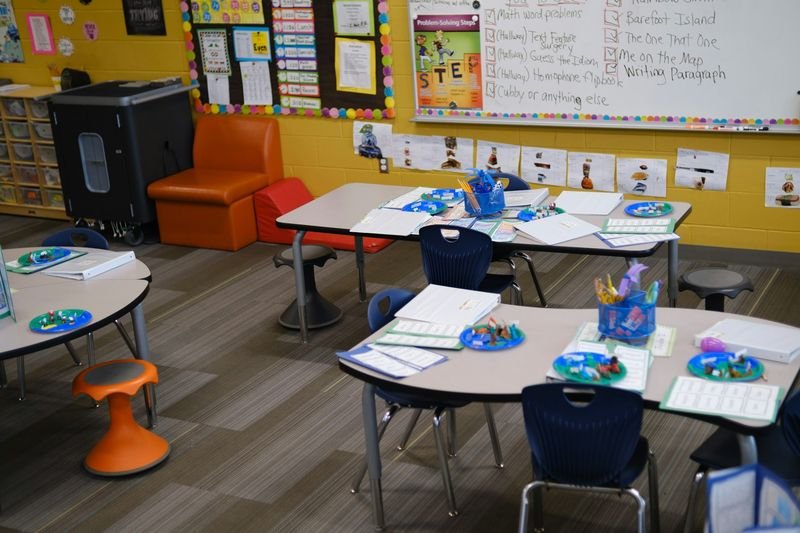
3. Don’t Mistake the Silent Period for a Delay
Stephen Krashen’s Silent Period describes the stretch — anywhere from a few weeks to a full year, depending on the student — where a new language learner absorbs comprehensible input and builds the neural wiring to speak, without yet producing much original output. It isn’t a disorder, a personality trait, or a sign the student is falling behind; it’s the predictable lag between understanding a language and generating it, and it shows up in every second-language learner to some degree, not just the quiet ones.
The mistake that sends a perfectly normal Silent Period student into an unnecessary evaluation is treating silence itself as the symptom. It isn’t. The symptom worth tracking is whether comprehension is also stalled — a student who can’t follow simple classroom instructions after months of exposure is different from a student who follows instructions fine but just isn’t ready to produce spoken English yet. The Natural Approach to ESL teaching is built almost entirely around this distinction, and it’s worth building the same low-pressure, input-heavy routine into any class with a student who isn’t talking much yet.

4. Separate “Won’t Talk” From “Can’t Talk Clearly”
A student who goes silent specifically in situations with social pressure — cold-calling, speaking in front of the group, a new substitute teacher — but talks normally to a friend at recess isn’t dealing with a speech delay at all. That pattern points toward selective mutism or classroom anxiety, and the fix looks almost nothing like a speech delay intervention: it’s about lowering social pressure, not building articulation or vocabulary.
A true speech or language delay doesn’t disappear in low-pressure settings. A student with a real delay still mixes up sounds, struggles to form sentences, or has a limited vocabulary when talking one-on-one with a friend they trust completely — the problem travels with the student, not with the audience. Watch where the silence happens before assuming why it’s happening. Mislabeling selective mutism as a delay, or the reverse, sends a teacher down the wrong fix for months.

5. Loop In a Speech-Language Pathologist Who Can Assess Both Languages
Once the first-language check and the milestone check both point toward a real delay, the move isn’t to design a classroom intervention — it’s a referral. A monolingual speech-language pathologist testing only in English will routinely flag a bilingual child as delayed when the child is actually on track once both languages are counted together, which is exactly the kind of over-referral that erodes trust in the process. Ask the school or district specifically for an evaluator who can assess in the student’s home language, or who works with an interpreter trained for clinical assessment, not a general classroom aide.
This is the same professional hand-off a teacher already makes for a student who stutters: a classroom can adjust pacing, reduce cold-calling, and lower performance pressure, but it can’t replace a trained clinician diagnosing the underlying cause. Flag what you’re seeing, document when it started and in which contexts, and let the referral process run alongside — not instead of — the low-pressure classroom habits that help every language learner.

6. Keep the Home Language Running at Full Strength
The instinct to tell a family to “just speak English at home” once a delay is suspected is common, well-meaning, and backed by nothing. Bird and colleagues studied bilingual children with Down syndrome in 2005 and found they acquired second-language vocabulary at rates matching bilingual peers without a developmental delay — a small sample, but it lines up with decades of broader bilingualism research: adding a second language doesn’t damage a delayed child’s first language, and dropping the first language doesn’t speed up the second.
What actually helps is keeping each language clean rather than blended mid-sentence — a parent saying a full sentence in Mandarin and then a full sentence in English, rather than switching languages inside one sentence, gives a developing child a clearer model to learn from either way. Pass that along directly to families who ask whether they’re “making it worse” by speaking their home language at the dinner table. They’re not, and this research is old enough that it shouldn’t still be a live question in 2026.

7. Build Oral Practice Into Every Lesson, Not Just “Speech Time”
A student working through either a genuine delay or a long Silent Period gets more benefit from twenty short, low-stakes speaking reps spread across a week than from one scheduled speaking-practice slot. Pair work, turn-and-talk routines, and choral response — the whole class answering together — all give a student oral reps without the spotlight that makes a hesitant speaker freeze up.
Skip the instinct to correct every mispronunciation in real time. Modeling the correct form back in your own next sentence, without flagging the error directly, keeps the student talking instead of shutting down mid-sentence to self-correct. This works for the same reason interactive journal writing helps deaf ESL writers or stuttering ESL speakers: the goal at this stage is volume of practice and confidence, not instant accuracy. Accuracy follows once the volume is there.

8. Document What You See — Don’t Try to Diagnose It Yourself
Untreated preschool speech delays carry a well-documented tail: the Singapore Medical Journal review ties unaddressed cases to later reading difficulty, poor spelling, behavioral problems, and academic underachievement that stretches into adulthood. That’s the argument for acting on a genuine concern quickly rather than waiting a full semester to see if a student “grows out of it” — but it’s not a license for a classroom teacher to diagnose anything.
The useful role here is narrow and specific: write down what you observe, when it started, whether it happens in one language or both, and whether a parent has independently raised the same concern. That record is what turns a vague “something feels off” into a referral a specialist can act on fast. A teacher who documents well and refers early does more for a student’s long-term reading and academic outcomes than any in-classroom fix ever could on its own.
The Order Matters More Than the List
These eight strategies only work in the order a teacher actually encounters them: first-language check, then milestone check, then the right kind of help — classroom patience for a Silent Period, a bilingual SLP referral for a real delay. Get that sequence backwards and a student either waits months for help they needed already, or gets pulled into an evaluation for a stage of language learning that was always going to resolve on its own. The next quiet ESL student in your room deserves the five minutes it takes to ask which one you’re actually looking at.
سرچینې
- Speech and language delay in children: a practical framework for primary care physicians — Singapore Medical Journal, 2023 — prevalence rates, developmental milestones, and red flags by age.
- Bilingualism and Speech/Language Delay — A+ Speech Therapy — Bird et al. (2005) findings on bilingual children with Down syndrome and second-language vocabulary acquisition.
- Language Disorder or Language Difference/Limited Proficiency? — LI Speech — the dual-language diagnostic check used by bilingual speech-language pathologists.
- The Silent Period and English Language Teaching — ICAL TEFL — Krashen’s Silent Period and its role in normal second-language acquisition.







 PS
 EN
 ZH
 ZH_CN
 KO
 VI
 FR
 AR
 ES
 HI
 PT
 BN
 RU
 JA
 TR
 DE
 IT
 PL
 ID
 TH
 FA
 UK
 TL
 HE
 UR
 SW
 RO
 NL
 MS
 TA
 HU
 EL
 SV
 NB
 NN
 DA
 CS
 SR
 AM