

Voice Assistants for English Beginners: 7 Pocket-Sized Speaking Drills
The hardest part of learning English at Level 1 is not grammar or vocabulary. It is finding someone patient enough to listen while you stumble through your first sentences. For absolute beginners — A1 learners, false beginners restarting after years away, students who still hesitate before saying “hello” — that patient listener is often the missing piece between a textbook and real fluency.
Modern AI voice tools fill that gap quietly and effectively. They never sigh, never correct rudely, never look at the clock. They will repeat the same sentence twenty times without losing composure. For teachers working with adult migrants, shy teens, or anxious test-prep candidates, a smartphone-based voice bot can become the bridge between Tuesday’s class and Friday’s class — the everyday practice partner that classroom teachers cannot physically be.
This guide walks through seven small speaking drills that any Level 1 student can run in five minutes, the tools that work best at this stage, and the classroom moves that turn pocket practice into measurable progress.

Why Speaking with a Bot Beats Silent Study at Level 1
At Level 1, students are still building the muscle memory of English sounds. Silent reading, vocabulary apps, and flashcard drills all build receptive skills — students can recognize words on a page — but they do little for the mouth, the breath, and the confidence loop that produces speech. Real-time speaking is the bottleneck.
The Common European Framework of Reference describes A1 speakers as people who can interact “in a simple way provided the other person talks slowly and clearly and is prepared to help.” That last clause is the one that matters. The other person must be willing to help. Most fluent English speakers in the wild are not. A voice bot, by design, is.
For teachers, this changes the homework calculus. Instead of writing exercises that learners struggle to mark themselves, you can prescribe a thirty-second spoken task and trust the AI to give immediate, friendly feedback.
The Five-Minute Rule: Why Tiny Daily Sessions Win
Beginners who promise themselves a thirty-minute daily routine almost always quit within two weeks. Beginners who promise themselves five minutes a day almost always continue. The difference is friction. Five minutes fits between a kettle boiling and a tea brewing. Thirty minutes requires a calendar slot, a clear desk, and willpower none of us have on a Wednesday evening.
The drills below are designed to fit inside that five-minute window. Each one targets a single sub-skill — pronunciation, simple question forms, present-tense narration, listening — and asks for one short spoken response. Students can run one drill per day or rotate through them across the week.

Seven Tiny Speaking Drills for Level 1 Learners
The prompts below assume the learner is using a free voice-capable assistant such as the smartphone version of ChatGPT, Google’s Gemini app, or a similar tool. Each prompt is written so the student can speak it word-for-word — or copy and paste it once and reuse the same chat thread every day.
1. Echo Back the Greeting
The drill: open the voice assistant and say, “Please greet me in English and ask me three easy questions about my morning.” Listen carefully, then answer each question out loud in a full sentence.
Why it works: greetings are the highest-frequency English exchange a beginner will encounter. Drilling them daily turns the first thirty seconds of any real conversation into autopilot, freeing cognitive load for the harder parts that come next.
2. Order Something Out Loud
The drill: tell the AI, “Pretend you are a barista at a coffee shop. Take my order. Correct any small mistakes I make politely.” Then place a real order using whatever you actually want that morning.
Why it works: transactional English — ordering, asking for directions, paying — is what most beginners need most urgently in the real world. Role-play with a bot gives unlimited rehearsal without the pressure of a queue forming behind them.
3. Name What You See
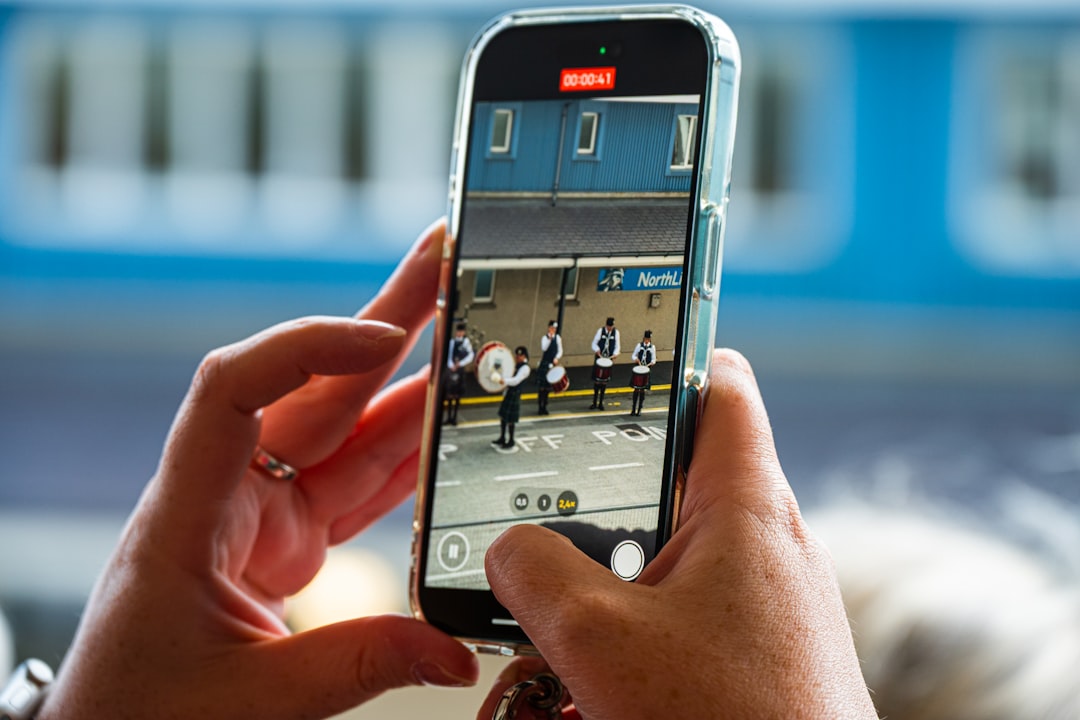
The drill: hold the phone up, take a quick photo of whatever is in front of you — your kitchen, your bus stop, your desk — and say, “Help me describe this photo in five simple English sentences. After I try, tell me one word I could replace with a better word.”
Why it works: description forces noun and adjective recall in context, which is far stickier than memorizing a vocabulary list. The single-word upgrade keeps the cognitive load reasonable for Level 1.

4. Ask the Bot a Question
The drill: open the assistant and say, “I want to practice asking questions. Give me an interesting fact in one sentence. I will ask you three follow-up questions. Correct my question forms if I make a mistake.”
Why it works: beginners over-practice answering and under-practice asking. Question formation in English is mechanically tricky — auxiliary inversion, do-support, intonation — and only becomes fluent in production with rehearsal. This drill targets the missing half of conversation.
5. Read One Line Aloud, Then Compare
The drill: ask the bot, “Read me a single short English sentence in your clearest voice. Wait. I will read it back to you. Then tell me which words I pronounced unclearly.” Repeat with three sentences.
Why it works: this is shadowing in miniature. Learners hear, repeat, and receive feedback in one tight loop. Three sentences will surface the consistent pronunciation issues an L1 learner needs to focus on — typically vowel reductions, final consonants, or word stress.
6. Tell the Bot About Your Day
The drill: at any point in the afternoon, open the bot and say, “I am going to tell you three things I did today in simple English. After I finish, give me one sentence in the same style, but better.” Talk for thirty seconds. Listen to the model sentence. Repeat it.
Why it works: production followed by a model sentence is a research-backed sequence for vocabulary uptake. The learner has a real intention to express, so the better-version sentence sticks.
7. The Goodnight Recap
The drill: at bedtime, open the bot and say, “Please ask me one easy question about my day. I will answer in two or three sentences. Then read me a short, simple English good-night message in a calm voice.”
Why it works: the brain consolidates language during sleep, so the last spoken sentences of the day get a small but real memory advantage. A predictable closing ritual also reduces the resistance to opening the app at all.
A Sample Week of Voice-Bot Practice
Beginners benefit from variety wrapped inside a predictable shell. Here is a simple seven-day rotation a teacher can hand to a Level 1 class as homework:
- Monday — Drill 1: Echo Back the Greeting
- Tuesday — Drill 4: Ask the Bot a Question
- Wednesday — Drill 2: Order Something Out Loud
- Thursday — Drill 5: Read One Line Aloud
- Friday — Drill 3: Name What You See
- Saturday — Drill 6: Tell the Bot About Your Day
- Sunday — Drill 7: The Goodnight Recap
Keep the list short, paper-printable, and stuck on a fridge. The lower the barrier between a learner and the prompt, the higher the completion rate.
Choosing the Right Tool for a Level 1 Learner
Not every assistant is suitable for a beginner. The features that matter are a real voice mode (not just text-to-speech of a typed reply), a settable speech speed if possible, a free tier substantial enough for daily five-minute use, and a friendly correction style.
As of 2026, three options cover the field for most beginners. The ChatGPT mobile app offers voice mode on its free plan with daily limits that comfortably absorb five-minute sessions. Google’s Gemini app has a similar voice mode and integrates with Android natively. Apple’s iOS now ships an upgraded Siri with conversational follow-up that is genuinely usable for short interactions in English.
Recommend just one to your class — choice paralysis kills the habit before it starts. Pick the one your students already have installed.

How Teachers Can Build Bot-Habits Into Lessons
The most powerful classroom move is the in-class first attempt. Spend the last seven minutes of one lesson per week walking students through a single drill while their phones are out and the room is quiet enough to hear their voices. Once a learner has done the drill once, with you watching, the chance of repeating it at home rises sharply.
Other classroom moves worth trying:
- Open the next lesson with a one-minute “bot-share”: one student says one sentence they practiced with the bot during the previous week.
- Create a shared class document of best prompts students discover on their own. Adolescents in particular respond to peer-sourced content.
- Demonstrate a misuse. Show what happens when a student asks the bot to do their homework for them — the lifeless output, the lost learning — and ask them to compare it to a real drill.
- Run a once-a-month “phone-free hot seat” where students reproduce, without the bot, what they have practiced with it.
Common Pitfalls (and How to Steer Around Them)
Three failure modes appear repeatedly when Level 1 learners start using voice AI.
Over-correction. Some bots will, by default, correct every micro-error. For an A1 learner this is crushing. Add to the system prompt or starter message: “Only correct mistakes that change the meaning. Encourage me on everything else.”
Reading instead of speaking. Learners will type their answers if allowed. For these drills, insist on voice. Suggest that students rest the phone face-down on the table to remove the keyboard temptation.
Drift to L1. A Mandarin-speaking learner using ChatGPT will sometimes switch to Mandarin out of habit. Bake a hard constraint into the prompt: “Speak only English. If I switch to my first language, respond in English and gently invite me back.”
What Counts as Progress at Level 1
Daily AI practice produces a different kind of gain from textbook study. The visible markers are shorter pauses before speaking, more complete sentences instead of single words, willingness to start a conversation rather than wait for one, and a noticeable drop in the “uhm” count.
These are not the numbers a test score measures, but they are what learners and their families notice within four to six weeks. Encourage students to record a thirty-second voice memo on day one and another on day forty-five. The side-by-side comparison is usually convincing — for the learner, for the family, and for the teacher’s own quiet confidence that the homework is working.
Final Thoughts
The promise of AI for Level 1 learners is not that it replaces a teacher. It is that it removes the daily-practice problem that has always limited what teachers could do in two or three classroom hours a week. With five minutes a day on a phone — and seven small drills repeated patiently — beginners cross from silent to speaking faster than any generation of learners before them.
The teacher’s job is no longer to provide all the practice. It is to design the prompts, model the habits, and notice the small wins until they add up to the moment a student answers a stranger’s “how are you?” without flinching.
سرچینې
- CEFR: Common European Framework of Reference for Languages — the A1/Level 1 descriptors used throughout this article.
- برتانوي شورا — teaching resources for adult beginners.
- کیمبرج انګلیسي — A1 assessment frameworks and learner research.
- BBC Learning English — free audio materials suitable for Level 1 shadowing drills.
Looking for free ESL worksheets? Browse our full collection — printable resources for every level and age group. Browse Free Worksheets →
Students can access free worksheets and reading materials at 18KEnglish.com.







 PS
PS  EN
EN  ZH
ZH  ZH_CN
ZH_CN  KO
KO  VI
VI  FR
FR  AR
AR  ES
ES  HI
HI  PT
PT  BN
BN  RU
RU  JA
JA  TR
TR  DE
DE  IT
IT  PL
PL  ID
ID  TH
TH  FA
FA  UK
UK  TL
TL  HE
HE  UR
UR  SW
SW  RO
RO  NL
NL  MS
MS  TA
TA  HU
HU  EL
EL  SV
SV  NB
NB  NN
NN  DA
DA  CS
CS  SR
SR  AM
AM