
10 ESL Reading Activities That Build Comprehension Fast
ESL reading activities are the backbone of any strong language classroom — but too many teachers rely on the same read-and-answer format that drains motivation and fails to build real comprehension skills. This guide covers 10 classroom-tested reading activities for ESL learners that actually work, from beginners decoding their first paragraphs to advanced students tackling academic texts.
Strong reading comprehension in a second language requires more than decoding words. Learners need exposure to vocabulary in context, practice predicting and inferring meaning, and structured opportunities to discuss what they read. The activities below address all of these dimensions.
Why Most ESL Reading Lessons Fall Flat

Before diving in, it’s worth naming the problem. Many ESL reading activities fail because they treat reading as a passive skill — students read silently, answer comprehension questions, check their answers, and move on. This approach ignores how the brain actually acquires language.
According to Cambridge English research on interactive reading, learners retain up to 70% more vocabulary when reading is paired with interactive tasks. The activities below are built on that principle: reading as active engagement, not passive consumption.
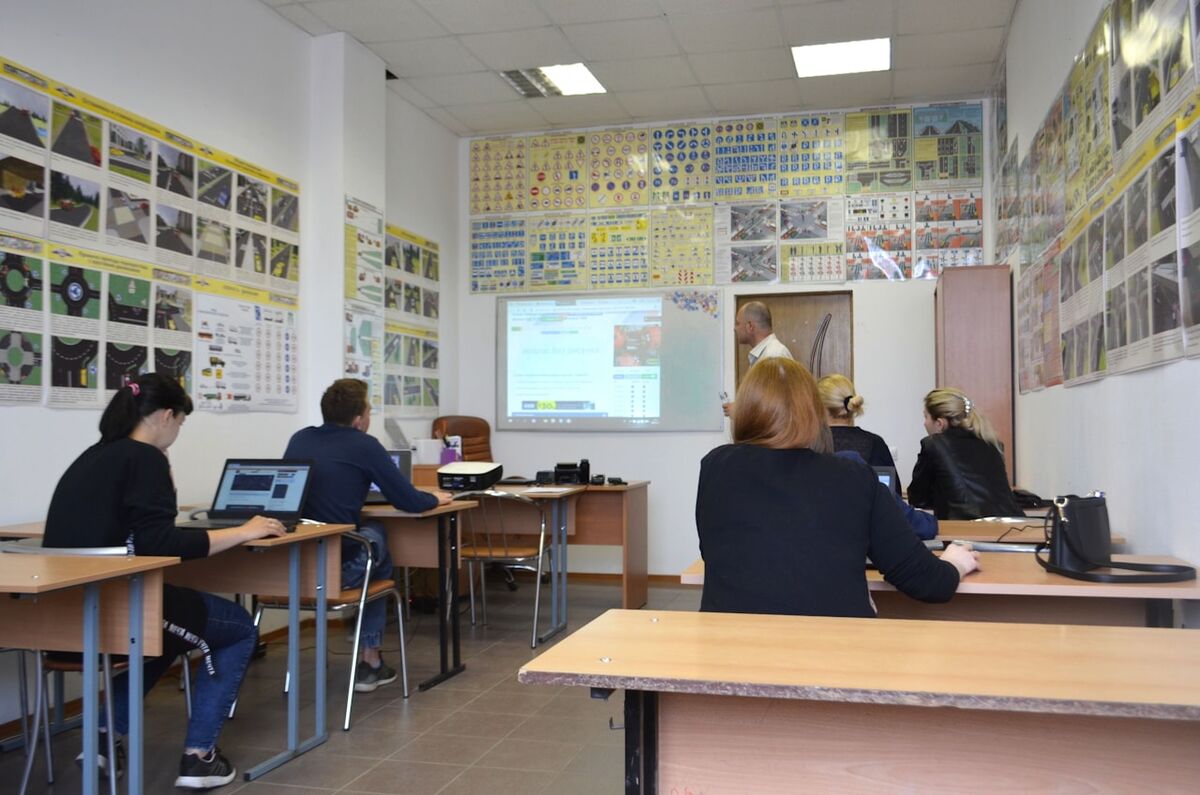
1. Jigsaw Reading: Build Comprehension Through Collaboration
Jigsaw reading is one of the most powerful ESL reading activities for intermediate and advanced classes. Split a longer text into three or four sections. Divide students into “expert groups,” each responsible for reading and deeply understanding one section. Then regroup students so each new group contains one expert from each section.
Students teach their sections to their new group, then the group works together to answer comprehension questions about the full text. The accountability of becoming the “expert” dramatically increases reading depth. This works particularly well with news articles, science texts, and narrative passages.
Ideal para: B1–C1 learners | Tempo: 40–60 minutes | Tamanho do grupo: 12–30 students
2. Predict-Read-Confirm: Activate Prior Knowledge
Before students read a single word, have them predict what the text will say based on the title, images, and first sentence. Write predictions on the board. Students then read to confirm or correct their predictions, marking key passages as they go.
This activity builds metacognitive awareness — students learn to monitor their own understanding. The prediction phase also activates prior vocabulary knowledge, which research shows increases reading speed and retention significantly.
Dica profissional: Use prediction as a warm-up for your Atividades de conversação em inglês como segunda língua that follow — students naturally want to debate whose predictions were closest.
3. Text Reconstruction (Dicto-Gloss)
Read a short paragraph aloud at natural pace while students take notes on key words only. Read it twice. Then students work in pairs to reconstruct the original text from their notes. The goal is not to reproduce it word-for-word but to retain the meaning using accurate grammar.
This activity bridges reading and writing beautifully. Students must process meaning deeply enough to re-express it, which is one of the most effective vocabulary acquisition techniques available in an ESL reading lesson.

4. Skimming and Scanning Races

Many ESL learners read every word at the same pace — painstakingly slow and exhausting. Teaching skimming (reading for gist) and scanning (reading for specific information) as separate, explicit skills transforms reading speed and confidence.
Turn them into timed races: give students a complex article and ask them to find five specific facts in under two minutes (scanning), then summarize the article’s main point in one sentence using only 30 seconds of re-reading (skimming). The competitive element raises engagement dramatically.
Ideal para: A2–B2 learners | Tempo: 20–30 minutes | Works well as: Exam preparation activity
5. Shared Reading with Think-Alouds
Shared reading is a teacher-led activity where you model expert reading behavior. Project the text on screen and read aloud while narrating your thought process: “This word is unfamiliar — I’ll use context clues from the surrounding sentences…” or “The author is being ironic here, which I know because…”
Think-alouds make invisible comprehension strategies visible to learners. According to the Reading Rockets research database, modeling metacognitive strategies through think-alouds is one of the top evidence-based reading interventions available. It works equally well in ESL contexts.
6. Story Mapping for Narrative Texts
After reading a story or narrative passage, students fill in a story map: setting, characters, problem/conflict, rising action, climax, and resolution. This visual framework helps ESL learners who struggle to hold all the elements of a story in working memory simultaneously.
Story mapping also builds the schematic knowledge students need for their own writing. When they understand story structure as readers, they become dramatically better storytellers in their second language.

7. Vocabulary in Context Guessing
Before reading, identify 8–10 target vocabulary words and remove them from the text, replacing them with blanks. Students read the passage and attempt to infer what word belongs in each blank based on context. Then reveal the actual words and discuss the context clues that led there.
This activity is more effective than pre-teaching vocabulary because it forces learners to grapple with meaning actively rather than passively receive it. It closely mimics the real-world reading challenge of encountering unknown words, building independent reading strategies.
For a related student engagement approach, see our student engagement techniques guide for more vocabulary-building strategies that keep learners motivated.
8. Question-the-Author

Instead of asking students to answer questions about a text, flip it: students pose questions to the author. “Why did the author use this word here?” “What is the author assuming the reader already knows?” “Do you agree with the author’s claim on line 12?”
This technique — developed by Isabel Beck at the University of Pittsburgh — fundamentally shifts students from passive readers to critical thinkers. It’s especially effective for opinion articles, persuasive texts, and anything with an identifiable point of view. Advanced ESL learners respond particularly well to this approach.
9. Readers Theater
Readers Theater turns a written text into a performance without full staging or props. Students are assigned roles (narrator, characters) and read the text aloud in their assigned voices. The performance focus gives reluctant readers a purpose for re-reading: they rehearse until their delivery sounds natural.
The repeated reading inherent in Readers Theater improves reading fluency faster than almost any other technique. Fluency — the ability to read accurately, at pace, with appropriate expression — is a proven prerequisite for deep comprehension.

10. DRTA (Directed Reading-Thinking Activity)
DRTA is a structured prediction cycle that runs throughout an entire text. Before reading each section, students predict what will happen next and why. After reading, they confirm or revise their predictions. The teacher acts as discussion facilitator, never revealing whether predictions are correct before students read to find out.
The ongoing prediction cycle keeps readers actively engaged across longer texts — a major win for ESL learners who often lose focus midway through a challenging passage. DRTA works with virtually any text type: fiction, informational, persuasive, or procedural.
How to Choose the Right Reading Activity
Not every activity works for every text type or proficiency level. Here’s a quick-reference guide:
- A1–A2 (Beginner): Shared reading, story mapping, predict-read-confirm
- B1–B2 (Intermediate): Jigsaw reading, skimming/scanning races, vocabulary in context
- C1–C2 (Advanced): Question-the-Author, DRTA, dicto-gloss
- Mixed levels: Readers Theater (roles can be differentiated by complexity)
The most effective ESL reading classrooms rotate through several activity types across a unit. Mix individual, paired, and group reading tasks. Combine reading with speaking, writing, and listening for maximum language acquisition gains.
Building a Reading Habit Outside Class
Classroom reading activities, however good, can only do so much. Sustained reading improvement requires independent reading practice. Encourage students to read for pleasure in English at least 20 minutes per day — research by Stephen Krashen on Free Voluntary Reading consistently shows that sustained silent reading outside class is one of the strongest predictors of long-term language acquisition.
Help students find texts at their independent reading level — slightly challenging but not frustrating. Graded readers, news websites like Newsela, and graphic novels are excellent entry points. When students choose what they read, motivation stays high.
The reading activities above will give your ESL students stronger skills, sharper strategies, and more confidence with English texts. Start with one or two new techniques this week, observe how your students respond, and build from there.
YouTube Resource
Fontes
- Cambridge English Blog: Interactive Reading — Research on interactive reading and vocabulary retention in ESL contexts.
- Reading Rockets: Think-Alouds Strategy — Evidence base for modeling metacognitive reading strategies.
- Krashen, S.: Free Voluntary Reading — Research demonstrating the language acquisition benefits of sustained independent reading.
Assessing Reading Comprehension Without Over-Testing
Tracking student progress in ESL reading doesn’t have to mean endless quizzes. Effective teachers use a mix of formal and informal assessments to get a true picture of comprehension growth. Exit tickets — short written responses to one key question — take only five minutes at the end of class yet reveal exactly which students grasped the main idea and which need reteaching. Because they’re low-stakes, students engage honestly rather than guessing for grade points.
Reading journals are another powerful tool. Ask students to write a two-sentence summary plus one personal reaction after each reading activity. Over time these journals become portfolios that demonstrate real growth, and students love seeing how far they’ve come. For lower-level learners, graphic organisers (Venn diagrams, story maps, sequence chains) scaffold the summarising process so that assessment becomes a productive language activity in itself.
Peer assessment also builds metacognitive skills. When students evaluate each other’s comprehension using a simple rubric — Did your partner identify the main idea? Did they explain supporting details? — they practise the same analytical thinking that fluent readers use automatically. Model the process with a sample text before expecting students to do it independently.
Differentiating Reading Activities for Mixed-Level Classes
One of the biggest challenges in ESL reading instruction is managing a mixed-ability class. The same text can work for multiple proficiency levels if you differentiate the task rather than the material. Give beginners a word bank and sentence frames; give intermediate learners open-ended discussion questions; challenge advanced students with analysis tasks or extension research questions.
Pre-teaching vocabulary before reading removes a major barrier for lower-level learners without making the activity less challenging for higher-level students, who can move past the vocabulary preview quickly. Visual glossaries — images paired with key terms — are particularly effective because they activate prior knowledge without simply translating the words. This approach keeps the whole class working on the same text while ensuring every learner can access and engage with the content at their own level.
Tiered questioning is equally effective. After reading, pose a set of questions ranked by cognitive demand: recall questions first (Who? What? When?), then inference questions (Why? How?), then evaluation questions (Do you agree? What would you change?). Students answer as many levels as they can, giving lower-level learners achievable wins while stretching advanced learners into deeper analysis. This single strategy can transform a standard comprehension exercise into a genuinely differentiated learning experience.




 PT
PT  EN
EN  ZH
ZH  ZH_CN
ZH_CN  KO
KO  VI
VI  FR
FR  AR
AR  ES
ES  HI
HI  BN
BN  RU
RU  JA
JA  TR
TR  DE
DE  IT
IT  PL
PL  ID
ID  TH
TH  FA
FA  UK
UK  TL
TL  HE
HE  UR
UR  SW
SW  RO
RO  NL
NL  MS
MS  TA
TA  PS
PS  HU
HU  EL
EL  SV
SV  NB
NB  NN
NN  DA
DA  CS
CS  SR
SR  AM
AM