

Selective Mutism: 8 ESL Strategies That Work
One percent of school-age children meet the clinical criteria for selective mutism, and it shows up more often in girls than boys, usually surfacing right around the time a child starts a new classroom. For an ESL teacher, that number matters because the condition gets misread constantly — a student who answered every question on last week’s quiz but hasn’t said a single English word out loud in six weeks looks, on paper, like a shy beginner working through normal language anxiety. It isn’t the same thing, and treating it like ordinary nervousness usually makes it worse.
Shyness, the Silent Period, and Selective Mutism Are Three Different Problems
Shyness fades. Give a shy ESL student four or five weeks with the same group and the same teacher, and the hesitation usually thins out on its own. The silent period — the stretch of weeks or months a brand-new language learner spends absorbing input before producing any original speech — fades too, and it fades specifically as comprehension improves. Selective mutism does neither. A student with selective mutism can be fluent in the target language, score well on written work, and still sit through an entire year without speaking aloud in that room, because the trigger isn’t the language — it’s the setting.
The giveaway is the pattern, not the proficiency. If a student talks normally with a parent at pickup but has never once answered a direct question in class, that’s a situational freeze response, not a vocabulary gap. ESL students with anxiety often loosen up once the material gets easier or the stakes feel lower. Selective mutism students frequently know the material cold and still can’t produce a word — which is exactly the detail that should tell a teacher this isn’t a language problem to teach around.
Never Make Speech the Price of Admission
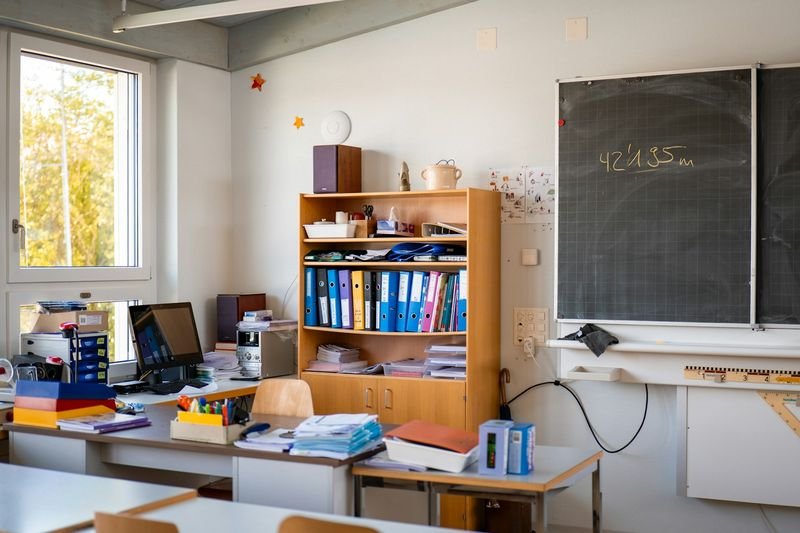
The single most common mistake in an ESL room is treating participation as synonymous with talking. Cold-calling a selectively mute student, waiting them out in front of the class, or offering a reward for “just try saying one word” all raise the exact anxiety response you’re trying to lower — because the demand to perform is the trigger, not a motivator. Direct eye contact and face-to-face questioning add pressure too; sitting beside a student rather than across from them, and routing a question through a worksheet instead of a verbal prompt, removes the performance element without removing the learning.
This is a hard habit to break in a conversation-heavy ESL classroom, where “get them talking” is usually the whole point of the lesson. The adjustment isn’t lowering your expectations for the student’s English — it’s decoupling evidence of learning from spoken output until the student chooses otherwise.

Build a Non-Verbal Response System on Day One
Thumbs up and thumbs down, a show of fingers for multiple choice, pointing at a picture card, nodding — all of it counts as a real answer, and all of it should be set up before you ever need it, not improvised mid-lesson once a student freezes. Color-coded yes/no cards work well for younger ESL learners; a small whiteboard on the desk works for older ones who can write faster than they can risk speaking. The goal is a system every student in the room already understands, so the selectively mute student isn’t the only one using it and doesn’t stand out for needing it.
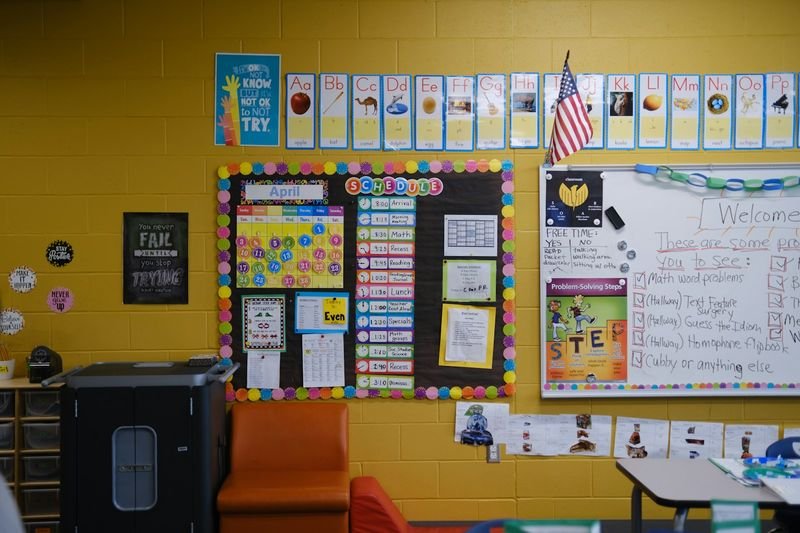
Predictability does a lot of the anxiety-reduction work by itself. A visible, consistent visual schedule removes one layer of uncertainty from a room that otherwise runs on spoken instructions the student has to process live.
Use the Warm-Up Window Before the Room Fills Up
Letting a student arrive 10 to 30 minutes before the rest of the class — with a parent, if the school’s schedule allows it — gives them time to settle into the physical space before the social demand of a full room arrives. The teacher can “fade in” to that early window gradually, starting with no verbal demand at all, then the parent exits once the student looks comfortable. By the time classmates walk in, the student has already adjusted to the room instead of trying to adjust and perform at the same time.
Few language schools build in this kind of flexibility, but even a scaled-down version — the student is first to enter, lights already on, teacher already seated and quiet — reduces the same stacked-anxiety problem on a smaller budget.
Small Groups and a Buddy System Lower the Stakes Fast
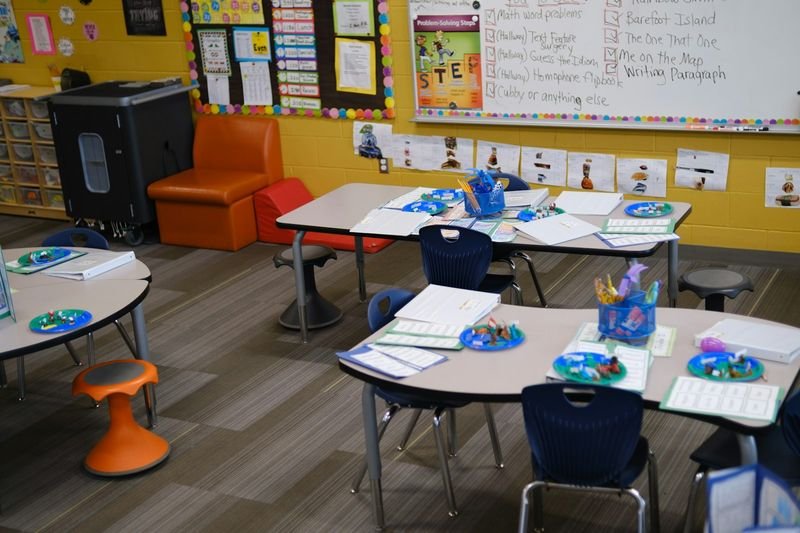
A circle of twenty pairs of eyes is a very different audience than one trusted classmate sitting next to a desk. Pairing a selectively mute ESL student with the same familiar peer across multiple activities — rather than rotating partners every lesson — gives them a chance to speak to one low-stakes listener long before they’re expected to speak to the group. If and when that first whispered word to a partner happens, the instinct to announce it or praise it out loud should be resisted; responding naturally to what was said, without commenting on the fact that they spoke, keeps the moment from turning into pressure the next time.
Floor circles and small-group stations work the same way structurally: fewer people watching, lower perceived risk, more chances for the student to test the water without an audience.

Let Writing and Recording Count as Real Output
A selectively mute student who writes a full paragraph, texts a parent in English, or records themselves at home describing their day is producing language — full stop. Treating that as a lesser substitute for speaking out loud undersells what’s actually happening: the student is demonstrating comprehension and production, just through a channel that doesn’t trigger the freeze response. Parent-recorded video of a student reading aloud at home is a legitimate way to assess fluency without requiring a live classroom performance, and it gives the teacher real data instead of a blank data point next to the student’s name.
Translanguaging strategies apply directly here — letting a student answer first in their first language, in writing, or through a mix of both, keeps the cognitive task focused on meaning instead of stacking “produce in English” on top of “produce out loud” on top of “produce in front of people.”

Give Them a Job That Doesn’t Require a Voice
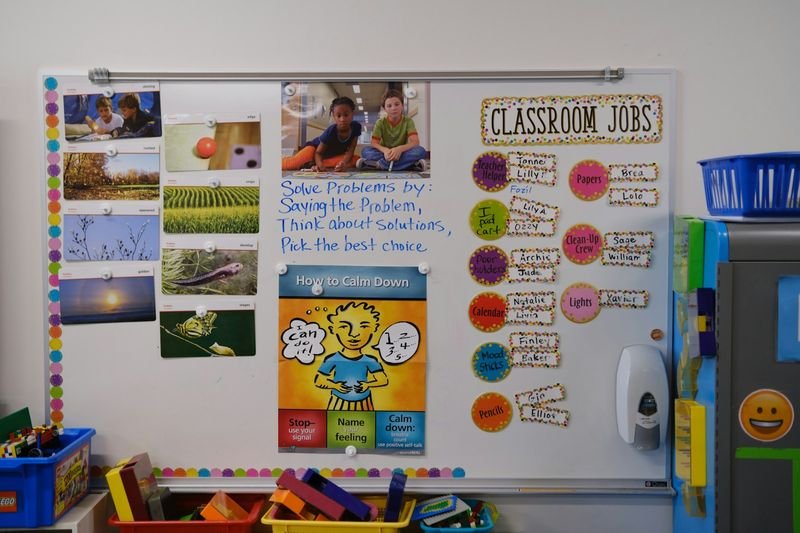
Handing out worksheets, collecting homework, running the timer, or sorting flashcards into piles are all classroom roles that put a student visibly in charge of something without requiring a single word. It’s a small move, but it reframes the student from “the one who doesn’t talk” to “the one who runs the timer” — a real role in the room’s social structure that has nothing to do with speech. Over a semester, that reframing matters more than it looks like it should; peers stop treating the silence as the defining fact about the student.
Loop In Parents and the School’s Support Team Early
A pattern that holds for a full semester — fluent at home, silent in class, regardless of material difficulty — is not something an ESL teacher should wait out solo. Selective mutism is a diagnosable anxiety disorder, and a student with a formal diagnosis may be entitled to classroom accommodations a language teacher won’t know about unless someone tells them. The same early flag that matters for ESL students with ADHD applies here: name the pattern to a counselor or support specialist instead of assuming six more weeks of warm-up games will resolve it.
Parents are also the fastest way to confirm whether the silence is situational (home fluent, school silent) or genuinely language-based (silent everywhere, including at home in the native language) — a distinction that changes the entire intervention plan and one a teacher can’t make alone from inside a 50-minute lesson.
What Quietly Undoes All of This
Three habits reverse progress fast: forcing a direct answer “because today’s a good day,” announcing or celebrating the first spoken word in front of the class, and assuming the student will talk if a situation gets urgent enough. All three add visible pressure at the exact moment the student needs the room to feel lower-stakes, not higher. Progress with selective mutism is slow and non-linear by nature — a student might whisper to a buddy for three weeks straight and then go quiet again for no obvious reason. That’s expected, not a sign the strategy failed.
Surse
- Selective Mutism Association — How to Help a Child With Selective Mutism in the Classroom — clinical definition and classroom accommodation guidance.
- We Are Teachers — What Teachers Need to Know About Selective Mutism — prevalence statistics and core classroom strategies.
- Bilinguistics — Selective Mutism Classroom Action Plan — self-modeling, non-verbal yes/no systems, and assigned-job strategies.
- The Teaching Speechie — 5 Ways to Help Students With Selective Mutism in the Classroom — warm-up window and buddy-system strategies.
- Wikipedia — Silent Period (Second-Language Acquisition) — background on Krashen’s pre-production stage and how it differs from a clinical anxiety disorder.









 RO
RO  EN
EN  ZH
ZH  ZH_CN
ZH_CN  KO
KO  VI
VI  FR
FR  AR
AR  ES
ES  HI
HI  PT
PT  BN
BN  RU
RU  JA
JA  TR
TR  DE
DE  IT
IT  PL
PL  ID
ID  TH
TH  FA
FA  UK
UK  TL
TL  HE
HE  UR
UR  SW
SW  NL
NL  MS
MS  TA
TA  PS
PS  HU
HU  EL
EL  SV
SV  NB
NB  NN
NN  DA
DA  CS
CS  SR
SR  AM
AM