
ESL Grammar Activities | 15 Engaging Techniques That Actually Work
 Transform boring grammar lessons into engaging interactive experiences your students will love
Grammar instruction doesn’t have to be the dreaded part of your ESL lesson plan. With the right ESL grammar activities, you can transform tedious rule memorization into dynamic, interactive experiences that stick. Whether you’re teaching present perfect tense to intermediate students or basic sentence structure to beginners, these 15 proven techniques will revolutionize your grammar teaching approach.
After 20 years of teaching English as a Second Language, I’ve discovered that traditional grammar instruction fails most students. They memorize rules but struggle to apply them naturally. However, when we shift to communicative grammar activities, learning transforms from painful drilling into engaging discovery. Students remember what they experience, not what they memorize.
Why Traditional Grammar Teaching Fails
Most ESL students struggle with grammar because traditional approaches focus on memorization rather than meaningful use. Students can recite rules perfectly but freeze when trying to apply them in conversation. The solution? Communicative grammar activities that embed learning in real contexts.
 Students learning grammar through collaborative, hands-on activities rather than passive memorization
Research from Cambridge English shows that students retain 90% of grammar rules learned through interactive activities versus only 20% through traditional drill methods. The key is making grammar functional and fun.
Consider this: when students laugh during a grammar auction or compete in board races, they’re forming positive neural pathways. The brain releases dopamine during enjoyable activities, which strengthens memory formation. This isn’t just educational theory—it’s neuroscience backing up what we observe in successful classrooms.
15 High-Impact ESL Grammar Activities
1. Grammar Auction
Give student teams “money” to bid on sentences. Mix correct and incorrect examples. Teams must decide which sentences are worth buying. This activity works brilliantly for reviewing multiple grammar points simultaneously while encouraging critical thinking.
Start with $1,000 per team and sentences worth $50-$300. Include obvious errors (“He have three cats”), subtle mistakes (“If I will see him, I’ll tell him”), and perfect examples (“She has been studying for hours”). Teams learn to trust their instincts while discussing grammar logic.
2. Living Grammar Charts
Students become parts of speech and physically arrange themselves into sentence structures. For example, when teaching past perfect tense, students hold cards reading “I,” “had,” “eaten,” “lunch” and organize themselves correctly while explaining their grammatical role.
This kinesthetic approach works especially well for visual and physical learners. Students remember their physical positions and movements, creating muscle memory alongside grammatical understanding. Advanced classes can tackle complex sentences with multiple clauses.
 Interactive teaching methods keep students actively involved in the learning process
3. Grammar Detective Stories
Create mystery scenarios where students must use specific grammar structures to solve crimes. “Detective Johnson has been investigating the case for three weeks. What had happened before he arrived?” This contextualizes complex tenses naturally.
Design mysteries requiring your target grammar for resolution. Students must ask questions using present perfect, describe past events with past perfect, or make predictions with future conditionals. They’re so focused on solving the mystery that grammar becomes a tool rather than an obstacle.
4. Board Race Grammar
Divide the class into teams. Call out a grammar prompt (“Make a question using ‘How long’…”), and one student from each team races to the board to write the correct answer. Fast-paced competition energizes the whole class.
This activity builds fluency through speed and repetition. Students don’t have time to overthink—they must trust their grammatical instincts. Perfect for reviewing question formation, verb tenses, or sentence transformation. Keep energy high with quick rounds and variety.
5. Grammar Interviews
Students interview classmates using target grammar structures. For conditionals: “If you won the lottery, what would you do?” They practice both question formation and answering while gathering real information about each other.
Create interview sheets with 8-10 questions featuring your target grammar. Students must find different classmates for each question, encouraging movement and interaction. Later, they report findings using reported speech: “Maria said she would travel to Japan if she won the lottery.”
 Active student participation is key to successful grammar instruction
6. Error Correction Relay
Write sentences with grammar errors on the board. Teams send representatives to correct one error, then tag the next teammate. The winning team corrects all errors first while maintaining accuracy.
This competitive format turns error correction from tedious work into exciting challenge. Students develop editing skills while racing against time. Include common errors your students actually make—they’ll recognize and avoid these mistakes in their own writing.
7. Grammar Storytelling Chains
Start a story using your target grammar point. Each student adds one sentence using the same structure. For past continuous: “I was walking to school when…” “…I was thinking about my exam when…” Stories become hilarious and memorable.
Stories often take unexpected turns, creating memorable moments students will reference weeks later. “Remember when Pablo said he was dancing with dinosaurs?” These shared experiences build classroom community while reinforcing grammar patterns naturally.
8. Find Someone Who (Grammar Edition)
Create a grid with grammar-based questions: “Find someone who has lived in three countries.” “Find someone who would travel to space if possible.” Students practice question forms while discovering interesting facts about classmates.
9. Grammar Jenga
Write grammar challenges on Jenga blocks. When students pull a block, they must complete the grammar task (“Make a sentence using present perfect continuous”) before placing it on top. Adds suspense to practice.
The physical element creates natural tension and excitement. Students cheer when towers stay standing and laugh when they fall. Purchase blank wooden blocks from craft stores and write challenges in permanent marker. One set lasts years across multiple classes.
10. Timeline Activities
Perfect for teaching tenses. Students create personal timelines showing past, present, and future events, then share using appropriate verb forms. “In 2020, I graduated. Now I am teaching. Next year, I will study abroad.”
Personal timelines connect grammar to students’ actual lives, making abstract tense relationships concrete and meaningful. Advanced students can include complex tenses: “By next year, I will have been living here for five years.”
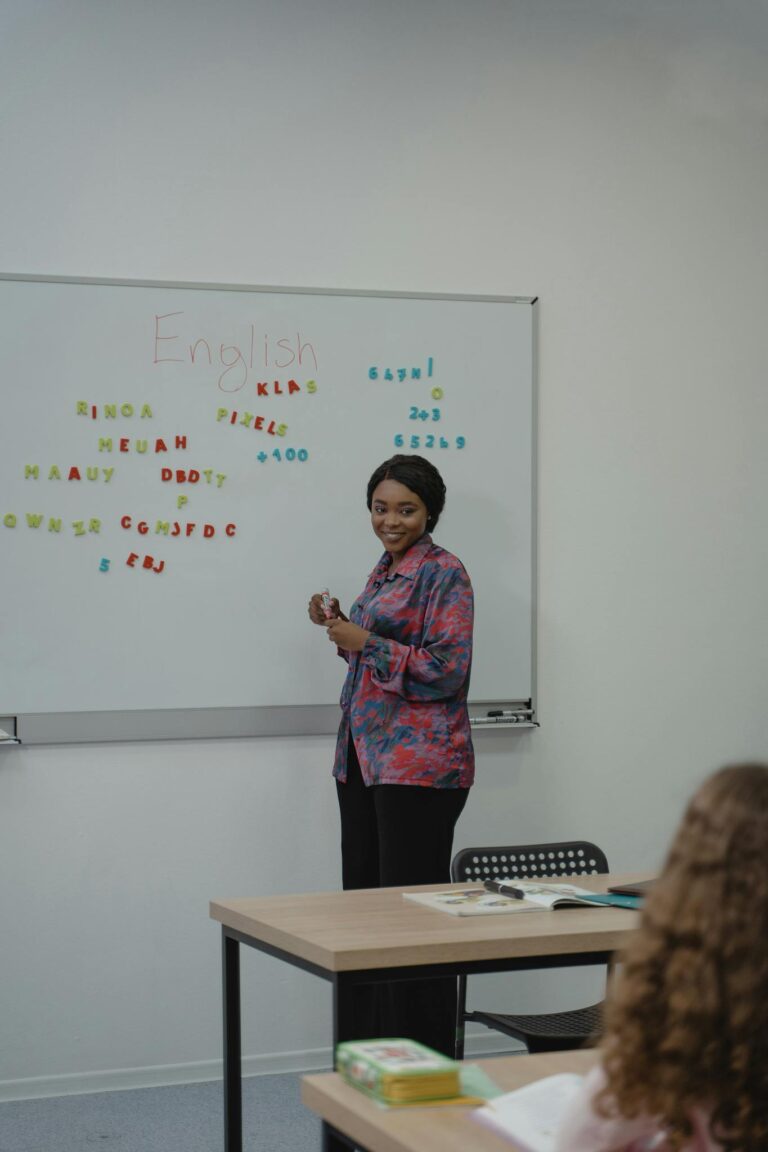
 Clear explanations combined with engaging activities create optimal learning conditions
11. Grammar Transformation Challenges
Give students sentences to transform: “Change this to a question,” “Make it negative,” “Use reported speech.” Time them for added excitement. Great for reviewing multiple grammar patterns.
This activity builds grammatical flexibility—the ability to manipulate language structures fluently. Start with simple transformations and progress to complex changes requiring multiple steps. Advanced students love the mental challenge.
12. Real-World Grammar Scavenger Hunts
Students find examples of target grammar in authentic materials: magazine ads, social media posts, news headlines. They justify why each example demonstrates the grammar point correctly.
Real-world hunting shows students that classroom grammar exists everywhere. They develop awareness of language patterns in natural contexts. For homework, students can photograph or screenshot examples using their phones—technology meets grammar instruction.
13. Grammar Debate Preparation
Assign controversial topics requiring specific grammar structures. “Should schools require uniforms?” Students must use modals of obligation: “Students should/must/have to wear…” Meaningful content drives grammar practice.
Debates naturally require complex language structures: conditionals for hypothetical situations, modals for opinions, and passive voice for formal arguments. Students focus on winning the debate, not perfecting grammar, yet both improve simultaneously.
 University-level students benefit from sophisticated grammar activities that challenge critical thinking
14. Grammar Escape Rooms
Create puzzle sequences where correct grammar use provides clues to “escape.” Students work in teams, solving grammar challenges to unlock the next clue. Digital or physical versions work equally well.
Design progressive challenges that build in difficulty. Early puzzles might require simple past tense formation, while final challenges demand complex conditional structures. The time pressure and teamwork create natural motivation for grammar mastery.
15. Recipe Grammar
Students write recipes using imperative forms, sequence words, and quantifiers. “First, chop three onions. Then, add a cup of rice.” They can share cultural dishes while practicing functional grammar naturally.
Food connects across cultures, making this universally engaging. Students share family traditions while practicing target structures. Create a class cookbook as a final project—students treasure these personalized grammar practice collections.
Adapting Activities for Different Levels
Beginner ESL Grammar Activities
Focus on simple present, basic question formation, and common verb patterns. Use visual aids heavily and incorporate lots of repetition through games. The board race activity works perfectly for practicing “I like/don’t like” or “There is/There are” structures.
Beginners need clear, simple instructions with demonstrable examples. Start with familiar vocabulary and predictable patterns. Success builds confidence, which encourages risk-taking with more complex structures later.
Intermediate Grammar Challenges
Target complex tenses, conditionals, and passive voice. Grammar debates and detective stories challenge students appropriately while providing meaningful contexts for advanced structures.
Intermediate students can handle ambiguity and complexity. They’re ready for activities requiring critical thinking and creative language use. Challenge them without overwhelming—find the sweet spot where struggle leads to satisfaction.
 Collaborative learning environments help students tackle challenging grammar concepts together
Advanced Level Refinement
Use authentic materials and focus on subtle grammar distinctions. Grammar scavenger hunts with academic texts or sophisticated debate topics challenge advanced learners appropriately.
Advanced students need precision and nuance. They understand basic structures but must master subtle differences: “I’m used to working late” versus “I used to work late.” Activities should reflect real-world language demands they’ll face outside class.
Implementation Tips for Maximum Success
Pre-Activity Setup
Always model activities clearly before students begin. Demonstrate with stronger students first, then let them help explain to others. Clear instructions prevent confusion and maximize learning time.
Take time for setup—confused students learn nothing. Walk through examples, check understanding, and anticipate problems. Ten minutes of clear explanation saves twenty minutes of confused practice.
Monitoring and Feedback
Circulate actively during activities, noting common errors for later review. Don’t interrupt fluency-focused activities to correct every mistake, but keep notes for targeted feedback afterward.
Balance encouragement with correction. Students need to feel successful while improving accuracy. Praise effort and progress, not just perfection. Your attitude toward errors shapes student risk-taking behavior.
Extension and Follow-Up
Plan follow-up activities that recycle the same grammar in different contexts. If students practice conditionals through interviews today, use conditional debates tomorrow and conditional storytelling next week.
Grammar mastery requires multiple exposures across varied contexts. Students need to see patterns repeatedly before internalizing them. Design lesson sequences that spiral through target structures systematically.
Assessment Through Activities
These activities double as informal assessment tools. Observe which students struggle with specific structures and adjust your teaching accordingly. The grammar auction reveals exactly which rules students understand versus those needing reinforcement.
Create simple rubrics focusing on accuracy, fluency, and participation. Students engaged in meaningful communication naturally demonstrate their grammatical competence more authentically than traditional tests.
Document observations during activities for portfolio assessment. Note breakthrough moments when students suddenly “get” a challenging concept. These insights inform future lesson planning and individual support strategies.
Technology Integration
Many activities adapt perfectly to digital environments. Grammar escape rooms work brilliantly on platforms like Breakout EDU. Virtual board races use shared documents where students type answers simultaneously.
Apps like Kahoot gamify grammar review, while platforms like Flipgrid let students create grammar explanation videos, combining practice with digital literacy skills.
Technology amplifies engagement but never replaces good pedagogy. Use digital tools to enhance human interaction, not replace it. The best grammar learning happens through meaningful communication with real people.
Cultural Considerations
Some activities work better in certain cultural contexts. Competitive activities thrive in cultures valuing individual achievement, while collaborative tasks suit collectivist societies. Adapt activities to match your students’ cultural backgrounds and learning preferences.
Consider face-saving in error correction activities. Some students prefer private feedback to public correction. Design activities allowing multiple right answers when possible, reducing anxiety about perfect performance.
Building Student Confidence
Grammar anxiety is real and counterproductive. These activities reduce fear by making grammar practice social, fun, and meaningful. When students laugh together during grammar storytelling chains, they’re building positive associations with English learning.
Celebrate progress, not perfection. A student who attempts complex conditional sentences deserves praise, even with errors. Risk-taking leads to learning—create environments where mistakes feel safe and normal.
For more comprehensive guidance on building student confidence in language learning, explore our detailed scaffolding strategies for ESL students resource.
Making Grammar Meaningful
Effective ESL grammar instruction balances accuracy with engagement. These 15 activities prove that grammar doesn’t have to be boring. When students laugh during a grammar storytelling chain or cheer during board races, they’re creating positive associations with language learning that last far beyond your classroom.
Start with activities matching your students’ comfort levels, then gradually introduce more challenging formats. Remember: the best grammar activity is one your students ask to repeat. Try incorporating 2-3 of these techniques into your next lesson plan and watch your students’ engagement soar.
Grammar mastery comes through practice, repetition, and meaningful use. These activities provide all three while keeping students engaged and motivated. Your classroom energy will transform when grammar becomes something students anticipate rather than dread.
Ready to revolutionize your grammar teaching? Choose one activity from this list and try it tomorrow. Your students will thank you for making grammar finally make sense—and actually be fun. Success in grammar teaching isn’t about perfect lessons—it’s about creating environments where students want to practice, improve, and communicate.





 RO
RO  EN
EN  ZH
ZH  ZH_CN
ZH_CN  KO
KO  VI
VI  FR
FR  AR
AR  ES
ES  HI
HI  PT
PT  BN
BN  RU
RU  JA
JA  TR
TR  DE
DE  IT
IT  PL
PL  ID
ID  TH
TH  FA
FA  UK
UK  TL
TL  HE
HE  UR
UR  SW
SW  NL
NL  MS
MS  TA
TA  PS
PS  HU
HU  EL
EL  SV
SV  NB
NB  NN
NN  DA
DA  CS
CS  SR
SR  AM
AM