
Knocker-Uppers Worksheet | Intermediate ESL Reading PDF
Pasaj de lectură
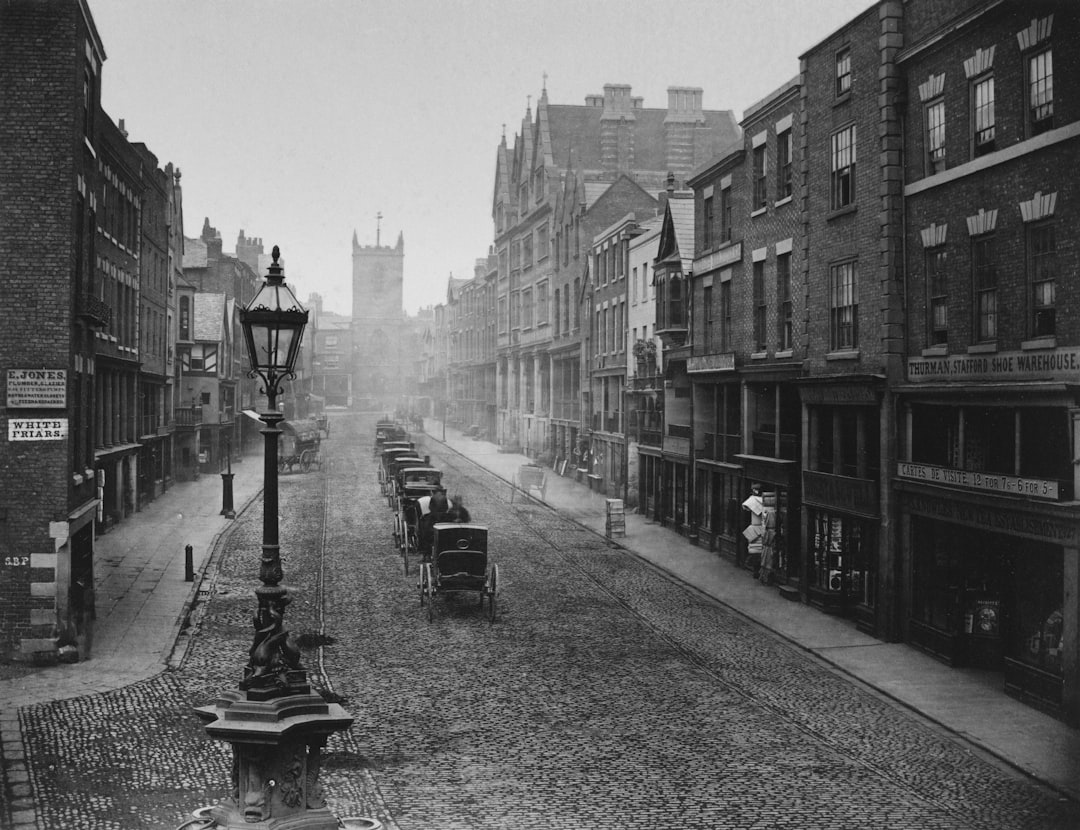
During the Industrial Revolution, before reliable and accesibil alarm clocks became widespread, a unique profession emerged to address a critical societal need. The knocker-upper served as a human alarm clock, ensuring that factory workers, miners, and dock workers arrived punctually for their early morning shifts. Missing work often meant losing wages or facing dismissal, making punctuality essential for maintaining one’s livelihood.
This extraordinary occupation required individuals to traverse dimly lit streets between 3 and 5 AM, armed with specialized equipment. Most knocker-uppers carried a long bamboo pole to tap rhythmically on upstairs bedroom windows, while others preferred pea-shooters, using dried peas as gentle projectiles to rouse sleeping customers. Each client provided compensation of a few pence per week, creating a modest but sustainable income stream for those who undertook this demanding profession.
The role demanded exceptional reliability, intimate neighborhood knowledge, and remarkable memory skills. Knocker-uppers maintained detailed mental records of each customer’s required wake-up time, often serving dozens of households along predetermined routes. They operated in all weather conditions, demonstrating remarkable dedication to their clientele’s professional obligations. The profession predominantly attracted elderly individuals and women who were unable to secure employment in the physically demanding industrial sector.
Remarkably, the profession created its own hierarchy of dependency – many knocker-uppers employed their own wake-up services to ensure they began their rounds punctually. This phenomenon highlights the critical importance of the service during Britain and Ireland’s industrial expansion from the 1830s through the 1940s, when manufacturing schedules demanded precise timekeeping from the working class.
The inevitable decline of this profession began with technological advancement and economic accesibilitate. Mass production techniques significantly reduced alarm clock manufacturing costs, particularly following World War II. Electric clocks, radio alarm clocks, and eventually digital timepieces rendered human wake-up services obsolete. The final recorded knocker-upper ceased operations in the 1970s, though their legacy persists in modern wake-up call services, smartphone applications, and hotel concierge offerings.
Nivel: Nivelul F
A. Potrivirea vocabularului
Asociați fiecare cuvânt cu definiția sa.
1. profession
2. punctuality
3. livelihood
4. affordable
5. projectiles
6. compensation
7. clientele
8. hierarchy
9. manufacturing
10. obsolete
a. b. A job or career that requires special training
b. a. The ability to be on time
c. j. How someone makes money to live
d. g. Not expensive; reasonably priced
e. c. Objects thrown or shot through the air
f. i. Payment for work or services
g. d. Customers or people who use a service
h. h. A system where some people have more power than others
i. f. The process of making things in factories
j. e. No longer needed or useful
B. Adevărat sau fals
Scrieți A (Adevărat) sau F (Fals) pentru fiecare afirmație.
- Knocker-uppers only worked during good weather conditions.
- The profession was most popular during the Industrial Revolution.
- All knocker-uppers were young, strong men.
- Customers paid several pounds each week for the service.
- Some knocker-uppers employed their own wake-up services.
- The job required excellent memory and neighborhood knowledge.
- Mass production made alarm clocks more expensive after WWII.
- The last knocker-upper stopped working in the 1950s.
- Knocker-uppers used bamboo poles and pea-shooters as equipment.
C. Completați spațiile libere
Word Bank: dismissal, women, manufacturing, wake-up, applications, industrial, technology
- Missing work often meant losing wages or facing _____________, making punctuality essential.
- The profession predominantly attracted elderly individuals and _____________ who were unable to secure factory employment.
- Mass production techniques significantly reduced alarm clock _____________ costs.
- Knocker-uppers maintained detailed mental records of each customer’s required _____________ time.
- Their legacy persists in modern wake-up call services and smartphone _____________.
D. Întrebări de înțelegere a textului
- Why was punctuality particularly important for industrial workers during this period?
- What specific equipment and techniques did knocker-uppers use to wake their customers?
- How did the socioeconomic background of knocker-uppers reflect broader employment patterns?
- What economic and technological factors led to the profession’s decline?
- How does the knocker-upper profession demonstrate the relationship between technological advancement and employment?
F. Discussion Questions
- How might the reliability and trust required for the knocker-upper profession compare to modern service industries?
- What economic and social factors contribute to the creation and eventual disappearance of professions?
- How do modern wake-up technologies reflect changing social structures compared to the personal service model of knocker-uppers?
Cheie de răspuns
Comprehension:
- Missing work often meant losing wages or facing dismissal, so workers needed to arrive on time for their shifts
- They used long bamboo poles to tap on bedroom windows or pea-shooters with dried peas as projectiles
- Most were elderly people or women who couldn’t work in physically demanding industrial jobs, showing limited employment options for these groups
- Mass production made alarm clocks affordable, especially after WWII, and electric clocks became widespread
- It shows how technological advancement can make certain jobs obsolete while creating new opportunities elsewhere
A. Vocabular: 1-b, 2-a, 3-j, 4-g, 5-c, 6-i, 7-d, 8-h, 9-f, 10-e
B. True or False: 1-F, 2-T, 3-F, 4-F, 5-T, 6-T, 7-F, 8-F, 9-T
C. Completați spațiile libere: 1-dismissal, 2-women, 3-manufacturing, 4-wake-up, 5-applications


 RO
RO  EN
EN  ZH
ZH  ZH_CN
ZH_CN  KO
KO  VI
VI  FR
FR  AR
AR  ES
ES  HI
HI  PT
PT  BN
BN  RU
RU  JA
JA  TR
TR  DE
DE  IT
IT  PL
PL  ID
ID  TH
TH  FA
FA  UK
UK  TL
TL  HE
HE  UR
UR  SW
SW  NL
NL  MS
MS  TA
TA  PS
PS  HU
HU  EL
EL  SV
SV  NB
NB  NN
NN  DA
DA  CS
CS  SR
SR  AM
AM