Task Based Language Teaching | 10 TBLT Activities for ESL Classrooms
Task based language teaching flips the traditional ESL classroom on its head. Instead of drilling grammar rules and memorizing vocabulary lists, students tackle real-world challenges that demand genuine communication. The approach has gained serious traction among ESL teachers worldwide, and for good reason — it works.
If you’ve ever watched students zone out during a grammar lecture but come alive during a role-play activity, you already understand the core principle behind TBLT. Language learning happens most effectively when students use the language to accomplish something meaningful, not when they study it as an abstract system.
What Is Task Based Language Teaching?
Task based language teaching (TBLT) is an approach where the lesson revolves around completing a specific task rather than studying a particular language point. The task comes first. Language instruction follows naturally from the communicative needs that arise during the task.
A “task” in TBLT isn’t just any classroom activity. It has specific characteristics that separate it from traditional exercises:
Meaning is primary. Students focus on communicating ideas, not practicing forms. The goal is getting a message across, not producing grammatically perfect sentences.
There’s a communication gap. Students need to exchange information, negotiate meaning, or solve a problem together. One student has something another student needs — whether that’s information, an opinion, or a missing piece of a puzzle.
Students rely on their own resources. Rather than being told exactly what language to use, learners draw on whatever English they have to complete the task. This mirrors how language works in the real world.
There’s a clear outcome. Every task has a definable endpoint beyond just “using English.” Students plan a trip, solve a mystery, design a product, or reach a group decision.
The concept originated from research by N. Prabhu in the 1980s and was later developed extensively by scholars like Jane Willis and Rod Ellis. Willis’s framework, published in 1996, remains one of the most practical guides for teachers implementing TBLT.
The Three-Phase TBLT Framework
Jane Willis’s task cycle divides each TBLT lesson into three distinct phases. Understanding this structure makes implementation far more manageable.
Pre-Task Phase
This is where you set the stage. Introduce the topic, activate background knowledge, and clarify what students need to accomplish. You might:
Show a short video clip related to the topic. Brainstorm vocabulary students might need. Model a similar but simpler version of the task. Review useful phrases or expressions without making them mandatory.
The pre-task phase should be brief — roughly 10 to 15 percent of total lesson time. You’re warming up the engine, not doing the driving.
Task Cycle Phase
This is the heart of the lesson, broken into three sub-stages:
Task: Students work in pairs or small groups to complete the task. You circulate, monitor, and take notes on language use — but you don’t interrupt to correct errors. This is their time to struggle productively with the language.
Planning: Groups prepare to report their outcomes to the class. This is where accuracy pressure naturally increases. Students know they’ll present publicly, so they self-correct and help each other polish their language.
Report: Groups share their findings, solutions, or decisions with the whole class. You facilitate, ask follow-up questions, and note common language issues for the next phase.
Language Focus Phase
Now — and only now — do you explicitly address language points. Based on what you observed during the task cycle, you highlight useful phrases, correct recurring errors, and draw attention to grammar patterns that emerged naturally.
This is what makes TBLT fundamentally different from traditional teaching. Grammar instruction isn’t abandoned — it’s repositioned. Students encounter the need for a structure before you teach it. They’re primed to absorb it because they just struggled with it.
10 Task Based Language Teaching Examples for ESL
Knowing the theory is one thing. Having a bank of ready-to-use tasks makes the difference between reading about TBLT and actually doing it. Here are ten tasks organized by complexity.
Beginner-Level Tasks
1. The Shopping List Challenge. Each student receives a different grocery list and a budget. Working in pairs, they role-play a shopping scenario where one person is the shopper and the other is the store clerk. They must negotiate quantities, ask about prices, and stay within budget. The outcome: a completed shopping receipt.
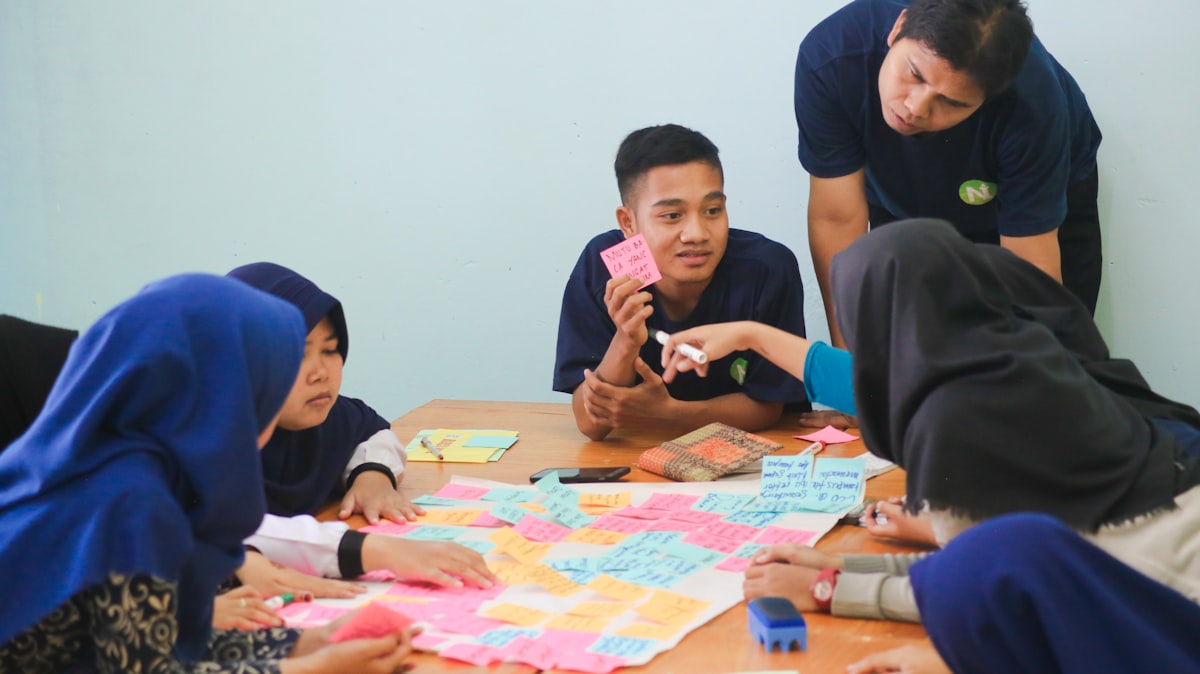
2. Classroom Survey. Students design three questions on a topic (favorite foods, weekend activities, dream vacations). They interview five classmates, record answers, and present the most interesting finding to the class. This naturally generates question formation, reported speech, and comparative language.
3. Spot the Difference. Two students sit back-to-back, each holding a slightly different version of the same picture. Through description and questioning alone, they identify all the differences. The task forces precise vocabulary use and clarification strategies.

Intermediate-Level Tasks
4. Desert Island Survival. Groups of four receive a list of 20 items salvaged from a shipwreck. They must agree on the seven most essential items for survival and rank them. Every group member must contribute and agree. This generates persuasion, justification, and conditional language (“If we take the rope, we could…”).
5. City Tour Planning. Each group plans a one-day tour for a specific type of visitor (a family with young children, a history enthusiast, a foodie). They research real locations, create an itinerary with times and transportation, and present it. Other groups vote on the most appealing tour.
6. Problem-Solution Scenarios. Present a realistic problem (the school cafeteria is losing money, the neighborhood park is being misused). Groups analyze the situation, brainstorm solutions, evaluate pros and cons, and present their best recommendation. This mirrors professional meeting dynamics.
Advanced-Level Tasks
7. Mock Job Interview. Students research a real job posting, prepare interview questions (as interviewers), and practice answering them (as candidates). Rotate roles so everyone experiences both sides. The task naturally demands formal register, hedging language, and self-presentation skills.

8. News Broadcast Production. Groups produce a five-minute news segment covering current events. They assign roles (anchor, reporter, weather presenter), write scripts, rehearse, and perform live for the class. The recorded version becomes a portfolio piece.
9. Debate Tournament. Assign controversial but age-appropriate topics. Teams prepare arguments for and against, anticipate counterarguments, and debate formally. A student panel judges based on argument quality, evidence use, and language sophistication.
10. Business Pitch. Groups invent a product or service, develop a business plan, create a presentation, and pitch to “investors” (the class). Listeners ask tough questions about feasibility, pricing, and competition. This integrates multiple language skills under authentic pressure.
Common Mistakes Teachers Make With TBLT
Implementing task based language teaching sounds straightforward, but several pitfalls catch teachers repeatedly.
Over-controlling the task. The biggest mistake is scripting too much. If you tell students exactly what language to use, you’ve turned a task into a controlled practice exercise. Trust the process. Let them struggle.
Skipping the language focus phase. Some teachers swing too far toward pure communication and never address accuracy. TBLT doesn’t ignore grammar — it teaches it at the moment students are most receptive.
Choosing tasks without genuine outcomes. “Discuss your weekend” isn’t a task — it’s a conversation prompt. Tasks need deliverables. A decision, a product, a presentation, a ranking. Without a clear endpoint, students drift.
Not accounting for mixed levels. In any task, stronger students will dominate unless you structure roles carefully. Assign specific responsibilities within groups. Make sure every student has unique information that the group needs.
Correcting during the task phase. This is hard for teachers, but resist the urge. Error correction during the task phase kills fluency and makes students self-conscious. Save it for the language focus phase where it lands with purpose.
How TBLT Compares to Other Approaches
Teachers sometimes confuse TBLT with other communicative methods. Here’s how they differ.
TBLT vs. Communicative Language Teaching (CLT): CLT is the broader umbrella. TBLT is a specific implementation within CLT that structures lessons around tasks rather than functions or notions.
TBLT vs. Project-Based Learning: Project-based learning spans days or weeks and produces major end products. TBLT tasks typically fit within a single lesson period. Projects can contain multiple TBLT-style tasks.
TBLT vs. PPP (Present-Practice-Produce): PPP starts with the language point and works toward free practice. TBLT starts with the communicative need and works back to language instruction. They’re essentially mirror images.
Making TBLT Work in Your Classroom
Start small. You don’t need to overhaul your entire curriculum overnight. Pick one lesson per week and redesign it around a task. Observe what happens. Notice which students who were passive during grammar drills suddenly become active participants.
Build a task library over time. Once you design a good task, it’s reusable across different proficiency levels with minor adjustments. The Desert Island task works for beginners (basic vocabulary negotiation) through advanced students (complex argumentation).
Pair TBLT lessons with assessment that matches the approach. If students learn through tasks, test them through tasks. Portfolio assessment, peer evaluation, and rubric-based performance assessment align far better with TBLT than traditional written tests.
The research backing TBLT is substantial. Studies consistently show that task-based instruction leads to greater fluency, improved communicative competence, and higher student engagement compared to form-focused approaches alone. It won’t replace explicit instruction entirely — but it transforms your classroom from a place where students study English to a place where they actually use it.






 RO
RO  EN
EN  ZH
ZH  ZH_CN
ZH_CN  KO
KO  VI
VI  FR
FR  AR
AR  ES
ES  HI
HI  PT
PT  BN
BN  RU
RU  JA
JA  TR
TR  DE
DE  IT
IT  PL
PL  ID
ID  TH
TH  FA
FA  UK
UK  TL
TL  HE
HE  UR
UR  SW
SW  NL
NL  MS
MS  TA
TA  PS
PS  HU
HU  EL
EL  SV
SV  NB
NB  NN
NN  DA
DA  CS
CS  SR
SR  AM
AM