
15 ESL Pronunciation Activities That Actually Work
Most ESL pronunciation activities fail for the same reason: they treat pronunciation as a list of sounds, when students actually struggle with rhythm, stress, and the fact that English connects words together in ways their first language never does. Drill the /θ/ sound for an hour and a student can still produce sentences nobody understands — because intelligibility lives in the bigger picture, not the individual phoneme.
This is a working teacher’s playbook for the ESL pronunciation activities that move the needle: 15 of them, organized so you can pull one out for a five-minute warmer or build a whole 50-minute lesson around three. Every activity here has been run in real classrooms with real teenagers who would rather be on their phones. None of them require a phonemic chart on the wall, though one will work better if you have one.

Why Pronunciation Gets Skipped (And Why That’s a Problem)
In a 2017 survey from Cambridge Assessment English, 73% of teachers said they spent less than 10% of class time on pronunciation, even though their students cited it as the single biggest barrier to confident speaking. The reason is practical: pronunciation feels uncomfortable to teach. Many non-native English teachers worry about modeling sounds incorrectly, and many native speakers have never been taught the phonetic vocabulary to explain why their mouth does what it does.
The truth is, most students don’t need a phonetics degree from their teacher. They need regular, low-stakes practice with focused feedback — five minutes a day beats one hour a week. The activities below are built around that principle.
Activity 1: Minimal Pair Bingo
Minimal pairs are word pairs that differ by exactly one sound — корабль/овца, bat/bet, rice/lice. They isolate the sounds your students confuse most. Hand out bingo cards where each square contains one word from a pair. Read out words at random and students mark the one they hear. The first card to fill a row shouts “bingo.”

This works because it forces discrimination before production. A student who can’t hear the difference between корабль и sheep will never reliably say it. Build your card around the pair their L1 collapses — Japanese learners get /r/ vs /l/, Mandarin learners get short and long vowels, Spanish learners get /b/ vs /v/. Rotate readers after each round so students hear different mouths producing the contrast.
Activity 2: Backchaining Long Phrases
When a student stumbles over “I would have gone to the store”, the problem isn’t the meaning. It’s that English crushes function words into weak forms — would have becomes woulda, to the becomes tuhthuh. Backchaining fixes this by drilling from the end of the phrase backwards.
You say: store. Class repeats. You say: the store. Class repeats. to the store. gone to the store. would have gone to the store. I would have gone to the store. By the time you reach the front of the sentence, the connected speech rhythm has built itself. This is the single most underused pronunciation drill in ESL textbooks, and it transforms students’ fluency in under ten minutes.
Activity 3: Tongue Twister Speed Rounds
Tongue twisters are a cliché for a reason — they target specific sound clusters with a built-in game mechanic. Put a thirty-second timer on the board. Students pair up and try to read the twister cleanly as many times as possible before the buzzer. Winner is whoever gets the highest чистый count, not just the highest count.

Pick twisters that target the sound you’re teaching, not whatever Google returns first. For /θ/ and /ð/: “Thirty-three thirsty thieves thought they’d seen the throne.” For /v/ and /w/: “Vincent vowed vengeance very vehemently when Wendy waited.” Speed introduces playful pressure, which lowers self-consciousness — students who refuse to repeat after the teacher will happily race a twister against a partner.
Activity 4: Word Stress Pictionary
Most multisyllabic English words have one strong syllable, and getting it wrong makes the whole word unintelligible. PHOtograph, phoTOGraphy, photoGRAPHic — same root, three different stress patterns. Draw a series of dots on the board, big and small: ●○○, ○●○, ○○●. Say a word with its natural stress. Students point to the matching pattern.
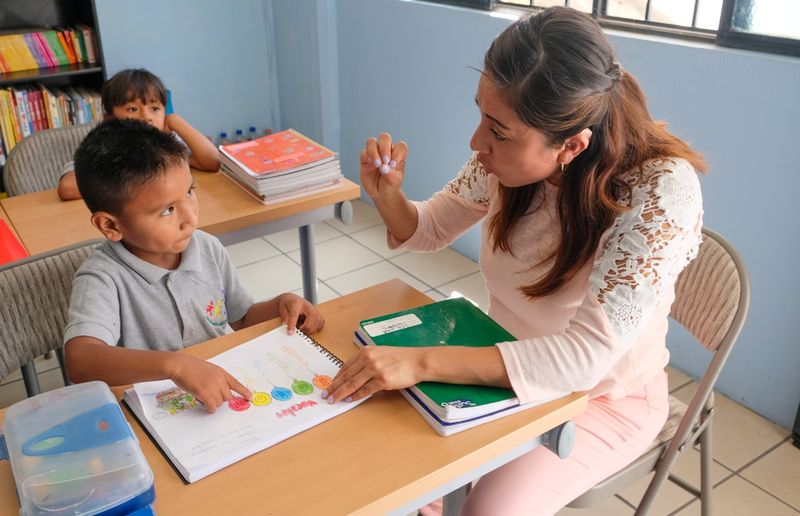
Once they get fast at it, flip the activity. Show a dot pattern. Students brainstorm words that fit. ●○○ gets you elephant, beautiful, basketball. The British Council Teaching English site has excellent free word-stress lesson plans if you want ready-made word lists.
Activity 5: Shadow the Native Speaker
Play a 30-second clip from a podcast, news anchor, or YouTube video. Students don’t repeat afterwards — they speak at the same time, matching pace, stress, and intonation as closely as they can. The first pass is chaos. The third pass is uncanny. By the fifth, students who never produce natural rhythm in conversation suddenly do.
Shadowing works because it forces the mouth to keep up with native cadence, which is what most ESL students are missing. Use clear, slightly slower speakers for beginners — BBC Learning English’s 6 Minute English series is calibrated for this. Don’t correct individual mistakes during shadowing. Let the reps do the work.
Activity 6: Schwa Hunt
The schwa — that lazy “uh” sound — is the most common vowel in English and the one students reliably overproduce. Banana isn’t “bah-NAH-nah,” it’s “buh-NAH-nuh.” О isn’t “ay-bowt,” it’s “uh-bowt.” Print a paragraph. Students underline every vowel they think is a schwa, then read aloud and check.
The shock for most students is how many vowels in unstressed syllables actually become schwa in connected speech. Once they hear it, they can’t unhear it, and their own English starts to sound less staccato. Pair this with Activity 4 — schwa always lives in the weak syllables, never the stressed one.
Activity 7: Pronunciation Pair Mirror
Students sit facing each other. One reads a sentence aloud. The other repeats it back exactly, mimicking pace, stress, and any mistakes. Then they swap. Then they swap again, but this time the listener corrects what they noticed.

This activity is gold because students who can’t hear their own mistakes can usually hear someone else’s. Peer correction also takes pressure off the teacher and gives quieter students permission to speak in a smaller audience. The catch: model the mimicry first so students understand they’re copying the sound, not making fun of each other.
Activity 8: Intonation Drawings
Pitch carries meaning in English the way tones carry meaning in Mandarin. “You’re going.” with a falling tone is a statement. With a rising tone it’s a question. With a flat tone followed by a rise on “going” it’s surprised disbelief. Draw arrows on the board over a sentence and have students copy the contour with their voice.
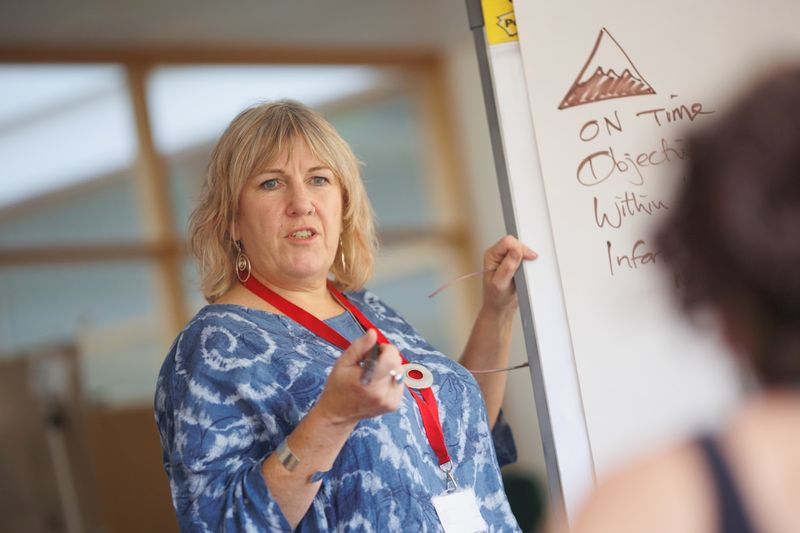
Once they get the four basic contours (statement, question, list, surprised), turn it into a guessing game. Say a sentence with one of the four contours. Students hold up 1, 2, 3, or 4. Twenty rounds takes five minutes and locks in something most textbooks never teach.
Activity 9: Record-Yourself Reflection
Every student records a 30-second monologue on their phone. Topic: their weekend, a movie they liked, anything low-stakes. They listen back individually with a worksheet that asks three questions: which word was hardest to say? Where did your voice get monotone? What’s one sound you noticed yourself avoiding?

This is the only ESL pronunciation activity I run where students always ask to redo their recording. Hearing your own voice is a powerful, slightly horrifying motivator. The reflection sheet matters — without structured questions, students just cringe and learn nothing.
Activity 10: The Dictogloss with a Twist
Read a short passage twice at natural speed — connected speech and all. Students don’t take notes the first time. The second time, they write down everything they can catch. Then in pairs, they reconstruct the full passage from their fragments.
The pronunciation gain comes from the negotiation step. Students argue about whether the teacher said “could have” или “couldn’t” — which sounds nearly identical at speed. They learn that listening for connected speech features is a survival skill, not a luxury. Match this with the lesson stage toolkit if you want a full session plan around it.
Activity 11: Stress-Timed Clapping
English is stress-timed. That means stressed syllables fall at roughly equal intervals regardless of how many unstressed syllables are between them. “DOGS chase CATS” и “the DOGS will be CHASing the CATS” take about the same time to say. This blows students’ minds when they realize it.

Clap the rhythm on the stressed syllables. Have the class clap with you while reading. Then strip out the unstressed words completely and read just the stressed ones to the same rhythm. “DOGS — CHASE — CATS.” Then add the function words back in, fitting them between the claps. This single drill explains why their flat, syllable-timed English sounds robotic — and gives them a fix.
Activity 12: The Silent Mouth
Say a word silently, mouthing it clearly with full lip and jaw shape. Students guess what you said. Then they take over — one student mouths, the rest guess. Five minutes, no English needed from the students’ voices, but they’re studying lip shapes and tongue positions in a way they never would otherwise.
This is gold for self-conscious classes. It’s also surprisingly hard. Students realize that they’ve been ignoring the visual half of pronunciation — and start watching native speakers’ mouths in videos afterwards. Variation: mouth a short phrase and let pairs work it out together.
Activity 13: Connected Speech Reformulation
Write a sentence on the board with every word fully separated: “What are you going to do this weekend?” Underneath, write the natural connected form: “Whaddaya gonna do this weekend?” Drill the second version. Then write three more sentences in their formal form and ask pairs to predict and rehearse the connected version.
Don’t confuse this with teaching slang. Connected speech features — assimilation, elision, intrusion — are how every native speaker actually talks, even in formal contexts. Students who can produce them sound dramatically more fluent in the same vocabulary they already know. The University of Iowa’s Sounds of Speech resource has animated mouth diagrams that pair well with this lesson.
Activity 14: Pronunciation Poker
Give each student five chips at the start of class. Every time they catch a classmate (or the teacher) mispronouncing a target sound from this week’s focus, they call it out — politely, with the correct version — and win a chip. End of class: most chips gets a small prize or homework pass.
The shift this creates is enormous. Students who would never volunteer corrections start actively listening for the target sound in everyone’s speech, including their own. Limit the rule to one sound per week — if students are policing every error, the activity becomes hostile instead of playful.
Activity 15: Phrase a Day
Pick one functional phrase per day. “I would’ve if I could’ve.” “What’re you up to?” “Lemme get back to you on that.” Drill it for two minutes — backchaining, shadowing, partner repetition. Then they have to use it in a real conversation before the end of class, and report back who said it to.
This is the closest thing to a magic bullet I’ve found. One phrase, drilled to automaticity, used once in the wild. Over a 20-week term, that’s 100 phrases of native-rhythm English that students own outright. Pair it with the skill-by-skill activity playbook for warmer and cool-down ideas that build off the phrase of the day.
Watching the Activities in Action
If you want to see a few of these games run live — the timing, the energy, the way you handle a class that resists — ESL with Tas has a strong walkthrough that pairs well with this list.
How to Build an ESL Pronunciation Activities Routine That Sticks
Don’t try to teach 15 activities in 15 days. Pick three. Run one as a warmer, one as a main activity, and one as a closer for the next month. Students stop dreading pronunciation when it becomes predictable. Once those three feel automatic, swap in two more.
The teachers I’ve seen get the biggest pronunciation gains are the ones who treat it like a daily habit, not a unit. Five minutes every single class beats a one-hour blowout once a month, every time. If you want a structured way to fold these into your existing lesson plans, the no-prep mixed-level activities guide has dozens of ways to slot pronunciation work into mixed-ability rooms without singling anyone out.
What to Try in Your Next Class
Pick the activity that scares you least and run it tomorrow. Backchaining (Activity 2) and Stress-Timed Clapping (Activity 11) are the two that give the most visible gain for the least prep — both take under ten minutes and need zero materials. If your class is shy, start with Activity 7 (Pair Mirror) or Activity 12 (Silent Mouth) where nobody has to perform solo. Track which one your students ask for again. That’s your answer for what to build the next month around.
Источники
- Cambridge Assessment English Research — Teacher survey data on pronunciation instruction time
- British Council Teaching English — Pronunciation — Free word stress and rhythm lesson plans
- BBC Learning English — Pronunciation — Audio clips for shadowing practice
- University of Iowa Sounds of Speech — Animated mouth and tongue diagrams for every English sound
- U.S. State Department American English — Pronunciation Skills — Free downloadable pronunciation curriculum for teachers
Looking for free ESL worksheets? Browse our full collection — printable resources for every level and age group. Browse Free Worksheets →
Students can access free worksheets and reading materials at 18KEnglish.com.









 RU
RU  EN
EN  ZH
ZH  ZH_CN
ZH_CN  KO
KO  VI
VI  FR
FR  AR
AR  ES
ES  HI
HI  PT
PT  BN
BN  JA
JA  TR
TR  DE
DE  IT
IT  PL
PL  ID
ID  TH
TH  FA
FA  UK
UK  TL
TL  HE
HE  UR
UR  SW
SW  RO
RO  NL
NL  MS
MS  TA
TA  PS
PS  HU
HU  EL
EL  SV
SV  NB
NB  NN
NN  DA
DA  CS
CS  SR
SR  AM
AM