

Fact-Checking AI Content: A Verification Workflow for Teachers (2026)
An AI assistant will hand you a polished paragraph in three seconds, complete with a confident date, a tidy statistic, and a quotation attributed to a famous author. It looks finished. It reads beautifully. And roughly one detail in ten may be quietly, completely wrong. For English teachers who now lean on AI to draft reading passages, discussion questions, grammar explanations, and biographical texts, that error rate is not a rounding problem. It is the difference between teaching a fact and teaching a fiction to a room full of students who trust you.
The good news is that fact-checking AI-generated content is a skill, not a talent. It runs on a repeatable process you can finish in a few minutes once it becomes habit. This guide walks through that verification workflow step by step, so the AI stays a fast first-drafter and you stay the editor who decides what is true.

Why AI Gets Confident Facts Wrong
Before you can check AI output efficiently, it helps to understand the machine you are checking. A large language model does not look facts up in a database. It predicts the most statistically likely next word based on patterns in its training data. That design makes it fluent, creative, and fast. It also means the model has no built-in sense of true versus false. It is optimising for text that sounds right, and something that sounds right is not the same as something that является right.
When a model generates a detail it has no real basis for, we call it a hallucination. The tricky part is that hallucinations arrive in exactly the same confident tone as accurate statements. There is no nervous hesitation, no asterisk, no change in font. An invented publication date for a novel looks identical to a correct one. This is why you cannot rely on how the text feels. The prose is engineered to feel trustworthy regardless of accuracy.
Certain content types carry far more risk than others. Knowing where errors cluster lets you spend your limited checking time where it actually matters.
- Specific numbers and dates — population figures, historical years, test statistics, and “studies show” percentages are prime hallucination territory.
- Quotations and attributions — the model frequently assigns real-sounding quotes to the wrong person, or invents them wholesale.
- Named sources and citations — AI can produce authors, journal titles, and book references that do not exist.
- Recent events — anything after the model’s training cut-off is guesswork dressed as fact.
- Cultural and local specifics — details about smaller countries, regional customs, or niche topics are thinner in training data and error-prone.
By contrast, general explanations of well-established ideas — how the present perfect works, why reading aloud builds fluency, what a topic sentence does — are usually reliable, because those patterns appear thousands of times in training data. The workflow below front-loads your attention onto the high-risk material.

Step One: Read With a Verifier’s Eye
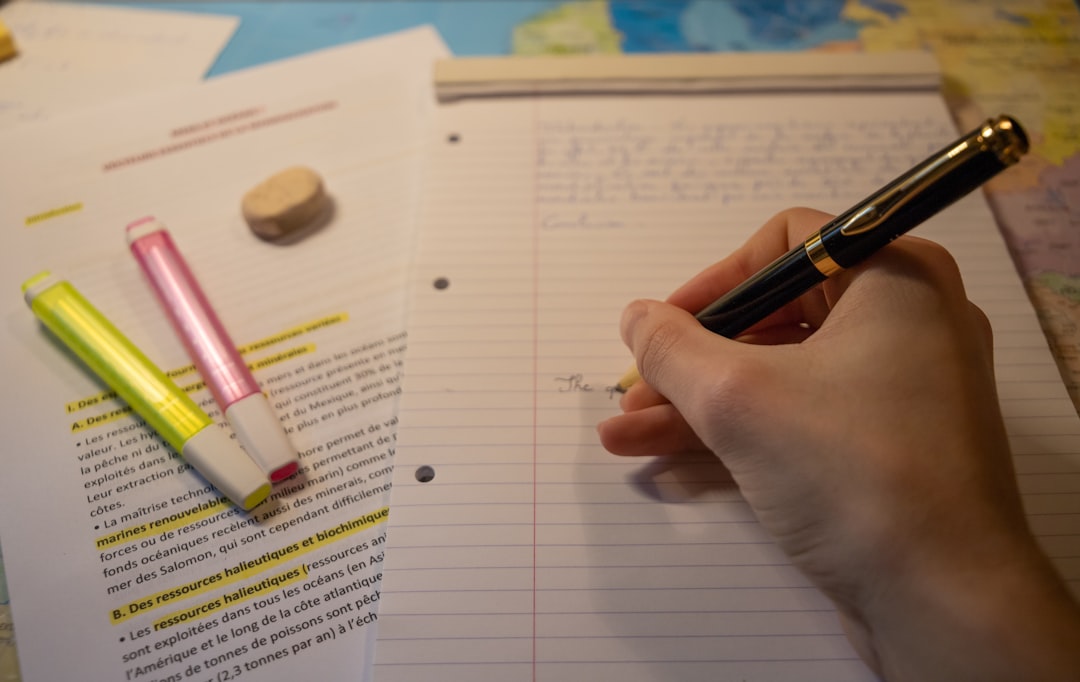
The first pass is not about fixing anything. It is about tagging. Read the AI draft once through and mentally — or literally, with a highlighter — mark every claim that a reader could, in principle, look up and prove wrong. Dates, numbers, names, quotes, titles, cause-and-effect statements, and superlatives (“the first,” “the largest,” “the only”) all get flagged.
Everything you flag becomes a checklist. Everything you don’t — the connective tissue of general explanation and opinion — you can usually leave alone. This single reframing turns a vague sense of unease (“I hope this is right”) into a concrete, finite list of items to confirm. A 400-word AI reading passage might contain only six or seven checkable claims. Verifying seven facts is a far smaller job than re-researching an entire topic, and it is the reason this workflow stays fast enough to actually use on a busy teaching week.
Ask the model to show its confidence
A useful trick during this pass: paste the draft back into the AI and ask, “Which of these specific facts are you least certain about, and which should a human verify independently?” The model is often surprisingly good at flagging its own shaky claims when prompted directly. Treat this as a way to prioritise your checklist, never as verification itself — the AI confirming its own facts is not evidence, only a hint about where to look first.

Step Two: Verify Against Independent Sources
Now you confirm the flagged claims — but the word independent is doing all the work here. Asking the same AI “Are you sure?” is not fact-checking. The model will often cheerfully double down, or apologise and invent a new wrong answer. Real verification means leaving the AI entirely and consulting a source with actual accountability behind it.
A practical hierarchy of trust helps you choose fast. For a claimed fact, ask what the most authoritative independent source would be, and go straight there.
- Primary and official sources first. Government statistics offices for population and economic data, official organisation sites for their own facts, original texts for quotations from literature.
- Established reference works next. Encyclopaedias and reputable dictionaries for definitions, dates, and biographical basics. These are edited and correctable, unlike raw AI output.
- Recognised news and academic publishers for events, research findings, and current affairs.
- Cross-checking when no single authority exists — if three unrelated, credible sites agree, confidence rises sharply.
For quotations specifically, search the exact wording in quotation marks. A genuine quote from a well-known figure will appear in multiple reputable places attributed the same way. A hallucinated one will either return nothing or trace back only to low-quality quote-aggregator sites that copy each other’s errors. When a “famous” quote has no solid origin, cut it. A lesson never suffers from removing an unverifiable quotation; it suffers badly from teaching a fake one as real.
Step Three: Check the Sources the AI Cites
If your AI tool provides citations or links — and many now do — resist the urge to treat those citations as proof. A distinctive failure mode of AI is the fabricated reference: a plausible author, a believable journal name, a real-looking URL, all pointing to a study that was never written. The citation exists to look like evidence, and it will fool anyone who doesn’t click through.
So click through. Open every link. Confirm three things: that the page actually exists, that it genuinely says what the AI claimed it says, and that the source is one you would trust on its own merits. A live link to a weak or irrelevant page is no better than a dead one. If a citation cannot survive a thirty-second visit, delete both the citation and the claim it was meant to support, then verify that claim independently through Step Two.
This step matters doubly if you plan to model good research habits for students. Teaching learners to evaluate sources while unknowingly handing them fabricated ones undermines the whole lesson. Your verified materials become a quiet demonstration of the standard you want them to reach.

Step Four: Watch for Bias, Not Just Errors
Fact-checking is not only about catching outright falsehoods. AI content can be entirely accurate and still quietly skewed. Because models learn from vast amounts of internet text, they can reproduce a dominant cultural viewpoint, flatten nuance, or present one interpretation of a contested topic as settled fact. For language teachers working with international classrooms, this matters enormously.
When an AI drafts a passage about a historical event, a cultural custom, or a social issue, ask whose perspective is centred and whose is missing. Does a text about a festival describe it from the inside, or as an exotic curiosity? Does an “objective” summary of a debate actually take a side? Does the example set assume a Western frame that your students may not share? These are editorial judgements no fact-check catches, and they are precisely where a human teacher’s judgement is irreplaceable.
You are also checking for level and tone. AI frequently drifts above the intended proficiency band, slipping in idioms or complex clauses that will lose a lower-level class. Reading the draft as your actual students would experience it is part of the same verification pass — accuracy of content and accuracy of pitch, checked together.

Building the Habit So It Actually Sticks
A workflow only helps if you run it every time, including the week you are exhausted and the passage looks obviously fine. The most reliable way to make verification automatic is to lower its cost and attach it to something you already do.
Keep a short, standing prompt template that asks the AI to separate its output into “general explanation” and “specific verifiable facts,” so your checklist is half-built before you even start reading. Save a small bookmark folder of your trusted go-to sources — an encyclopaedia, an official statistics portal, a reputable dictionary — so verification is two clicks, not a fresh search each time. And build the check into your existing lesson-prep routine rather than treating it as an extra chore bolted on at the end.
It also helps to calibrate effort to stakes. A throwaway warm-up question that sparks discussion barely needs checking; if a detail is off, the conversation absorbs it. A biographical reading passage students will take as authoritative, a grammar rule they will memorise, or a statistic they might quote in an exam essay deserves your full attention. Spend your verification time in proportion to how much a reader will trust and repeat the claim.
Turn the process into a teachable moment
Once the workflow is second nature for you, it becomes content in its own right. Showing students how you caught an AI error — the flagged claim, the independent source, the verdict — is one of the most concrete digital-literacy lessons available. It teaches them that fluent, confident text is not automatically true, a habit of mind that will serve them long after any particular grammar point fades. Your own verification routine, done in the open, models the exact critical thinking you want them to carry into a world full of machine-generated writing.
The Editor in the Loop
AI has genuinely changed lesson preparation for the better. It removes the blank page, drafts in seconds, and frees hours you can spend actually teaching. None of that is worth surrendering. The point of a verification workflow is not to distrust the tool but to use it the way it works best: as a brilliant, tireless first-drafter that still needs an editor with judgement, subject knowledge, and accountability to a real classroom.
That editor is you. Flag the checkable claims, confirm them against independent sources, click through every citation, and read for bias and level as well as facts. Do it a dozen times and it stops feeling like a process and starts feeling like professional instinct. The AI writes fast; you make it true. That division of labour is what keeps the technology an asset to your teaching instead of a quiet liability inside it.
If you’d like a desk reference on evaluating information and spotting misinformation, a good media-literacy handbook is worth keeping nearby: browse media-literacy guides for teachers on Amazon.
Источники
- Wikipedia — Hallucination (artificial intelligence)
- Британский совет
- Международная ассоциация TESOL
- Poynter Institute — media literacy and fact-checking







 RU
RU  EN
EN  ZH
ZH  ZH_CN
ZH_CN  KO
KO  VI
VI  FR
FR  AR
AR  ES
ES  HI
HI  PT
PT  BN
BN  JA
JA  TR
TR  DE
DE  IT
IT  PL
PL  ID
ID  TH
TH  FA
FA  UK
UK  TL
TL  HE
HE  UR
UR  SW
SW  RO
RO  NL
NL  MS
MS  TA
TA  PS
PS  HU
HU  EL
EL  SV
SV  NB
NB  NN
NN  DA
DA  CS
CS  SR
SR  AM
AM