
12 ESL Speaking Activities That Build Real Fluency
Getting ESL students to actually speak in class is one of the toughest challenges in language teaching. Most learners understand far more than they can produce — and the gap between passive knowledge and active speech can feel enormous, especially in a classroom where the fear of making mistakes looms large. The right ESL speaking activities don’t just give students something to do; they lower that anxiety, create real communicative pressure, and build fluency through repetition without feeling repetitive.
This guide covers 12 proven speaking activities that work across levels, from beginner to advanced. Each one is designed to maximize talk time while keeping teacher prep low. You’ll find out what makes each activity effective, how to set it up, and how to adapt it for different class sizes and proficiency levels.
Why Traditional Speaking Practice Falls Short
Ask-and-answer drills, round-robin reading, and teacher-led question sessions share a common flaw: most students are silent most of the time. In a class of 20, each student might produce only a few sentences in a 50-minute period. That’s not enough for fluency development.
Research in Cambridge’s language teaching literature consistently shows that meaningful, communicative practice — where students have a reason to exchange information — produces far better speaking outcomes than drills. The activities below are built on that principle. They create information gaps, opinion divergence, or task-based goals that give students genuine motivation to speak.
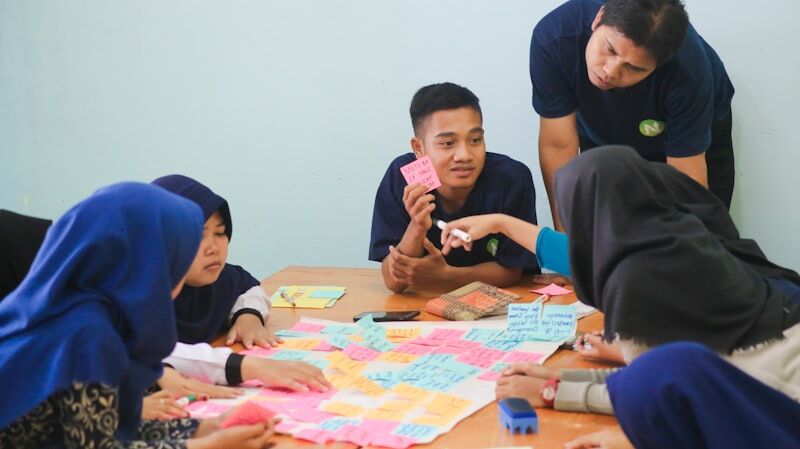
ESL Speaking Activities That Actually Build Fluency
1. Find Someone Who (Mingling Activity)
This classic warmer works at almost every level. Each student receives a bingo-style grid with statements like “Find someone who has lived in another country” or “Find someone who can cook three different cuisines.” Students mingle and interview classmates until they find matches for each square.
Почему это работает: It forces interaction across the whole class, not just with a seatmate. Students practice question formation naturally because they have a real purpose — filling in their grid. The mingling format also breaks down classroom hierarchies.
Adaptation: For beginners, pre-teach the question forms before the activity. For higher levels, require follow-up questions (“Why did you move there?” rather than just “Yes/No”).
2. Information Gap Activities
In an information gap, student A has information that student B needs, and vice versa. Neither can see the other’s sheet. A classic version: both students have a partially complete schedule, and they must ask each other questions to fill in the missing times and activities.
These activities create genuine communicative need. Students can’t cheat by looking — they have to speak to complete the task. You can build information gaps around maps, pictures with differences, partial texts, or fact sheets.

3. Debate Corners
Post four signs around the room: Strongly Agree, Agree, Disagree, Strongly Disagree. Read a statement — “Social media does more harm than good” — and students physically move to the corner that represents their opinion. They then discuss with whoever is in their corner, and you cold-call students to justify the class position.
This works exceptionally well for adult ESL learners because it involves their real opinions. The physical movement also energizes a class that’s been sitting for a while. After one round of discussion, read a new statement and students re-sort themselves.
4. Dictogloss
A dictogloss is a reconstruction task that bridges listening and speaking. Read a short text (2-3 sentences at normal speed) twice. Students take notes on key words, then work in pairs to reconstruct the original text from memory. The pair discussion to agree on the correct wording is where the speaking practice happens.
Unlike a traditional dictation, dictogloss doesn’t require students to write every word — which means the focus shifts from transcription accuracy to meaning and grammar negotiation. Pairs often argue over which tense was used or what article was correct, and that negotiation is exactly the kind of metalinguistic speaking that strengthens accuracy.
5. Picture Description Pairs
Student A describes a picture in detail. Student B draws what they hear without seeing the original image. When the description is complete, they compare drawing to original. The discrepancies are where the real learning happens — what vocabulary was missing? What was misunderstood?
For more advanced classes, use a complex scene from a news photograph or a painting. The richer the image, the more language it demands. This activity naturally practices spatial vocabulary, descriptive adjectives, and sequencing phrases.
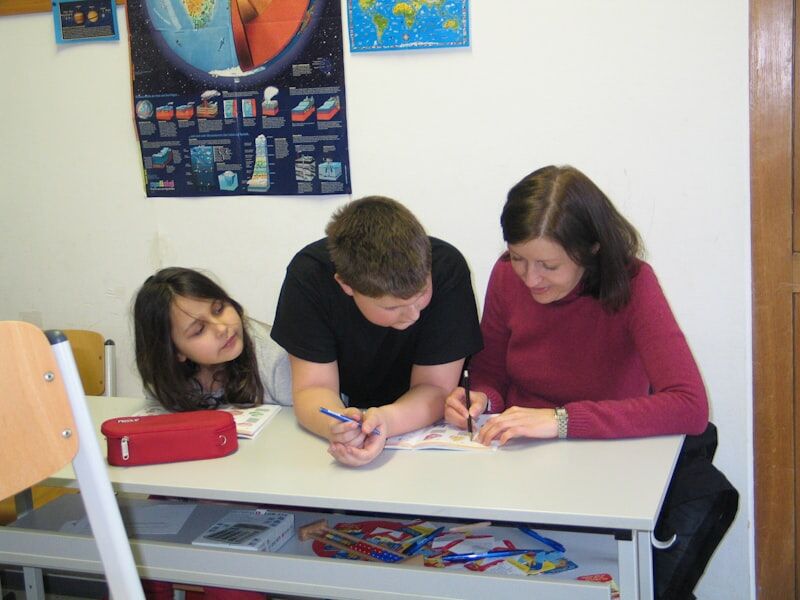
Discussion Activities for ESL Students
6. Fishbowl Discussion
Set up four or five chairs in the center of the room — the “fishbowl.” A small group discusses a controversial topic while the rest of the class observes and takes notes on language use, argument structure, or specific phrases. After five minutes, the outer circle rotates in and the previous discussants become observers.
This format solves two problems at once: it holds observers accountable (they can’t zone out when they know they’ll rotate in) and it models discussion moves for students who are unsure how to enter or respond in a conversation. See our related post on transforming your ESL classroom with conversation practice for complementary strategies.
7. Socratic Seminar
Based on the classical discussion method, a Socratic seminar asks students to analyze an open-ended question collaboratively rather than compete for the “right” answer. The teacher’s role is minimal — ask the question, then step back. Students are expected to build on each other’s comments, ask clarifying questions, and respectfully challenge claims.
Good Socratic seminar questions for ESL classes include: “What does it mean to be fluent in a language?” or “Is it possible to fully understand a culture without speaking its language?” These questions have no single answer, which means every student has something to contribute regardless of their English level.
8. Story Spine
Story Spine is an improv technique adapted for ESL. Each student adds one sentence to a collaborative story, using sentence starters that force logical progression:
- “Once upon a time…”
- “Every day…”
- “Until one day…”
- “Because of that…”
- “Because of that…”
- “Until finally…”
- “Ever since then…”
The structure prevents students from getting stuck or killing the narrative. Because each turn is short (one sentence), even anxious speakers can participate. The humor that emerges from unexpected story turns keeps engagement high.

ESL Warm-Up Activities for Speaking
9. Speed Conversations
Set up chairs in two rows facing each other — like speed dating. Give students a question or topic, set a two-minute timer, and let pairs converse. When the timer sounds, one row rotates one seat. Students talk to a new partner about the same or a new topic.
The short time limit removes the pressure to sustain a long conversation. Students who run out of things to say after 30 seconds only have to endure 90 seconds before the rotation. More importantly, repeating the same conversation with different partners naturally improves fluency — each version flows a little more smoothly.
10. Think-Pair-Share with a Twist
The standard think-pair-share is familiar but underused as a speaking scaffold. The twist: after sharing with their partner, students must report their partner’s view to the class, not their own. This active listening component is crucial. Students suddenly pay much closer attention during the pair stage because they know they’ll be held responsible for someone else’s ideas.
For ESL teachers, this also shifts focus from “performing” to “communicating” — a much more authentic reason to speak carefully.
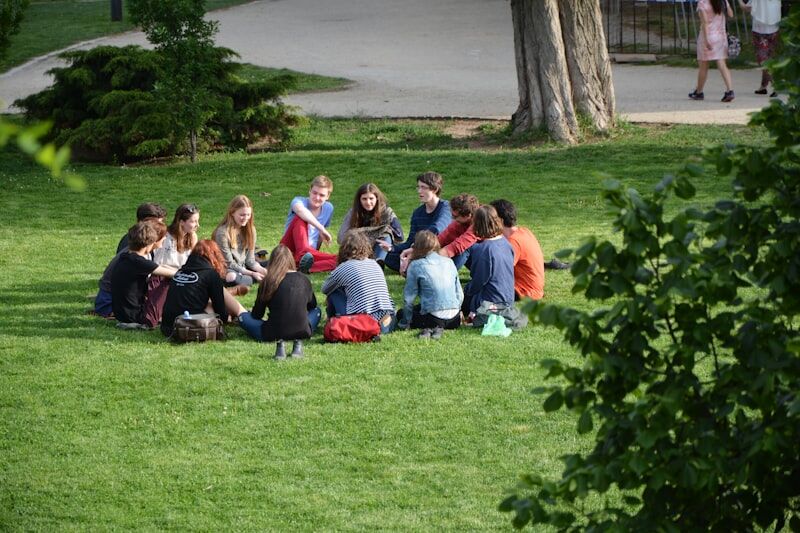
Keeping It Communicative: What to Avoid
Even the best activities break down under poor implementation. A few common pitfalls:
Overcorrecting during fluency tasks. When a student is in the middle of a discussion activity, stopping to correct grammar kills communicative momentum. Save error correction for after the task — note common errors on the board and address them as a class without attributing them to specific students.
Unequal talk time. In group discussions, dominant personalities can crowd out quieter learners. Use structured roles (timekeeper, facilitator, note-taker) or timed turns to distribute speaking opportunities more evenly.
Activities that don’t suit the proficiency level. A debate works beautifully with B2+ learners and falls apart with A2 students who lack the vocabulary to argue abstract points. Always match the cognitive and linguistic demands of the activity to your class’s actual level, not their target level.
The British Council’s Teaching English resources offer a thorough framework for matching activity types to proficiency levels if you want to go deeper on this.
ESL Icebreakers That Set the Tone
11. Two Truths and a Lie
Every student writes two true statements and one false statement about themselves. Classmates guess which is the lie. This works as a first-day icebreaker or as a low-stakes warm-up at any point in the term. The guessing game element creates genuine engagement — students are invested in listening because they want to catch the lie.
For language teaching purposes, build in a grammar focus: require past tense sentences (“I have lived in three countries”), comparative structures, or a vocabulary set from the previous lesson. The activity becomes both communicative and form-focused.
12. Hot Seat
One student sits at the front with their back to the board. Project a vocabulary word, famous person, or concept behind them. The rest of the class gives definitions, descriptions, and clues — without saying the word itself — until the student in the hot seat guesses correctly.
Hot Seat is especially effective for vocabulary consolidation because it forces students to paraphrase and describe using related language rather than simply translating. It’s also genuinely fun, which matters more than many teachers acknowledge. Enjoyment lowers the affective filter, and a lower affective filter means more language production.
For a deep library of topic-based conversation starters to use alongside these activities, check out our post on ESL vocabulary games that transform your classroom.
Building a Speaking-Rich Classroom Culture
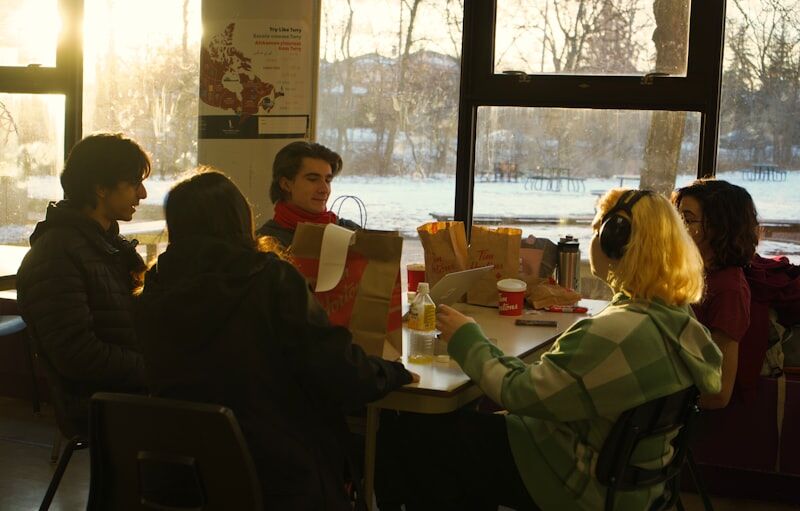
Activities alone don’t create a speaking-rich classroom. Culture does. Students need to believe that mistakes are expected, that partial communication is valued, and that trying is always the right move. This culture is built over weeks and months, not in a single lesson.
A few structural choices that accelerate this culture: praise effort and communication before accuracy; use pair work before whole-class sharing so ideas are tested in a safer space first; and regularly discuss почему speaking practice matters — not just that it does. Students who understand that output creates noticing, and that noticing accelerates acquisition, become more intrinsically motivated to push through discomfort.
According to communicative language teaching research, classrooms that average 60-70% student talk time consistently outperform teacher-centered classrooms on fluency measures. The activities in this list are designed to get you there.

The goal isn’t to fill every minute with speaking activity for its own sake. It’s to structure class time so that students leave each lesson having produced meaningful language — sentences, stories, arguments, or questions they didn’t know they could make when they walked in. That’s the standard worth holding yourself to.
Sources
- Cambridge English Language Teaching — Research on communicative language teaching and speaking skill development
- British Council: Teaching English — Activity frameworks, proficiency-level matching guides, and classroom strategies for ESL teachers
- ScienceDirect: Communicative Language Teaching — Academic research on student talk time and fluency development outcomes






 RU
RU  EN
EN  ZH
ZH  ZH_CN
ZH_CN  KO
KO  VI
VI  FR
FR  AR
AR  ES
ES  HI
HI  PT
PT  BN
BN  JA
JA  TR
TR  DE
DE  IT
IT  PL
PL  ID
ID  TH
TH  FA
FA  UK
UK  TL
TL  HE
HE  UR
UR  SW
SW  RO
RO  NL
NL  MS
MS  TA
TA  PS
PS  HU
HU  EL
EL  SV
SV  NB
NB  NN
NN  DA
DA  CS
CS  SR
SR  AM
AM