The Audio-Lingual Method: 7 ESL Techniques That Work
The Audio-Lingual Method drills English through repetition and pattern practice. Seven classroom-ready ALM techniques for ESL teachers, from dialogue memorization to minimal pairs.

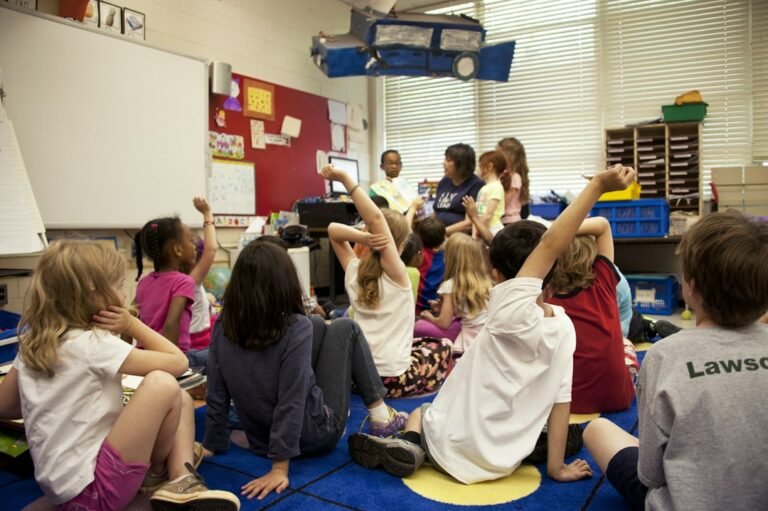
The Audio-Lingual Method drills English through repetition and pattern practice. Seven classroom-ready ALM techniques for ESL teachers, from dialogue memorization to minimal pairs.

Beneath every forest floor, invisible to the naked eye, there is a network of extraordinary complexity. It connects trees to each other, carries nutrients across hundreds of meters, and allows a dying tree to send a final gift to its neighbors. Scientists call it the mycorrhizal network. Most of us call it the Wood Wide…

No. Plants have no brain, no nervous system, and no nociceptors, so they cannot feel pain the way an animal does. But they detect damage in seconds, send electrical and chemical signals through their whole body, and change their behavior afterward — responses that look remarkably like reacting to an injury, even without anyone home…

Berlitz built a worldwide school empire on one rule: never translate. Here are 7 Direct Method techniques ESL teachers can use to build real speaking fluency.

The Silent Way is a 1963 ESL method where the teacher stays mostly silent, using Cuisenaire rods, gestures, and a sound-color chart to push students into producing language themselves.

Station rotation ESL teaching splits a class into small groups that cycle through three or more activity stations — typically a teacher-led station, a digital or independent practice station, and a collaborative task station — on a fixed timer. Each group gets focused, level-appropriate work instead of sitting through one whole-class lesson pitched at the…

CLIL (Content and Language Integrated Learning) means teaching a non-language subject — science, geography, history — through English, so students pick up content and language in the same lesson instead of two separate ones. It only works if the teacher scaffolds the language load; the seven techniques below (vocabulary tiering, silent-video prediction, hot-seating, pyramid discussion,…

Reciprocal teaching hands four reading roles — predicting, questioning, clarifying, and summarizing — to students themselves, who rotate through them in small groups while the teacher steps back and listens. Annemarie Palincsar and Ann Brown developed the method in 1984 and moved struggling readers from the 20th to the 50th percentile in comprehension after just…

Suggestopedia is a language-teaching method developed in the 1970s by Bulgarian psychiatrist Georgi Lozanov that pairs a relaxed, comfortable classroom with music and theatrical delivery to lower the mental barriers that slow down second-language learning. Almost no modern ESL teacher recreates the full ritual — reclining armchairs, a live pianist, hour-long “concert” readings — but…

A gallery walk gets ESL students out of their seats and moving between stations posted around the room, where they respond to vocabulary, images, or peer writing instead of sitting through a lecture. It works because it forces every student to produce language while moving, not just the two or three who normally raise their…
 RU
 EN
 ZH
 ZH_CN
 KO
 VI
 FR
 AR
 ES
 HI
 PT
 BN
 JA
 TR
 DE
 IT
 PL
 ID
 TH
 FA
 UK
 TL
 HE
 UR
 SW
 RO
 NL
 MS
 TA
 PS
 HU
 EL
 SV
 NB
 NN
 DA
 CS
 SR
 AM