

Writing ESL Tests and Curriculum With AI: Getting Reliability and Validity Right
Ask an AI chatbot to “write me a B1 reading test” and it will hand you something polished-looking in about ten seconds. The formatting is clean, the vocabulary feels level-appropriate, and the answer key is already filled in. It is tempting to print it and walk into class. But a test that looks right is not the same as a test that measures right, and this is where most teachers quietly get burned. The real skill in using AI for assessment is not generating questions — it is knowing whether the questions you generated actually tell you what your students can do.
This guide is about that second skill. Rather than another prompt-recipe walkthrough, we will look at the two properties that decide whether an assessment is worth your students’ time — reliability и validity — and how to build them into an AI-assisted workflow so your tests and the curriculum behind them hold up under scrutiny.
Why AI Speed Is a Trap for Assessment
A language model does not understand your learning objectives. It predicts plausible text. When you ask for a “grammar quiz on the past simple,” it produces sentences that statistically resemble past-simple quizzes it has seen — which is usually fine, but it has no idea whether those items discriminate between a student who has mastered the tense and one who is guessing. It cannot tell that three of your ten items secretly test vocabulary instead of grammar, or that one distractor is actually a correct answer in a dialect it wasn’t thinking about.
The danger is that the output is confident and clean, so it disables the skepticism you would normally apply to a rushed colleague’s photocopy. The fix is not to stop using AI. It is to treat every AI draft as a first draft from an eager but unqualified intern — fast, tireless, and in constant need of an expert editor. That editor is you, and your editing lens is reliability and validity.
Validity: Are You Measuring the Right Thing?
Validity is the single most important question in assessment: does this test actually measure the ability I claim it measures? A “speaking” test that mostly rewards students who can decode written prompts quickly is measuring reading under pressure, not speaking. A vocabulary test where the correct answer is always the longest option is measuring pattern-spotting, not word knowledge.
AI introduces specific validity threats worth naming out loud. It tends to smuggle in construct-irrelevant difficulty — hard vocabulary in a grammar item, cultural references your international students won’t share, or reading loads far above the level being tested. It also loves surface plausibility: distractors that sound reasonable to a native speaker but don’t map onto the actual errors your learners make.

Start With a Test Blueprint, Not a Prompt
The most powerful move you can make is to write a table of specifications — a simple blueprint — before you touch the AI. It is a small grid: rows for the skills or objectives you are assessing, columns for how many items each gets and at what cognitive level. For a unit on the present perfect, your blueprint might allocate four items to form, three to the contrast with past simple, and three to real communicative use. Now the AI is working for a spec instead of inventing one.
Feed that blueprint into your prompt directly: “Write ten items matching this specification. Each item must test only the objective listed. Do not use vocabulary above A2 in the grammar items.” You have just converted a vague request into an auditable one — because now you can check the output against the grid and immediately see if item six wandered off into testing prepositions instead.
The Alignment Check
After generation, run each item through one question: which single objective on my blueprint does this item measure, and could a student fail it for a reason unrelated to that objective? If a grammar item can be missed because of an unfamiliar noun, rewrite the noun. If a reading question can be answered without reading the passage (background knowledge alone), it is invalid — cut it or anchor it to the text. This pass takes minutes and catches the failures that make results meaningless.
Reliability: Would You Get the Same Result Twice?
Reliability is consistency. If the same student took an equivalent version of your test tomorrow, or if a second teacher graded the same writing sample, would the score come out roughly the same? A test can be perfectly valid in design and still be unreliable in practice — usually because scoring is fuzzy or the items are inconsistent.
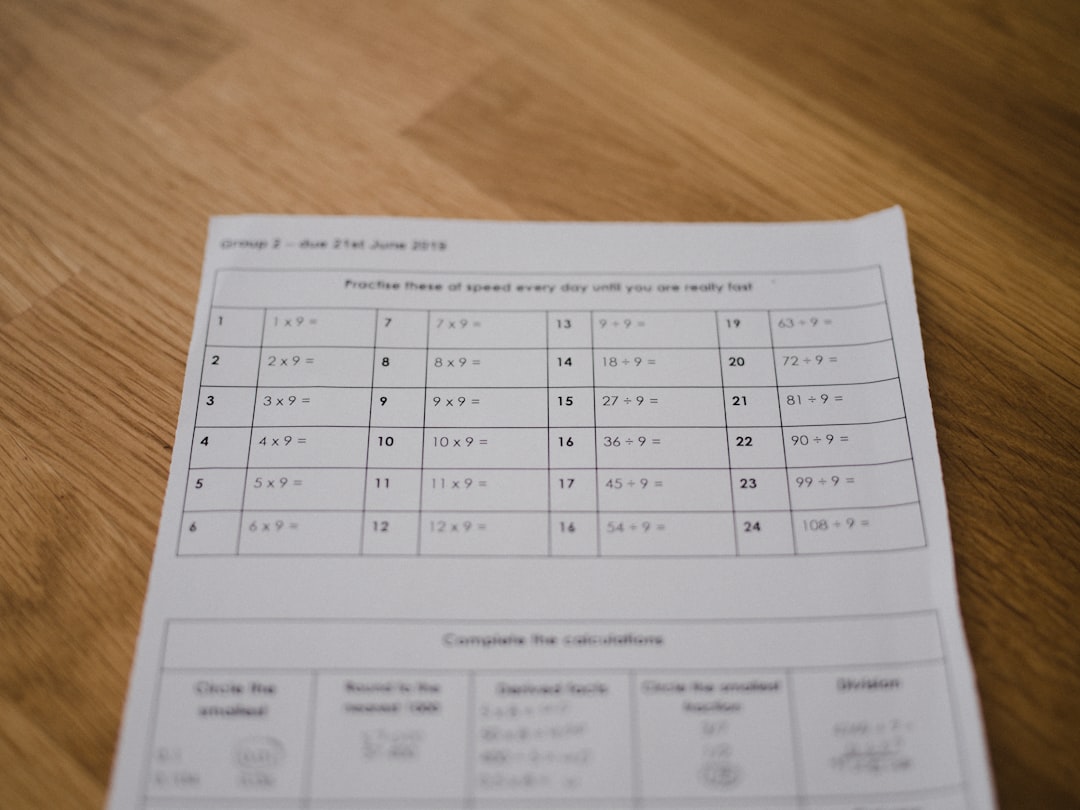
For selected-response items (multiple choice, gap-fill), AI actually helps reliability, because it can generate parallel forms quickly and keep item wording consistent. Ask it to produce two versions of the same blueprint and you have a retake or an anti-cheating variant that measures the same thing. The risk is subtle wording drift — one version harder than the other — so spot-check that the two forms are genuinely equivalent in difficulty, not just in topic.
Where AI Rescues Reliability: Rubrics
The biggest reliability killer in ESL is subjective grading of speaking and writing. Two teachers give the same essay a B and a D because they weighted fluency and accuracy differently. This is exactly where AI earns its keep — not by grading for you, but by helping you build an analytic rubric with clearly separated criteria and observable descriptors.
Prompt the model to draft a four-band rubric for a B1 opinion paragraph across task fulfillment, coherence, grammatical range, and vocabulary — then demand concrete, behavioral descriptors. “Good organization” is unreliable; “uses at least two linking words correctly and groups related ideas into paragraphs” is something two graders can agree on. Have the AI generate a couple of sample responses at each band as anchor papers. Now your grading is anchored to shared reference points, and consistency across a class set — or across co-teachers — jumps sharply.
Pilot, Then Do Light Item Analysis
You do not need statistics software. After a test, glance at your results for two patterns. First, the item everyone got right or everyone got wrong — the first is too easy to be informative, the second may be flawed or badly taught. Second, the item where your strongest students scored lower than your weaker ones. That inversion almost always signals a broken key or an ambiguous item the AI produced and you didn’t catch. Feed the item back to the model and ask it to find the ambiguity; it is surprisingly good at spotting its own second defensible answer.
Extending the Same Discipline to Curriculum
Everything above scales up to curriculum design, because a curriculum is really a promise about what students will be able to do and how you’ll know. AI will happily generate a twelve-week syllabus with tidy weekly topics, but a list of topics is not a curriculum — it is a table of contents. The validity question at curriculum scale is: do these units, in this order, actually build toward the exit competencies I’ve promised?
Use AI to pressure-test rather than just generate. Give it your intended outcomes and your unit sequence, then ask it to find gaps: “Which of these outcomes is never actually practiced before it’s assessed? Where does difficulty jump too fast?” This adversarial use — asking the model to attack your plan — surfaces the silent holes where week seven assumes a skill you never taught. It is the same move as the alignment check, applied to a whole course.
Keep Assessment and Curriculum in One Loop
The strongest workflow keeps tests and curriculum talking to each other. When item analysis shows a whole class missing a concept, that is curriculum feedback, not just a bad test day — it tells you a unit needs more practice time before its checkpoint. Ask the AI to propose two extra formative activities targeting exactly that objective, slot them in, and reassess. Over a term this loop tightens the fit between what you teach and what you test, which is the entire point of aligned assessment.

A Practical Editing Checklist
Before any AI-generated test reaches your students, run it through a short, repeatable pass. This is the difference between using AI as a shortcut and using it as a genuine assistant.
- Blueprint match: Does every item trace back to a specific objective on your table of specifications?
- Single-construct test: Can a student fail any item for a reason unrelated to what it’s supposed to measure? Remove the irrelevant difficulty.
- Key integrity: Is there exactly one defensible answer per item? Actively hunt for a second correct option — AI distractors are the usual culprit.
- Level check: Is the reading and vocabulary load appropriate for the level, especially in non-reading items?
- Bias and culture: Does any item assume knowledge your international learners may not share?
- Scoring clarity: For open responses, is the rubric specific enough that a second teacher would land on the same band?
Tools and the Human in the Loop
You can run this entire workflow inside a general chatbot, but many teachers keep a reference on assessment design nearby to sharpen their own judgment — the model is only as good as the standards you hold it to. A concise handbook on language testing or classroom assessment pays for itself the first time it stops you from shipping a broken item. If you want to browse options, an assessment principles and classroom practices guide or a rubric design resource for teachers are worthwhile starting points.
The through-line is simple. AI collapses the production cost of tests and curriculum to almost nothing, which means your time shifts entirely to judgment — deciding what to measure, verifying that the draft measures it, and keeping scoring consistent. Teachers who understood reliability and validity before AI arrived are now enormously more productive without losing rigor. Teachers who skip that thinking just generate flawed tests faster. The tool amplifies whichever one you are.

The Takeaway
Writing ESL tests and curriculum with AI works beautifully when you invert the usual instinct. Don’t ask the model to think for you; ask it to draft fast so you can spend your expertise on the parts that matter — the blueprint that defines what counts, the alignment check that guards validity, and the rubric that protects reliability. Do that, and every assessment you ship measures real learning instead of guesswork, at a fraction of the time it used to take.
Извори
- Кембриџ енглески — principles of language assessment and validity.
- Британски савет — ESL assessment and teaching resources.
- Common European Framework of Reference (CEFR) — level descriptors for alignment.
- Међународно удружење TESOL — standards and professional guidance for English language teachers.









 SR
SR  EN
EN  ZH
ZH  ZH_CN
ZH_CN  KO
KO  VI
VI  FR
FR  AR
AR  ES
ES  HI
HI  PT
PT  BN
BN  RU
RU  JA
JA  TR
TR  DE
DE  IT
IT  PL
PL  ID
ID  TH
TH  FA
FA  UK
UK  TL
TL  HE
HE  UR
UR  SW
SW  RO
RO  NL
NL  MS
MS  TA
TA  PS
PS  HU
HU  EL
EL  SV
SV  NB
NB  NN
NN  DA
DA  CS
CS  AM
AM