
Reflective Teaching: 7 Models and Examples That Work
Reflective teaching is the habit of looking honestly at a lesson you just taught and using what you notice to teach a better one. It is not a self-esteem exercise. Done well, it shortens the distance between the lesson you planned and the lesson your learners actually got.
Most teachers think they already do this. They replay a class on the drive home, decide a warmer “kind of worked,” and move on. That is rumination, not reflective teaching. The version supported by research, by CELTA tutors, and by the teachers I have watched develop fastest is structured, written down, and aimed at the next planning decision rather than yesterday’s regrets. This guide walks through what reflective teaching actually is, the three models worth knowing (Schön, Gibbs, Brookfield), seven examples drawn from real ESL classrooms, journal prompts that produce analysis instead of waffle, and the routines that make the practice stick past week three.
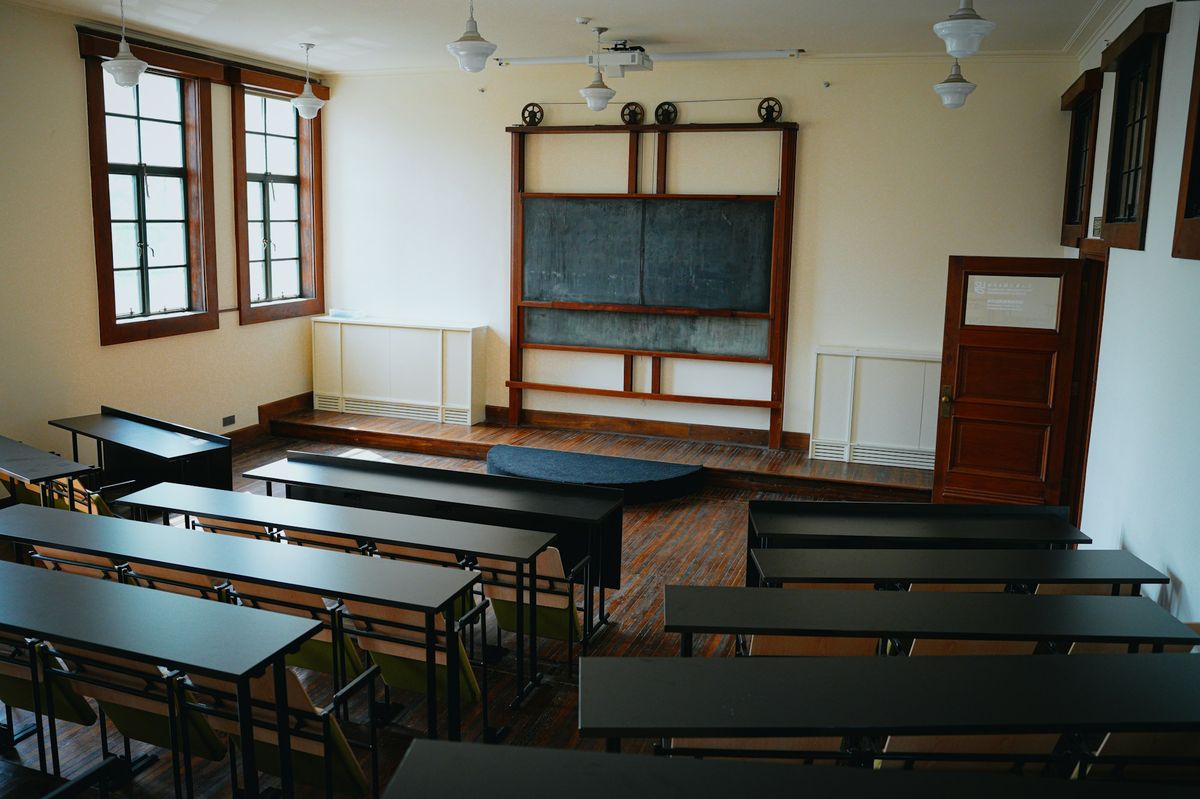
What Is Reflective Teaching?
Reflective teaching is a structured process where teachers examine specific moments of their own practice, judge what worked against what they hoped for, and translate those judgements into a concrete change in the next lesson. The word “structured” matters. Wandering through your memory of the day is not the same as following a framework that forces you to separate description from interpretation.
The idea traces back to John Dewey in How We Think (1933), who argued that experience alone does not teach — reflection on experience does. Donald Schön built that into a profession-by-profession theory in The Reflective Practitioner (1983), and Graham Gibbs turned it into the six-step cycle now taught on almost every CELTA and PGCE course. The label changes; the core move does not. Notice something specific, take it apart, decide what to do differently, and put that decision in your next plan.
Why Reflective Teaching Matters More Than Most CPD Books Admit
The honest case for reflective teaching is that experience plateaus without it. Teachers in their third year often teach the same lesson they taught in their first, because nothing in their routine forced them to interrogate whether it actually worked. The teachers who pull ahead are not the ones who attend more workshops. They are the ones who close the loop between observation and the next plan.
Empirical work backs the case. Hashim and colleagues (2023), writing in the Arab World English Journal, found that in-service ESL teachers who used Gibbs’ model produced reflections that were measurably more analytical — moving from “the lesson went well” to specific causal reasoning about why a particular drill landed and a particular task did not. A broader 2025 review in Fostering Reflective Practice reported that structured reflection improved instructional decision-making, learner responsiveness, and teacher self-efficacy across multiple studies. That last variable matters: teachers who feel in control of their classroom stay in the profession longer.
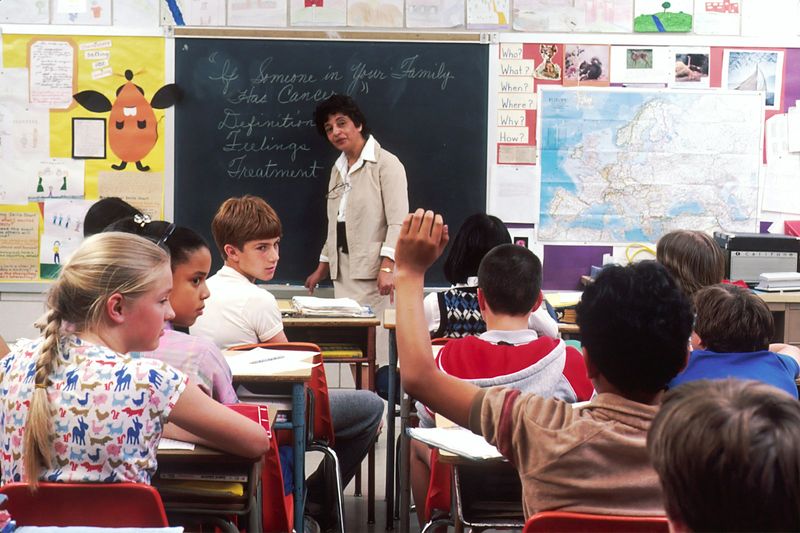
Schön’s Reflection-in-Action and Reflection-on-Action
Donald Schön split reflective teaching into two moves. Reflection-in-action is what you do while you are still in the room — the tiny adjustments good teachers make in real time when something is not working. A blank stare during instructions, so you rephrase. Two students disengaging during a controlled practice, so you swap pairs. A weak elicitation, so you supply the word and move on rather than waste another forty seconds. None of that requires conscious deliberation; it is craft built up over hundreds of similar moments.
Reflection-on-action happens later. It is the deliberate, slower process of asking what you would do differently if that same lesson landed on your desk again next week. This is where Gibbs, Brookfield, and the journal entry live. The reason both halves matter is that they feed each other. Better reflection-on-action quietly sharpens your in-the-moment instincts, which is why veteran teachers seem to “just know” things newer colleagues miss.
Gibbs’ Reflective Cycle: 6 Steps You Can Use Tomorrow
Gibbs’ cycle is the most widely used model on teacher training courses for one good reason: it works on a single lesson, in twenty minutes, with a notebook. The six stages walk you from raw observation to a concrete change in the next plan, and each stage has a job to do.
- Опис — What happened? Stick to facts. “Students did the speaking task in pairs for eight minutes. Three pairs finished in three minutes and went silent.”
- Feelings — What were you thinking and feeling during it? Name the discomfort. “I felt the lesson was slipping and started over-explaining.”
- Evaluation — What was good, what was poor? Be specific. “The model dialogue worked. The follow-up task lacked enough information gap.”
- Analysis — Why did it play out this way? This is where you use what you know about pedagogy. “Both speakers held the same information, so there was nothing real to communicate.”
- Закључак — What else could you have done? “I could have split the information between the two roles, or added a constraint that forced more turns.”
- Action plan — What will you change next time? “Rewrite the task as an info-gap. Build in a thirty-second ‘extension question’ for early finishers.”
The stage most teachers skip is Analysis. Without it, you produce a list of complaints, not a diagnosis. The skill is forcing yourself to ask “why” three times before you draft the action plan.

Brookfield’s Four Lenses (and Why Most Teachers Skip Three)
Stephen Brookfield’s contribution to reflective teaching is the observation that your own eyes are not enough. In Becoming a Critically Reflective Teacher (1995), he proposed four lenses: your autobiographical view of yourself as both a teacher and a former learner, your students’ eyes, your colleagues’ eyes, and the theoretical literature. The point is not to use all four every day. The point is to notice which ones you never use.
In practice, almost everyone defaults to lens one. We replay our own version of the lesson, decide what we think went well, and stop. Lens two — what students actually experienced — takes thirty seconds of an exit ticket and almost no one bothers. Lens three is even rarer: most schools never build a peer-observation routine that produces honest, specific feedback rather than collegial encouragement. Lens four, the research literature, is the one teachers say they will get to “when things slow down.” Things never slow down. If reflective teaching feels stuck, pick the lens you have not used in a month and use it this week.
7 Reflective Teaching Examples From the ESL Classroom
The models are abstract; reflective teaching itself is concrete. Here are seven examples that match what the practice actually looks like for working ESL teachers, drawn from CELTA observation routines and from teachers I have worked alongside in Taipei.
- The two-minute post-lesson note. Right after the bell, write one sentence on each of three lines: “What worked. What flopped. What I’ll change next time.” Eight minutes a week, fifty-two lessons a year. Compound interest.
- The student exit ticket. Last three minutes of class: “Write one thing you understood today and one thing you didn’t.” Read them on the train home. Brookfield’s lens two, for the cost of a slip of paper.
- Audio recording your own teaching. Phone on the desk for forty minutes. Listen for teacher talk time, instruction length, and the questions you actually asked versus the ones you planned to ask. Most teachers are shocked at how often they answer their own questions.
- Peer observation with a single focus. Ask a colleague to watch only one thing — pacing, instruction-checking, or how you handle off-task chat. Single-focus observation produces useful notes. “Tell me what you thought” produces flattery.
- Lesson re-planning, not just lesson planning. After teaching a lesson, immediately rewrite the plan as if you were teaching it again next period. That rewrite is the artefact of your reflective teaching, not the journal entry.
- Critical incidents. Pick the moment in the week where things went sideways — a discipline issue, a student who shut down, a grammar explanation that confused everyone. Write 200 words on what triggered it and what you would change in the setup, not the moment.
- The slow re-read. Once a term, re-read your last 10 journal entries in one sitting. Patterns jump out. Three entries about the same student? Two about the same activity flopping? That is your real CPD agenda.
None of these requires permission, a course, or a budget. The teachers who pull ahead pick two or three and run them for a term.

How to Keep a Reflective Teaching Journal That Actually Helps
Most reflective teaching journals die in week three. The cause is almost always the same: open-ended journalling. “Reflect on today’s lesson” produces description on Monday, shorter description on Wednesday, and silence by Friday. The fix is question-driven prompts that force analysis.
The prompts I have seen work best on language teachers are deliberately uncomfortable. Try: What is the thing I did today that I would not want my CELTA tutor to see? Or: What was the single moment a student looked confused, and what did I do in the next ten seconds? Or the brutally useful: If a colleague taught the same lesson tomorrow, what one change would I tell them to make? Those questions point at the action plan, which is the only part of a journal entry that changes your next lesson.
Keep entries short. Seven sentences is plenty. The goal is volume and consistency, not literary merit. A short entry written on the day beats a 500-word entry written from memory on Sunday night, because reflective teaching depends on detail that fades within hours.
Tools and Routines That Make Reflection Stick
Reflective teaching survives or dies on routine. The teachers who keep at it past the first burst of enthusiasm tend to share three habits. They reflect at the same trigger every day — usually right after the last class, before email or chat. They keep the artefact dead simple — a Google Doc, a paper journal, or a Notes app. And they tie reflection to their lesson planning so that what they noticed yesterday changes what they write today.
A short list of tools that earn their place: a phone voice memo for the lazy days when you cannot face writing; a private folder of one-sentence “lesson postmortems” indexed by week; an exit-ticket template you can hand out without thinking; and one trusted colleague with whom you have a standing fifteen-minute Friday call. The voice memo trick is underrated. Five minutes of talking about the lesson to yourself in the car captures more than twenty minutes of staring at a blank journal page.

Reflective Teaching in Groups: Peer Observation and Communities of Practice
Solo reflection has a ceiling. After a term or two, you stop noticing your own blind spots, which is exactly what Brookfield’s lens three is designed to fix. The teachers I have watched grow fastest were not the most talented at journalling — they were in tight feedback loops with two or three colleagues who would tell them the truth.
The lightest version is a swap. Observe a colleague for thirty minutes with one explicit focus — say, how they handle corrective feedback — and have them do the same for you next week. Debrief over coffee with a structured prompt: one thing that surprised you, one thing that worked, one question you’d ask. That is reflective teaching at the scale of a department. It compounds faster than any solo journal because two pairs of eyes catch what one pair edits out.

Common Mistakes Teachers Make With Reflection
The mistakes are repeatable and worth naming. The first is treating reflection as a feelings dump. If your entry never gets past “I felt frustrated,” it will not change anything you do tomorrow. Feelings are stage two of Gibbs, not stage six.
The second is reflecting only on bad lessons. The lessons that landed well also deserve analysis, because if you cannot articulate why something worked, you cannot do it again on purpose. The third is the “lessons learned” trap — vague generalisations like “I need to scaffold better” that point at no specific action. Better скеле is a category, not a plan. Name the specific scaffold for the specific lesson on Wednesday at 10am.
The fourth, and the one that ends most journals, is treating reflective teaching as an extra task. It is not. It is the part of lesson planning that you skipped if you went straight from the bell to your next worksheet. Built into the lesson cycle, it adds eight minutes a day and saves hours of reteaching content that did not land the first time.
Watch: A Short Talk on Reflective Teaching
If you have ten minutes and want a primer that goes beyond definitions, Solomon Au Yeung’s TEDxEdUHK talk is the cleanest starting point — short, classroom-grounded, and useful for sharing with colleagues who are skeptical that reflection is anything more than a buzzword.
Make Reflective Teaching the Smallest Possible Habit
The teachers who sustain reflective teaching are not the ones who promise themselves a daily 30-minute journal. They are the ones who promise themselves a two-minute note after their last class and never break the streak. Pick one prompt from this article, write the first entry on the back of today’s lesson plan, and rewrite Wednesday’s plan around what you find. That is the loop. Everything else — Gibbs, Brookfield, the apps, the workshops — is scaffolding around it.
Извори
- Hashim et al. — Exploring the Use of Gibbs’ Reflective Model in Enhancing In-Service ESL Teachers’ Reflective Writing — Empirical study of Gibbs in ESL contexts (AWEJ, 2023).
- Fostering Reflective Practice: A Pathway to Effective Teaching and Professional Growth — 2025 review of reflective practice outcomes for teachers.
- Reflective Practice for Teachers: Models and Strategies — Practical overview of Schön, Gibbs, Kolb, and Brookfield models.
- 12 Reflective Teaching Examples — Worked examples of reflection-in-action and reflection-on-action.
- The Hall of Mirrors: Reflecting on Pre-Service Teachers’ Reflections — Peer-reviewed analysis of how teachers actually reflect (Teachers and Teaching, 2024).
Looking for free ESL worksheets? Browse our full collection — printable resources for every level and age group. Browse Free Worksheets →
Students can access free worksheets and reading materials at 18KEnglish.com.




 SR
SR  EN
EN  ZH
ZH  ZH_CN
ZH_CN  KO
KO  VI
VI  FR
FR  AR
AR  ES
ES  HI
HI  PT
PT  BN
BN  RU
RU  JA
JA  TR
TR  DE
DE  IT
IT  PL
PL  ID
ID  TH
TH  FA
FA  UK
UK  TL
TL  HE
HE  UR
UR  SW
SW  RO
RO  NL
NL  MS
MS  TA
TA  PS
PS  HU
HU  EL
EL  SV
SV  NB
NB  NN
NN  DA
DA  CS
CS  AM
AM