2026 NBA Championship ESL Worksheet — The Knicks’ 53-Year Wait (Advanced PDF)
This advanced ESL worksheet uses the 2026 NBA Championship as a springboard for high-level reading, vocabulary, and critical thinking practice. The New York Knicks ended a 53-year title drought on June 13, 2026, defeating the San Antonio Spurs 4-1 in a series defined by one of the most dramatic comebacks in Finals history — and that story gives students an authentic, emotionally engaging text to work through in the classroom.
What’s Inside the 2026 NBA Championship Worksheet
The worksheet runs 13 pages and is built around three reading passages that move from the road to the Finals, through the historic Game 4 comeback, to the city-wide celebration that followed. Each passage is followed by its own comprehension questions, keeping reading and response tightly linked. This structure makes it easy to use individual sections in a single lesson without assigning the full worksheet at once.
Part 1 — Key Vocabulary: Eleven terms — drought, underdog, dynasty, clutch, comeback, deficit, momentum, franchise, MVP, ticker-tape parade, euphoria, jubilation — defined in a reference table. Students study these before reading, which reduces the need to pause mid-passage.
Part 2 — Vocabulary Practice: A matching task and a fill-in-the-blank set test initial recall before students encounter the words in context.
Part 3 — Reading Passage 1 (The Road to the Finals): A news-style narrative covering the Knicks’ 11-game winning streak, Jalen Brunson’s Eastern Conference Finals MVP performance, and the matchup against Victor Wembanyama’s San Antonio Spurs. Six open-ended comprehension questions follow.
Part 4 — Reading Passage 2 (The Comeback and the Championship): The centrepiece passage, covering Game 4’s 29-point comeback — the largest in Finals history — and the Game 5 clincher where Brunson scored 45 points. Students complete 8 True or False questions and 6 comprehension questions.
Part 5 — Fill in the Blank: A second gap-fill exercise revisiting all 11 vocabulary terms in new sentence contexts, reinforcing retention through varied exposure.
Part 6 — Reading Passage 3 (The City Celebrates): A detailed account of the night of the win — crowds at Madison Square Garden, events across the city, and the June 18 ticker-tape parade through Manhattan’s Canyon of Heroes attended by over a million fans. Five comprehension questions.
Part 7 — Discussion Questions: Six open-ended questions covering the emotional weight of championship droughts, civic responsibility during celebrations, clutch performance, and what separates a single title from a dynasty.
Part 8 — Opinion Essay: Students argue how cities should balance public celebration with public safety, using evidence from the three passages. Requires a clear thesis, evidence-based body paragraphs, and a conclusion addressing a counterargument.
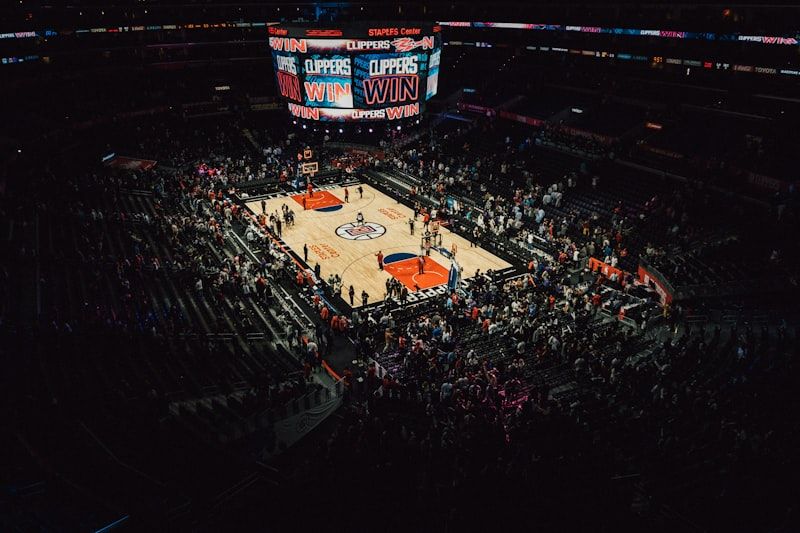
Teaching Sports English With Current Events
Current events make powerful ESL texts for one reason textbook passages can’t replicate: students often already know the outcome. When a student knows the Knicks won the championship, they bring background knowledge that activates schema and reduces the cognitive load of processing unfamiliar content. More of their attention goes to the language itself — vocabulary, syntax, the rhetorical structure of the passages — rather than to decoding the basic storyline.
The sports vocabulary in Part 1 is also transferable beyond this worksheet. Terms like clutch, underdog, momentum, och dynasty appear regularly in sports media and in general idiom use. The companion worksheet English Idioms: Sports & Competition pairs well as a pre-teaching activity — it covers the figurative meanings of sports expressions that students will encounter throughout this reading.
Vocabulary in Focus: Key Terms From the Worksheet
Drought is the most analytically interesting term in the set. In the worksheet it refers to a 53-year wait for a championship, but the word carries the same core idea across agriculture, economics, and everyday speech. Asking students to generate non-sports sentences using drought is a quick extension that builds productive vocabulary knowledge.
Clutch has a literal mechanical meaning (a car clutch) and a figurative sports meaning (performing well under pressure). The figurative use is now common in general American English. Discussing its semantic evolution is a worthwhile vocabulary development moment for advanced learners.
Dynasty connects directly to Discussion Question 6 in Part 7 — whether one championship is enough to call a team great. Using the vocabulary definition itself to lead into that discussion is strong lesson sequencing: students arrive at the discussion question already equipped with the precise terminology they need.
How to Use This Worksheet in Class
The full worksheet is designed for 90–120 minutes of instructional time. For standard 50–60 minute periods, a three-lesson split works well:
Lesson 1: Parts 1–3. Vocabulary introduction and the first reading passage. Students build context before encountering the more complex passages.
Lesson 2: Parts 4–6. The comeback passage — the most dramatically engaging text — plus the second fill-in-the-blank set.
Lesson 3: Parts 7–8. Discussion and essay. Open with whole-class discussion of Questions 1, 3, and 6, then students write independently.
The Student Answer Sheet (page 12) consolidates all short answers, True/False responses, and vocabulary answers in one place. This makes marking faster than reading through annotated passage pages. The Answer Key (pages 10–11) and Answer Sheet Key (page 13) are included for the teacher.
Level and Exam Alignment
This worksheet is pitched at advanced level (CEFR B2–C1). The reading passages use complex sentence structures, subordinate clauses, and a mix of sports-specific and academic vocabulary. The opinion essay requires students to construct an argument with a clear thesis, body evidence, and a counterargument — skills assessed at B2 and above in most major examinations.
It aligns well with preparation for IELTS (Task 2 essay and True/False/Not Given reading tasks), Cambridge FCE and CAE (Reading and Writing), and TOEFL Independent Writing. The True or False section in Part 4 specifically mirrors the True/False/Not Given format common in IELTS Reading.
Differentiation and Extension Ideas
The discussion questions in Part 7 are deliberately open-ended and admit a wide range of defensible positions. Question 2 — about civic responsibility when celebrations turn dangerous — generates particularly varied responses depending on where students are from and their own experiences of public events.
For exam extension, the essay prompt in Part 8 can be upgraded by requiring students to incorporate two vocabulary terms from Part 1 into their argument, or by setting a word count minimum aligned to IELTS Task 2 or Cambridge CAE Writing requirements.
For listening integration, official NBA Finals recap videos for each game are available online. Playing the Game 4 recap — two or three minutes showing the comeback in real time — before students read Passage 2 gives audio-visual context that makes the narrative immediately and viscerally clear, particularly for students who don’t follow basketball.
For another advanced reading exercise on a completely different subject, the Kangaroos Advanced ESL Worksheet provides similar reading depth in a science and nature context.
Vanliga frågor
Is this worksheet suitable for students who don’t follow basketball? Yes. The three reading passages are written as self-contained news narratives, so no prior knowledge of the NBA is assumed. Every sport-specific term students need — franchise, deficit, clutch — is defined in the Part 1 vocabulary table before the reading begins. Teachers who want extra support can play the recap video above to establish visual context in under three minutes.
How long does the full worksheet take to complete? The complete set of eight parts is designed for 90 to 120 minutes of instruction. Most teachers split it across two or three lessons rather than running it in a single block, since the discussion and essay sections in Parts 7 and 8 work best once students have had time to absorb the reading passages first.
Can I use only part of the worksheet? The structure is deliberately modular. Each reading passage carries its own comprehension questions, so a single passage plus its questions works as a standalone 30-minute reading lesson. The vocabulary sections in Parts 1, 2, and 5 can also be lifted out and used as a warm-up on a different day.
What answer support is included? The download includes a full Answer Key on pages 10 and 11, a consolidated Student Answer Sheet on page 12, and an Answer Sheet Key on page 13. Open-ended discussion and essay responses are not scripted, but the key provides model points for the comprehension and True/False items.
Does the essay prompt work for exam preparation? The Part 8 opinion essay mirrors the argument structure assessed in IELTS Writing Task 2 and Cambridge CAE Writing — a clear thesis, evidence-based body paragraphs drawn from the passages, and a conclusion that addresses a counterargument. Setting a 250-word minimum brings it directly in line with IELTS Task 2 timing.
What reading level is this pitched at? The passages sit at CEFR B2–C1. Sentence structures include subordinate clauses and a mix of academic and sports-specific vocabulary, so lower-intermediate classes may need the vocabulary pre-taught over two sessions rather than one. For a gentler on-ramp, pair it with the sports idioms worksheet linked above before assigning the full reading.
Sports worksheets work especially well when students have a genuine connection to the topic. For combat sports fans, pair this lesson with the Taipei BJJ blog for BJJ and MMA reading material. Students who enjoy sports strategy games may also enjoy TKO Tycoon, a free online MMA management game that builds sports vocabulary in a game context.
Also available on our sister site: 18kenglish.com — NBA 2026 worksheet.
Källor
- NBA.com — 2026 NBA Finals official recap
- ESPN — NBA Finals 2026: The Knicks finally have their New York
- Wikipedia — 2026 NBA Finals
Looking for free ESL worksheets? Browse our full collection — printable resources for every level and age group. Browse Free Worksheets →





 SV
SV  EN
EN  ZH
ZH  ZH_CN
ZH_CN  KO
KO  VI
VI  FR
FR  AR
AR  ES
ES  HI
HI  PT
PT  BN
BN  RU
RU  JA
JA  TR
TR  DE
DE  IT
IT  PL
PL  ID
ID  TH
TH  FA
FA  UK
UK  TL
TL  HE
HE  UR
UR  SW
SW  RO
RO  NL
NL  MS
MS  TA
TA  PS
PS  HU
HU  EL
EL  NB
NB  NN
NN  DA
DA  CS
CS  SR
SR  AM
AM