TPRS: 7 ESL Storytelling Techniques
Blaine Ray built TPRS in the early 1990s after years of watching his Spanish students forget vocabulary lists within a week. He borrowed James Asher’s gesture-based Total Physical Response, kept the physical anchoring, and added something Asher’s method never had: a story students actually wanted to follow. Thirty years later, TPRS shows up in ESL teacher-training programs from Taipei to Toronto, and for good reason — it gets quiet students talking without a single grammar drill.
What Makes TPRS Different From Regular Storytelling
A lot of teachers hear “storytelling” and picture reading a picture book aloud. TPRS is not that. The story doesn’t exist until the class builds it, sentence by sentence, in response to the teacher’s questions. If a teacher asks “Does the cat live in Taipei or in Kaohsiung?” and a student shouts “Kaohsiung,” that answer becomes canon for the rest of the lesson. The story belongs to the room, which is exactly why students remember the vocabulary attached to it.
This separates TPRS from the broader comprehensible-input family it grew out of — the theory behind the Natural Approach and behind Krashen’s original input hypothesis. Those approaches describe what learners need; TPRS is the specific classroom procedure for delivering it through a co-created narrative.

1. Establish Meaning Before the Story Starts
Every TPRS lesson opens with three target structures written on the board — never more than three, or the story collapses under its own vocabulary load. The teacher introduces each one with a gesture, a quick translation, or a Total Physical Response action, then checks comprehension immediately. A teacher might point to the phrase “is afraid of” and mime a flinch, then ask three or four students a personalized question using it before moving on. Nobody writes anything down yet. The goal is recognition speed, not note-taking.
Skip this step and the story falls apart in minute four, because half the class is still decoding “is afraid of” while the other half has already moved on to deciding what the cat is afraid of.

2. Ask the Story Instead of Telling It
This is the technique that confuses teachers who’ve only read about TPRS secondhand. The teacher does not narrate a pre-written plot. They ask it into existence: “Class, there is a student. Boys, what’s his name?” Someone yells a name, the teacher accepts it and keeps going — “Does he live in Tainan or in a tree?” The sillier the accepted answer, the better it sticks. A story about a boy who lives in a tree in Tainan is more memorable than any textbook dialogue, because the students invented the absurdity themselves.
Three to five questions per target structure is the usual rhythm. Push past that and attention drops; stop short and the structure never gets enough repetition to move into long-term memory.
3. Circle Back With Compare-and-Contrast Questions
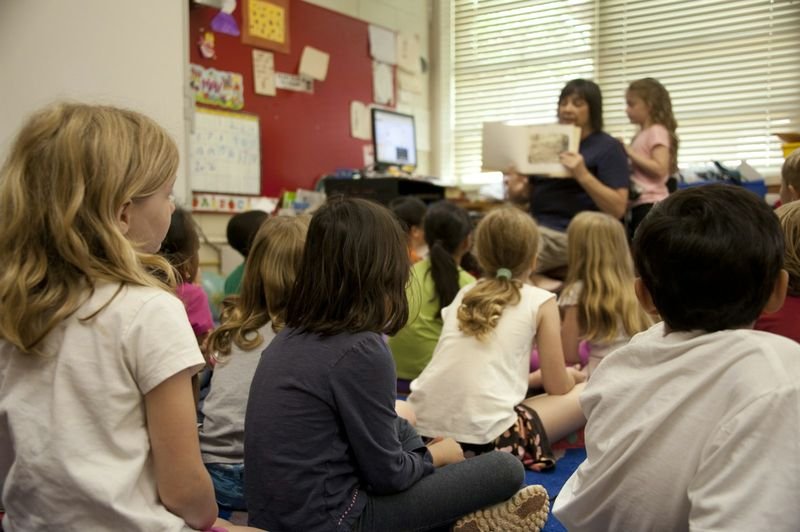
“Circling” is the drilling mechanism hidden inside TPRS, and it’s the part that does the real repetition work. Once the class has established “the boy lives in a tree,” the teacher circles it with a fixed sequence: a yes/no question (“Does the boy live in a tree?”), an either/or question (“Does he live in a tree or in a house?”), a question with the correct answer (“Where does the boy live?”), and finally a question with a wrong answer the class has to correct (“Does the boy live in a car?” — “No! He lives in a tree!”). That correction moment is where the structure actually locks in, because the student has to produce the full sentence to fix the teacher’s “mistake.”

4. Personalize Before You Generalize
TPRS calls this a “Personalized Question and Answer” session, and most guides mention it in passing. It deserves more weight than that. Before or after the class story, the teacher asks two or three students the same target structure about their own lives — “Are you afraid of spiders?” “Where do you live?” — using real names and real answers. Students stop treating the grammar as something that happens to fictional cats and start hearing it as something that describes them. That’s the bridge between a story drill and actual spoken fluency.
5. Extend the Story With Role-Play, Not Just Repetition
Once a story has three or four established events, pull four students to the front and let them act it out while the class narrates or corrects. This is where TPRS earns the “performance” half of its reputation, and it’s also where a lot of the published guides stop — they describe the drama step but skip the part where a third of any ESL class would rather sit through a root canal than perform in front of peers. The fix isn’t forcing everyone on stage. Run the role-play in pairs first, at desks, with no audience, before ever asking for a front-of-room version. A student who’s rehearsed the lines quietly with a partner is five times more likely to volunteer for the public version ten minutes later.

6. Move to the Written Story Last, Never First
Once the spoken story exists, write a short version on the board or hand out a text — usually 80 to 150 words for a single target-structure cycle. Students read a story they already know the plot of, in a language they just spent fifteen minutes speaking. That’s the opposite order of a typical reading lesson, and it’s the reason comprehension holds up even for students who’d normally stall on a cold text. Add one or two embedded questions in the margins (“Why is the boy afraid?”) so the reading isn’t passive.
7. Handle Mixed Proficiency Without Splitting the Class
This is the part almost nobody writing about TPRS actually addresses, and it’s the question every real ESL classroom runs into by week two: what happens when half the room needs the story slowed down and the other half is bored by question three? TPRS has a built-in answer most teachers never use — assign your strongest students the job of “story prop manager” or “detail tracker,” asking them to supply extra adjectives or plot twists when the teacher calls on them, while beginners stick to yes/no and either/or circling questions. Nobody gets a separate worksheet. The story stays one story, but the question difficulty flexes per student in real time. The teacher doesn’t scaffold by giving weaker students less language — they scaffold by giving them easier questions about the exact same language everyone else is hearing.

Grading TPRS Without Killing the Vibe
Every TPRS guide stops short of the one question administrators actually ask: how do you put a grade on a method with no quiz at the end of it? The honest answer is you grade the reading phase, not the storytelling phase. Storytelling stays ungraded and low-stakes on purpose — the second students sense a score attached to their answer in the co-created story, they stop taking risks and the story gets boring, which defeats the entire method. Save the actual assessment for a short write-from-memory task after the reading: give students two minutes to write everything they remember about the story using the target structures, then score that for accurate use of the structure, not for plot accuracy. A student who writes “The boy are afraid of the dog” gets marked on the verb form, not on whether they remembered the dog correctly.
For a formal grade, a 60-second oral retell to a partner — recorded on a phone if you want a paper trail — covers the speaking side without turning the storytelling portion of the lesson into a test. Keep a simple three-point rubric: used the target structure, used it correctly, and used it without rereading the board. That’s enough for a report card and it doesn’t cost the class the willingness to be silly that makes the method work in the first place.
Watch TPRS in Action
Reading the steps and watching a real class circle a story are different things — the pacing and the exaggerated gestures are hard to describe in text. This clip walks through where the method came from and what it looks like when Blaine Ray runs it himself.
The Mistake That Kills TPRS Fastest
Teachers who try TPRS once and abandon it almost always make the same error: they write a full plot in advance and just perform it, asking the class rhetorical questions instead of real ones. That turns the lesson back into a teacher monologue with extra gestures, which is precisely the format TPRS exists to replace. If you already know what the boy is afraid of before you ask the class, you’re not running TPRS — you’re reading a script out loud with pauses. The entire engagement engine depends on the answer being genuinely unknown until a student shouts it out. It feels uncomfortable the first few times, because not knowing where your own lesson is going is not how most teacher training prepares you to feel. Stick with it for three or four stories before deciding whether it’s working. The first one is always awkward.
Running TPRS in an Online ESL Class
TPRS was built for a room full of bodies, gestures, and a boy who might live in a tree. Move it to a video call and the gestures still work — exaggerate them more than you would in person, since webcam framing cuts off peripheral vision — but the physical role-play step needs a substitute. Use the chat box as a second circling channel: ask the yes/no question aloud, then have students type one-word answers simultaneously so quiet students who’d never raise a hand on camera still produce language every round. Screen-share a single shared document for the written story phase instead of a handout, and let two students take turns editing it live as the class adds details. It’s slower than an in-person lesson, but it keeps every one of the seven techniques above intact instead of quietly dropping role-play and calling it TPRS.

TPRS vs. TPR vs. the Natural Approach
Teachers new to comprehensible input often use these three names interchangeably, and that’s a mistake worth clearing up. TPR is pure action-response — a teacher says “stand up,” students stand. It has no story and no reading phase. The Natural Approach is the broader theoretical umbrella Krashen and Terrell built, arguing that any method delivering comprehensible input in a low-anxiety setting will produce acquisition. TPRS is the one concrete lesson procedure that operationalizes that theory with an actual script: establish meaning, ask the story, circle, read. If a method name doesn’t include a story your class built together, it isn’t TPRS — it’s borrowing the label.
Teachers coming from Community Language Learning will recognize the same instinct to let students generate the content rather than hand them a script. TPRS just adds a tighter structure around how that content gets built.
Källor
- TPR Storytelling — Wikipedia — overview of Blaine Ray’s method and its development from Total Physical Response.
- What Is TPRS? — BridgeUniverse TEFL Blog — breakdown of the three-phase TPRS methodology.
- Implementing TPR and TPRS in the Adult ESL Classroom with SLIFE Learners — Hamline University — teacher diary study on TPR/TPRS with adult ESL learners.








 SV
SV  EN
EN  ZH
ZH  ZH_CN
ZH_CN  KO
KO  VI
VI  FR
FR  AR
AR  ES
ES  HI
HI  PT
PT  BN
BN  RU
RU  JA
JA  TR
TR  DE
DE  IT
IT  PL
PL  ID
ID  TH
TH  FA
FA  UK
UK  TL
TL  HE
HE  UR
UR  SW
SW  RO
RO  NL
NL  MS
MS  TA
TA  PS
PS  HU
HU  EL
EL  NB
NB  NN
NN  DA
DA  CS
CS  SR
SR  AM
AM