
Coral Reefs – Cities Under the Sea | ESL Worksheet Level F (Advanced)
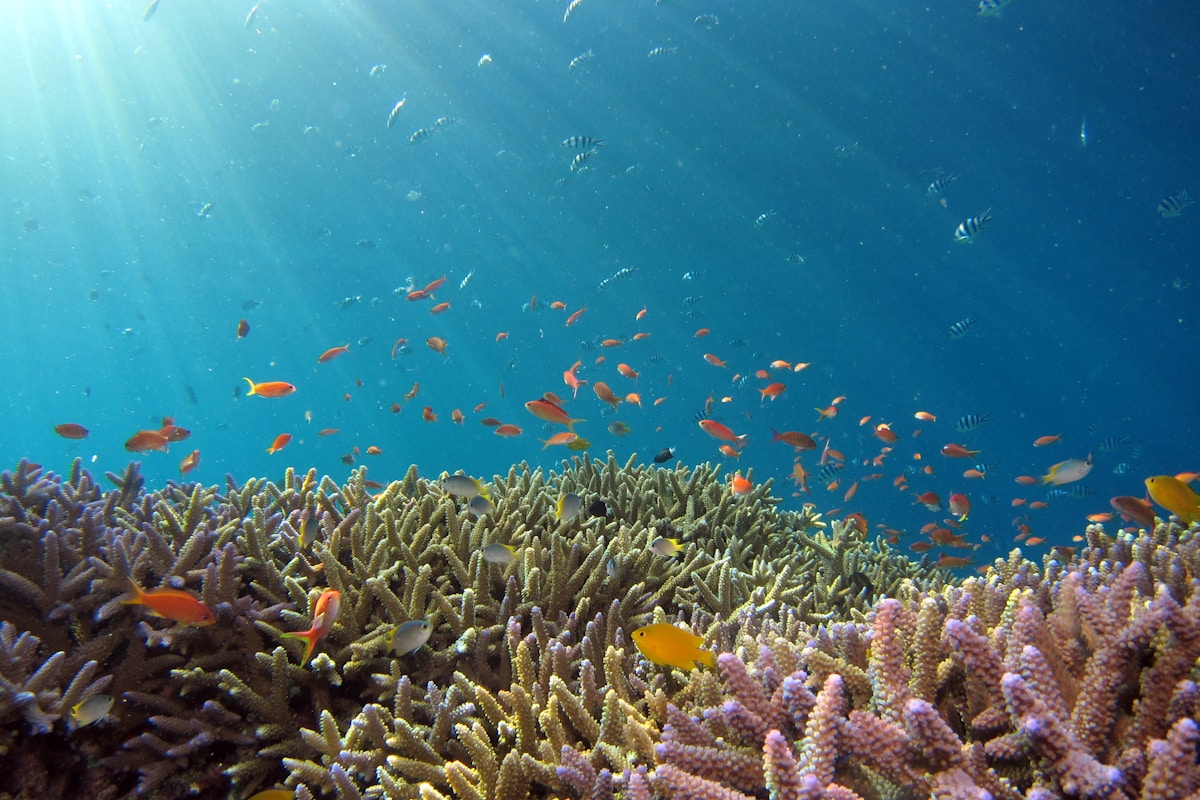
Coral reefs are among the most olika ecosystems on our planet, often called the rainforests of the sea. Although they cover less than one percent of the ocean floor, they provide a home for roughly twenty-five percent of all known marine species. These stunning underwater structures are found in warm, shallow tropical waters near the equator, where bright sunlight can easily reach the ocean bottom and support life.
A coral reef is built by millions of tiny varelser called coral polyps over hundreds and sometimes thousands of years. Each polyp produces a hard outer skeleton made of calcium carbonate, a natural chemical compound found in seawater all around the world. As old polyps die, new ones grow on top of their skeletons and add new layers. This slow process creates the massive and colorful reef formations that divers explore and scientists study today.
Coral polyps have a remarkable partnership with tiny plant-like organisms called algae that live inside their soft bodies. The algae produce food through sunlight and share this energy with the coral host. In return, the coral gives the algae a protected place to live and grow. This relationship is essential because coral depend on the algae for up to ninety percent of their energy needs and also for their beautiful rainbow colors.
Unfortunately, coral reefs face serious threats from human activities and rapidly changing ocean conditions around the world. Rising ocean temperature caused by climate change forces the algae to leave, turning coral white in a dangerous process called bleaching. Pollution from factories, cities, and farms also poisons reef waters and blocks the sunlight that coral desperately needs to survive, grow, and stay healthy.
Scientists and bevarande groups are now working hard to protect and restore damaged coral reefs before it is too late for these fragile ecosystems. Some researchers carefully grow young coral in special underwater nurseries and then transplant healthy pieces onto damaged reef areas. Governments have also created marine parks where fishing and boating are strictly limited to let reefs recover. Everyone can help by reducing pollution, saving energy, and learning more about these precious underwater cities that support so much ocean life.
📥 Download the Full Worksheet (PDF)
⬇️ Download Coral Reefs – Level F Worksheet (PDF)
A. Vocabulary
Match each word with its definition:
- olika
- provide
- structures
- tropical
- varelser
- chemical
- process
- produce
- temperature
- bevarande
a. buildings or things that are built or arranged b. having many different kinds or types c. a substance made through chemistry d. to give or supply something needed e. the protection of nature and wildlife f. living things, especially animals g. relating to hot regions near the equator h. how hot or cold something is i. a series of steps or actions j. to make or create something
B. Sant eller falskt
- Coral reefs cover more than ten percent of the ocean floor.
- Coral reefs are found in warm, shallow waters.
- Coral polyps produce a hard outer skeleton.
- Algae live inside coral polyps.
- Coral depends on algae for energy.
- Rising ocean temperature helps coral grow.
- Bleaching turns coral white.
- Pollution can block sunlight from reaching coral.
- Some scientists grow coral in underwater nurseries.
C. Fyll i luckorna
Ordbank: diverse, provide, structures, tropical, chemical, temperature, conservation
- Coral reefs are among the most _______________ ecosystems on Earth.
- Reefs _______________ a home for twenty-five percent of all marine species.
- These stunning underwater _______________ are found in warm waters.
- Coral polyps produce a skeleton made of a natural _______________.
- Rising ocean _______________ causes coral bleaching.
D. Förståelsefrågor
- What percentage of marine species depend on coral reefs?
- How do coral polyps build a reef over time?
- What is the relationship between coral and algae?
- What causes coral bleaching?
- How are scientists working to protect coral reefs?
E. Diskussionsfrågor
- Why do you think coral reefs are called the rainforests of the sea?
- What would happen to ocean life if all coral reefs disappeared?
- What can ordinary people do to help save coral reefs?
Source: NOAA Coral Reef Conservation Program | © Tahric Teaches


 SV
SV  EN
EN  ZH
ZH  ZH_CN
ZH_CN  KO
KO  VI
VI  FR
FR  AR
AR  ES
ES  HI
HI  PT
PT  BN
BN  RU
RU  JA
JA  TR
TR  DE
DE  IT
IT  PL
PL  ID
ID  TH
TH  FA
FA  UK
UK  TL
TL  HE
HE  UR
UR  SW
SW  RO
RO  NL
NL  MS
MS  TA
TA  PS
PS  HU
HU  EL
EL  NB
NB  NN
NN  DA
DA  CS
CS  SR
SR  AM
AM