

Teaching Young Learners: 12 Proven ESL Tips
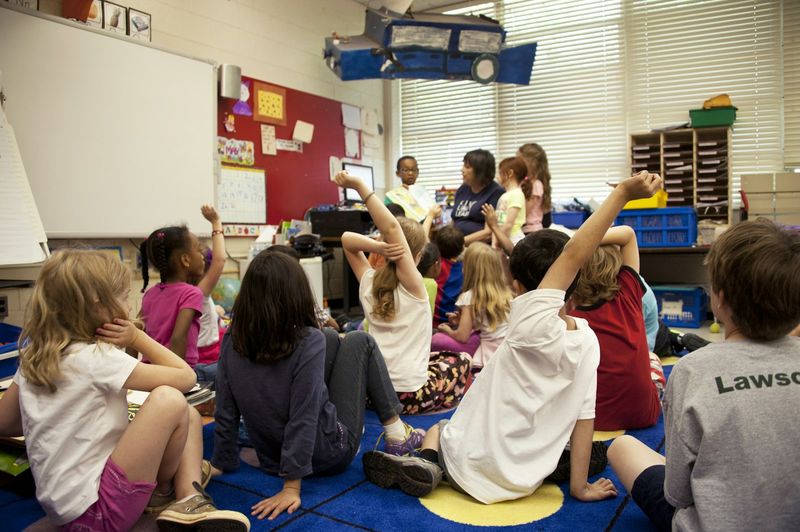
A typical six-year-old can hold focus for about six to eight minutes before their attention drifts somewhere more interesting. That single fact reshapes everything about teaching young learners. You cannot lecture them, you cannot reason them into caring about the present continuous, and you certainly cannot hand them a worksheet and expect quiet productivity. What works is movement, color, repetition, and a teacher who treats English as something to do rather than something to study. The twelve tips below come from what actually holds up in a real classroom of wiggly five- to ten-year-olds, not from a methodology textbook.
Why Teaching Young Learners Is a Different Job
Adults learn a language by understanding rules and then practicing them. Children do the opposite. They absorb chunks of language first and work out the rules years later, if at all, which is exactly how they picked up their first language. A four-year-old never studied subject-verb agreement, yet she says “I want juice” perfectly. Your job with young learners is to flood them with meaningful, repeated input and give them low-pressure reasons to produce it back.
This is why the methods that feel “serious” to parents, such as grammar explanations and vocabulary lists, are often the least effective in a young learner room. The classroom that looks like chaos to an outsider, with kids jumping up to act out verbs, is usually the one where the most learning is happening. Hold that distinction in mind and the rest of these tips will make sense.
1. Match Activity Length to Attention, Not the Clock
The old teacher’s rule of thumb is one minute of focus per year of age, give or take. A class of seven-year-olds can manage seven or eight minutes on one task before you lose the room. Plan a 50-minute lesson as six or seven short blocks, not two long ones. Switch the activity type, not just the topic, when energy dips. A reading task followed by a standing chant followed by a drawing task keeps the brain fresh because each one uses a different channel.
2. Put Total Physical Response at the Center
Total Physical Response (TPR) ties language to movement, and for young learners it is closer to essential than optional. When children physically act out “jump,” “stir the soup,” or “creep quietly,” the word lands in long-term memory far faster than if they only hear it. Movement also burns off the restlessness that turns into misbehavior. Start every new vocabulary set with gestures the whole class performs together, then let them lead. For a full bank of ideas, our guide to TPR examples and activities breaks down fifteen you can run tomorrow.

3. Let Songs and Chants Do the Heavy Lifting
Melody is a memory trick that has worked on humans for thousands of years, and it works brilliantly on children. A target phrase set to a tune (“What’s your name? My name is…”) gets internalized after a few rounds without a single child realizing they practiced. Super Simple Songs and the British Council’s kids channel built entire libraries on this for a reason. Use a song to open the lesson, to signal transitions, and to review. The repetition that would feel like a boring drill in spoken form feels like fun when it has a beat.
4. Teach Through Play and Games, Not Worksheets
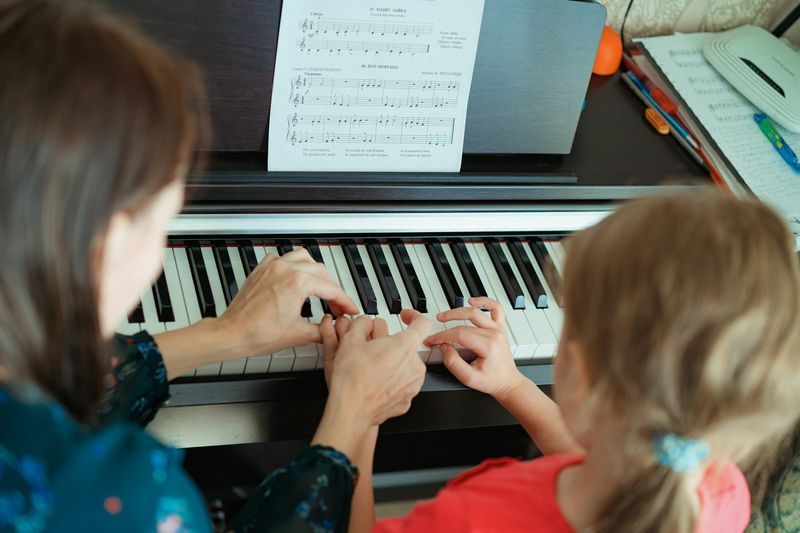
Children learn by doing, and for them “doing” means playing. A flashcard slap game teaches the same vocabulary as a matching worksheet, but one of them generates twenty repetitions and a dozen laughs while the other generates silence and a few doodles. Games create a reason to use the target language: you have to say the word to win the point. Keep a short rotation of reliable games you can deploy with any vocabulary set, so setup takes seconds. Our roundup of five-minute warmers and fillers is built for exactly these moments.
5. Build the Lesson on Routines
Young learners feel safe when they know what comes next, and safe children take more risks with language. A fixed opening song, a predictable order of activities, and a consistent closing ritual remove the anxiety of the unknown. Routines also save you from re-explaining instructions every single day, because the kids already know the drill. The trick is to keep the structure predictable while the content inside it changes. Strong routines are the backbone of solid classroom management, and with young learners they prevent far more problems than any reward chart fixes.
6. Make Everything Visual and Hands-On
A young learner who hears the word “apple” might forget it in a minute. A young learner who sees a bright flashcard, touches a plastic apple, and draws one will hold onto it. Children think in concrete, physical terms long before they think in abstractions, so anchor every new word to something they can see or hold. Flashcards, real objects, puppets, and simple drawings carry more teaching weight than any explanation. Build a deck you reuse constantly, and rotate through the dozens of games in our ESL flashcards guide so the same cards never feel stale.
7. Recycle Language Relentlessly
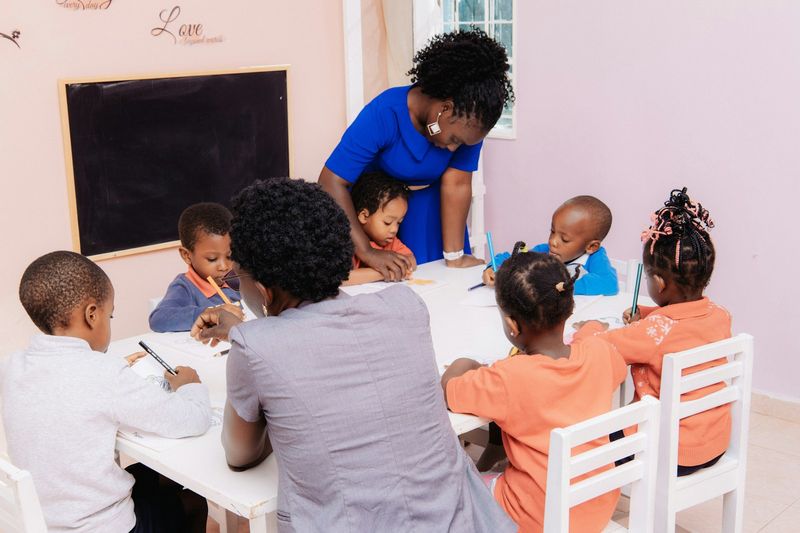
One exposure to a new word teaches almost nothing. Researchers who study vocabulary acquisition put the number of meaningful encounters needed somewhere between eight and a dozen, and for young learners spread across days, the real figure is higher. This is why spiraling beats marching forward. Bring last week’s words into this week’s game, fold today’s words into tomorrow’s song, and never assume something is “done” because you taught it once. The classes that revisit old language constantly are the ones whose students actually retain it.
| Age Group | Focus Window | What Lands Best |
|---|---|---|
| 3–5 years | 3–5 minutes | Songs, TPR, big gestures, one word at a time |
| 6–8 years | 6–8 minutes | Games, flashcards, short stories, simple writing |
| 9–11 years | 10–12 minutes | Project tasks, role-play, reading, light grammar in context |
8. Read Aloud and Tell Stories Often
A good story does three jobs at once: it delivers language in context, it builds the emotional engagement children need to care, and it models the rhythm of English better than isolated sentences ever could. You do not need a fluent class to read aloud. Picture books with repeated refrains (“Run, run, as fast as you can”) invite children to chime in, predict, and act out. Pause to let them finish a line. Point at the pictures and ask “What’s this?” Storytelling turns passive listeners into participants, and our breakdown of storytelling activities for ESL shows how to stretch one book into a full lesson.

9. Protect Confidence Above Accuracy
Stephen Krashen called it the affective filter: when a learner feels anxious or embarrassed, the brain quite literally blocks language from going in. For young children, that filter is fragile. One harsh correction in front of classmates can make a shy kid stop volunteering for a month. The truth is, most teachers who struggle with silent young learners aren’t facing a language problem at all, they’re facing a confidence problem they accidentally created. Praise the attempt, celebrate the brave guess, and treat English as a place where mistakes are safe.
10. Manage Behavior With Positives, Not Threats
The fastest way to lose a young learner classroom is to run it on warnings and punishments. Children chase attention, and if the only attention available comes from misbehaving, they will misbehave to get it. Flip it: pour your visible energy into the kids doing the right thing. A simple points system for the table that is sitting nicely, or a quiet word of specific praise, redirects the room without a single raised voice. Catching good behavior the moment it happens trains the class far faster than reacting to the bad.
11. Give Instructions a Child Can Actually Follow
“Okay everyone, I want you to find a partner and then take turns asking each other about your weekend, and write down three things.” To an adult, clear. To a class of seven-year-olds in their second language, total noise. Break instructions into one step at a time, model each step yourself, and check understanding by having a child demonstrate rather than asking “Do you understand?” (they will always say yes). Fewer words, more showing. If they cannot start the task, the instruction failed, not the children.
12. Let Fluency Grow Before You Chase Accuracy
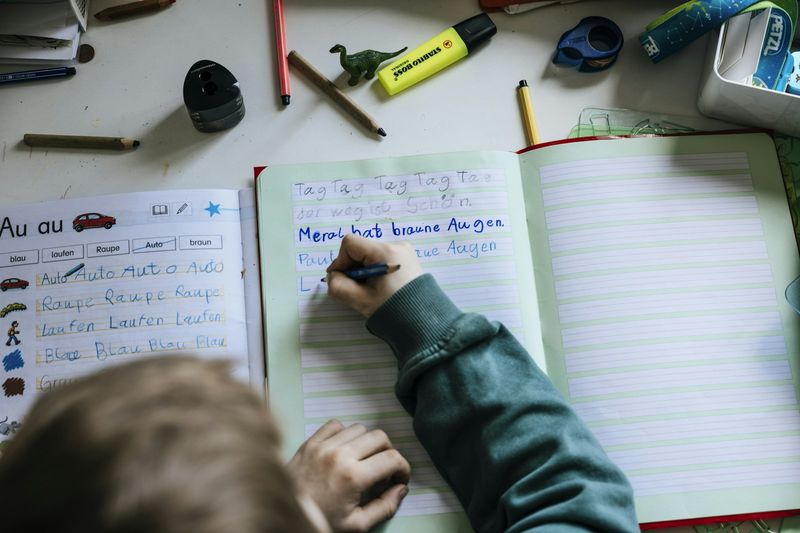
When a young learner says “He goed to the park,” resist the red pen. That error is actually a sign of progress; the child has internalized the past-tense rule and is over-applying it, which is exactly what first-language children do. Constant correction teaches kids that speaking is dangerous. Instead, recast naturally (“Yes! He went to the park”) and move on. The grammar tidies itself up over years of exposure. Your role at this age is to keep them talking, not to make them perfect.

Watch: Ten Practical Tips for Teaching English to Kids
This short video walks through several of the same principles in a real classroom context and is worth ten minutes before your next young learner lesson.
Putting It Together This Week
Pick three of these to try in your very next lesson rather than overhauling everything at once. Open with a song, run one new vocabulary set through TPR and a game, and bite your tongue on the next small error you hear. Watch what happens to the energy in the room. The teachers whose young learners make the fastest progress are rarely the ones with the strictest classrooms; they are the ones whose students cannot wait to come back. Build that, and the English takes care of itself. For your next planning session, pair these ideas with our strategier för klassrumshantering to keep the energy productive.
Källor
- British Council TeachingEnglish — Teaching Young Learners — guidance on how children acquire language and age-appropriate activities.
- Cambridge English — Young Learners — frameworks and assessment for primary-age English learners.
- Edutopia — Video Resources for English Language Learners — using multimedia and song with young ELLs.
Looking for free ESL worksheets? Browse our full collection — printable resources for every level and age group. Browse Free Worksheets →
Students can access free worksheets and reading materials at 18KEnglish.com.
Shop on Amazon
Kids ESL Books on Amazon →
As an Amazon Associate we earn from qualifying purchases.









 SV
SV  EN
EN  ZH
ZH  ZH_CN
ZH_CN  KO
KO  VI
VI  FR
FR  AR
AR  ES
ES  HI
HI  PT
PT  BN
BN  RU
RU  JA
JA  TR
TR  DE
DE  IT
IT  PL
PL  ID
ID  TH
TH  FA
FA  UK
UK  TL
TL  HE
HE  UR
UR  SW
SW  RO
RO  NL
NL  MS
MS  TA
TA  PS
PS  HU
HU  EL
EL  NB
NB  NN
NN  DA
DA  CS
CS  SR
SR  AM
AM