
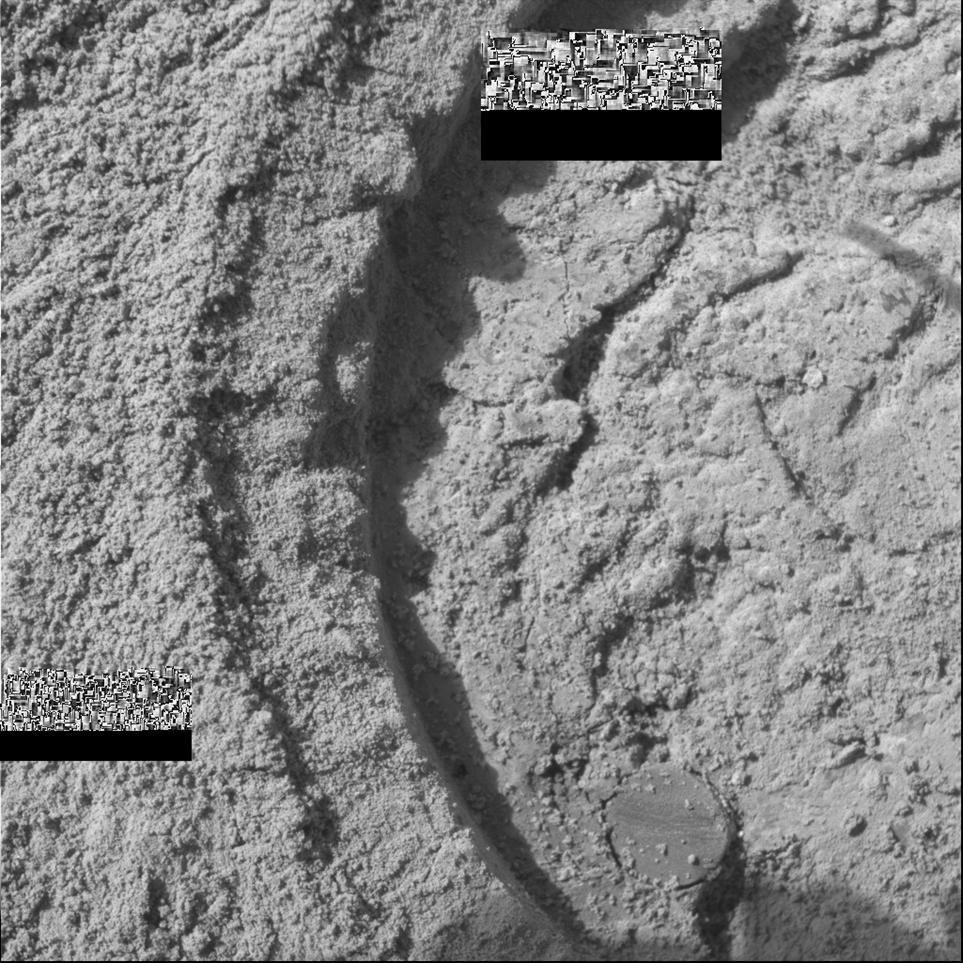
“What China Found on Mars — Part 1: The Mission & the Ancient Ocean”
What China Found on Mars
Part 1: The Zhurong Rover & Evidence of an Ancient Ocean
ESL Science Worksheet | Grades 9–12
Läsningspassage
On May 15, 2021, China made history. Its Tianwen-1 spacecraft successfully landed a rover named Zhurong on the surface of Mars — making China only the second country ever to operate a rover on another planet. The landing site was a vast, flat lowland called Utopia Planitia, one of the largest impact basins in the entire solar system.
Zhurong (朱融) is named after the Chinese god of fire. Despite its fiery name, its most stunning discoveries are all about water.
China’s Tianwen-1 Mission
Tianwen-1 means “Questions to Heaven” — a poetic name from an ancient Chinese poem. The spacecraft carried an orbiter, a lander, and the Zhurong rover all in one mission. Zhurong is roughly the size of a golf cart and carries six scientific instruments, including cameras, a spectrometer, and a ground-penetrating radar that can “see” beneath the Martian surface.
A Planet That Once Had an Ocean?
For decades, scientists suspected that Mars once had liquid water on its surface. They had photographed ancient river valleys, lake beds, and delta formations from orbit. But Zhurong provided the first on-the-ground, subsurface evidence of a major ocean that may have covered up to one-third of Mars billions of years ago.
The evidence came from Utopia Planitia itself — a region that scientists believe was once the floor of a massive northern ocean. Zhurong’s high-frequency ground-penetrating radar detected continuous layers of buried sediment stretching over 1.2 kilometers along its route. These layers were found between 10 and 35 meters below the Martian surface.
The Ancient Beach Discovery
One of Zhurong’s most dramatic findings was the discovery of what appears to be an ancient buried beach. The rover’s radar detected smooth, gently-sloping sandy layers beneath the surface — layers that were parallel to a nearby rocky cliff and rose at a shallow 15-degree slope. On Earth, this kind of slope is typical of a sandy beach where waves gradually wash onto shore.
The sandy layers were found buried about 10 meters (33 feet) underground, suggesting they were deposited billions of years ago and later covered by dust and volcanic material.
Scientist Hai Liu of Guangzhou University, a member of the Tianwen-1 team, stated: “Even though Mars’ surface has transformed dramatically over billions of years, our radar data has provided direct evidence of coastal deposits that aren’t visible on the surface.”
Planetary scientist Michael Manga of UC Berkeley noted that the orientation of these features is “parallel to what the old shoreline would have been” — exactly what you’d expect to find at a beach.
How Old Is This Ocean?
Scientists estimate that the ancient Martian ocean existed during a period called the Late Noachian to Early Hesperian, approximately 3.4 to 4 billion years ago. The ocean may have persisted for millions of years — long enough to deposit the thick sediment layers Zhurong detected.
By roughly 3.42 billion years ago, the ocean had largely evaporated or frozen. But remnants may still exist below the surface as ice or hydrated (water-containing) minerals.
Researcher Benjamin Cardenas of Penn State University emphasized the importance of this finding: “Shorelines are great locations to look for evidence of past life.”
The Deuteronilus Contact
Geologists have a name for the proposed ancient shoreline on Mars: the Deuteronilus contact. This boundary sits at roughly −3,580 meters elevation (below a reference level called the areoid). Zhurong’s data helped confirm that the features it found align with this proposed ancient coastline — strengthening the case that a genuine ocean once existed there.
Section A: Vocabulary
Match each term to its correct definition.
| Term | Definition | |——|———–| | 1. Zhurong | ___ | | 2. Utopia Planitia | ___ | | 3. Ground-penetrating radar | ___ | | 4. Subsurface | ___ | | 5. Sediment | ___ | | 6. Deuteronilus contact | ___ | | 7. Areoid | ___ | | 8. Hesperian | ___ | | 9. Spectrometer | ___ | | 10. Hydrated | ___ |
Definitioner:
- a. A period of Martian geological history, roughly 3.0–3.7 billion years ago
- b. The proposed ancient shoreline of Mars’ northern ocean
- c. China’s Mars rover, named after the Chinese god of fire
- d. An instrument that analyzes what materials are made of by measuring light
- e. A technology that uses radio waves to detect structures underground
- f. The Martian equivalent of Earth’s sea level, used as a reference for elevation
- g. Particles of rock, sand, or minerals deposited by water or wind
- h. Below the surface; underground
- i. A large, flat lowland basin on Mars — likely an ancient ocean floor
- j. Containing water chemically bonded to a mineral
Section B: Comprehension Questions
Answer in complete sentences.
- What does “Tianwen-1” mean, and why is it a fitting name for a space mission?
- What is ground-penetrating radar, and why was it important to Zhurong’s discoveries?
- Describe the evidence that Zhurong found for an ancient beach. What made scientists think it was a beach and not just random rock layers?
- Approximately how long ago did the ancient Martian ocean exist, and how long did it last?
- What is the “Deuteronilus contact,” and what does Zhurong’s data tell us about it?
- Why do scientists say that shorelines are especially good places to search for evidence of past life?
Section C: Fill in the Blank
Use the word bank to complete each sentence.
Ordbank: Utopia Planitia / 3.42 billion / 15-degree / radar / 10 meters / one-third / sediment layers / god of fire / 1.2 kilometers
- Zhurong is named after the Chinese _____, which is ironic given that its most important discoveries involve water.
- The landing site, _____, is thought to have been the floor of an ancient Martian ocean.
- Zhurong’s ground-penetrating _____ could “see” up to 80 meters below the Martian surface.
- Scientists believe the ancient ocean may have covered up to _____ of Mars.
- The buried beach layers were found about _____ below the surface.
- The sandy beach layers rose at a shallow _____ slope, similar to beaches on Earth.
- Zhurong detected ___ stretching over ___ along its route.
- By approximately _____ years ago, the Martian ocean had largely evaporated or frozen.
Section D: Critical Thinking
Answer in 3–5 sentences each.
- Scientists say Zhurong’s findings are “supportive but not conclusive” evidence of an ancient ocean. What is the difference between supportive evidence and conclusive evidence? Why is this distinction important in science?
- Mars lost its global magnetic field billions of years ago, which allowed solar wind to strip away its atmosphere — and its liquid water. How does this connect to what Zhurong found? What would Mars need to have kept its ocean?
- If Mars once had an ocean for millions of years, what conditions might have existed to support microbial life? What would scientists need to find to confirm life once existed there?
Section E: Short Essay (Choose One)
Write a well-organized paragraph of 8–12 sentences.
Option 1 — The Scientific Argument: Using evidence from the passage, make the strongest possible argument that Mars once had an ocean. What is the most compelling evidence? What counterarguments might a skeptical scientist raise, and how would you respond?
Option 2 — The Exploration Angle: China’s Zhurong mission succeeded on its very first Mars attempt — something even NASA took multiple tries to achieve. What does this tell us about the current state of space exploration? Is international competition in space good or bad for science? Explain your reasoning.
Source: Based on findings from China’s Tianwen-1 mission (Zhurong rover), 2021–2025. References: Space.com, The Debrief, People’s Daily, National Science Review, PNAS.
Looking for free ESL worksheets? Browse our full collection — printable resources for every level and age group. Browse Free Worksheets →





 SV
SV  EN
EN  ZH
ZH  ZH_CN
ZH_CN  KO
KO  VI
VI  FR
FR  AR
AR  ES
ES  HI
HI  PT
PT  BN
BN  RU
RU  JA
JA  TR
TR  DE
DE  IT
IT  PL
PL  ID
ID  TH
TH  FA
FA  UK
UK  TL
TL  HE
HE  UR
UR  SW
SW  RO
RO  NL
NL  MS
MS  TA
TA  PS
PS  HU
HU  EL
EL  NB
NB  NN
NN  DA
DA  CS
CS  SR
SR  AM
AM