

ESA Method: 7 Best ESL Techniques
Every CELTA course in the world still opens its lesson-planning module with a diagram of three circles labeled Engage, Study, and Activate, and that diagram traces back to a single 1998 textbook. Jeremy Harmer wrote How to Teach English to give new teachers something the dominant model of the time, PPP, never offered: permission to rearrange a lesson when the room wasn’t cooperating with the plan.
A teacher running a straight PPP lesson who hits a wall in the practice stage has two options — push through a drill nobody is absorbing, or freeze and improvise without a framework. ESA gives a third option: loop back, re-teach the sticking point, then try the production stage again. That loop has a name inside the ESA model (boomerang), and it is a big part of why ESA has outlasted most of the methodology trends that came out of the same decade.

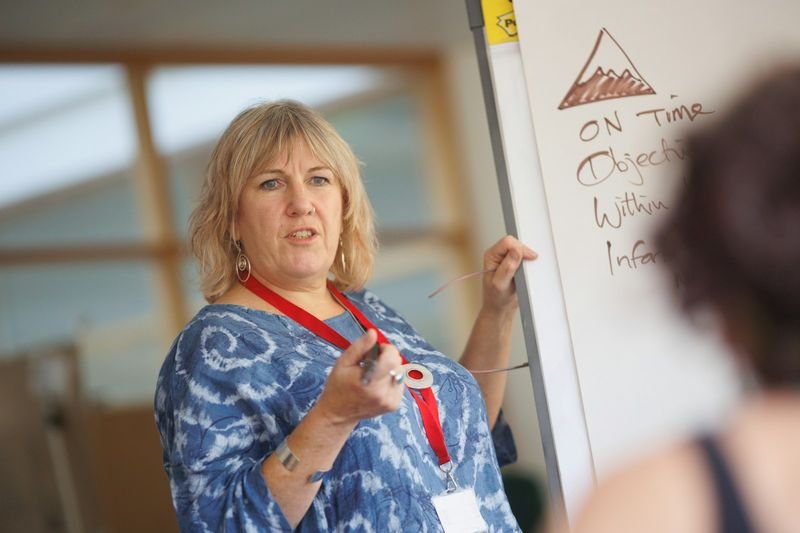
Engage is the first of ESA’s three stages — getting students mentally and emotionally ready before any language teaching starts.
What Is the ESA Method?
ESA breaks a lesson into three functions rather than three fixed time blocks. Engage is about getting students emotionally involved before a single grammar point is mentioned — a short video, a personal question, a strange image on the board, anything that gets students thinking in English and wanting to know more. Harmer’s point was blunt: a class that walks in bored stays bored for the next forty minutes no matter how good the grammar explanation is.
Study is where accuracy lives. Students look at form, meaning, and pronunciation of a specific language item, often through noticing activities where they spot a pattern in a text before the teacher names it. This is the one stage that overlaps most with traditional grammar-translation teaching, and it is deliberately the smallest of the three in a well-balanced ESA lesson.
Activate is where the language gets used for real communication — roleplay, debate, a writing task, a problem-solving game — without the teacher correcting every error in real time. Harmer treated fluency and accuracy as two different skills that need two different kinds of practice, and Activate is where fluency actually gets built.

Study is the accuracy stage — short, focused, and usually the smallest of the three.

Activate hands the language back to students with no safety net — real fluency practice, not another drill.
The Three ESA Sequences: Straight Arrows, Boomerang, and Patchwork
Straight arrows runs the stages in order — Engage, then Study, then Activate — and is the closest ESA gets to traditional PPP. A typical straight arrows lesson might open with students recalling a bad restaurant experience, move into studying the language of complaints and reviews, then close with students writing their own review. It is the easiest sequence to script, which is why most trainee teachers are taught this version first.
Boomerang flips the order to Engage, Activate, Study, Activate. Students attempt a task cold, the teacher watches for what breaks, teaches directly to those gaps, then sends students back to retry the same task. Teaching “can” and “can’t” to a low-level class works well this way: engage with a short video, have students attempt to describe a character’s abilities (Activate), study the one or two errors that came up across the room, then let students redesign and present their own character using the corrected form.
Patchwork throws out any fixed order entirely. A housing-vocabulary lesson might Engage on apartment photos, Study comparatives, Activate through a listening task, circle back to Study with new example sentences, then Activate again through a paired discussion. Patchwork is the sequence Harmer designed for teachers who trust their own read of the room over a template — it takes the most experience to run well, and it is the version most TEFL courses warn beginners away from until they’ve taught straight arrows and boomerang enough times to know what a stalled lesson actually looks like.
Three sequences, one set of stages — the order is the only thing that changes.
ESA vs PPP: Why Flexibility Wins in Real Classrooms
The honest comparison is this: PPP is easier to script, especially for a trainee building one of their first few lesson plans, but it breaks the moment real students show up with real gaps in the middle of the practice stage. PPP vs TBLT vs CLT lays out how the major methodologies differ on paper. In practice, boomerang ESA is what most PPP lessons quietly turn into by week three of a teacher’s career, because boomerang is really PPP with an escape hatch built into the middle of it.
That is not a knock on PPP — it is a reasonable starting template for someone who has never stood in front of a class. But a teacher who sticks to straight arrows forever, never looping back when a drill clearly isn’t landing, is choosing the plan over the students. Harmer’s whole argument for ESA was that the plan should bend to the room, not the other way around.
A Sample ESA Lesson Plan for Teaching “Can/Can’t”
Here is a 45-minute boomerang lesson for a low-level class, the same one referenced above, laid out stage by stage:
- Engage (8 minutes): Play a 90-second video clip of an unusual animal or character with an obvious skill (a dog that skateboards, a kid who solves a Rubik’s cube blindfolded). Ask students what surprised them.
- Activate 1 (10 minutes): In pairs, students describe three things the character in the video can and can’t do, using whatever English they already have. No correction yet — just watch and note recurring errors.
- Study (12 minutes): Address the two or three errors that came up most — usually word order (“can swim he” instead of “he can swim”) or the missing “to” confusion with other modals. Drill the correct form briefly, then have students self-correct their earlier sentences.
- Activate 2 (15 minutes): Students invent their own character — real or fictional — and write five can/can’t sentences, then present the character to a new partner who has to guess if it’s real.
The whole lesson hinges on that middle Study stage being short and surgical. A 12-minute grammar explanation in the middle of a 45-minute lesson should never balloon to 20 — if it does, the Activate stages get cut, and the lesson quietly turns back into a grammar lecture with a video attached.

A boomerang lesson plan is just four stages written out in order, with timing attached to each one.
Common Mistakes Teachers Make With ESA
The most common mistake is treating ESA as a straitjacket rather than a toolkit — running straight arrows every single lesson because it is the version that got taught in week one of a TEFL course, then wondering why engagement drops off by the third week of term. ESA was built to be rearranged; a teacher who never touches the order is using a third of what the framework offers.
The second mistake is cutting Activate short when a lesson runs long. Study is the stage with the clearest “right answer,” so it is tempting to protect it and shrink the fluency practice instead. That is backwards — Study without a following Activate stage produces students who can complete a grammar exercise but freeze the moment they need the same structure in conversation.
The third mistake shows up in Engage: treating it as a five-minute warm-up game disconnected from the rest of the lesson. A strong Engage stage sets up the specific language students will need later — a weak one is just filler before the “real” teaching starts, and students can usually tell the difference.

Most ESA mistakes come from running one sequence on autopilot instead of reading the room.
Why CELTA and TEFL Courses Still Teach ESA Decades Later
ITTT, one of the larger TEFL certification providers, still lists ESA as a core methodology in its teacher-training curriculum nearly three decades after Harmer published it — not out of nostalgia, but because it gives new teachers a planning structure flexible enough to survive an actual classroom. A study published in the Theory and Practice in Language Studies journal measured ESA’s effect on speaking ability directly and found students taught through ESA sequencing showed measurably stronger gains in spoken fluency than a control group taught through a stricter grammar-first order.
That durability is the real argument for learning ESA properly instead of skimming it. Methods built entirely around a classroom gimmick — a specific game, a specific prop — tend to fade once the novelty wears off. A method built around “notice what the room needs and adjust” doesn’t go out of style, because the problem it solves (lessons that fall apart when students don’t behave like the plan expects) never goes away.

ESA is still a standard unit in CELTA and TEFL lesson-planning training today.
ESA is not the only framework built around flexibility rather than a fixed sequence. The Silent Way solves the same “the plan shouldn’t dominate the room” problem from a completely different angle — by removing most of the teacher’s talk time instead of rearranging it. Worth comparing the two the next time a straight arrows lesson feels stale.
Vyanzo
- An Overview of the Popular ESA Teaching Methodology — ITTT TEFL — certification-provider breakdown of ESA’s three stages and classroom use.
- The Effects of ESA Elements on Speaking Ability of EFL Learners — Theory and Practice in Language Studies — peer-reviewed study measuring ESA’s impact on spoken fluency.
- From Linear to Flexible: Using Jeremy Harmer’s ESA Model for Lesson Planning — TESOL Pop — worked examples of straight arrows, boomerang, and patchwork sequences.
- What is ‘Engage, Study, Activate’? — Barefoot TEFL Teacher — classroom-level walkthrough of a boomerang can/can’t lesson.







 SW
SW  EN
EN  ZH
ZH  ZH_CN
ZH_CN  KO
KO  VI
VI  FR
FR  AR
AR  ES
ES  HI
HI  PT
PT  BN
BN  RU
RU  JA
JA  TR
TR  DE
DE  IT
IT  PL
PL  ID
ID  TH
TH  FA
FA  UK
UK  TL
TL  HE
HE  UR
UR  RO
RO  NL
NL  MS
MS  TA
TA  PS
PS  HU
HU  EL
EL  SV
SV  NB
NB  NN
NN  DA
DA  CS
CS  SR
SR  AM
AM