
Formative Assessment: 15 Best Examples for Teachers
A 2011 review by the Education Endowment Foundation put effective feedback — the engine behind formative assessment — at roughly eight months of additional progress per year for the average student. That is one of the largest returns in education research, and it costs nothing but a change in how you check for understanding. The catch is that most teachers confuse formative assessment with quizzing, grading, or “doing more tests.” It is the opposite of that. Done right, it is the quiet running commentary between you and your class that keeps a lesson on the rails.
What Is Formative Assessment?
Formative assessment is the in-the-moment evidence a teacher gathers to find out whether students are learning what is being taught — while there is still time to do something about it. Think of it as the difference between tasting the soup as you cook and waiting for a restaurant critic to review the finished bowl. You taste, you adjust, you taste again.
The term comes from researchers Paul Black and Dylan Wiliam, whose 1998 paper “Inside the Black Box” made the case that what happens inside the classroom — the questions, the feedback, the second chances — matters more for results than any end-of-term exam. Their core argument was blunt: feedback only counts as formative if someone acts on it. A score in a grade book that nobody responds to is not formative. A whispered correction that changes a student’s next sentence is.
If you have already worked through our guide to exit tickets, you have used formative assessment without the label. This article zooms out and gives you the full toolkit.
Formative vs. Summative Assessment: What’s the Difference?
Here is the cleanest way to separate them. Summative assessment measures learning — the final exam, the unit test, the graded essay. Formative assessment supports learning while it is still happening. One is a verdict; the other is a course correction.
The distinction is not about the tool itself. A quiz can be either. Give a quiz, record the marks, and move on — that is summative. Give the same quiz, scan for the three questions half the class missed, and reteach those tomorrow — now it is formative. What makes assessment formative is not the format. It is whether the information changes what you or your students do next.
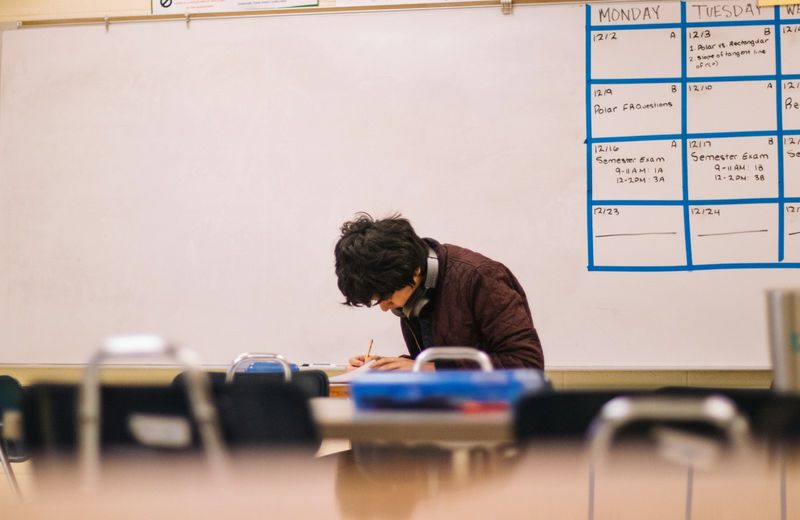
My honest take: schools over-invest in summative assessment and under-invest in formative. Tests get a calendar slot, an exam hall, and a marking policy. The daily checks that actually move the needle get squeezed into whatever minutes are left. Flip that ratio and scores tend to follow.
Why Formative Assessment Works
The research is unusually consistent for education. Black and Wiliam’s review of more than 250 studies found that strengthening formative assessment produced learning gains “among the largest ever reported for educational interventions.” The reason is simple psychology: students learn faster when the gap between what they did and what they aimed for is made visible quickly, and when they are shown how to close it.
Dylan Wiliam later distilled this into five strategies — clarifying success criteria, engineering classroom discussions that surface thinking, giving feedback that moves learning forward, activating students as resources for one another, and activating students as owners of their own learning. His short talk below is the best 20-minute explanation I have found, and it is worth watching before you redesign a single lesson.
There is a second, quieter benefit. When students get used to frequent low-stakes checks, the high-stakes test stops feeling like an ambush. They have rehearsed retrieving the material a dozen times in small doses. That alone lowers test anxiety and raises performance.
15 Formative Assessment Examples You Can Use Tomorrow
None of these need an app, a budget, or a planning period to set up. Pick two or three, not all fifteen. The goal is a habit, not a checklist.
Quick written checks
- Exit ticket. One question on a slip of paper in the last three minutes: “What’s one thing you understood today, and one thing that’s still fuzzy?” Sort the answers into three piles before you plan tomorrow.
- One-sentence summary. Students compress the whole lesson into a single sentence. If they can’t, they didn’t grasp the main idea — and you just found out for free.
- The muddiest point. Ask what was the least clear part of the lesson. The pattern in their answers is your reteach list.
- Two stars and a wish. For peer work: two things done well, one thing to improve. It trains students to assess against criteria, not just react.
Spoken and discussion checks
Talk is the fastest window into thinking, but only if you stop letting the same three confident hands answer everything. These structures spread the evidence across the whole room.
- Think-pair-share. Pose a question, give 30 seconds of silent think time, then pair before sharing. The quiet students rehearse with one partner before facing the class.
- Cold call (no hands). You pick who answers. It signals that everyone is accountable for thinking, not just the volunteers.
- Hinge question. A single well-designed multiple-choice question at the pivot point of a lesson, where each wrong answer reveals a specific misconception. Their hands or fingers vote; you decide whether to push on or pause.

Whole-class visible checks
- Mini whiteboards. Every student answers, every student holds it up, you read the whole room in two seconds. The single highest-return tool on this list.
- Four corners. Label the corners “strongly agree” to “strongly disagree” and have students move to the one that matches their view on a statement. Their feet show you the spread of understanding.
- Fist to five. Students rate their confidence from a closed fist (lost) to five fingers (could teach it). Quick, public, and honest if you have built the right climate.
- Traffic-light cups. Red, amber, green cups on each desk that students flip to show whether they are stuck, slowing down, or flying. You triage the reds first.

Self and peer checks
- Traffic-light self-assessment. Students mark their own work green, amber, or red against the success criteria before you see it.
- Peer marking with a rubric. Swap work and grade against a clear checklist. Students learn the criteria far better by applying them than by reading them.
- Learning logs. A two-line end-of-week reflection: what got easier, what is still hard. Over a term it becomes a map of each student’s progress.

How to Give Feedback That Moves Learning Forward
Collecting evidence is only half the job. What you do with it decides whether any of this works. The strongest finding in the feedback research is also the most ignored: comments beat grades. When researcher Ruth Butler compared students who got marks, students who got comments, and students who got both, the comment-only group improved most. The group that got marks alongside comments ignored the comments entirely and chased the number.

Make feedback specific and actionable. “Good work” tells a student nothing. “Your topic sentence states the claim clearly — now add one piece of evidence to back it up” gives them a move to make. Aim feedback at the task, not the person, and always leave the thinking with the student. The teacher who rewrites a sentence has learned something; the student has not. This pairs naturally with kiunzi — feedback is just real-time scaffolding aimed at the next step.
Common Formative Assessment Mistakes to Avoid
The most common error is gathering evidence and then teaching the next lesson exactly as planned anyway. If the mini-whiteboards show that a third of the class missed the concept and you move on regardless, you ran a data-collection exercise, not a formative assessment. The whole point is to let the evidence bend the plan.
A close second is checking only the loud, confident students and reading the room from them. They are the least representative sample you could pick. The third mistake is grading everything — the moment a check gets a mark, students stop taking risks and start performing, and the honest signal you need disappears. Keep formative checks ungraded and low-stakes on purpose.

Digital Tools for Formative Assessment
You do not need technology to assess formatively — a stack of mini whiteboards beats most apps. But a few tools speed up the part where you sort and read responses. Mentimeter and Wooclap turn the whole class into a live poll in seconds. Google Forms with a self-grading quiz gives you a colour-coded spreadsheet of who missed what. Quizizz and Kahoot add a game layer that works well as a retrieval warm-up, and our own breakdown of Bloom’s Taxonomy helps you write questions that check understanding rather than just recall.
One warning: the tool is not the assessment. A flashy live quiz that nobody acts on is the same dead end as a grade nobody reads. Pick the simplest tool that lets you see thinking and respond to it before the lesson ends.
How to Start Using Formative Assessment
Do not try to bolt all fifteen examples onto Monday’s lesson. Choose one check, use it every day for two weeks until it is automatic, then add a second. Most teachers who stick with it start with exit tickets or mini whiteboards because the feedback loop is immediate and the setup is near zero.
The deeper shift is mental, not procedural. Stop asking “did I cover it?” and start asking “did they get it — and how would I know?” Once that question runs in the background of every lesson, the techniques almost choose themselves. Build the habit this term, and by next term your summative results will tell you it was worth it. Start tomorrow with a single exit ticket and watch what it reveals.
Vyanzo
- Black, P. & Wiliam, D. (1998). Inside the Black Box — the foundational research on formative assessment and classroom feedback.
- Education Endowment Foundation — Feedback Toolkit — evidence summary estimating the impact of feedback on student progress.
- Edutopia — High-Impact Formative Assessment Strategies — practical classroom techniques for checking for understanding.
- NWEA — Easy Formative Assessment Strategies — a working list of low-prep checks for gathering evidence of learning.
Looking for free ESL worksheets? Browse our full collection — printable resources for every level and age group. Browse Free Worksheets →
Students can access free worksheets and reading materials at 18KEnglish.com.







 SW
SW  EN
EN  ZH
ZH  ZH_CN
ZH_CN  KO
KO  VI
VI  FR
FR  AR
AR  ES
ES  HI
HI  PT
PT  BN
BN  RU
RU  JA
JA  TR
TR  DE
DE  IT
IT  PL
PL  ID
ID  TH
TH  FA
FA  UK
UK  TL
TL  HE
HE  UR
UR  RO
RO  NL
NL  MS
MS  TA
TA  PS
PS  HU
HU  EL
EL  SV
SV  NB
NB  NN
NN  DA
DA  CS
CS  SR
SR  AM
AM