

Gifted ESL Students: 8 Proven Strategies
Only 2.4% of the 3.3 million gifted students identified in U.S. schools are English learners, even though ELs make up more than 10% of national enrollment, according to a 2017 Education Week analysis of federal data. The gap isn’t because gifted English learners are rare. It’s because most gifted screening tools measure vocabulary and verbal reasoning in a language the student is still acquiring, so a sharp kid with limited English reads as “needs support” instead of “needs more.” Teachers who’ve been in the room long enough spot the signal before any test does: the student who finishes the worksheet in four minutes and starts doodling, the one who keeps asking “but why” after everyone else has moved on, the one whose behavior problems vanish the moment the work gets harder. The eight strategies below are built for a general ESL classroom without a formal gifted program behind it — just a student who’s outgrowing the lesson in front of them.
Why Gifted ESL Students Get Missed in the First Place
Gifted identification in most schools still runs through standardized tests built around native-English vocabulary and idiom. A student who hasn’t picked up “connotation” or “metaphor” in English yet can ace the same reasoning task in their first language and still score low enough to get screened out. Education Week’s reporting on the issue found gaps as wide as 18 to 19 percentage points between a state’s EL enrollment share and its share of ELs in gifted programs — in the worst cases, an English learner gets identified as gifted at roughly a tenth the rate of a native-English-speaking classmate with the same ability.
The deeper problem is deficit-based thinking. A teacher under pressure to close a language gap starts treating every gap as the whole story and stops looking for what the student can already do. A gifted ESL student is usually still gifted in their first language — they’re just building a second one on top of an ability level that was never actually the issue.

What Giftedness Actually Looks Like Behind a Language Barrier
Forget the stereotype of the kid who already speaks fluent English and finishes every test early. A gifted ESL student’s ability usually shows up sideways, filtered through whatever English they’ve picked up so far. Watch for these patterns instead of waiting for fluency to reveal them:
- Finishes assigned work early and consistently asks for “something harder” instead of “something easier”
- Picks up a new grammar pattern after one or two examples instead of needing repeated drilling
- Shows advanced reasoning, humor, or vocabulary in their first language that hasn’t transferred to English yet
- Goes quiet or restless during repetition-heavy drills, then snaps back to attention the moment a task gets more complex
- Asks questions that go past the lesson — connecting today’s grammar point to something from last month, or to a hypothetical the class hasn’t discussed
- Reads well above grade level in their native language, even when their English reading level looks average on paper
None of these show up on a vocabulary quiz. They show up in how a student behaves when the work is too easy, which is exactly why watching behavior matters more than scores for this group.
Curriculum Compacting: Stop Re-Teaching What They Already Know
Curriculum compacting means pre-assessing a student on the upcoming unit, removing the parts they’ve already mastered, and replacing that freed-up time with something harder — not with a packet of extra worksheets on the same point. Before you start a new grammar unit, give your suspected advanced student a two-minute diagnostic covering the target structure. If they get it right without hesitation, don’t make them sit through five more days of practice they don’t need.
What you buy back with compacting is time, and time is the actual resource gifted students are short on in a mixed-level class. A student who’s spending 60% of class time on material they mastered weeks ago isn’t being included — they’re being parked. Compacting isn’t extra work for you, either: it’s usually a single pre-test and a folder of alternate tasks you can reuse across units.

Depth and Complexity Beats More Worksheets
Handing a gifted student a second worksheet when they finish the first one teaches them one lesson: finishing fast gets you punished with more of the same. The better move is Sandra Kaplan’s Depth and Complexity framework, which takes the exact same content and asks the student to dig into it differently — find the unanswered questions in the text, trace a pattern across multiple examples, identify the “big idea” the lesson is actually teaching, or argue a different perspective than the one in the textbook.
Say your class is reading a short story about a family moving to a new country. The rest of the class answers comprehension questions. Your advanced student researches how the story’s themes connect to a real migration event, then presents the parallel to the class in English. Same text, same reading time, completely different cognitive demand — and no extra grading pile for you.

Tiered Assignments and Choice Boards That Still Build English
A tiered assignment keeps the whole class working on the same grammar point or vocabulary set at three different depths, so you’re not managing three separate lesson plans. Everyone practices the target language — the tiers change the complexity of the task, not the topic. A choice board does the same job with more student autonomy: give a 3×3 grid of tasks at the target skill level, from a quick recall activity to an open-ended creative one, and let the student pick their own path through it.
This overlaps heavily with general mixed-level differentiation strategies — the difference for a gifted student is that their top tier needs to genuinely stretch them, not just add more sentences to translate. If your “advanced” tier is just “the same thing but five more questions,” it isn’t advanced. It’s volume.
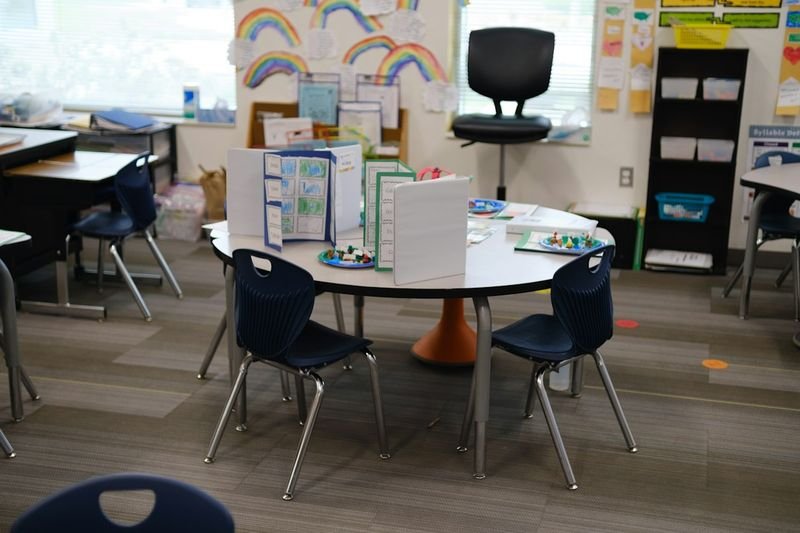
Cluster Grouping Instead of Isolating Your Strongest Student
It’s tempting to pair your strongest student with your weakest one every single time — it looks like peer tutoring, and it does help the struggling student. But do it constantly and your gifted student learns that being advanced means working, not learning. Cluster grouping flips that: periodically group two or three of your strongest students together so they get to think alongside intellectual peers instead of explaining the same concept on repeat.
You don’t need a separate gifted track to do this. Even 15 minutes, twice a week, where your top two or three students tackle a harder extension task together while the rest of the class works in mixed groups, gives them the peer engagement a classroom of mixed levels can’t offer on its own. Save the peer-tutoring pairing for when it genuinely teaches the tutor something too — like having them explain their reasoning out loud, which is a skill, not just a favor to you.
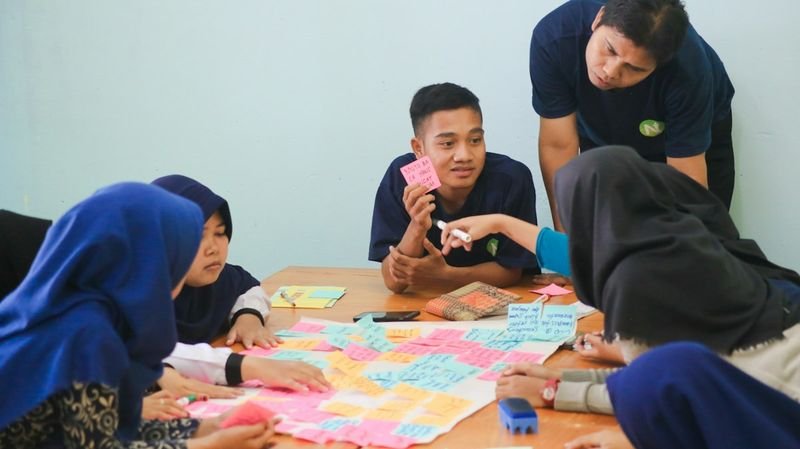
Independent Projects That Actually Stretch Advanced Learners
Independent study works for gifted ESL students specifically because it decouples pace from the rest of the class. Give your advanced student a research question tied to the unit — something with no single right answer — and let them work toward a final product in English: a short presentation, a written report, a recorded explainer video. The structure mirrors project-based learning techniques you’d use with the whole class, just scoped to one student’s pace and interest instead of a group timeline.
The trap to avoid is handing over a project with zero check-ins and calling it differentiation. Gifted students still need feedback on their English — just less frequently, and focused on the writing or speaking output rather than on basic comprehension checks they don’t need.

Twice-Exceptional: When Gifted Overlaps With a Learning Difference
Some of your most-missed students are twice-exceptional — gifted and also living with a learning difference like dyslexia, ADHD, or a speech-language disorder. The two conditions can mask each other on paper: strong reasoning compensates for the reading struggle, and the reading struggle drags down the score enough that the giftedness never gets flagged. The International Dyslexia Association’s guidance on twice-exceptional students notes that these students often land in neither support category — not struggling enough to get intervention, not performing well enough to get enrichment — and get written off as “average” for years.
If a student in your class shows the advanced-reasoning signs above but also struggles with something specific and persistent — spelling, word retrieval, staying seated — don’t assume one cancels the other out. Check our guide on teaching dyslexic ESL students for strategies that pair well with the depth-and-complexity approach here; the two aren’t in conflict; a twice-exceptional student usually needs both at once.

None of this costs extra budget — it costs planning time, and most of it makes the lesson easier to run, not harder. A student who’s intellectually fed stops being the discipline problem at the back of the room. The next time a kid finishes first and starts drumming on the desk, treat that as information about the lesson, not a behavior issue to manage.
Vyanzo
- Education Week — Gifted English-Learners Often Ignored, Overlooked — reporting on the national identification gap between EL enrollment and EL representation in gifted programs.
- Colorín Colorado — Differentiated Instruction for English Language Learners — guidance on differentiating content, process, and product for EL students.
- International Dyslexia Association — Gifted and Dyslexic: Identifying and Instructing the Twice-Exceptional Student — on recognizing and supporting twice-exceptional learners.







 SW
 EN
 ZH
 ZH_CN
 KO
 VI
 FR
 AR
 ES
 HI
 PT
 BN
 RU
 JA
 TR
 DE
 IT
 PL
 ID
 TH
 FA
 UK
 TL
 HE
 UR
 RO
 NL
 MS
 TA
 PS
 HU
 EL
 SV
 NB
 NN
 DA
 CS
 SR
 AM