
Before You Print It: Checking AI Lesson Materials for Accuracy
A colleague of mine recently generated a short reading passage about the history of tea for her intermediate class. It was clean, level-appropriate, and ready in under a minute. It also claimed that tea was first brewed in Japan in the year 200 BCE—a confident, specific, and completely wrong sentence sitting right in the middle of a comprehension exercise. Her students would have copied it into their notebooks as fact. This is the quiet risk of using AI to build lesson materials: the output almost always looks finished, which is exactly why the errors slip through.
Language models are built to produce fluent, plausible text, not verified text. For an ESL teacher, that distinction matters more than it does for almost anyone else. Our materials teach two things at once—the language மற்றும் the content carried by that language. When an AI-generated worksheet contains a fabricated statistic or a grammar rule that sounds authoritative but is subtly false, students absorb both the English and the mistake. This guide walks through a practical way to check AI-made materials before they ever reach a desk, without turning your prep time into a research project.

Why AI Materials Need a Second Look, Not Blind Trust
It helps to understand ஏன் these tools produce confident errors, because that shapes where you look for them. A language model doesn’t retrieve facts from a database and hand them back to you. It predicts the next most likely word based on patterns in its training data. Most of the time that prediction lands on something true, because true statements are common in the text it learned from. But when the model reaches for a specific date, a source, a rare collocation, or a niche grammar point, it will fill the gap with whatever sounds right rather than admitting uncertainty. Researchers call these confident fabrications “hallucinations,” and they are a feature of how the technology works, not an occasional glitch.
For classroom purposes, this means you can trust AI to handle form far more than fact. It’s excellent at rephrasing a passage to a lower level, generating discussion questions, or producing ten example sentences that use the past perfect. It’s much weaker the moment real-world accuracy enters the picture: historical dates, scientific claims, statistics, named sources, and—surprisingly often—the finer points of English grammar itself. Knowing this lets you skim the safe parts quickly and slow down exactly where errors cluster.
The Three Places Errors Hide in ESL Materials
Across hundreds of AI-generated worksheets, the same three trouble spots come up again and again. If you know where they live, checking becomes a targeted habit rather than a vague worry.
Grammar Rules That Sound Authoritative but Aren’t
Ask an AI to “explain when to use தி” and you’ll get a tidy, confident answer—which may include an overstated rule with no exceptions, or an invented distinction that doesn’t survive contact with real usage. I’ve seen generated handouts claim that “used to” can never appear in questions, or that stative verbs are “never” used in the continuous. These absolutes feel reassuring to a learner and are precisely the kind of oversimplification that causes problems two levels later. When an AI explanation states a rule with the words always அல்லது never, treat that as a flag to verify against a proper reference grammar.
Facts Buried Inside Reading Passages
This is the tea problem. A reading passage generated for a lesson on, say, the Great Barrier Reef, renewable energy, or a famous inventor will read smoothly while quietly misstating a date, a location, a measurement, or a cause-and-effect claim. Because comprehension questions are built directly on these sentences, a single fabricated fact contaminates the whole exercise—and the “correct” answer you’re marking against is wrong too. Non-fiction and biographical passages are the highest-risk category, so they deserve the closest read.
Answer Keys and Test Items
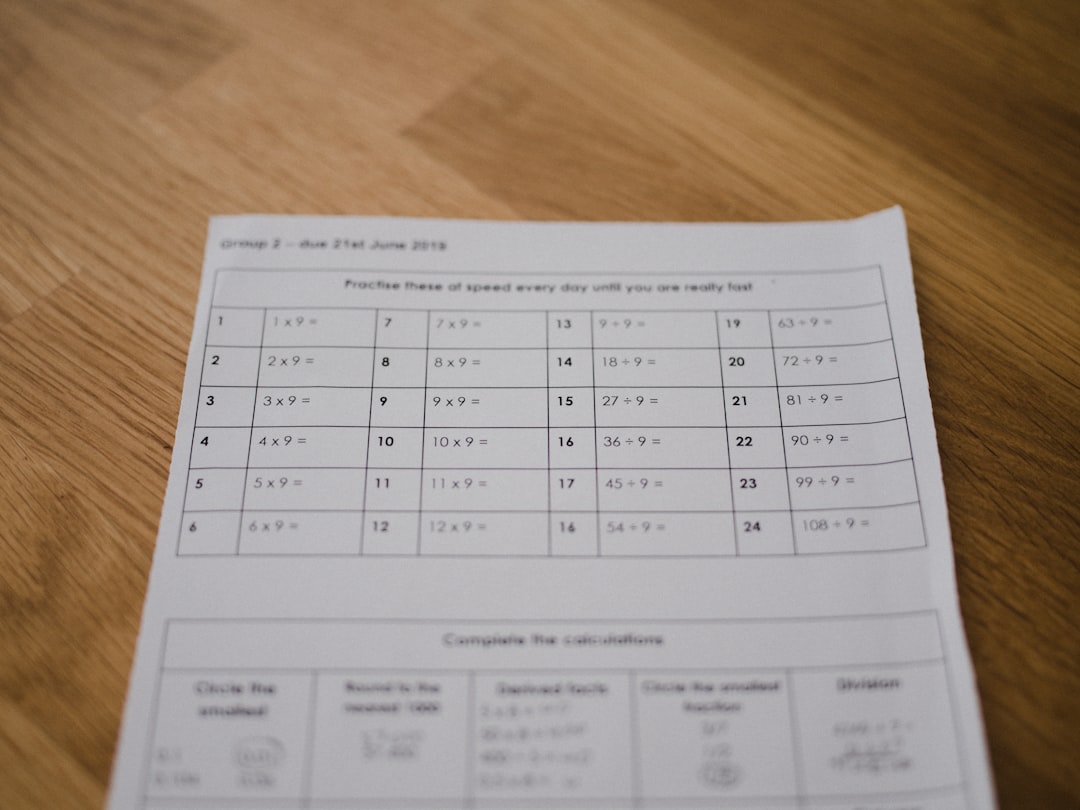
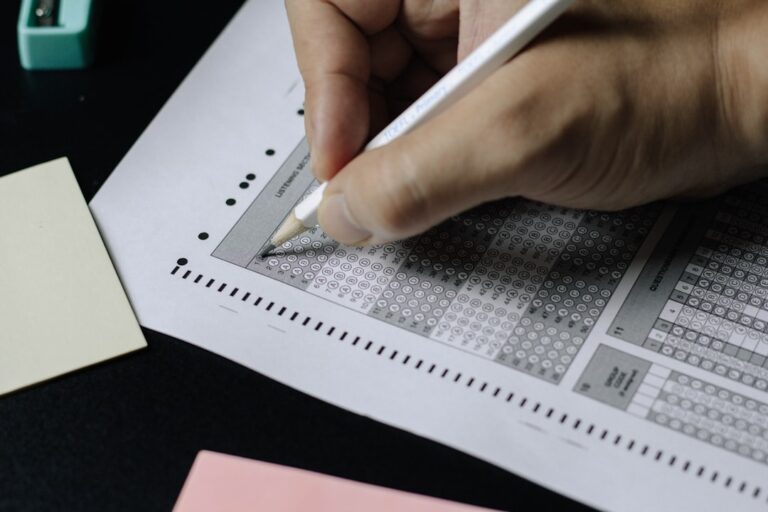
If you generate TOEIC- or IELTS-style practice questions, the answer key deserves particular suspicion. AI regularly produces multiple-choice items where two options are defensibly correct, where the “key” contradicts the passage, or where a gap-fill accepts only one word when three fit naturally. For high-stakes exam prep, a flawed key does real damage: students internalise a wrong pattern and lose trust in your materials when a sharp learner spots the contradiction. Always solve your own generated quiz as if you were a student before you photocopy it.

A Pre-Class Verification Routine You Can Actually Keep
The goal here is a routine light enough to survive a busy prep period. You are not fact-checking every sentence to journalistic standards; you are triaging by risk. Here is the sequence I use, and it rarely adds more than five minutes to producing a worksheet.
First, separate the fluff from the facts. Read the material once and mentally underline anything that makes a checkable claim—dates, numbers, named people, places, sources, and any grammar rule stated as absolute. Everything else (the framing, the questions, the general vocabulary) is low-risk and can pass on a skim.
Second, verify each flagged claim against an independent source. The key word is independent: don’t ask the same AI “is this true?”, because it will often cheerfully confirm its own error. A ten-second search on a reputable site—an encyclopedia, a government or university page, an established news outlet—settles most factual questions. For grammar, keep a trusted learner’s grammar reference or a corpus tool open in a tab.

Third, do the exercise yourself. Complete the comprehension questions and any quiz using only the passage in front of you. This single step catches mismatched answer keys, questions that reference information not actually in the text, and items with more than one valid answer—the failures that embarrass you mid-lesson.
Fourth, sanity-check the cultural and level fit. AI defaults to a US-centric frame and sometimes to vocabulary above the stated level. A quick pass for idioms your international students won’t know, culturally narrow references, or a stray C1 word in a B1 text keeps the material usable for the class actually in front of you.
Faster Checking: Tools and Habits That Compound
A few small habits make this routine faster every week rather than more tedious. The biggest lever is the prompt itself. If you ask the model to “write a B1 reading passage about coffee, and avoid stating specific dates, statistics, or named sources unless they are widely known,” you dramatically shrink the surface area you later have to verify. You’re steering the tool away from exactly the content it’s worst at.
Another habit: ask the AI to mark its own uncertainty. A prompt like “flag any fact in this passage you are not highly confident about” won’t catch everything, but it surfaces a useful shortlist of the shakiest claims to check first. Pair this with a corpus tool—an online collocation checker or a learner corpus—to confirm that the “natural” example sentences it produced are actually how native speakers combine those words. Generated collocations are a subtle failure point: “make a strong decision” reads fine to a machine and wrong to a fluent ear.

Finally, keep a running note of the error types your particular tool tends to make. Once you notice that it consistently overstates grammar rules or invents plausible-sounding studies, you stop being surprised and start checking those spots first. Verification turns from a chore into pattern recognition.
Training Your Own Skeptical Eye
The deeper skill here isn’t a checklist—it’s a stance. The teachers who use AI most safely have simply internalised that fluency is not evidence. A paragraph can be grammatically flawless, perfectly leveled, and factually hollow, and our brains are wired to grant confident, well-formed prose the benefit of the doubt. Retraining that instinct is the real work.
A useful mental trigger is to notice your own comfort. The moment a generated passage feels so polished that you’re tempted to skip the check is precisely the moment to slow down, because that polish is what will carry the error past you and into a student’s notebook. This is also, incidentally, the exact habit we want our students to develop as they start using these tools for their own writing and research—so modelling careful verification in your materials teaches digital literacy alongside English.

None of this means abandoning AI for lesson prep. Used well, it’s one of the most powerful time-savers a teacher has had in a generation—it drafts, differentiates, and rephrases faster than any of us can type. The point is to use it as a fast first-draft writer whose work you edit, never as an authority whose word you publish. That relationship—draft from the machine, judgment from the teacher—keeps the speed while removing most of the risk.
Making Verification a Permanent Part of Prep
The teachers who get burned by AI materials are almost never careless—they’re just trusting a tool that earns trust it hasn’t verified. Build the five-minute routine into your workflow and it stops feeling like extra work; it becomes the same reflex as proofreading a handout you typed yourself. Flag the checkable claims, confirm them independently, take your own quiz, and check the fit. Do that consistently and you get the best of both worlds: the speed of AI drafting with the reliability your students deserve.
Start small. On your next generated worksheet, don’t try to overhaul your whole system—just do one thing: complete the exercise yourself before you print it. That single habit catches more classroom-embarrassing errors than any other, and once you see how often it saves you, the rest of the routine tends to follow naturally.

ஆதாரங்கள்
- Wikipedia — Hallucination (artificial intelligence)
- பிரிட்டிஷ் கவுன்சில்
- கேம்பிரிட்ஜ் ஆங்கிலம்
- Cambridge Dictionary (grammar and collocation reference)
Looking for free ESL worksheets? Browse our full collection — printable resources for every level and age group. Browse Free Worksheets →
Students can access free worksheets and reading materials at 18KEnglish.com.
Shop on Amazon
ESL Teaching Resources on Amazon →
As an Amazon Associate we earn from qualifying purchases.






 TA
TA  EN
EN  ZH
ZH  ZH_CN
ZH_CN  KO
KO  VI
VI  FR
FR  AR
AR  ES
ES  HI
HI  PT
PT  BN
BN  RU
RU  JA
JA  TR
TR  DE
DE  IT
IT  PL
PL  ID
ID  TH
TH  FA
FA  UK
UK  TL
TL  HE
HE  UR
UR  SW
SW  RO
RO  NL
NL  MS
MS  PS
PS  HU
HU  EL
EL  SV
SV  NB
NB  NN
NN  DA
DA  CS
CS  SR
SR  AM
AM