

AI in the ESL Classroom: A Practical Guide for Teachers
Most conversations about AI in the ESL classroom swing between two extremes: breathless promises that a chatbot will replace half your prep, or quiet dread that students will simply paste every assignment into a machine. Neither is useful when you are standing in front of twenty-eight mixed-level learners on a Monday morning. What you actually need is a clear-eyed sense of where these tools earn their place in your week, where they quietly sabotage learning, and how to draw that line for your students before they draw a worse one for themselves.
This guide treats AI as one more tool in the teacher’s kit — powerful, error-prone, and only as good as the person steering it. We’ll walk through the parts of the job where it genuinely saves time, the parts where it needs a firm hand, and the classroom habits that keep the technology in service of language learning rather than in place of it.

Start With the Job, Not the Tool
The fastest way to waste a term on AI is to start with the tool and go looking for a problem it can solve. Start instead with the parts of your workload that are repetitive, time-hungry, and low-stakes if they go slightly wrong. Those are the tasks worth automating. Generating ten example sentences for a target structure, drafting a reading passage at a controlled level, brainstorming warmers around a theme, or rewording a rubric in student-friendly language — these are chores, not craft. Handing them to a language model frees the hours you would rather spend on feedback, relationships, and the judgement calls that no machine can make.
The mirror image is just as important. Anything that เป็น the learning should stay in human hands. If the point of an activity is for a student to wrestle with a paragraph until the ideas come out in English, an AI that writes it for them has not helped — it has skipped the lesson. The clearest test is to ask: is the struggle here the obstacle, or is the struggle the whole point? When the struggle is the point, keep the AI out of it.
Planning and Materials Without Losing Your Voice
Lesson planning is where most teachers feel the first real relief. A model can take a topic, a level, and a target grammar point and return a rough lesson shape in seconds. The trap is treating that output as finished. What comes back is a competent average — generic, over-long, and often pitched at the wrong level. Your value is in the editing: cutting the filler, swapping the flat examples for ones that fit your learners’ lives in Taipei or Seoul or São Paulo, and pruning until the plan matches the forty-five minutes you actually have.

Prompting well is a skill worth building. A vague request produces vague material. A precise one — naming the CEFR level, the learners’ first language, the exact structure, the number of items, and the format you want — produces something you can almost use. Ask for a reading passage “at A2 level, around 150 words, using the past simple, for adult learners interested in travel, with five comprehension questions,” and you will get far closer to usable than “write me a reading.” Treat the first output as a draft you are commissioning, not an answer you are receiving.
Always Check the Facts and the Level
Language models are fluent liars. They will produce grammatically flawless text that states something false with total confidence, invent a “common idiom” that no native speaker uses, or slip a B2 clause into an A1 passage without noticing. Before any AI-generated material reaches a student, read it as if a new colleague handed it to you: check the facts, sanity-check the level, and cut anything that sounds subtly off. This verification habit is not optional busywork — it is the difference between AI that supports your teaching and AI that quietly teaches your students wrong things.
Differentiation That Finally Fits the Time You Have
Differentiation is the promise every teacher believes in and few have time to deliver. A single reading passage rarely serves a class where some learners are still decoding and others are ready to argue back. Here AI does something genuinely new: it can take one text and produce three versions at three levels in the time it used to take to make one. Feed it your original passage, ask for a simplified A2 version and a stretched B2 version, and you have a tiered set of materials that let every student work at the edge of their ability rather than drowning or coasting.
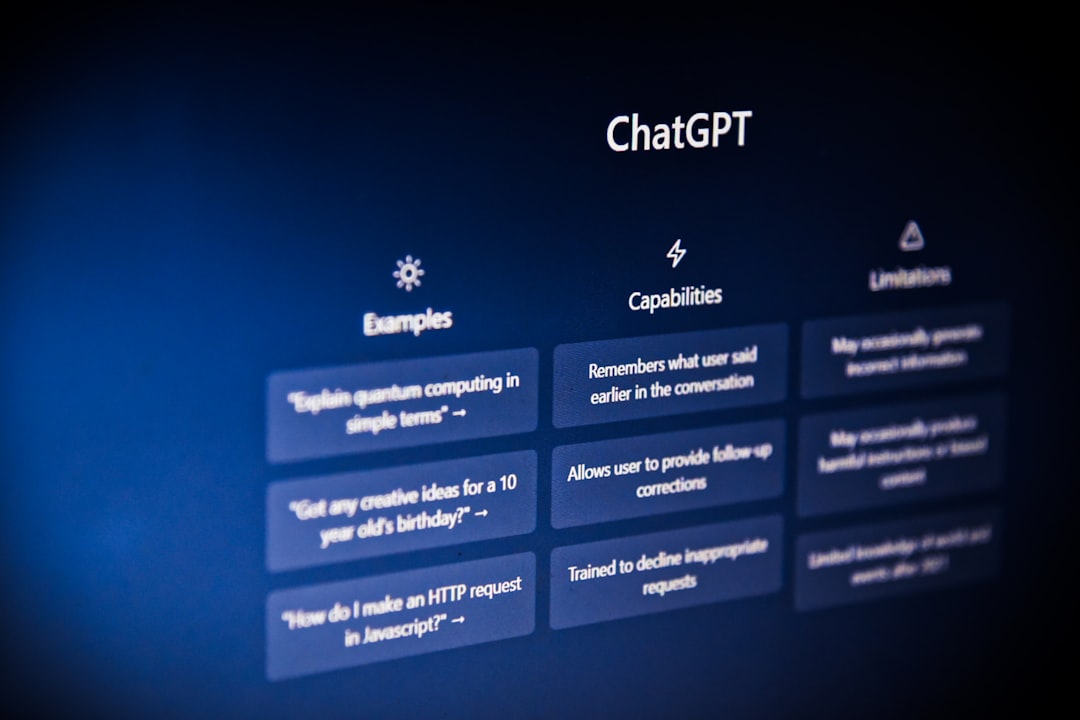
The same move works for comprehension questions, vocabulary glosses, and sentence frames. A stronger group gets open-ended questions; a group that needs scaffolding gets the same content with gapped answers and a word bank. The teaching judgement — who needs what, and when to nudge someone up a tier — stays with you. The tedious duplication that used to make differentiation impossible on a normal workload is what the machine absorbs.
Speaking and Writing Practice Between Classes
The scarcest resource in any language classroom is talking time. One teacher cannot give thirty students meaningful individual conversation practice in a single period, and most learners get almost none outside class. Conversational AI changes the arithmetic. A student can hold a low-pressure spoken exchange with a chatbot, ask it to slow down, request a rephrase, and make mistakes without the social cost of stumbling in front of peers. For shy learners and for exam candidates rehearsing IELTS or TOEIC speaking prompts, that private, patient, infinitely repeatable practice is a real gain.
It is not a substitute for human interaction, and it should never be sold as one. The machine has no genuine understanding, misses the cultural texture of real conversation, and cannot read the flicker of confusion on a face. Position it as a warm-up and a rehearsal space — the batting cage, not the game. The real match still happens between people, in your classroom, where negotiation of meaning and genuine communication actually take place.
Writing feedback follows a similar logic. Used well, AI can give a student instant reaction to a draft — flagging repeated errors, suggesting stronger vocabulary, pointing out where an argument goes vague — so they arrive at your desk with a cleaner second draft rather than a raw first one. The risk is obvious: a learner who lets the tool rewrite their work has practised nothing. The way through is to make the process visible. Ask for drafts, ask students to mark what they changed and why, and treat AI feedback as a prompt to revise rather than a service that revises for them.
Teaching Students to Use AI, Not Hide From It
Your students are already using these tools, whether or not your syllabus acknowledges it. Pretending otherwise simply pushes the use underground, where it is uncritical and undisclosed. The more durable move is to bring it into the open and teach the skill directly: how to prompt clearly, how to spot when the output is wrong, and how to use AI as a study aid without outsourcing the thinking. That digital literacy is now part of what it means to teach English, and the learners who master it will outpace those who either avoid the tools or trust them blindly.

Practical classroom activities make this concrete. Have students fact-check an AI-generated paragraph and correct its errors — a task that sharpens their own language while teaching healthy scepticism. Ask them to compare two AI responses to the same prompt and judge which is more natural. Get them to rewrite a robotic AI paragraph in a warmer, more human voice. Each of these turns the tool into an object of study, and each one builds the critical eye that keeps a learner from being fooled by fluent nonsense.
Setting Rules That Hold Up
None of this works without clear, stated expectations. A blanket ban is unenforceable and teaches students that the honest move is to hide their tool use. A total free-for-all guts the assessment. The workable middle is a simple, explicit policy that names when AI is welcome and when it is off-limits, and — crucially — explains the reasoning so the rule survives contact with a motivated teenager. “You may use AI to brainstorm and to check grammar on your draft; you may not use it to write the paragraph, because writing the paragraph is the skill we are building” is a rule students can actually follow.
Design your assessments with this reality in mind. In-class writing, spoken assessment, and tasks that draw on personal experience are naturally resistant to being outsourced. Where you set take-home work, ask for process artefacts — outlines, drafts, reflections on what changed — that show the thinking rather than only the polished product. The goal is not to build an AI-proof fortress, which is impossible, but to design work where using AI to skip the learning is more effort than doing the learning itself.

Keeping the Human at the Centre
The teachers who get the most from AI are rarely the ones chasing every new app. They are the ones with a firm sense of what teaching is for, using the technology to clear away the drudgery that stood between them and that purpose. AI can draft, tier, and rehearse. It cannot notice that a usually chatty student has gone quiet, cannot decide that today’s plan should be abandoned for a conversation the class actually needs, and cannot build the trust that makes a nervous learner willing to speak.
Start small. Pick one recurring chore — example sentences, differentiated readings, first-draft lesson shapes — and let AI take it for a month while you keep a critical eye on the output. Notice where it saves you real time and where it quietly makes more work through errors you have to catch. Expand into what earns its place and drop what doesn’t. Used that way, AI in the ESL classroom is neither saviour nor threat. It is leverage — and the person holding the lever is still, and always, the teacher.

Sources and Further Reading
- สภาอังกฤษ — teacher training and English language teaching resources.
- Cambridge University Press & Assessment — research on assessment and language learning.
- สมาคม TESOL นานาชาติ — professional standards and practice for English language teachers.
- Common European Framework of Reference (CEFR) — the level descriptors referenced throughout this guide.







 TH
TH  EN
EN  ZH
ZH  ZH_CN
ZH_CN  KO
KO  VI
VI  FR
FR  AR
AR  ES
ES  HI
HI  PT
PT  BN
BN  RU
RU  JA
JA  TR
TR  DE
DE  IT
IT  PL
PL  ID
ID  FA
FA  UK
UK  TL
TL  HE
HE  UR
UR  SW
SW  RO
RO  NL
NL  MS
MS  TA
TA  PS
PS  HU
HU  EL
EL  SV
SV  NB
NB  NN
NN  DA
DA  CS
CS  SR
SR  AM
AM