

Future Tense ESL: 5 Lesson Plans for Every Level
“I will going to eat pizza tonight.” After twenty years in ESL classrooms, I’ve heard that sentence more than I can count. Students mix will และ going to not because they’re careless, but because most languages handle the future with a single structure. English doesn’t, and that gap creates fossilized errors that survive into advanced levels if you don’t catch them early. The fix isn’t a single lesson on future tense — it’s a sequence of five.
Why the Future Tense Trips Up ESL Learners
English has at least four distinct ways to talk about the future, each signaling a different relationship between the speaker and the event. Students from translation-based learning backgrounds often collapse all of them into one mental slot. The result is persistent interference: learners who hold fluent conversations still write “I am going to call you as soon as I will arrive” at B2 level.
The British Council’s learner corpus research identifies the will/going to distinction as one of the most persistently misused structures in English — even among candidates scoring 6.5 on IELTS. The problem isn’t vocabulary. It’s missing schema for how English marks speaker stance toward the future.
That’s the frame your lesson sequence needs to build — one layer at a time.
Future Tense ESL Lesson Plan 1 — Beginners: Will for Instant Decisions
Level: A1–A2 | Time: 60 minutes
At the beginner level, isolate will completely. Don’t introduce going to in the same lesson. Students at A1 need one clear use case — and the clearest one is the instant decision made at the moment of speaking.

Beginner students retain will faster when the context is immediate — a menu choice, a phone call, a decision happening right now in the room.
วอร์มอัพ (10 นาที): Project a restaurant menu. Ask each student: “What do you want?” Model the answer: “I’ll have the pasta.” Repeat with six students. Don’t explain the grammar yet. Flood the room with the form first.
Presentation (15 min): Draw two columns on the board — Instant Decision และ Already Decided. Give examples from the warm-up and daily life. Tell students: today’s lesson is the left column only. The right column comes next week. That boundary matters — it prevents premature overgeneralization.
Practice (20 min): Information gap activity. Student A has a list of problems (printer is out of paper, the phone is ringing, someone is at the door). Student B offers instant solutions using will. This forces 12–15 instances of the form in natural context before anyone has had a chance to overthink it.
Production (15 min): Post 10 situation cards around the room. Students walk and respond in pairs: “A stranger asks you for directions — what do you do?” → “I’ll show them on my phone.” Every response must use will. Monitor for errors, but hold correction for the end of class.
Future Tense ESL Lesson Plan 2 — Lower Intermediate: Going To for Plans
Level: A2–B1 | Time: 60 minutes
Once students have a stable relationship with will for instant decisions, introduce be going to for pre-made plans and evidence-based predictions. Don’t reteach will here — trust the schema from Lesson 1.
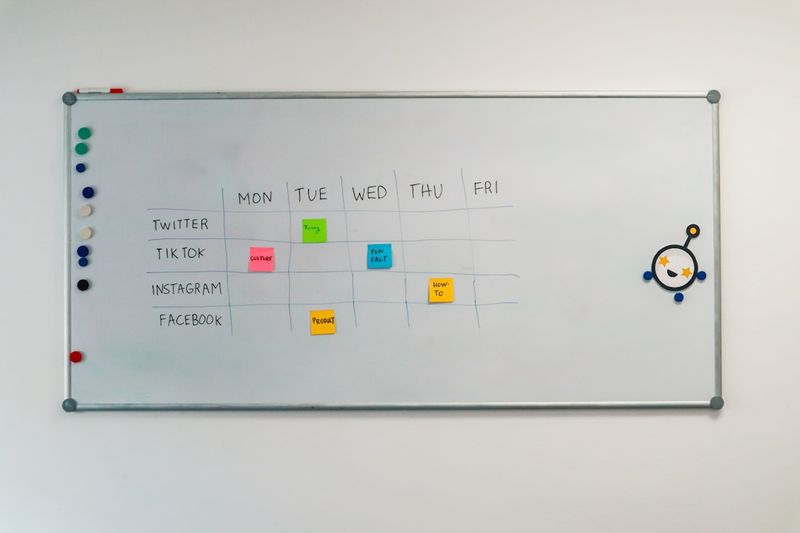
A shared timeline on the board makes the pre-existing intention behind going to visible — students see it rather than memorizing a rule.
Presentation (15 min): Draw a timeline from “last month” to “next month” on the board. Place student events on it: “Ana started saving money three weeks ago. She’s going to buy a laptop next month.” The timeline makes the prior intention concrete. Then show a photo of dark clouds: “Look at the sky. It’s going to rain.” Evidence → conclusion. Both uses of going to share the same logic: something existed before the prediction.
Cambridge’s Grammar in Use research notes that students who see going to anchored in visible evidence or documented prior plans retain the form at roughly twice the rate of students who receive it through rule memorization alone.
Practice (20 min): Diary swap. Students write five plans for next week using going to. A partner reads the diary and asks follow-up questions: “Why are you going to visit your grandmother?” This generates natural be + going to + infinitive in a real conversational frame.
Production (15 min): Show four photos — a packed suitcase, a birthday cake, storm clouds, a signed lease. Students predict in writing: “She’s going to move into a new apartment.” Debrief by asking what evidence led to each prediction. That debrief is where the grammar rule becomes explicit — after students have already used it correctly.
Future Tense ESL Lesson Plan 3 — Intermediate: Will vs. Going To
Level: B1–B1+ | Time: 75 minutes
This is the lesson most teachers teach first. It should be the third lesson in the sequence. By this point, students have already internalized two distinct schemas — and the contrast lesson is simply surfacing what they already know.
At intermediate level, students analyze sentence pairs rather than memorize rules — the contrast emerges from examples they already partly recognize.
Context dialogue (10 min): Present two scenarios on the board. Scenario A: “The doorbell rings. ‘I’ll get it!'” Scenario B: “I’m going to pick up my friend from the airport at 6.” Ask: “Which one did the speaker plan before this moment?” Students can usually identify the difference without a grammar explanation — because they’ve already built the schema.
The framing: will = speaker decides right now. Going to = speaker decided before. That’s the entire rule. Don’t complicate it.
Gap-fill analysis (15 min): Provide 10 sentence pairs. Students choose will หรือ going to and write one sentence explaining why. The written explanation is mandatory — it’s the metacognitive step that converts a correct guess into durable knowledge.
Using concept checking questions is particularly powerful in this lesson. After a student answers, ask: “Did they plan this before? Or decide just now?” The CCQ surfaces the underlying reasoning without telling the student whether they were right.
Practice (20 min): Travel agency roleplay. Student A is an agent. Student B is a traveler who hasn’t planned anything yet. The traveler makes real-time decisions (“I’ll take the window seat”) while discussing a trip they’ve been organizing for months (“I’m going to stay in Bali for two weeks”). Both forms appear in one natural conversation.
Production (20 min): Future paragraph. Students write: “What are your plans for next year, and what do you imagine will happen in your life at 60?” Plans → going to. Imagined outcomes → will. Students must use both, and they usually have to stop and think about which one fits each sentence.
Future Tense ESL Lesson Plan 4 — Upper Intermediate: Present Continuous for Arrangements
Level: B1+–B2 | Time: 60 minutes
Most textbooks present present continuous as a “future tense” without grounding it in the specific context where it actually works: fixed social arrangements where both parties already know the plan.
Appointment roleplays at this level generate the social dimension of future tense — students hear the difference between planning alone and coordinating with others.
The practical rule: use present continuous when the arrangement is mutual — both parties know about it. “I’m meeting Dr. Kim at 3.” [She has the appointment in her calendar too.] Contrast with: “I’m going to see Dr. Kim about my knee.” [Dr. Kim doesn’t know yet.]
Presentation (15 min): Show a Google Calendar screenshot filled with appointments. Read them out: “I’m having dinner with my sister on Friday. I’m flying to Tokyo on the 14th.” These are locked in. Then contrast with personal intentions that haven’t been communicated to anyone: “I’m going to start exercising next month.” No appointment. No mutual knowledge. Going to, not present continuous.
Practice (20 min): Appointment roleplay. Students fill diary slots for next week, then find partners to schedule meetings: “Are you free on Thursday afternoon?” → “No, I’m presenting at the department meeting at 3.” The information gap forces present continuous as a social signal — not just a grammar form.
Production (20 min): Event planning presentation. Groups plan a class trip for next month and present the itinerary: “We’re leaving at 9. We’re visiting the market at 11. We’re having dinner at the night market.” Every event presented as fixed, mutual, expected. Peer groups ask: “Is that in the calendar, or is that just a wish?”
Future Tense ESL Lesson Plan 5 — Advanced: Future Perfect and Future Continuous
Level: B2–C1 | Time: 75 minutes
By C1, students should produce future perfect (will have done) and future continuous (will be doing) with confidence. In practice, many B2 learners avoid both forms entirely — they sound complex, and avoidance is invisible to teachers who don’t probe.

At advanced levels, pair work on job interview simulations generates the future perfect and future continuous in naturally high-stakes communicative contexts.
The core logic: both forms position the speaker at a specific future moment and describe the action from that vantage point. Future continuous = still in progress at that moment. Future perfect = already finished before it.
Presentation (15 min): Time travel metaphor. “Imagine it’s December 31, 2030. What will you have achieved? What will you be doing that evening?” Students write two sentences immediately, before any grammar explanation. The temporal logic becomes intuitive when students actually have to place themselves in the future and look back or around.
Peer analysis (20 min): Give 12 incorrect sentences using both forms. Students identify the error, rewrite it, and explain the logic in one sentence. TESOL research from Lyster and Ranta’s 1997 recasts study demonstrates that explicit metalinguistic analysis at advanced levels produces more durable accuracy repair than simple reformulation.
Production (30 min): Job interview simulation. The interviewer asks: “Where do you see yourself in ten years?” Students must use both forms: “I’ll have built my own consulting practice. I’ll be leading a team across three countries.” The professional context creates real stakes — students want to sound credible, which pushes them to choose forms deliberately rather than fall back on present simple.
For guidance on sequencing these lessons into a term plan, the overview in English Tenses: 12 Tenses Chart + How to Teach Them gives a bird’s-eye view of how future tense fits within the full tense system.
A YouTube Resource Worth Using in Class
The video below, designed specifically for ESL teachers, covers will, going to, and present continuous for the future in a classroom-ready sequence. It’s a useful model for Lesson Plans 2 and 3 above.
5 ESL Future Tense Activities That Actually Work
These activities cross all five levels and slot into any of the lesson plans above.

1. Bucket list interviews. Students write a “before I turn 40” list using going to. Partners interview each other: “When are you going to do that? What will you need first?” The conversation naturally mixes both forms because some items are planned and some are aspirational.
2. News predictions. Show a current headline with the outcome hidden. Students predict what happened next using will และ going to. Reveal the actual outcome. The real stakes — and the occasional surprise — make the language stick better than invented scenarios.
3. Future timeline race. Each group has a blank 10-year timeline. The teacher calls out an event; the first team to correctly place it on the timeline with the right future form wins a point. Fast, competitive, and forces form-meaning connection under pressure.
4. Voicemail planning. Students leave a 30-second voicemail for a classmate coordinating a group event. “Hi, I’m calling about the trip. I’ll bring the food — you’re going to book the hotel, right?” Develops the social layer of future tense choice: who decided what, and when.
5. Speculative obituary. Advanced only. Students write a brief speculative obituary for their 95-year-old self using future perfect: “She will have spent forty years teaching. She will have raised two children and learned three languages.” Unusual enough to be memorable; complex enough to require real form control.
Correcting Future Tense Errors Without Derailing Fluency

The errors you’ll see most often:
Random mixing: “I will going to travel next week.” This usually means the student intended going to but grabbed will from the front of the sentence. Ask: “Did you plan this trip before today?” If yes, guide toward going to with a CCQ rather than a rule reminder.
Will for everything: Upper-intermediate learners who learned will first often use it as the default for all future reference. The fix is to probe the planning context: “When did you decide that?” Once they locate the prior decision, the right form usually follows.
Present simple for scheduled events: “The conference starts next Monday at 9.” This is actually correct — timetabled events can take present simple. When students get this right and you correct it, you’re wrong. Use the opportunity to teach the spectrum instead.
Save grammatical correction for accuracy-phase activities where students know feedback is expected. During fluency tasks, recasts work better than explicit interruptions — but don’t rely on implicit recasts alone at B2 and above. Lyster and Ranta’s research is clear: learners at higher proficiency levels need explicit metalinguistic feedback to notice and repair grammar errors.
The five lesson plans above only work if they run in sequence. Resist the pressure to collapse them. Teachers who jump straight to the will/going to contrast lesson are often working harder than necessary — and their students are learning a grammar rule instead of a communication system. Give each form room to settle before you introduce the contrast, and by Lesson Plan 3, you’ll find the discussion practically runs itself.
For techniques that apply across grammar points — not just future tense — the approach described in teaching English conditionals uses the same sequenced schema-building method.
แหล่งที่มา
- สภาอังกฤษ — Learner corpus research on common grammatical errors in English proficiency testing.
- Cambridge English Grammar in Use — Research base for grammar retention rates under different instructional approaches.
- Lyster, R., & Ranta, L. (1997). “Corrective feedback and learner uptake.” Studies in Second Language Acquisition, 19(1), 37–66. — Foundational TESOL research on corrective feedback effectiveness at different proficiency levels.





 TH
TH  EN
EN  ZH
ZH  ZH_CN
ZH_CN  KO
KO  VI
VI  FR
FR  AR
AR  ES
ES  HI
HI  PT
PT  BN
BN  RU
RU  JA
JA  TR
TR  DE
DE  IT
IT  PL
PL  ID
ID  FA
FA  UK
UK  TL
TL  HE
HE  UR
UR  SW
SW  RO
RO  NL
NL  MS
MS  TA
TA  PS
PS  HU
HU  EL
EL  SV
SV  NB
NB  NN
NN  DA
DA  CS
CS  SR
SR  AM
AM