
Tea Culture in Taiwan | Advanced ESL Reading Worksheet PDF
Free, classroom-ready, one click — includes answer key on page 3.

Reading Worksheet — Advanced (F) | tahricteaches.com
Taiwan’s tea culture is widely regarded as one of the most ช่ำชอง in East Asia, blending centuries-old Chinese traditions with distinctly local innovations. Tea was first brought to the island in the early 18th century by settlers from Fujian Province, who recognized that Taiwan’s mountainous terrain and humid subtropical climate were ideally suited to cultivation. Today, the island produces some of the world’s most celebrated oolong teas.
The geography of Taiwan plays a crucial role in the distinctive character of its teas. High-elevation regions such as Alishan, Lishan, and Shan Lin Xi produce leaves that develop slowly in cool mountain air, resulting in a smoother, more aromatic flavor profile. These conditions, combined with generations of accumulated expertise, allow Taiwanese farmers to cultivate varieties that command premium prices on the international market.
Beyond agriculture, tea occupies a central place in Taiwanese social life. The traditional gongfu tea ceremony, which emphasizes patience, precision, and mindfulness, is still practiced in dedicated teahouses scattered throughout cities like Taipei and Taichung. Participants brew small portions repeatedly, savoring how the flavor evolves across multiple infusions, and engaging in unhurried conversation.
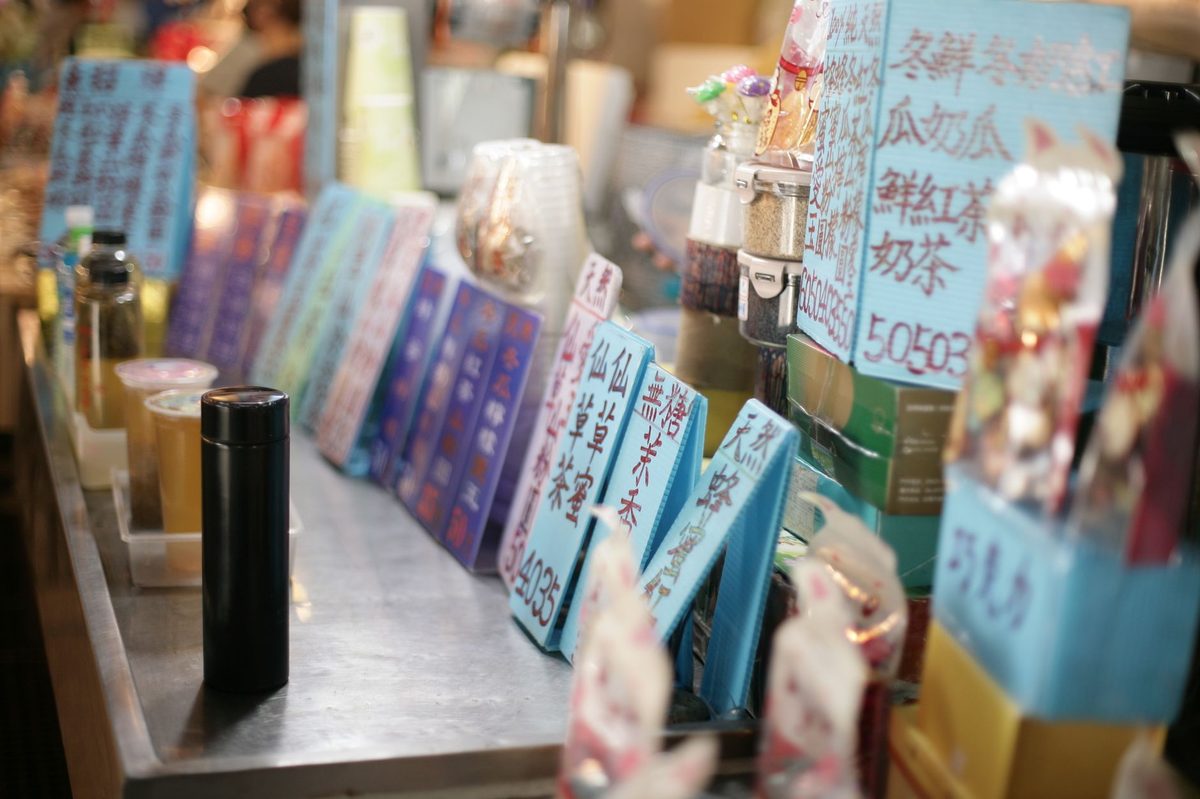
In recent decades, Taiwan has also become globally famous for bubble tea, which was ประดิษฐ์ in Taichung during the 1980s. This sweet, milky drink with chewy tapioca pearls has transformed how younger generations engage with tea, creating an industry that now spans dozens of countries. While purists sometimes lament its departure from tradition, bubble tea has undeniably introduced Taiwanese tea culture to millions of new consumers.
The contrast between solemn teahouses and bustling bubble tea shops reflects Taiwan’s broader cultural identity: deeply rooted in heritage yet remarkably adaptive. Whether sipping a delicate high-mountain oolong or queueing for a plastic cup of brown sugar boba, drinkers participate in a living tradition that continues to evolve while honoring its origins.
ก. คำศัพท์
- sophisticated ____
- crucial ____
- cultivate ____
- emphasizes ____
- invented ____
- heritage ____
- infusion ____
- lament ____
- premium ____
- adaptive ____
- a. prepare and use land to grow crops or plants
- b. created or designed something that did not exist before
- c. express sorrow, regret, or disappointment about something
- d. highly developed, refined, or complex in nature
- e. extremely important or essential to a particular outcome
- f. drink made by soaking leaves or herbs in hot water
- g. traditions, achievements, and beliefs passed down from previous generations
- h. of superior quality and commanding higher prices
- i. gives special importance or attention to something
- j. able to adjust and change to fit new conditions

ข. จริงหรือเท็จ
- ____ Tea was brought to Taiwan in the early 18th century by settlers from Fujian Province.
- ____ Taiwan’s tropical lowlands are the primary regions for producing high-quality tea.
- ____ High-elevation tea growing produces leaves with a smoother, more aromatic flavor profile.
- ____ The gongfu tea ceremony emphasizes speed and efficiency over mindfulness.
- ____ Bubble tea was invented in Taichung during the 1980s.
- ____ Bubble tea has had little impact outside of Taiwan.
- ____ Alishan and Lishan are well-known high-elevation tea regions in Taiwan.
- ____ Traditional teahouses can still be found in cities like Taipei and Taichung.
- ____ All Taiwanese tea purists fully embrace bubble tea as an authentic tradition.
- ____ Taiwan’s tea culture blends Chinese traditions with local innovations.
ค. เติมคำในช่องว่าง
- Taiwan’s mountainous geography plays a ___ role in shaping the unique flavor of its teas.
- The gongfu tea ceremony ___ patience, precision, and mindfulness during preparation.
- Farmers in high-elevation regions ___ tea varieties that command high prices internationally.
- Bubble tea was ___ in Taichung during the 1980s and quickly spread worldwide.
- Taiwan’s tea culture is regarded as one of the most ___ in East Asia.
ง. คำถามเพื่อทดสอบความเข้าใจ
- Why is Taiwan’s geography important for producing high-quality tea?
- How does the gongfu tea ceremony differ from drinking bubble tea?
- What does the contrast between teahouses and bubble tea shops reveal about Taiwanese culture?
E. คำถามเพื่อการอภิปราย
- Do you think modern innovations like bubble tea strengthen or weaken traditional tea culture? Why?
- What role does a national drink or food play in shaping a country’s cultural identity in your home country?
Answer Key (click to reveal)
ก. คำศัพท์: 1-d, 2-e, 3-a, 4-i, 5-b, 6-g, 7-f, 8-c, 9-h, 10-j
ข. จริง/เท็จ: 1-T, 2-F, 3-T, 4-F, 5-T, 6-F, 7-T, 8-T, 9-F, 10-T
ค. เติมคำในช่องว่าง: 1-crucial, 2-emphasizes, 3-cultivate, 4-invented, 5-sophisticated
ง. ความเข้าใจ:
- The mountainous terrain and humid subtropical climate, especially in high-elevation regions, allow tea leaves to develop slowly, resulting in smoother and more aromatic flavors.
- The gongfu ceremony emphasizes patience, precision, and mindful conversation, while bubble tea is a fast, sweet, modern drink consumed casually and on the go.
- It shows that Taiwanese culture is deeply rooted in heritage while remaining highly adaptive and open to innovation.
© Tahric Teaches | tahricteaches.com
Looking for free ESL worksheets? Browse our full collection — printable resources for every level and age group. Browse Free Worksheets →






 TH
TH  EN
EN  ZH
ZH  ZH_CN
ZH_CN  KO
KO  VI
VI  FR
FR  AR
AR  ES
ES  HI
HI  PT
PT  BN
BN  RU
RU  JA
JA  TR
TR  DE
DE  IT
IT  PL
PL  ID
ID  FA
FA  UK
UK  TL
TL  HE
HE  UR
UR  SW
SW  RO
RO  NL
NL  MS
MS  TA
TA  PS
PS  HU
HU  EL
EL  SV
SV  NB
NB  NN
NN  DA
DA  CS
CS  SR
SR  AM
AM