

ESL Students With Autism: 8 Proven Strategies
Teaching ESL students on the autism spectrum works best when you replace surprise with a visual, predictable routine, give students more than one way to answer (pictures, gestures, AAC — not just speech), and treat scripted or echoed language as a scaffold to build on instead of a behavior to correct. Add a low-sensory corner for when the classroom gets loud, and most of the “shutdowns” and “refusals” teachers report turn out to be sensory overload or a missing visual anchor, not a lack of ability.
About 1 in 31 children in the United States had been identified with autism spectrum disorder by age 8, according to the CDC’s most recent Autism and Developmental Disabilities Monitoring Network data, collected in 2022. Boys were identified more than three times as often as girls. That means almost every ESL classroom of 25-plus students has at least one autistic learner sitting in it, whether or not a diagnosis has ever reached the teacher.
I’ve taught buxibans and private ESL classes in Taiwan for over two decades, and the pattern repeats every term: a student labeled “difficult” or “not trying” turns out to be an autistic learner who’s been coping with an unpredictable room, a verbal-only grading rubric, and zero warning before transitions. Fix the structure and the “behavior problem” usually disappears on its own.
Why Standard ESL Lesson Plans Fail Autistic Students
Most ESL lessons assume a student can tolerate ambiguity: a surprise pop quiz, a sudden switch from pair work to silent reading, a teacher who changes the plan mid-class because the energy feels off. Autistic students generally do better with less ambiguity, not more encouragement to “just go with it.” Add a second language on top of that — where the student is already decoding unfamiliar sounds and grammar — and an unpredictable lesson becomes two problems stacked on each other: the language itself, and the anxiety of not knowing what happens next.
The fix isn’t a separate curriculum. It’s structural: more visual anchors, more predictability, more than one channel for the student to show what they know. Every strategy below is something you can run inside a mixed-ability ESL class without pulling the student out of it.
Build a Visual, Predictable Routine
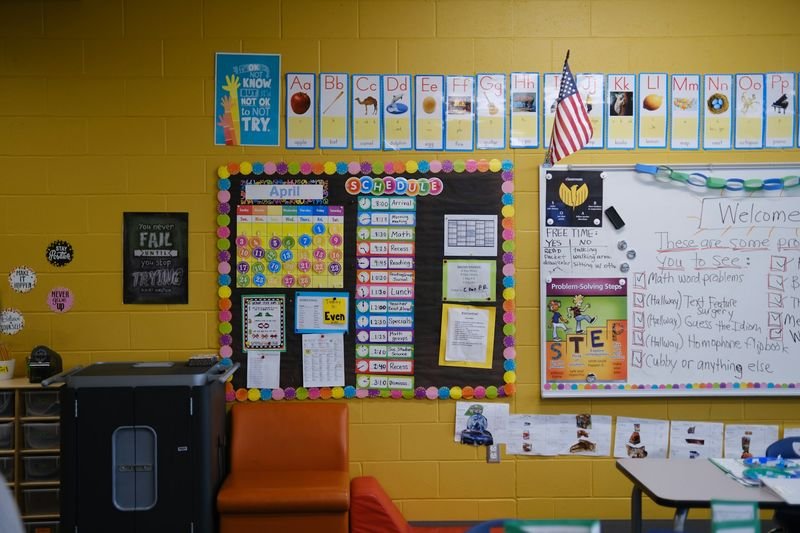
Post the lesson sequence on the board at the start of every class — listening, vocabulary, pair practice, worksheet — and physically point to or cross off each step as the class moves through it. The content can change daily; the shape of the lesson shouldn’t. Autistic students often rely on knowing what’s coming next to manage anxiety, and a visible routine does that job without singling anyone out, since every student in the room benefits from seeing the plan.
The payoff shows up fastest right after a holiday or a sub teacher, the moments when routines usually fall apart. Keep the same five-icon sequence on the board even when the content is a one-off review class, and you skip the reset period most teachers assume is unavoidable after a break.
Use Picture Cards and Visual Vocabulary Anchors
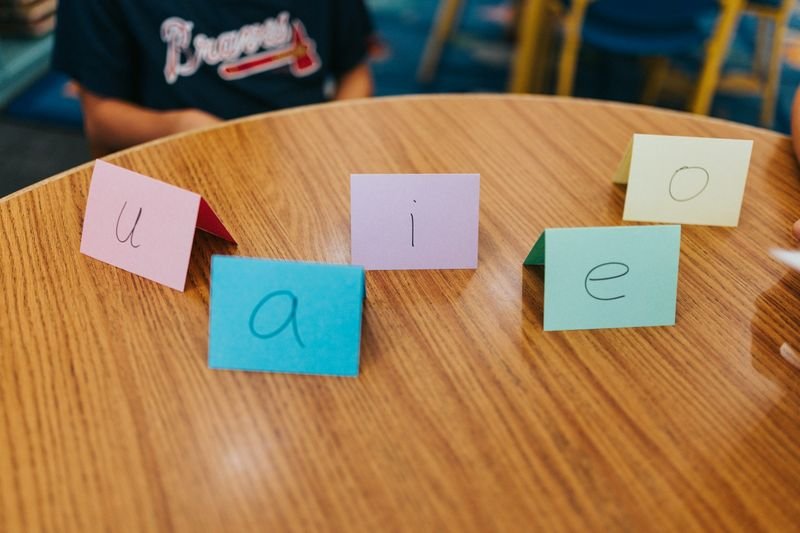
Pair every new vocabulary word with an image, not just a translation. Many autistic learners are strong visual processors, and a picture card gives them a stable anchor that doesn’t depend on catching every spoken syllable. This is standard beginner-ESL practice already — the shift is making sure it doesn’t disappear once a class moves past “elementary” level, since an autistic intermediate or advanced student can still benefit from a visual tied to abstract vocabulary.
For abstract words — feelings, opinions, comparisons — a single photo won’t cut it, so pair the word with a small set of icons instead: a thumbs-up/thumbs-down scale for opinion words, a simple face chart for emotion vocabulary. The goal is giving the student something stable to point at before they’re asked to produce the word out loud.
Work With Echolalia, Not Against It

If a student repeats your sentence back, a line from a show, or a phrase from last week’s lesson, that’s not necessarily off-task noise. A peer-reviewed study of autistic children’s echolalia found that 61% of echoed utterances were functionally used — mostly for naming, describing, or building on a topic, not meaningless repetition. In ESL terms, that’s a student using memorized chunks to communicate, which is the same strategy every phrasebook and survival-phrase lesson teaches beginners to use. Instead of correcting the repetition, build on it: ask a follow-up question that invites the student to extend the exact phrase they just echoed.
In practice, that looks like a student answering “What’s your favorite animal?” with your exact model sentence from the drill — “My favorite animal is a dog” — word for word, including your intonation. Rather than flagging it as copying, treat it as the first rung of production: next round, swap one word (“My favorite animal is a cat”) and let the scaffold carry the rest of the sentence while the student supplies the new content.
Create a Low-Sensory Corner in the Classroom
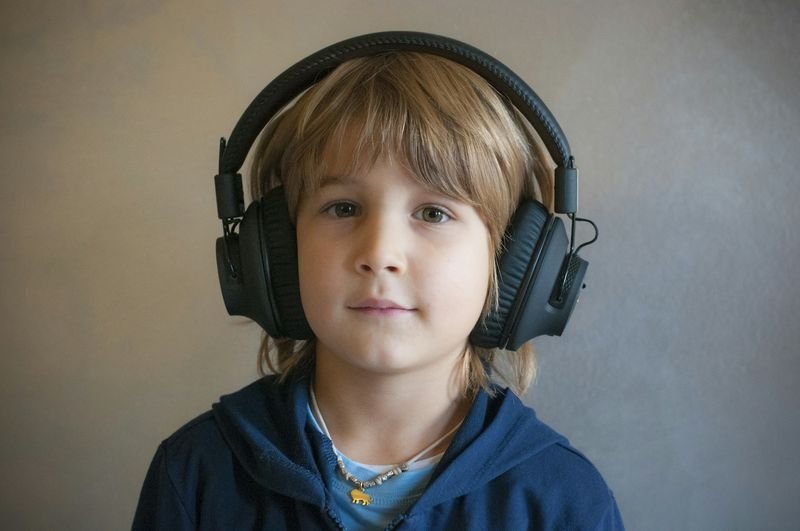
A classroom running a listening activity, a group game, and ambient hallway noise at once can be genuinely painful for a student with sensory sensitivities — not just distracting. One desk or corner set apart from the main noise, with the option to do written work there instead of in the middle of group chaos, gives a student a pressure valve without removing them from the lesson. Offer it before a meltdown, not as a punishment after one.
It doesn’t need furniture or budget — a single desk turned toward the wall, a pair of noise-reducing headphones kept in a drawer, or permission to sit near the door instead of in the middle of the room all count. Introduce it on a calm day as a normal option everyone can use, not a special accommodation announced in front of the class, and it stops carrying any stigma.
Offer More Than One Way to Answer

Don’t make verbal response the only way to show comprehension. Let students point to a picture, write a one-word answer, type it, or use an AAC app if they already have one. A student who can’t produce a spoken answer under pressure in a second language often can point to the right picture instantly — the language knowledge is there even when the verbal output isn’t. Grading only the spoken answer undercounts what the student actually knows.
This matters most during speaking assessments, where a rubric built entirely around spontaneous verbal output can score an autistic student as “not proficient” when the gap is performance anxiety under live speech, not comprehension. Build in a written or picture-based checkpoint alongside the spoken one and compare the two — the mismatch itself tells you where the real teaching gap is.
Teach Through the Student’s Special Interest

If a student is deeply into dinosaurs, trains, or a specific game, build a vocabulary set or reading passage around it instead of fighting the interest for attention. Motivation research aside, this is just practical: a student who already has 40 words of passion-topic vocabulary in their first language will pick up the English equivalents faster than generic classroom nouns they have no attachment to.
This doesn’t mean every worksheet becomes a dinosaur worksheet — it means the first example in a new grammar pattern uses the interest (“The T-rex is bigger than the Triceratops”) before the class moves to neutral practice sentences. One hooked example buys attention for everything that follows it.
Script Social Language With Sentence Stems

Give explicit, written sentence stems for things neurotypical students pick up by osmosis — “Can I have a turn?”, “I don’t understand, can you repeat that?”, “I need a break.” Autistic students often learn social language best when it’s taught directly rather than absorbed from watching peers, and a second language removes the option of falling back on first-language social scripts. Put the stems on a card at the desk, not just on a slide shown once.
Rehearse the stems the same way you’d drill any grammar pattern — choral repetition, then pair practice, then cold use in a real moment during class. A student who has physically said “Can I have a turn?” out loud twenty times is far more likely to produce it unprompted than one who only saw it on a poster.
Warn Before Every Transition

“Two more minutes, then we switch to pair work” costs you nothing and prevents most transition meltdowns before they start. Pair the verbal warning with a visual cue — a timer, a hand signal, a card flip — so the warning lands even if the spoken English wasn’t fully caught. The goal is zero surprise transitions, not slower pacing.
Stack the warning with the visual routine from strategy one and cross the finished step off the board as you give the verbal countdown — two signals landing at once beat one signal landing perfectly. The biggest disruptions I’ve seen in two decades of classes weren’t caused by difficult content; they were caused by a lesson ending differently than the student expected it to.
This Isn’t a Small Population to Plan Around
At roughly 1 in 31 children in CDC-tracked data, autism isn’t a rare edge case you’ll encounter once in your teaching career — it’s a near-certainty across enough classes. Most of these students have never been formally diagnosed in the country where you’re teaching, especially across Asia where diagnostic access varies widely. Plan the structure in regardless of whether a parent has told you anything.
Combine This With Your Existing Classroom Toolkit
None of these strategies require replacing your lesson plans — they layer on top of the same chunking and visual-schedule techniques that help ESL students with ADHD and the structured, multisensory approaches that help dyslexic ESL students. Build one visual, predictable, multi-channel classroom and you end up supporting all three groups — plus every other student who benefits from clearer structure — at the same time.
Mga Pinagmumulan
- CDC MMWR: Prevalence and Early Identification of Autism Spectrum Disorder Among Children Aged 4 and 8 Years, 2022 data
- Functional echolalia in autism speech: verbal formulae and repeated prior utterances as communicative and cognitive strategies
- Novakid: Practical ESL strategies for teaching English to children with autism









 TL
TL  EN
EN  ZH
ZH  ZH_CN
ZH_CN  KO
KO  VI
VI  FR
FR  AR
AR  ES
ES  HI
HI  PT
PT  BN
BN  RU
RU  JA
JA  TR
TR  DE
DE  IT
IT  PL
PL  ID
ID  TH
TH  FA
FA  UK
UK  HE
HE  UR
UR  SW
SW  RO
RO  NL
NL  MS
MS  TA
TA  PS
PS  HU
HU  EL
EL  SV
SV  NB
NB  NN
NN  DA
DA  CS
CS  SR
SR  AM
AM