

Think-Pair-Share: 7 ESL Techniques
A class of 30 students has room for maybe six or seven volunteers to answer a question out loud in a fifty-minute period. Everyone else stays silent, and in an ESL room, silence usually means the weaker speakers never open their mouths at all. Think-pair-share fixes the math: every single student talks, twice, before the teacher even calls on anyone. I’ve run it in classes as small as eight and as large as forty, and the structure holds up either way because the “think” step removes the panic of being asked a question with zero preparation.
What Think-Pair-Share Actually Solves in an ESL Classroom
Cold-calling punishes slow processors. A student translating a question in their head, building a sentence, then checking the grammar before speaking needs eight to ten seconds most teachers never give them. Think-pair-share buys that time back by building it into the structure instead of leaving it to chance. Nobody is put on the spot without warning, because the warning — think first — is the whole point.
The strategy also solves a problem specific to English learners: vocabulary retrieval under pressure. Rehearsing an answer with one partner, quietly, in a low-stakes pairing, lets a student test whether their sentence actually makes sense before risking it in front of thirty classmates. That single rehearsal cuts the anxiety of the “share” step by more than half in my experience — students who freeze when called on cold will repeat, almost word for word, what they just said to their partner thirty seconds earlier.
The Three Steps, and Where ESL Teachers Get Them Wrong
The classic structure has three stages: think, pair, share. Skip or rush any one of them and the whole activity collapses into ordinary group chat.
- Think: Pose a specific question — not “What do you think about pollution?” but “Name one thing your family does that wastes water.” Give 30-60 seconds of silent thinking time, no talking, no writing required if the level is low enough that writing slows them down.
- Pair: Students turn to one assigned partner — not whoever is closest, which lets the same five confident kids always end up together. Give a time limit (60-90 seconds) and a concrete product: one agreed answer, one disagreement, or one new word they taught each other.
- Share: A pair reports to the class, or pairs combine into groups of four to compare answers before a whole-class share. Cold-call the pair, not the individual — this removes the “pick me” dynamic and keeps quieter students from ducking.

The most common failure I see in observation reports isn’t skipping a step — it’s giving no time limit on “pair.” Left open-ended, pairs either finish in ten seconds and go silent, or one student dominates and the other never gets a word in. A visible timer on the board fixes both problems at once.
7 Think-Pair-Share Techniques for ESL Classrooms
The basic three-step version works, but it gets stale fast if it’s the only variation a class ever sees. These seven adaptations keep the routine fresh while targeting different language skills.
1. Think-Pair-Square
Instead of reporting straight to the whole class, two pairs combine into a group of four and compare answers before anyone addresses the room. This adds a full extra round of speaking practice and lets students hear a second interpretation of the question before the stakes go up. It works especially well with open-ended prompts where there’s no single correct answer.
2. Write-Pair-Share
Lower-level students often need to see their own words before they can say them aloud. Add 60 seconds of writing between “think” and “pair” — even three or four words scribbled on paper — and watch hesitant speakers suddenly have something to read from instead of composing live.
3. Numbered Heads Pair-Share
Assign each student a number (1 or 2) before pairing. After the pair discussion, call a number, not a name — “all the 2s report.” Since nobody knows in advance who’ll be picked, both partners have to genuinely prepare an answer instead of letting the stronger student carry the pair.
4. Pair-Share-Repeat
Run the same question twice with two different partners. The second round is almost always more fluent — students refine their answer after hearing feedback from the first partner, which mirrors how real conversational repair actually works.
Rotate Partners to Fix the Dominant-Student Problem
The fifth technique addresses the biggest complaint teachers have about pair work generally: the same student always ends up doing all the talking.
5. Timed Turn-Taking Pairs
Give each partner a strict 30-second window to speak while the other only listens, then switch. A phone timer or a simple hand signal works. This single rule stops the stronger speaker from monopolizing the pair and forces the quieter student into airtime they wouldn’t otherwise claim.
6. Think-Pair-Share with Sentence Frames
For A1-A2 learners, drop a sentence frame on the board before the “think” stage: “One reason I ___ is ___.” Students aren’t inventing grammar from scratch under time pressure — they’re slotting vocabulary into a structure they already trust, which means the pair conversation actually happens in English instead of collapsing into the first language.
7. Silent Pair-Share (Written Exchange)
Pairs write their answers on index cards and swap, reading silently before responding in writing. This variation is worth keeping in rotation for shy classes or for practicing written register specifically — it slows the pace down and gives processing time that spoken pair-share doesn’t allow.
How to Pair Students Without Killing the Activity
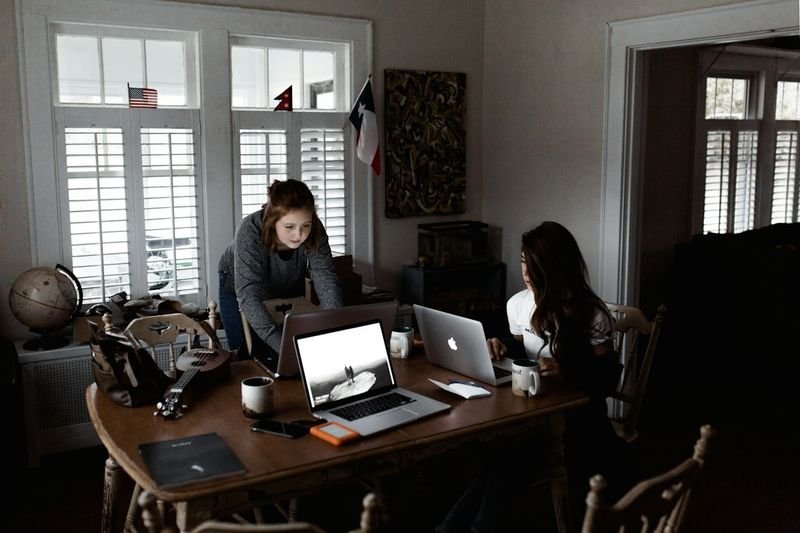
Pairing strategy matters more than most lesson plans admit. Random pairing is fast but inconsistent — a strong student paired with a beginner either turns into free tutoring or into the strong student answering alone while the beginner nods. I’ve had better results assigning fixed “shoulder partners” for the week and switching only every Friday, so students build enough comfort with one person to actually take risks in English.
Mixed-level pairing works when the gap isn’t too wide — one level apart, not three. Pair a true beginner with your most advanced student and the beginner checks out within a minute because they can’t follow the conversation at all. The differentiation benefit of think-pair-share only shows up when both partners can actually understand each other.

Using Think-Pair-Share for Quick Formative Assessment
Walking the room during the “pair” step is the fastest diagnostic a teacher gets all day. You can hear grammar errors, vocabulary gaps, and pronunciation issues in real time, from every pair, without collecting a single worksheet. Keep a clipboard and jot down two or three names of students who are struggling with the target structure — that list becomes your small-group reteach for tomorrow. For a deeper look at building these quick checks into every lesson, see our guide to formative assessment techniques for ESL.
Think-Pair-Share Works for Grammar Practice, Not Just Discussion
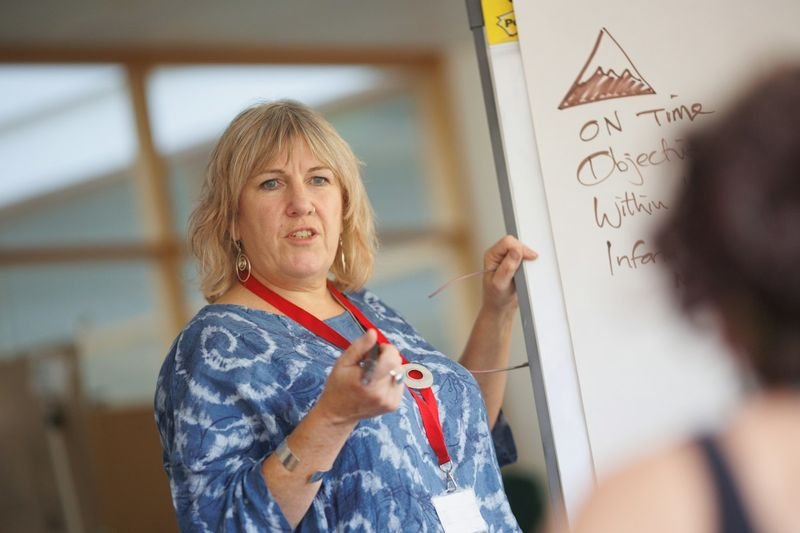
Most examples of this strategy online use it for opinion questions — favorite season, best movie, agree or disagree. That undersells it. Drop a grammar target into the “think” prompt instead: “Write one sentence about your weekend using the past continuous,” or “Correct this sentence: ‘She go to school every day.'” Students think through the rule silently, test their answer on a partner who can push back if it sounds wrong, then defend their choice to the class. That defense step is where real grammar learning happens — a student who can explain why “was going” is correct has internalized the rule in a way that filling in a worksheet blank never confirms.
I use this version most for error-correction drills. Put a sentence with a common mistake on the board, run one think-pair-share round on “what’s wrong with this sentence,” and the class corrects it collectively before I ever have to explain the rule myself. It also surfaces which specific students still don’t have the rule down, since you can hear the wrong explanations during the pair step and target those students directly afterward.
How Long Each Step Should Actually Take
Timing is the detail that separates a sharp think-pair-share from a mushy one. For most secondary and adult ESL classes, 30 seconds of silent think time is enough for a concrete question and too little for an abstract one — adjust based on how much the prompt demands. Pair time runs 60-90 seconds for simple exchanges, up to two minutes if you’ve added a writing component. Share time depends entirely on class size: in a room of 15, you can realistically hear from every pair; in a room of 35, plan to call on four or five and let the rest self-report through a quick show of hands (“raise your hand if your answer matched your partner’s”). Announce the time limit before each step starts, not partway through — students who don’t know how long they have either rush or stall, and neither produces good language output.
Think-pair-share isn’t the only structured talk routine worth rotating into an ESL week, and it shouldn’t be the only one. It pairs naturally with broader cooperative learning activities that ask for longer group tasks, and it solves a narrower problem than general group and pair work aimed purely at maximizing talk time — think-pair-share is built specifically around the think-first structure, not just proximity to a partner.

Adapting Think-Pair-Share for Large Classes
Taiwan cram school classes and public school English periods regularly run 35-40 students, which is where a lot of Western classroom-management advice quietly falls apart. The fix isn’t a different strategy — it’s tighter timing. Cut think time to 20 seconds, cap pair time at 45, and only call on three or four pairs during the share step instead of trying to hear from everyone. The unheard pairs still did the work; you just can’t audit all of it in one period. Rotate who gets called on so the sampling evens out over a week.

Signs Think-Pair-Share Isn’t Working in Your Class
Two symptoms show up consistently when the routine breaks down. First, pairs finish silent within fifteen seconds — the question was too easy or too vague, and the fix is a sharper, more specific prompt. Second, one partner does all the talking and the other just nods — the fix is timed turn-taking (technique five above) or a written component that forces both students to produce something individually before they speak.

Think-pair-share isn’t a warm-up filler to burn two minutes before the real lesson starts. Used deliberately — with a sharp question, a real time limit, and a pairing strategy that isn’t random — it’s one of the few structures that gets every student speaking English in a single period, not just the six who would have raised their hands anyway. Try one new variation from the list above this week and see which one your class actually needs.
Mga Pinagmumulan
- Using the Think-Pair-Share Technique — ReadWriteThink, NCTE/IRA strategy guide on classroom implementation.
- Increase Student Interaction with Think-Pair-Shares and Circle Chats — Colorín Colorado, guidance specific to English language learners.
- Think-Pair-Share: Steps, Classroom Examples and Questions — Structural Learning, teacher’s implementation guide.








 TL
TL  EN
EN  ZH
ZH  ZH_CN
ZH_CN  KO
KO  VI
VI  FR
FR  AR
AR  ES
ES  HI
HI  PT
PT  BN
BN  RU
RU  JA
JA  TR
TR  DE
DE  IT
IT  PL
PL  ID
ID  TH
TH  FA
FA  UK
UK  HE
HE  UR
UR  SW
SW  RO
RO  NL
NL  MS
MS  TA
TA  PS
PS  HU
HU  EL
EL  SV
SV  NB
NB  NN
NN  DA
DA  CS
CS  SR
SR  AM
AM