

15 Best ESL Reading Comprehension Activities (2026)
Most ESL students don’t fail reading comprehension because the text is too hard. They fail because nobody taught them what to do перед they read, while they read, or after they read. Comprehension is a sequence of habits, not an intelligence test, and the 15 ESL reading comprehension activities below build those habits at every level from A1 to C1.
Each activity below is tagged with the reading stage it belongs to (pre, while, or post), the level it works best at, and how long it takes. Mix and match — the same text can carry three of these activities in a single lesson if you pace it right.

Why Stage-Based ESL Reading Activities Outperform Random Worksheets
The single biggest mistake I see in ESL reading lessons is dropping a passage in front of students with a comprehension worksheet stapled to the back. Students read, fill it out, hand it in. Nothing sticks. The research has been clear for decades: comprehension improves when teachers explicitly scaffold the three-stage reading framework — pre-reading, while-reading, and post-reading — instead of asking students to “just read it.”
That framework works because second-language readers carry a much heavier cognitive load than L1 readers. They decode vocabulary, parse grammar, hold context, and make inferences all at the same time. Pre-reading activities offload some of that work upfront. While-reading activities keep students from drifting. Post-reading activities cement the learning into long-term memory. Skip any stage and the next one collapses.
The activities below are organized by stage. Pick one from each category for any reading lesson and you’ll see comprehension scores rise within four to six weeks. I’ve used this exact structure with mixed-level classes in Taipei for almost two decades.
Pre-Reading Activities for ESL Comprehension
Pre-reading is where most teachers cut corners. The temptation is to skip ahead and start reading because “we don’t have time.” Reverse that thinking. Five minutes of pre-reading saves fifteen minutes of confusion later, and it dramatically improves retention. Here are the five pre-reading activities I rotate through every week.
1. Vocabulary Pre-Teach With Visual Anchors
Stage: Pre-reading | Рівень: A1–C1 | Час: 8–12 minutes
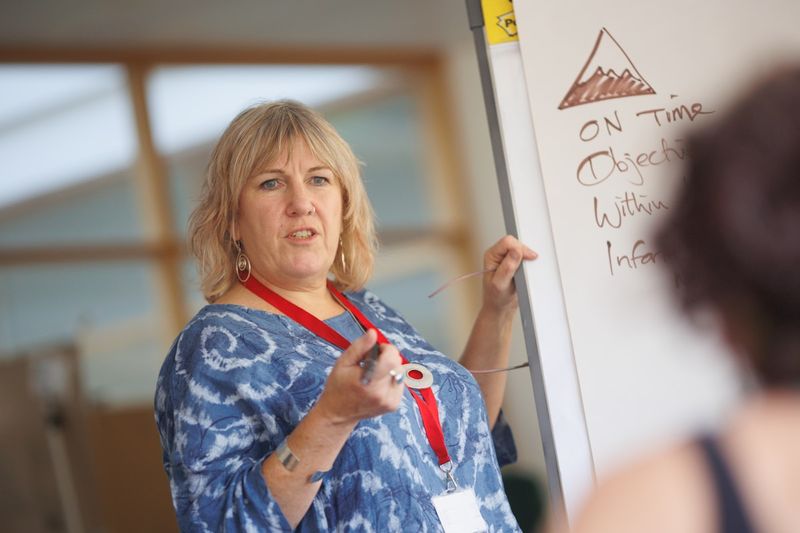
Pick six to ten target words from the text. Don’t just write definitions on the board — pair each word with an image, a quick gesture, or a one-sentence personal example. Students copy the word, draw a tiny icon next to it, and write a sample sentence in their own life. The icon-drawing step is what makes this stick: dual-coding (image plus word) doubles retention compared to definitions alone. This is also the activity most aligned with how the brain stores vocabulary, which is why our best ESL vocabulary games all lean on visual anchoring too.
2. Predict From the Title and One Image
Stage: Pre-reading | Рівень: A2–C1 | Час: 5 хвилин
Show only the title and one image from the text. Ask students to write three predictions about what the passage will contain. Share predictions in pairs, then with the class. The prediction step activates schema — what students already know about the topic — which is the single biggest predictor of comprehension according to Reading Rockets research. Students who predict beforehand read with purpose. Students who don’t, drift.
3. KWL Chart — What I Know, Want to Know, Learned
Stage: Pre-reading + Post-reading | Рівень: B1–C1 | Час: 6 minutes pre, 4 minutes post
Draw three columns: K (Know), W (Want to know), L (Learned). Students fill K and W before reading and L after. The trick most teachers miss: the W column is where Google rankings live in the classroom too. Whatever questions your students write are the questions a future test, conversation, or exam will ask. Keep the chart taped to the wall after class — students will refer back to it for days.
4. Title-Only Brainstorm
Stage: Pre-reading | Рівень: A1–B1 | Час: 4 minutes
Write the title on the board and nothing else. Students brainstorm every word they can think of related to the topic. Lower levels can do this in their L1 first and then translate. The point is to surface vocabulary the student already has, so the reading feels like recognition rather than discovery. For mixed-level rooms, this is the single most equalizing activity because everyone contributes something.
5. The Five-Question Hook
Stage: Pre-reading | Рівень: B1–C1 | Час: 5 хвилин
Write five high-curiosity questions about the text on the board before students see the passage. “Why do scientists think octopuses might dream?” or “What did the Taipei government ban in 2019?” Students discuss in pairs which questions they’d most want answered. They now have intrinsic motivation to read — they’re searching for answers to questions they chose, not questions the teacher imposed.
While-Reading Activities That Keep ESL Students Engaged
While-reading is where focus dies. Silent reading is the default in most ESL classrooms and the default is wrong. Without an active task, students stare at the page, lose track of meaning at about line three, and quietly give up. Every while-reading activity below gives students a job to do as they read.

6. The Two-Color Highlighter Method
Stage: While-reading | Рівень: A2–C1 | Час: 10–15 minutes
Give every student two colored highlighters or pens. Yellow for “I understand this fully.” Pink for “I don’t get this.” Students read and mark every sentence. The genius of this method: it forces metacognition. Students can no longer pretend to understand. After reading, you instantly see what to reteach because the pink ink shows you exactly where the class struggled. This is the single most useful while-reading activity I’ve ever used.
7. Sticky-Note Margin Questions
Stage: While-reading | Рівень: B1–C1 | Час: 12 minutes
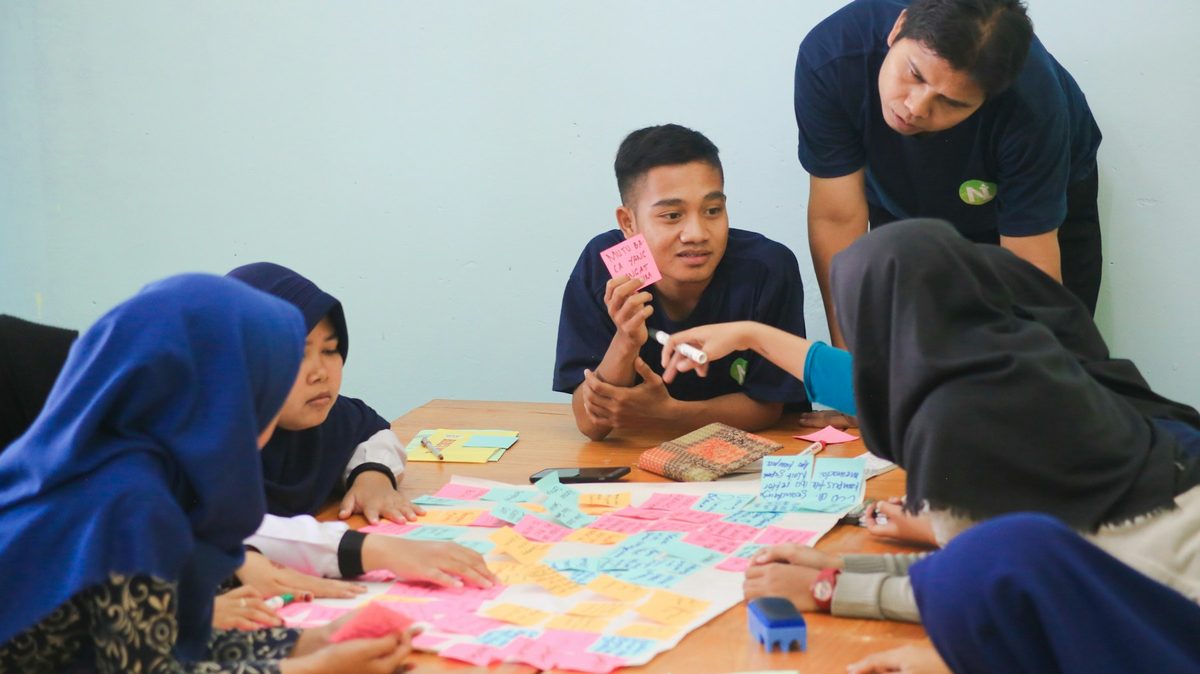
Hand each student five sticky notes. As they read, they write one question per sticky note and stick it next to the relevant paragraph. The questions can be vocabulary (“What does brittle mean?”), inference (“Why is the character angry?”), or curiosity (“Is this true in other countries?”). After reading, students swap papers and try to answer each other’s sticky-note questions. This turns reading into a conversation with the text.

8. Jigsaw Reading
Stage: While-reading | Рівень: B1–C1 | Час: 20–25 minutes
Split a longer text into three or four sections. Each group reads only their section, becomes the “expert,” and then teaches it back to the class. Each group only does a quarter of the reading load but learns the whole text through their classmates. Jigsaw forces accountability — if you don’t read your section carefully, your classmates can’t learn it. The U.S. State Department English Teaching Forum has documented strong comprehension gains from jigsaw reading in multi-level ESL classrooms.
9. Sentence-Strip Reordering
Stage: While-reading | Рівень: A1–B1 | Час: 8 хвилин
Cut a paragraph into individual sentences. Students reorder the strips before reading the original. This forces them to use discourse markers (however, then, finally) and logical sequencing — the connective tissue of comprehension that low-level readers often skip past. When they finally see the original text, they compare and discuss why the author chose that order.
10. Running Dictation Reading Race
Stage: While-reading | Рівень: A2–B2 | Час: 15 хвилин
Post a passage on the wall outside the classroom. One student (the runner) goes out, reads a chunk, runs back, and dictates to their partner (the writer). They swap roles every minute. The first team to recreate the full passage wins. This sounds like a vocabulary game but it builds reading speed, short-term memory, and chunk recognition — three of the weakest skills in lower-intermediate ESL learners. Combine it with our other ESL warm-up activities when class energy needs a jolt.
Post-Reading Activities That Lock In ESL Comprehension
Post-reading is where comprehension becomes permanent. Without a deliberate task after reading, students forget about 60 percent of what they read within 24 hours. With a strong post-reading activity, that number drops to about 20 percent. Here are the five post-reading activities I use most.

11. Graphic Organizer Retell
Stage: Post-reading | Рівень: A2–C1 | Час: 10 хвилин
Hand out a graphic organizer that matches the text type. Cause-and-effect texts get a flowchart. Compare-and-contrast texts get a Venn diagram. Narrative texts get a story map (setting, characters, problem, solution). Students fill it in without looking at the text, then check. The constraint of the visual structure forces them to identify what actually mattered in the passage. This single activity is what turned my B1 classes from “I read it but I forgot” to “I read it and here’s the summary.”

12. Hot-Seat Comprehension Interview
Stage: Post-reading | Рівень: B1–C1 | Час: 10 хвилин
One student sits in the “hot seat” and pretends to be a character, expert, or narrator from the text. Classmates ask questions in character. The hot-seat student must answer based on what the text says — and infer what the text implies but doesn’t say. This forces inference, which is the comprehension skill ESL students struggle with the most. Rotate hot-seats every two minutes so multiple students get a turn.
13. Six-Word Summary
Stage: Post-reading | Рівень: A2–C1 | Час: 5 хвилин
Students summarize the entire passage in exactly six words. Not five, not seven. The constraint forces them to identify the central claim, strip away supporting detail, and use compression — all higher-order reading skills disguised as a quick task. Compare summaries on the board afterward. Class debates over which six words best captured the text are some of the most productive vocabulary discussions I’ve ever run.
14. Question Generation Swap
Stage: Post-reading | Рівень: B1–C1 | Час: 12 minutes
Students write five comprehension questions about the text — one factual, one vocabulary, one inference, one opinion, and one prediction-forward. They swap papers and answer their partner’s questions. Writing questions is harder than answering them, which is exactly why this works. Students who can generate good comprehension questions have understood the text at a deep level, not just decoded it.
15. Reading Response Discussion Circle
Stage: Post-reading | Рівень: B1–C1 | Час: 15–20 minutes
Put students in groups of four. Each group gets four discussion roles: summarizer, question-asker, vocabulary investigator, and connection-maker (who links the text to real life). Students rotate roles across multiple texts over the term so they practice all four skills. This is the gold-standard post-reading structure used in literature circles, adapted for ESL. It pairs naturally with our Розмовні вправи з англійської як другої мови if your goal is to combine reading and oral fluency in the same hour.

Watch: ESL Reading Activities in Action
Jackie Bolen runs through a stack of practical ESL reading activities including some of the techniques covered above. Worth watching if you’re a visual learner.
How to Choose the Right ESL Reading Activity for Your Class
Match the activity to three variables: student level, lesson goal, and energy in the room. For lower levels (A1–A2), lean on visual and physical activities — running dictation, sentence strips, vocabulary pre-teach. For intermediate students (B1–B2), build inference and metacognition through the highlighter method, sticky-note questions, and hot seats. For advanced learners (B2–C1), push them with question generation, six-word summaries, and discussion circles where they argue interpretation rather than recall fact.
If the class is dead-tired by the last period, pick movement activities like running dictation or jigsaw. If the class is over-energized after lunch, drop them into highlighter work or sticky-note margin questions to channel focus. The activity isn’t separate from classroom management — it є classroom management. If you’re rebuilding your weekly structure, our ESL lesson plan template shows where each of these activities slots into a full 50-minute lesson.
The One Thing Most ESL Teachers Get Wrong About Reading
Reading instruction in ESL classrooms is still treated like a quiet activity. It shouldn’t be. The data from Cambridge English research on second-language reading consistently shows that interactive reading — where students discuss, question, predict, and respond — produces faster comprehension gains than silent independent reading at every CEFR level. Silent reading has its place, but it’s a small place. The activities above turn reading from a solo task into a social one, which is what makes them work.
Start with one activity from each stage next week. Pre-teach vocabulary with visual anchors. Use the two-color highlighter method while reading. Close with a six-word summary. Three activities, twenty-five minutes, and your students will retain more from one passage than they did from the last five they “read.”
Джерела
- British Council TeachingEnglish — Three-Stage Approach to Reading — Foundational framework for pre/while/post-reading instruction.
- Reading Rockets — Comprehension Instruction: What Works — Research synthesis on schema activation and comprehension gains.
- U.S. State Department English Teaching Forum — Jigsaw Reading in Multi-Level Classrooms — Documented gains from cooperative reading structures.
- Cambridge English Research and Validation — CEFR-aligned studies on interactive second-language reading.
- TESOL International Association — Professional Development — Standards and resources for ESL reading instruction.
Looking for free ESL worksheets? Browse our full collection — printable resources for every level and age group. Browse Free Worksheets →
Students can access free worksheets and reading materials at 18KEnglish.com.
Need help ranking on Google? RankOnRepeat manages your entire blog — keyword research, writing, and publishing — so your business shows up when customers search. See how it works →
Shop on Amazon
Phonics Books on Amazon →
As an Amazon Associate we earn from qualifying purchases.




 UK
UK  EN
EN  ZH
ZH  ZH_CN
ZH_CN  KO
KO  VI
VI  FR
FR  AR
AR  ES
ES  HI
HI  PT
PT  BN
BN  RU
RU  JA
JA  TR
TR  DE
DE  IT
IT  PL
PL  ID
ID  TH
TH  FA
FA  TL
TL  HE
HE  UR
UR  SW
SW  RO
RO  NL
NL  MS
MS  TA
TA  PS
PS  HU
HU  EL
EL  SV
SV  NB
NB  NN
NN  DA
DA  CS
CS  SR
SR  AM
AM