

Vocabulary Games and Activities: How to Make Them Actually Teach Words
Vocabulary games and activities have a reputation problem. Walk into almost any ESL classroom in the world and you will see some version of Pictionary, Hangman, or a word matching game on a smartboard. Students are usually smiling. The energy is up. And yet, two weeks later, many of those same students cannot reliably produce the words they just “played with.” The game was fun. The learning was thin.
The problem is rarely the games themselves. It is that we treat vocabulary games as filler — something to break up a textbook unit — rather than as carefully sequenced retrieval practice. This guide is about closing that gap. We will look at how vocabulary actually moves from a fleeting encounter to permanent productive knowledge, and how to choose, design, and run games and activities that serve each stage of that process.
Why Vocabulary Games Work (When They Work)
The cognitive science behind word learning is unglamorous: students need repeated, spaced, meaningful encounters with a word before it sticks. Paul Nation’s widely cited research suggests learners need somewhere between six and twenty exposures to a word in different contexts before they can produce it confidently. A single textbook page rarely delivers that.
Games quietly solve this exposure problem. A well-designed Bingo round can give every student forty to fifty meaningful encounters with target vocabulary in fifteen minutes — more than a week of passive reading. The game frame also lowers what Stephen Krashen called the affective filter: anxiety drops, attention rises, and the brain becomes more receptive to encoding new forms.
But the magic ingredient is not fun. It is retrieval. Every time a learner has to pull a word from memory under mild pressure — to win, to keep the round going, to not let their team down — they strengthen the neural pathway to that word. Games are powerful precisely because they disguise retrieval practice as play. Activities that look exciting but never force retrieval (watching a vocabulary cartoon, listening to a word song passively) feel productive but produce far less learning.
The Three Stages of Vocabulary Learning
Before choosing a game, decide which stage of word knowledge you are targeting. Most teachers blur these together, which is why their game sessions feel busy but inconsistent.
Encounter and Encoding
At this stage, students meet the word for the first time and begin building a mental representation: the sound, the spelling, a rough meaning, perhaps an image. Games here should be low-pressure and recognition-based. Matching activities, picture-word association, and listen-and-point tasks belong here. Asking students to produce a brand new word in a competitive game before they have encoded it is the fastest way to embarrass quieter learners and reinforce errors.
Retrieval and Consolidation
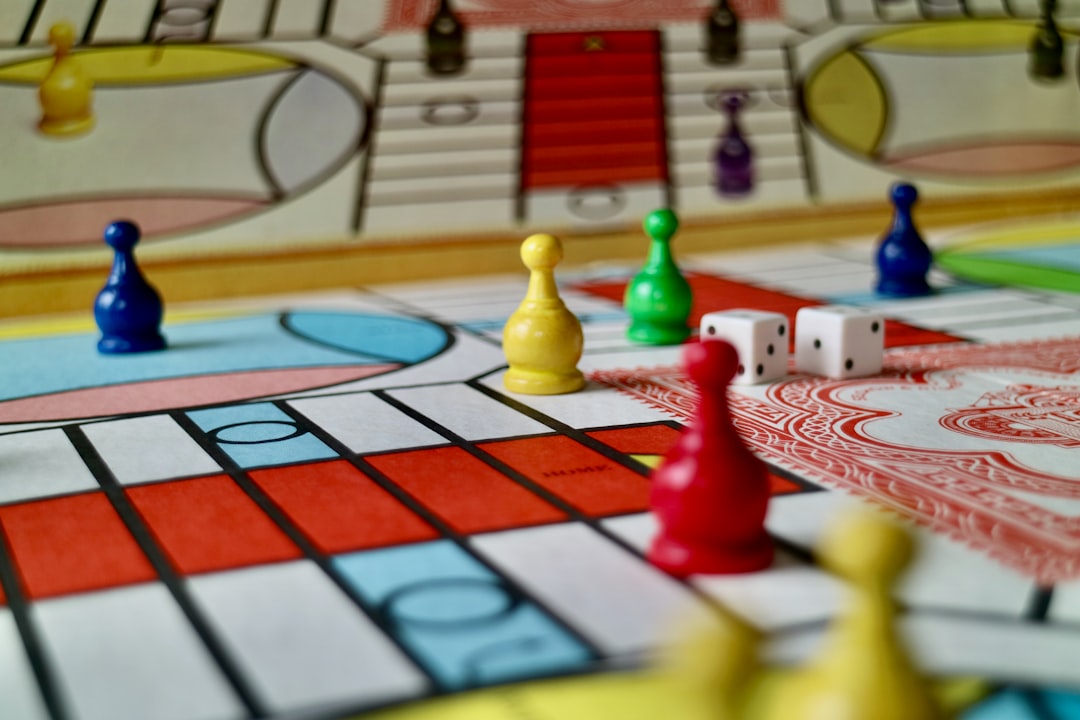
Once students recognize the word, the next job is to strengthen recall. This is the sweet spot for most classic vocabulary games: Bingo, Pictionary, charades, flashcard races, board games with word prompts. The goal is repeated, slightly varied retrieval. Crucially, this is where spacing matters: revisit the same word set across three or four short sessions over two weeks rather than burning through it in one marathon Friday lesson.

Productive Use
The final stage is genuine production: students using the word in sentences they construct themselves, in unscripted speaking and writing. Games at this level look more like structured speaking activities — taboo-style description tasks, story-building rounds where each player must include a target word, role-plays with vocabulary cards. The pressure is higher, but only learners who have already passed through the first two stages can succeed.
Building a Game Around the Right Word List
A vocabulary game is only as useful as the word list behind it. Two common mistakes haunt this step. The first is grabbing whatever words appear in the unit theme without considering frequency or usefulness. The second is mixing words from radically different proficiency bands — putting “hospital” next to “otolaryngologist” in the same Pictionary deck — so half the class is bored and half is lost.
A useful filter is to ask three questions of every word you put into a game. Will the student plausibly encounter this word in real input outside class within the next year? Does it belong to a recognized frequency band appropriate to their level (the New General Service List or the Academic Word List are excellent references)? And does it pair well with the other words in the set — same theme, similar register, comparable difficulty?
Aim for sets of eight to twelve words per game session. Smaller sets feel thin and rob students of variety. Larger sets dilute repetition: if a Bingo card has thirty words, each one only gets called once or twice.
Classic Activities and How to Make Them Pedagogically Sound
Most teachers already know the names of the activities below. The difference between a forgettable round and a genuinely effective one lies in small design choices.

Pictionary and Drawing-Based Activities
Pictionary forces the guesser to retrieve a word from a visual cue, which makes it excellent for cementing form-meaning links. The trick is to require the guessing team to use the word in a sentence after they shout it out, not just call out the bare noun. “Umbrella!” earns a half point. “It’s an umbrella because it’s raining” earns a full point. That one rule transforms a recognition exercise into a small production task.
Charades and Total Physical Response
Charades works beautifully for verbs and adjectives, where drawing is awkward. James Asher’s Total Physical Response research found that linking words to body movement produces stronger and longer-lasting recall than purely verbal repetition. Use charades especially for action verbs (sprint, tiptoe, grab) and feeling adjectives (exhausted, suspicious, thrilled) where a mime captures the meaning in a way no translation can.
Bingo with a Twist
Standard Bingo is a recognition game and a strong choice for the encoding stage. To push it into consolidation territory, call words by definition or example sentence rather than by the word itself. “A small tool you use to cut paper” — students must work out it is scissors before they can mark their card. Now they are retrieving from meaning rather than just matching letters.

Word Association Chains
This is the simplest activity in the world and one of the most underused. Sit students in a circle. The first person says a target word. The next must say a word semantically related to it. The chain continues until someone breaks the rule or repeats a word. Association chains build the kind of dense lexical networks that mature speakers rely on — they help students learn not just words but neighborhoods of words.
Taboo and Description Games
For higher-level classes, Taboo is the gold standard productive game. Students must describe a target word to their team without using a list of forbidden related words. This forces circumlocution, synonym retrieval, and definition skills — exactly the abilities that separate a confident speaker from a stuck one. Make your own decks targeting unit vocabulary rather than buying the commercial English version, which is calibrated for native speakers.
Digital Tools That Complement In-Class Games
Digital vocabulary tools are not a replacement for live games — they lack the social pressure and improvisation that make classroom rounds memorable. But they are powerful spacing tools for the gaps between lessons. Quizlet’s flashcard modes, Kahoot’s quiz games, and Wordwall’s drag-and-drop templates all let you reactivate a word set days after the original lesson, which is when retrieval practice is most valuable for long-term retention.
The discipline to develop is treating these tools as homework, not as the main event. A five-minute Quizlet review on Tuesday and again on Friday will do more for retention than a forty-minute Kahoot blitz in class.
Common Pitfalls When Running Vocabulary Games
Even good games can be undone by predictable mistakes. The most common is letting the strongest students dominate. If three students answer every prompt, the other twelve are not retrieving anything. Build in rules that force participation: each team member must answer at least once per round, the youngest player goes first, or rotate a “speaker” badge so everyone has the floor.
Another pitfall is failing to debrief. Students will play happily and walk out without knowing which words they actually struggled with. Spend the last three minutes of every game asking students to write down the two words they found hardest and the two they feel most confident with. This metacognitive step is small but turns a game into a study tool.
A third pitfall is the one-shot trap: doing a game once and never revisiting the same word set. Plan vocabulary games in sequences, not as standalone events. A word set introduced on Monday should reappear in a different game format on Wednesday and in a productive task on the following Monday.

Adapting for Different Levels and Ages
Young learners need shorter rounds, more physical movement, and visual prompts. Charades, drawing games, and flashcard sprints work well; Taboo and description games rarely do, because their working memory cannot juggle a forbidden word list and a definition simultaneously.
Teen and adult learners benefit from games that pose a slight intellectual challenge: word association chains with categorical constraints, collocation Bingo where students must identify the correct partner word, or odd-one-out games that force them to articulate why a word does not belong. The dignity factor matters here — adult learners often resist games that feel babyish, so frame the activity as a strategy challenge rather than playtime.
Exam-prep classes (TOEIC, IELTS, Cambridge) can still benefit from games, but the word lists must be ruthlessly aligned with exam frequency lists. A Pictionary round drawing from an Academic Word List sublist delivers more relevant retrieval practice than the same activity using random thematic vocabulary.

A Final Word on Energy and Intent
Vocabulary games and activities are not optional decoration on a serious lesson — they are one of the most efficient delivery systems for the repeated retrieval practice that turns recognition into production. But they only deliver that value when the design is deliberate: the right word list, the right stage, the right rules, and the right follow-up.
The next time you plan a vocabulary game, pause before you print the cards. Ask which stage of learning you are targeting, how many meaningful encounters this game will give each student, and when those same words will reappear in the following two weeks. If you can answer those three questions, your students will leave the game with words that stay learned — and that is what separates a memorable lesson from a busy one.
Джерела
Видавництво Кембриджського університету — Paul Nation’s research on vocabulary acquisition and word frequency lists.
Британська Рада — Teaching English resources on vocabulary instruction and classroom activities.
Wikipedia: Total Physical Response — Background on James Asher’s TPR method and its application to vocabulary teaching.
Квізлет — Digital flashcard platform for spaced retrieval practice between lessons.
Looking for free ESL worksheets? Browse our full collection — printable resources for every level and age group. Browse Free Worksheets →
Students can access free worksheets and reading materials at 18KEnglish.com.









 UK
UK  EN
EN  ZH
ZH  ZH_CN
ZH_CN  KO
KO  VI
VI  FR
FR  AR
AR  ES
ES  HI
HI  PT
PT  BN
BN  RU
RU  JA
JA  TR
TR  DE
DE  IT
IT  PL
PL  ID
ID  TH
TH  FA
FA  TL
TL  HE
HE  UR
UR  SW
SW  RO
RO  NL
NL  MS
MS  TA
TA  PS
PS  HU
HU  EL
EL  SV
SV  NB
NB  NN
NN  DA
DA  CS
CS  SR
SR  AM
AM