Flipped Classroom: 7 Proven Steps for Teachers (2026)
Two chemistry teachers in Woodland Park, Colorado started the modern flipped classroom almost by accident. In 2007, Jon Bergmann and Aaron Sams began recording their lectures so absent students could catch up — then noticed the students who were present learned more when class time went to lab work instead of note-taking. That single observation has spread to language classrooms, university lecture halls, and primary schools worldwide. The idea is simple, but most teachers who try it once give up, because they flip the delivery and forget to flip the تعلیم.

What Is a Flipped Classroom?
A flipped classroom is a teaching model where students first meet new content on their own — usually through a short video — and then use class time to apply it with the teacher present. The traditional order is reversed: the lecture becomes homework, and the homework becomes classwork. Instead of explaining the present perfect to thirty blank faces and sending students home to practice it alone, you record a six-minute explanation, students watch it before class, and the whole period goes to using the tense in conversation while you circulate and correct.
The phrase teachers use is “sage on the stage to guide on the side,” a line the education researcher Alison King coined back in 1993, long before the technology caught up to the idea. Flipping is the practical version of that shift. Your voice still matters — it just moves to where students can pause, rewind, and replay it as many times as they need, which no live lecture allows.
The Flipped Classroom Model, Explained
The flipped classroom model splits learning into two phases mapped onto cognitive difficulty. The low-effort tasks — remembering and understanding new information — happen at home, where a struggling student can rewatch a clip three times without holding up the class. The high-effort tasks — applying, analyzing, and creating — happen in class, where help is one raised hand away. This is the part most explanations skip, and it is the whole point.
That split lines up neatly with Bloom’s Taxonomy. The lower two rungs of Bloom’s ladder are exactly what a video handles well; the upper rungs are exactly where students get stuck and need a teacher. Flip the room and you stop spending your most valuable resource — live contact time — on the thing a recording does just as well.
Here is the model in two minutes, from a source worth bookmarking:
7 Proven Steps to Build a Flipped Classroom
You do not flip a whole course at once. Pick one unit, run it well, and expand from there. These seven steps are the order that keeps the model from collapsing in week two.
1. Start with one lesson, not the whole syllabus
Choose a single topic that students reliably find boring or confusing when you lecture it — a grammar point, a set of vocabulary, a process. Flip only that. Running one tight unit teaches you more about your own students’ habits than reading ten articles about the method ever will, and a small failure is recoverable.
2. Record short, or curate ruthlessly
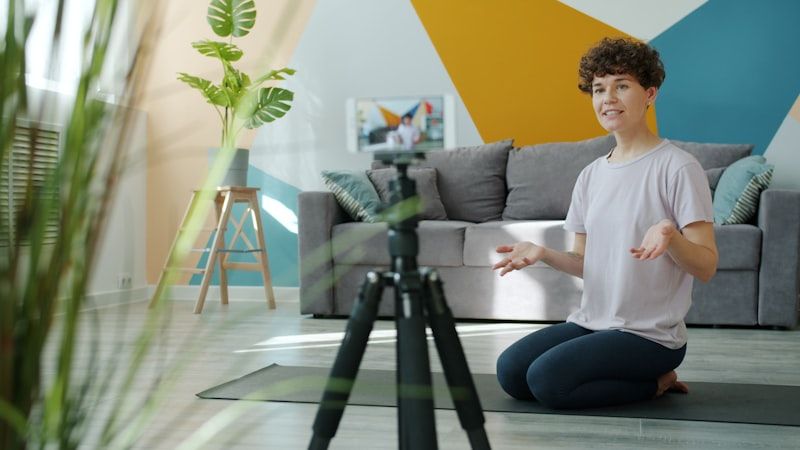
The video is where beginners overinvest. Keep each clip between six and twelve minutes — attention drops off a cliff after that, a pattern confirmed by a large study of millions of online-course viewing sessions. You do not need a studio. A phone, decent light, and a clear voice beat a polished video with a vague point. If recording feels like too much at first, curate an existing video, but watch every second of it before you assign it.
3. Build accountability into the video
This is the step that decides whether your flip lives or dies. If students can skip the video with no consequence, half of them will, and your in-class plan falls apart on contact. Attach something concrete: three questions they answer as they watch, a one-sentence summary they post, a single screenshot of a completed note. The task should take two minutes and be impossible to fake without watching.
4. Redesign class time around active work
A flipped classroom with a quiet, worksheet-filled class period is just homework reassigned. The recovered time has to go somewhere better — debate, role-play, error-hunting, a problem too messy to solve alone. Plan the in-class task first and the video second; the video exists to make the task possible, not the other way around. Strong pair and group activities are the natural fit here, because they turn recovered minutes into student talk time.
5. Plan for the students who didn’t watch
Some will arrive unprepared, especially early on. Punishing them in front of the class breeds resentment; letting them off the hook trains the rest to stop watching too. A clean fix is a “catch-up corner” — a tablet or a printed transcript in one part of the room where the unprepared few watch the clip while everyone else starts the task. They feel the cost without being shamed, and you protect the lesson for the prepared majority.
6. Use class time to give feedback you couldn’t before
Lecturing leaves no room for real feedback; circulating during active work is nothing but feedback. Move through the room, listen, correct one error per student rather than every error, and note which mistakes repeat. The patterns you spot become your next video. This loop — watch, practice, correct, re-record — is where the method compounds. Fold what you see into your wider lesson planning so the next unit starts ahead of the last one.
7. Ask students what broke, then fix one thing
After the first flipped unit, ask three blunt questions: Did you watch? If not, why? What helped? You will hear that the video was too long, or the task was unclear, or the platform was annoying. Pick the single most common complaint and fix only that before the next unit. Teachers who try to fix everything at once quit; teachers who fix one thing per cycle still flip three years later.
Flipped Classroom Examples That Work
The model looks different depending on what you teach, but the spine is always the same: passive intake at home, active use in class. In an English class, students watch a short clip on reported speech, then spend the period interviewing each other and reporting back what their partner said. In a science class, they watch a demonstration, then run the experiment. In a history class, they read a primary source at home and argue two sides of it in class.
For language teachers specifically, the flip is a gift, because language is a skill, not a body of facts — and skills need reps. The grammar explanation, the pronunciation model, the vocabulary list: all of that can live in a video. What can’t live in a video is the messy, real-time work of producing the language with a human who can correct you. Move the explaining out, and you free an entire period for the one thing students can’t do alone — actually speaking.
Flipped Classroom Benefits
The clearest benefit is time. A teacher who lectures for fifteen minutes of a fifty-minute period is spending nearly a third of class on something a recording does just as well — and often better, since the recording can be paused. Reclaim that third and you have roughly forty extra hours of active class time over a school year, without adding a single minute to the timetable.
The second benefit is pace. Live lectures move at one speed, which is wrong for almost everyone in the room — too fast for some, too slow for others. A video moves at each student’s speed. The strong learner skips ahead; the struggling one rewatches. That alone makes the flipped classroom a quiet form of امتیازی ہدایات that costs you no extra planning once the video exists. The third benefit is visibility: when students work in front of you instead of at home, you finally see who is struggling and where, while there is still time to help.
Flipped Classroom Pros and Cons: An Honest Take
The honest truth is that flipping fails more often than it succeeds, and the failures are predictable. The biggest con is the access gap — if a student has no reliable device or internet at home, the video becomes a barrier, not a bridge, and you have quietly punished the kids who can least afford it. The fix is to never assume access: keep a low-tech path open, whether that is a printed transcript, a downloadable file, or class time set aside to watch.
The second con is upfront work. Building a library of videos is real labor, front-loaded into a term that is already busy. The cons are real, but most of them are first-year problems that fade as your video library grows. The pros — recovered time, individual pace, better feedback — compound every year you keep at it. That is the trade most teachers who stick with it would make again: a hard first term for an easier, richer every term after.
Flipped Classroom vs. Blended Learning
People use these terms as if they mean the same thing, and they don’t. Blended learning is the broad umbrella — any mix of online and face-to-face instruction counts, in any arrangement. A flipped classroom is one specific shape under that umbrella: online content first, in-person practice second, in that fixed order. Every flipped classroom is a form of blended learning, but plenty of blended setups are not flipped. Knowing the difference matters when a coordinator asks you to “go blended” — flipping is a clear, teachable version of that vague request, with a defined sequence you can actually plan around.
Making the Flip Work for ESL Classes
Language teachers have one advantage and one trap. The advantage: your subject is endlessly demonstrable on video — a mouth forming a sound, a gesture pairing with a word, a short skit modeling a function. The trap: it is tempting to flip the grammar and stop there, leaving the in-class half as dull drills. Resist that. The recovered time should go to output — speaking, debating, writing under your eye — not to silent gap-fills students could finish at home. Flip the input, fill the room with output, and the model earns its keep.
If you teach mixed-level groups, lean into the pause button. Assign the same core video to everyone, but give faster students an extension clip and slower ones a transcript to read alongside. You are running three levels at once without writing three lesson plans — the video carries the load you used to carry live.
Start with one unit this week. Pick the lesson you most dread lecturing, record six honest minutes, and protect the class period for the work that needs you in the room. The flip is not a technology project; it is a decision about where your time is worth the most. If you want a stronger foundation under it, build the flip on top of a clear ESL سبق کی منصوبہ بندی routine — the model rewards teachers who plan the destination before they record the directions.
ذرائع
- Flipped classroom — Wikipedia — Origins with Bergmann and Sams, definitions, and the structure of the model.
- Flipped Classrooms — Harvard Bok Center for Teaching and Learning — How class time shifts to higher-order, active learning when first exposure moves out of class.
- 100 Videos and Counting: Lessons From a Flipped Classroom — Edutopia — Practical lessons on accountability, video length, and redesigning class time.
Looking for free ESL worksheets? Browse our full collection — printable resources for every level and age group. Browse Free Worksheets →
Students can access free worksheets and reading materials at 18KEnglish.com.

 UR
UR  EN
EN  ZH
ZH  ZH_CN
ZH_CN  KO
KO  VI
VI  FR
FR  AR
AR  ES
ES  HI
HI  PT
PT  BN
BN  RU
RU  JA
JA  TR
TR  DE
DE  IT
IT  PL
PL  ID
ID  TH
TH  FA
FA  UK
UK  TL
TL  HE
HE  SW
SW  RO
RO  NL
NL  MS
MS  TA
TA  PS
PS  HU
HU  EL
EL  SV
SV  NB
NB  NN
NN  DA
DA  CS
CS  SR
SR  AM
AM