

Co-Teaching With Local Teachers: 7 ESL Tips
Taiwan’s Ministry of Education expects to bring in 980 foreign English teachers and teaching assistants for the 2026 school year alone, every one of them paired with a local English teacher under the Taiwan Foreign English Teacher Program (TFETP), part of the government’s Bilingual 2030 push. That’s a lot of two-person teams walking into a classroom together for the first time with no shared playbook. Most training for the job covers visas, housing, and classroom management — almost none of it covers how to actually share a room with another adult who has a different first language, a different teaching background, and, often, a different idea of what the lesson is supposed to look like.

A typical TFETP placement puts a foreign teacher and a local co-teacher in front of the same class, up to 20 periods a week.
Why Co-Teaching in Taiwan Looks Different From a US ESL Classroom
Most of the co-teaching advice floating around online was written for American public schools, where a foreign-language specialist pushes into a mainstream classroom to support a handful of English language learners. Taiwan’s model flips that. Under TFETP, the foreign teacher is usually the one leading English content, and the local teacher — called a Local English Teacher, or LET — is the one who already knows the students, the parents, and the school.
A 2026 study out of the Asian Institute of Research followed five junior high schools in central Taiwan and found that most pairs default to a “One Teaching, One Assisting” pattern: the foreign teacher runs the lesson, and the LET ends up functioning as classroom manager, translator, and tech support rather than a true co-instructor. The researcher pointed to two root causes — almost no protected co-planning time, and LETs carrying a heavier administrative load that leaves them with little bandwidth to plan jointly. Neither of those is a personality problem. They’re structural, and they’re fixable with how you set up the partnership from week one.
Settle the “Who Does What” Question Before the First Bell
Vague role division is the single biggest reason co-teaching pairs drift into the “one leads, one assists” rut. Before you’ve taught a single class together, sit down and map out — in writing — who introduces new grammar, who runs warm-ups, who handles behavior redirection, and who grades what. It doesn’t need to be the same split every lesson, but it needs to exist as a default so neither of you is guessing in front of the class.
The teams that get stuck are usually the ones who never had this conversation out loud. They assumed the division would sort itself out, and six weeks in, the local teacher is still just translating instructions while the foreign teacher runs everything else. Say the quiet part early: “I’ll take vocabulary and speaking drills, you take grammar explanations and behavior — let’s revisit this in a month.” That one sentence prevents a semester of quiet resentment.
Protect 15 Minutes of Co-Planning Time — Even If You Have to Steal It

A shared folder and ten minutes before homeroom beats zero planning time every time.
The AIR study’s biggest finding wasn’t about teaching skill — it was about scheduling. Schools rarely build dedicated co-planning periods into the timetable, so planning either doesn’t happen or happens over a rushed message the night before. If your school hasn’t carved out formal planning time, don’t wait for permission to fix it. Grab ten minutes before homeroom, trade a shared document the night before, or use the five minutes between back-to-back classes to flag anything that changed.
Fifteen minutes of real planning beats an hour of each teacher silently preparing their own half of the lesson and hoping it lines up. Keep a running shared doc — even a single Google Sheet with “this week’s vocab,” “who’s leading what,” and “flag anything weird from last class” — so the conversation doesn’t have to start from zero every time.
Swap “My Class” for “Our Students”
Language matters more than it sounds like it should. Colorín Colorado, the US-based ELL resource site, puts it plainly in its co-teaching guide: teachers who use “our students” and “our classroom” instead of “my class” build partnerships that last. It signals to your co-teacher — and to the kids — that there isn’t a main teacher and a helper. There are two teachers.
This shows up in small moments: correcting a student’s answer without checking your co-teacher’s face first, backing up a discipline call your co-teacher made even if you’d have handled it differently, giving credit out loud when their idea works better than yours. Students pick up on hierarchy fast. If they sense one teacher outranks the other, they’ll start directing every question and every excuse to whichever one they think holds the real authority.
Match the Co-Teaching Model to the Lesson, Not the Other Way Around

Most pairs settle into a single default pattern and never switch it up — usually because nobody told them there were other options. There are at least four worth rotating through depending on what the lesson actually needs:
- Lead and support — one teacher delivers content while the other circulates, checks notebooks, and redirects off-task students. Good for grammar explanations or anything that needs one clear voice.
- Parallel teaching — split the class into two groups, each teacher runs the same activity simultaneously. Doubles speaking time per student, which matters a lot in classes of 30+.
- Station teaching — students rotate between stations, each teacher owns one. Works well for mixed-level classes where some kids need more scaffolding than others.
- One teach, one observe — one teacher runs the lesson while the other tracks specific students or patterns (who’s not participating, who’s lost). Use sparingly — overused, this is exactly the pattern the AIR study flagged as a trap, not a technique.
The mistake isn’t using “one teach, one observe” occasionally — it’s using it as the default because nobody planned anything else. Rotate models based on what Tuesday’s lesson actually calls for, not out of habit.
Let Your Co-Teacher Call the Plays You Can’t See

Two adults in front of the class only works if both are trusted to make calls, not just one.
You will not catch everything in a Taiwanese classroom, and that’s not a knock on your observation skills — it’s a language and context gap you can’t close by trying harder. A kid mumbling something under their breath in Mandarin, a seating arrangement that’s actually separating two students who had a falling-out, a parent WeChat message your co-teacher mentioned in passing before class: your LET is catching all of that, and you’re not.
Defer to them on discipline calls, seating changes, and anything that touches a student’s home situation, without making them explain the reasoning to you in real time in front of the class. If you disagree, take it up after the bell, not mid-lesson. Undermining a call your co-teacher just made in front of 30 students does more damage to the partnership than almost anything else on this list.
Build the Relationship Before You Need It
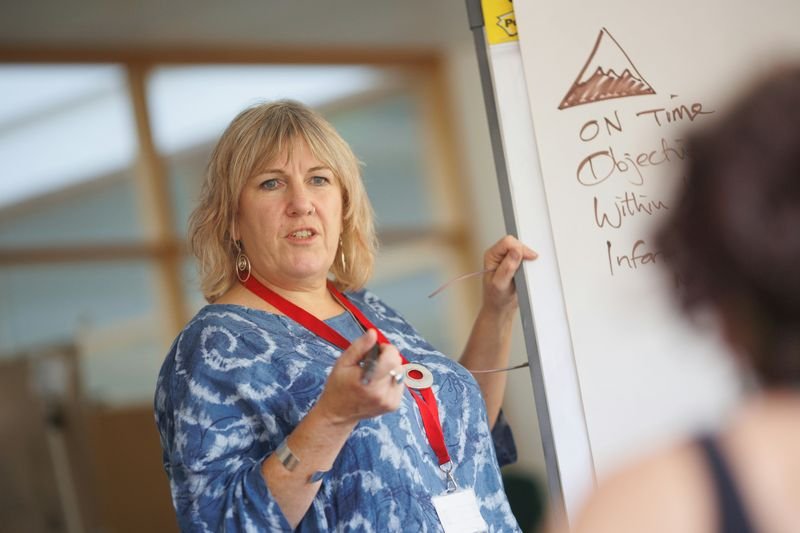
The strongest co-teaching pairs I’ve seen didn’t become strong because they were both good teachers — they became strong because they ate lunch together, asked about each other’s weekends, and talked through a rough class afterward instead of letting it fester. None of that is in the job description, and none of it shows up in a lesson plan, but it’s what makes the hard conversations possible later.
If your school runs joint professional development sessions or TFETP orientation workshops, don’t treat them as a box to check. They’re one of the only structured opportunities to build rapport with your co-teacher outside the pressure of an actual class. Show up, participate, and use the downtime between sessions to actually talk.
Close the Loop With Real Feedback

Most co-teaching pairs never give each other direct feedback, and it’s usually out of politeness, not because there’s nothing to say. Set a five-minute check-in at the end of the week — what worked, what didn’t, what to try differently. Keep it specific: “the pair-work timing ran long today” lands better than “that lesson was a bit messy.”
Ask for feedback on your own teaching too, and mean it when you ask. A local co-teacher who’s watched you teach for three months has noticed patterns you can’t see from the front of the room — pacing habits, instructions that confuse students every single time, activities that land flat. If you only ever give feedback and never ask for it, the relationship stays one-directional, and one-directional partnerships are exactly what turns into “one teach, one assist” by default.
When Co-Teaching Falls Apart

The AIR study’s central finding is worth repeating because it’s the pattern most new TFETP teachers walk straight into without realizing it: role division hardens fast, and it hardens toward imbalance, not partnership. A local teacher who starts the year as co-instructor can slide into permanent “translator and disciplinarian” within a few weeks if nobody actively pushes back against it — and exam-driven scheduling pressure makes it worse, since prep for standardized tests tends to default back to whichever teacher is seen as the “real” English authority.
If you notice your co-teacher’s role shrinking to classroom management and translation, that’s not a sign they’re less capable — it’s a sign the default pattern is winning by inertia. Bring it up directly. Something as simple as “I want you leading the grammar explanation next unit, not just managing behavior while I talk” resets the dynamic before it calcifies into the whole year.
If you’re new to teaching in a Taiwanese classroom altogether, pair this with our buxiban survival tips for the wider context, and our classroom management techniques guide for handling the room when your co-teacher isn’t there to back you up. And if you’re weighing whether a TFETP-style placement fits your longer-term plans, our ESL teacher career guide covers where public school co-teaching roles fit against cram school and international school paths.
Co-teaching badly is worse than not co-teaching at all — a confused, hierarchical pairing teaches students that one adult’s English is the “real” English and the other’s is just backup. Done right, it does the opposite: it shows students that language learning is collaborative, not a performance by one expert in front of the room.
Nguồn
- Taiwan Ministry of Education — Join Taiwan’s Bilingual Education Efforts: MOE to Continue Recruiting Foreign English Teaching Talent in 2026 — official TFETP recruitment numbers and program structure.
- Asian Institute of Research — Evaluating Collaborative Teaching under Taiwan Foreign English Teacher Program — five-school study on co-teaching role division and structural barriers.
- Colorín Colorado — Co-Teaching ELLs: 8 Strategies for Success — communication and partnership-building strategies for ELL co-teaching pairs.








 VI
 EN
 ZH
 ZH_CN
 KO
 FR
 AR
 ES
 HI
 PT
 BN
 RU
 JA
 TR
 DE
 IT
 PL
 ID
 TH
 FA
 UK
 TL
 HE
 UR
 SW
 RO
 NL
 MS
 TA
 PS
 HU
 EL
 SV
 NB
 NN
 DA
 CS
 SR
 AM