

8 Proven Strategies for Dyslexic ESL Students
In a 2020 survey of Algerian EFL teachers, only 11.11% could correctly describe what dyslexia actually looks like in a classroom, even though 93.83% said they’d want training on it if it existed.1 That gap between wanting to help and knowing how is the real story behind most “slow progress” cases in ESL classrooms. A student who reverses letters, reads far below their speaking level, or needs three times as long to finish a worksheet isn’t automatically behind in English — they might be dyslexic, and nobody’s checked.
Why “They’re Just Still Learning the Language” Is the Wrong Diagnosis
Second-language acquisition and dyslexia produce overlapping symptoms, which is exactly why so many dyslexic ESL students get waved through as typical slow learners. Both can involve halting reading, spelling that doesn’t match pronunciation, and trouble following multi-step instructions. The difference shows up in the pattern: a student still acquiring English usually catches up steadily once vocabulary and exposure increase, while a dyslexic student’s reading stays disproportionately behind their listening and speaking skills no matter how much exposure they get.
The International Dyslexia Association’s current definition is specific about where the breakdown happens — difficulties with word reading and spelling that persist “even with instruction that is effective for the individual’s peers.”2 That’s the tell. If every other student in a class is making normal progress with the same scaffolded instruction and one student consistently isn’t, that’s worth a closer look, not another worksheet. Researchers at Yale have also flagged family history as a strong signal — a parent or sibling with dyslexia measurably raises a child’s risk, language background aside.3 Ask about it during enrollment, not after a semester of confusion.
None of this means diagnosing dyslexia yourself. It means flagging the pattern early with whatever formative assessment techniques you’re already running, so a referral happens in month two instead of year two.

Multisensory Teaching That Actually Reaches Dyslexic Learners
Multisensory instruction means a student sees the word, hears it, and does something physical with it — tracing letters in sand, tapping out syllables, building words with letter tiles — instead of just reading it silently off a page. For a dyslexic brain, that third channel matters more than it does for most learners, because it gives the word a second and third way to get encoded besides the visual route that keeps misfiring.
- Trace new vocabulary in shaving cream, sand, or on a textured surface while saying it aloud
- Tap out syllables on the desk before writing a word, so spelling follows sound instead of memory
- Use color-coded letter tiles for vowel teams and silent letters students keep dropping
- Pair every new word with a gesture or quick sketch, not just a translation
This takes more prep than handing out a worksheet, and it’s genuinely worth it. A ten-minute multisensory warm-up on five target words will outperform twenty minutes of silent reading practice for a dyslexic student, because silent reading is the exact skill that isn’t working for them yet.
Structure Lowers the Guesswork, Not the Bar
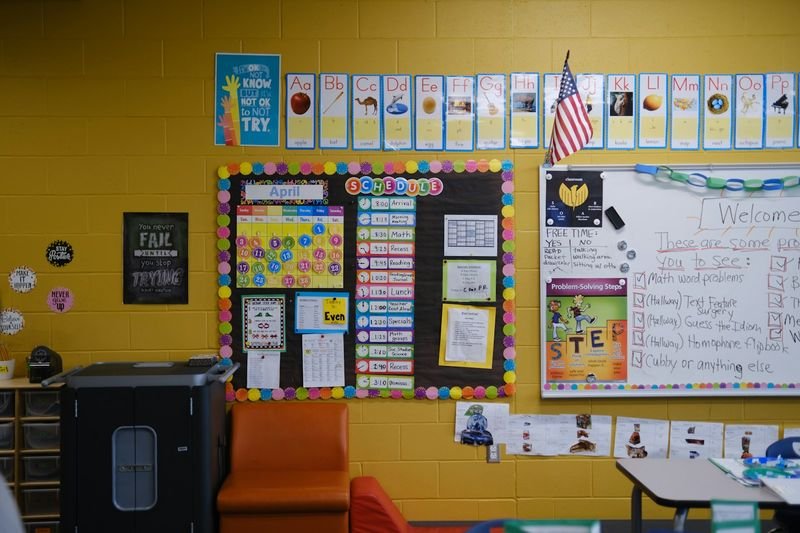
A predictable lesson shape — same opening routine, same place for new vocabulary, same signal before a transition — cuts the cognitive load a dyslexic student spends just figuring out what’s happening next. That’s working memory freed up for actual language learning instead of logistics.
Keep the sequence boringly consistent: review, introduce one new concept, practice it, apply it, close. Post it somewhere visible so students can check it instead of asking. Introduce exactly one new grammar point or vocabulary set per lesson for a dyslexic student, even if the rest of the class can handle two — stacking new material doesn’t speed anyone up, it just guarantees nothing lands. If you’re already running scaffolding techniques for mixed-ability groups, the structural piece is largely the same instinct applied more strictly.

Processing Time Costs You Nothing and Changes Everything
Dyslexic students need longer to decode a question before they can answer it, and most classroom pacing doesn’t leave room for that. The fix is almost embarrassingly simple: after asking a question, silently count to eight or ten before calling on anyone. That pause feels long to a teacher and completely normal to a student who actually needs it.
Extend this to reading tasks and tests too. A dyslexic ESL student doing a timed reading comprehension exercise is being tested on decoding speed, not comprehension — give extra time or shorten the passage, and you’re finally measuring the thing you meant to measure. This is the lowest-cost accommodation on this entire list and the one most frequently skipped, usually because a teacher simply didn’t think to build in the pause.

Assistive Tech Worth Adding to a Dyslexia-Friendly ESL Classroom
Text-to-speech and speech-to-text tools let a dyslexic ESL student engage with content at their actual comprehension level instead of their decoding level, which for many students is a full grade or two apart. A student who can discuss a topic fluently in conversation but struggles to read a paragraph about it isn’t weak in English — they’re being blocked by a skill the tool can route around.
- Built-in screen readers (Microsoft Immersive Reader, Apple VoiceOver) for any digital reading task
- Speech-to-text for drafting writing, so spelling doesn’t gate idea generation
- Audiobooks or recorded passages paired with the printed text, so students follow along by ear and eye together
- Word-prediction typing tools for longer writing assignments
Introduce one tool at a time and let students practice with it before a test matters. Tech dropped in cold on exam day just adds a second thing to figure out under pressure.

Font, Spacing, and Page Layout Choices That Reduce Reading Strain
Dense worksheets with tiny serif fonts and no white space are genuinely harder for a dyslexic student to track, line by line, than the same content laid out generously. The fix doesn’t require special dyslexia fonts, despite what some marketing claims suggest — a plain sans-serif font like Arial or Verdana at 12–14pt, 1.5 line spacing, and left-aligned (never justified) text covers most of the benefit.
Cream or light-gray paper instead of stark white reduces the visual glare some dyslexic readers describe as text “swimming” on the page. It’s a small print-shop change that costs nothing and takes one settings adjustment. If a student is reading on a screen, the same logic applies — turn off full justification and bump the line height before anything else.

Building Confidence Without Lowering Expectations
A dyslexic ESL student has usually already been told, directly or indirectly, that they’re behind. Repeated correction in front of classmates confirms it and teaches them to stop volunteering, which is the opposite of what a language classroom needs from any student. Confidence-building here isn’t about empty praise — it’s about making sure effort gets noticed as reliably as mistakes do.
Lean into oral skills deliberately. Many dyslexic learners speak and listen at a level well above their reading and writing, so a classroom that only measures progress through written tests is measuring their weakest channel and ignoring their strongest. Give credit for strong spoken answers, fluent discussion contributions, and listening comprehension, not just what shows up on paper. That’s not lowering the bar for English — it’s measuring the whole student instead of one skill they’re still working around.
The Training Gap Nobody’s Talking About
Here’s the part most advice articles skip entirely: the reason so many dyslexic ESL students go unsupported isn’t that teachers don’t care, it’s that almost nobody trained them to recognize this in the first place. A 2021 study of Turkish EFL teachers found 95% had received no training on dyslexia at all, and a separate 2024 study of 180 Turkish teachers found only 16.7% understood the specific reading challenges dyslexic students face.1 Poland fares a little better, but 60.9% of its EFL teachers were still untrained as of 2022.1
None of that is a knock on individual teachers — it’s a systemic gap, and a researcher at UCSF has pointed out that there’s genuinely little research yet on bilingual and multilingual students with dyslexia specifically, so even well-meaning professional development often leans on monolingual assumptions.3 If your school offers any dyslexia-specific training, take it even if it’s framed around native speakers — the core strategies transfer, and you’ll be ahead of most of the field just by showing up informed.
Nguồn
- Teachers’ Perceptions and Preparedness for Teaching EFL to Students with Developmental Dyslexia: A Systematic Review (PMC, 2025) — training and awareness statistics across Algeria, Turkey, Poland, Greece, and Sri Lanka
- Definition of Dyslexia — International Dyslexia Association (2025) — the current clinical definition of dyslexia and its core diagnostic criteria
- English Learners and Dyslexia: A Guide — Lexia Learning — expert commentary on family history risk factors and research gaps for bilingual students with dyslexia
Watch: Teaching English Language Learners with Dyslexia
Most of what’s written about teaching dyslexic students assumes a monolingual classroom and gets ported over to ESL without adjustment. The students who actually need the adjustment are the ones sitting in your class right now, watching a worksheet swim on the page and wondering if the problem is English or something else. Figure out which one it is before the semester decides it for them, and loop in whatever mixed-ability differentiation tools you’re already using to carry the accommodation forward once you know.







 VI
VI  EN
EN  ZH
ZH  ZH_CN
ZH_CN  KO
KO  FR
FR  AR
AR  ES
ES  HI
HI  PT
PT  BN
BN  RU
RU  JA
JA  TR
TR  DE
DE  IT
IT  PL
PL  ID
ID  TH
TH  FA
FA  UK
UK  TL
TL  HE
HE  UR
UR  SW
SW  RO
RO  NL
NL  MS
MS  TA
TA  PS
PS  HU
HU  EL
EL  SV
SV  NB
NB  NN
NN  DA
DA  CS
CS  SR
SR  AM
AM