PPP vs TBLT vs CLT: Comparing ESL Methodologies Head-to-Head
Walk into any ESL teacher training and you will be hit with an alphabet soup of methodologies: PPP, CLT, TBLT, ALM, GTM, TPR, CLIL. Every approach claims to be the one that finally cracks the code of second-language acquisition. The honest answer is that none of them is a silver bullet — but each one solves a specific problem better than the others. This guide compares the major ESL teaching methods head-to-head so you can match the approach to your learners, your context, and your curriculum constraints.

Why Methodology Choice Still Matters in 2026
It is fashionable to say that the “methods era” is over and that good teachers simply pick the best from each tradition. That is true for experienced practitioners. But for newer teachers, school directors writing a curriculum, or anyone preparing students for high-stakes exams like TOEIC and IELTS, methodology is still a blueprint. It dictates how you sequence a lesson, what counts as practice, how you correct errors, and what evidence of progress you accept. A teacher who quietly defaults to grammar drills while believing they are doing communicative teaching is sending students very mixed signals.
The six methodologies below are the ones you will actually meet in staff rooms, observation reports, and coursebook teachers’ notes. Understanding what each one is optimised for — and where it fails — is the foundation of principled lesson planning.
The Six ESL Methods at a Glance
- Grammar-Translation Method (GTM) — explicit grammar rules, translation between L1 and L2, heavy reading.
- Direct Method — target-language only, inductive grammar, oral focus.
- Audio-Lingual Method (ALM) — pattern drills, mimicry, behaviourist habit formation.
- Communicative Language Teaching (CLT) — meaning over form, real-world tasks, fluency-first.
- Task-Based Language Teaching (TBLT) — outcome-focused tasks drive language emergence.
- Presentation-Practice-Production (PPP) — structured three-stage lesson built around a target item.

Grammar-Translation: The Method We Love to Hate
Born in 19th-century Latin classrooms and exported worldwide, Grammar-Translation treats a foreign language like an academic puzzle. Learners memorise rules, decline verbs, and translate literary passages back and forth. Speaking is barely on the agenda.
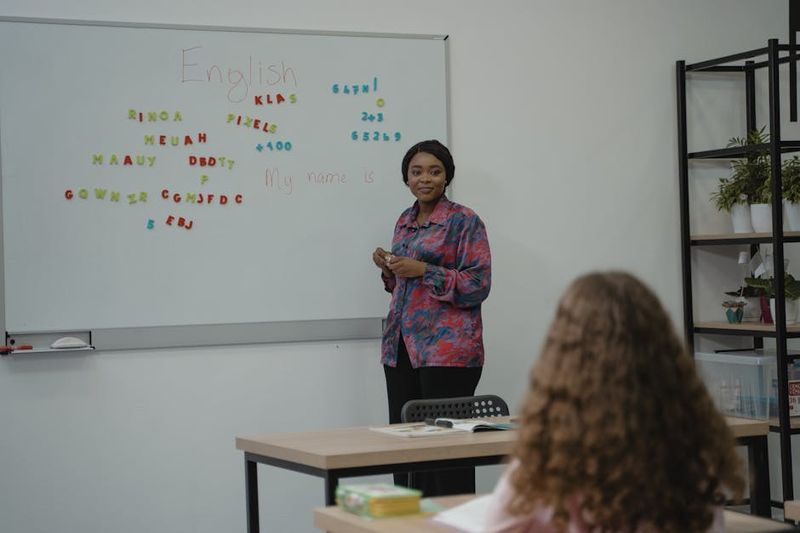
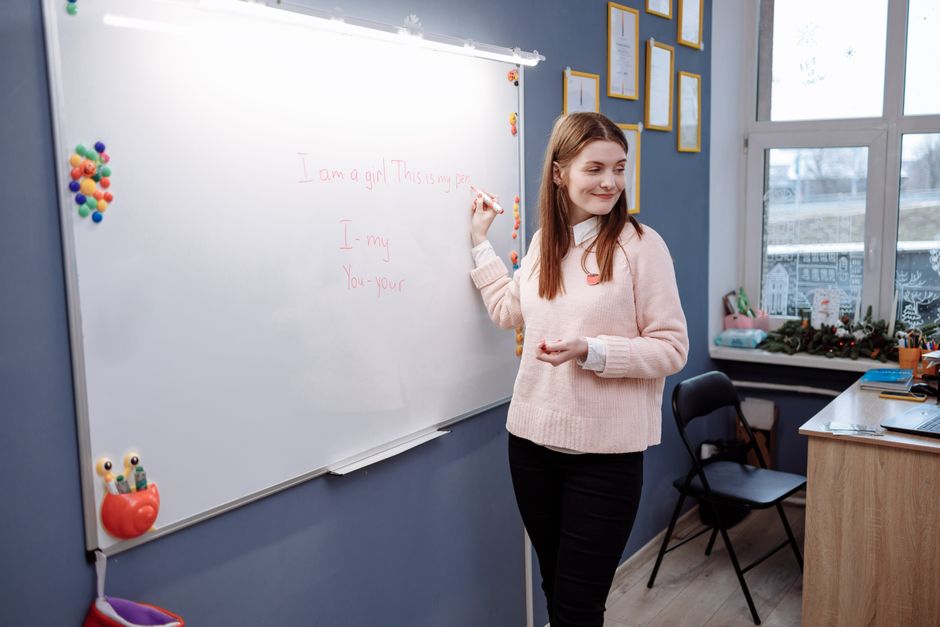
Choosing the right methodology shapes how every classroom interaction unfolds.
Strengths
It produces learners with strong reading comprehension, large passive vocabularies, and confident metalinguistic awareness — they can talk 關於 the language. It is also cheap to deliver: one teacher, one textbook, large classes, no audio equipment.
Weaknesses
Students often cannot order a coffee abroad. Listening, pronunciation, and spontaneous speaking are systematically neglected. Translation also embeds the L1 into every utterance, slowing automaticity.
Best for
University literature courses, learners preparing for translation careers, and reading-heavy exam tracks. Despite its bad reputation, fragments of GTM still serve well when learners need to dissect a complex IELTS Reading passage.
Direct Method: Immersion in a Box
The Direct Method emerged as a reaction to GTM. Teachers banned the L1 from the classroom, taught vocabulary through pictures, mime, and realia, and let grammar be inferred from examples. Berlitz built an empire on it.
The strength is exposure: students hear continuous English from minute one and develop strong listening intuition. The weakness is teacher dependency. Direct Method demands native-like fluency and theatrical presence. With a less confident teacher it collapses into guessing games and frustrated silence. It is also painfully slow for abstract grammar — try miming “the third conditional”.
Audio-Lingual Method: Drill, Drill, Drill
ALM applied behaviourist psychology to language: form correct habits through repetition and the language sticks. A typical lesson features substitution drills, transformation drills, and choral repetition. Mistakes are corrected immediately so they do not calcify into bad habits.
The method delivers fast accuracy on a narrow band of structures and produces excellent pronunciation when the teacher models well. The downside is well documented: students who can drill “She goes to school” flawlessly often freeze the moment a real conversation breaks the script. Meaning is bolted on after form, not before. Most modern coursebooks still include drill exercises — they just no longer pretend that drills alone will produce a speaker.
Communicative Language Teaching: The Modern Default
CLT is less a single method than a philosophy: language is for communication, so the classroom should look like communication. Lessons centre on information-gap activities, role-plays, opinion exchanges, and authentic materials. Errors are tolerated when they do not block meaning.
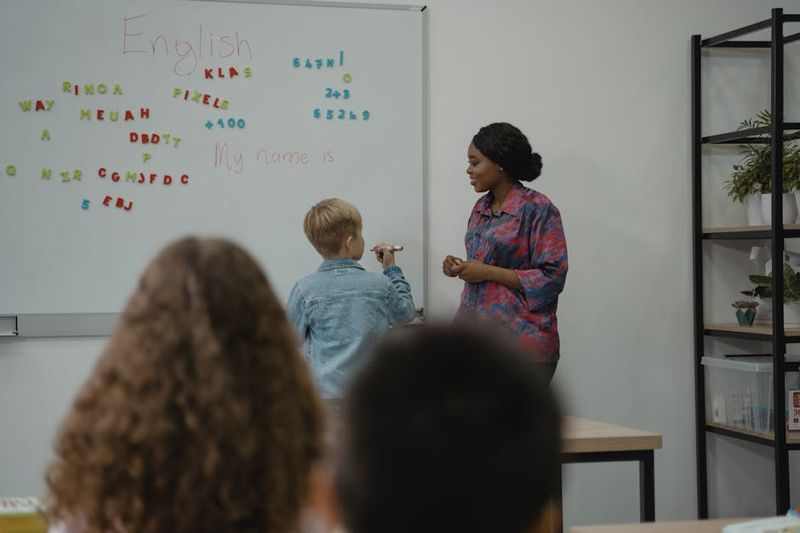
Audio-lingual drills built habits but rarely led to real conversation.
Strengths
Students gain fluency, risk-taking, and pragmatic competence — knowing not just what is grammatical but what is appropriate. CLT also embraces the teacher as facilitator rather than performer, which scales better with mixed-ability groups.
Weaknesses
Without a clear language focus, CLT can drift into “chat club” where students rehearse the same broken English week after week. It also frustrates exam-prep students who want concrete grammar boxes. Skilled CLT teachers build deliberate language input into every communicative cycle to prevent fossilisation.
Task-Based Language Teaching: Outcomes First
TBLT is CLT’s more disciplined cousin. The lesson is planned around a specific task with a non-linguistic outcome: plan a weekend trip on a budget, design a poster for a charity, decide which job applicant to hire. Language emerges in service of finishing the task; the teacher steps in afterwards with a focus-on-form stage that addresses the gaps students actually showed.
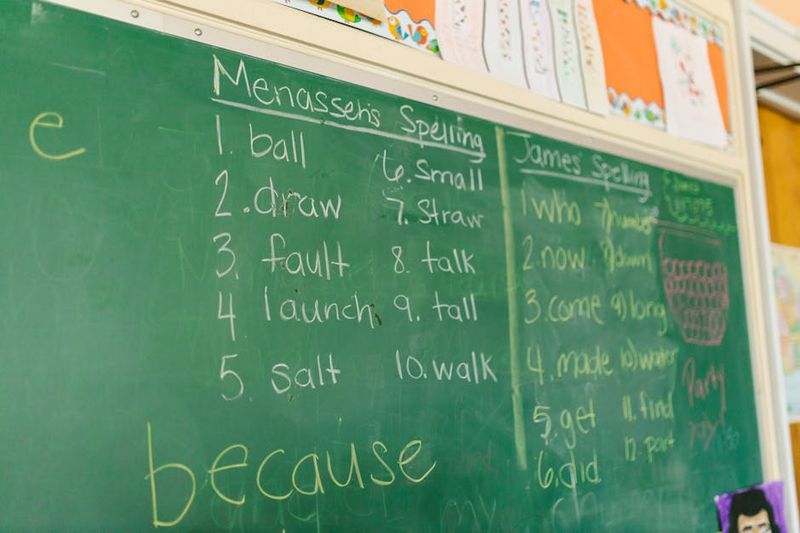
CLT shifted the focus from forms to functions — what learners can do with English.
The evidence base for TBLT is the strongest of any method on this list — research from Rod Ellis and Mike Long has repeatedly shown gains in spontaneous production. The catch is preparation time. A good task has to be authentically motivating and produce predictable language, which is harder than opening Unit 7. TBLT also assumes a flexible curriculum; if your school mandates page-by-page coverage of a coursebook, pure TBLT will hit institutional walls.
PPP: The Workhorse Lesson Shape
Presentation-Practice-Production is the lesson shape most new ESL teachers learn first because it is easy to plan and easy to observe. The teacher presents a target item (say, the present perfect for life experiences), drills it in controlled practice, then opens it up in freer production where students use it in personalised contexts.

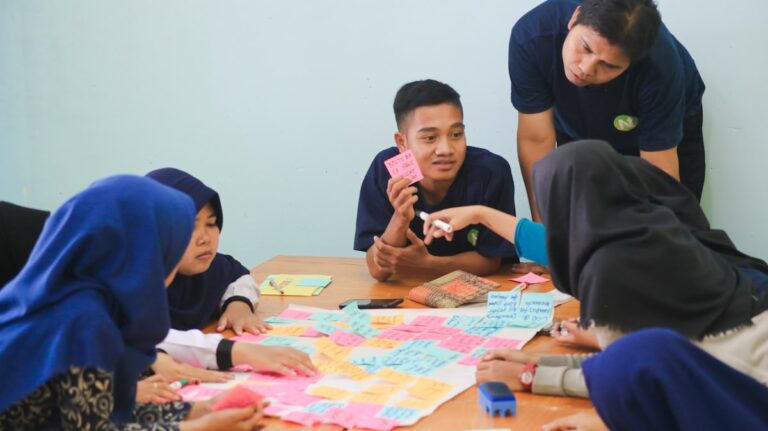
Task-based learning starts with the outcome — language emerges through doing.
PPP is unfairly maligned by methodology purists. Yes, it is linear and sometimes artificial. But it gives novice teachers a defensible structure, gives institutions a clear progression, and gives exam students a concrete answer to “what did we learn today?” The smart move is to use PPP for discrete grammar points and switch to task-based or communicative cycles for fluency development.
Honourable Mentions: TPR, Lexical, and CLIL
Total Physical Response (TPR), developed by James Asher, has students physically respond to commands before they are required to speak. It is gold for young learners and absolute beginners because it lowers the affective filter and exploits motor memory. It runs out of steam fast above pre-intermediate level.

PPP remains the workhorse — present, practice, produce — for a reason.
這 Lexical Approach, championed by Michael Lewis, argues that fluent language is built from chunks — collocations, phrases, fixed expressions — not from grammar slotted with words. It rewires how teachers select and recycle vocabulary and pairs beautifully with TBLT.
CLIL (Content and Language Integrated Learning) teaches a subject — science, history, geography — through the target language. It dominates European bilingual schools and is gaining ground in Asia. Done well, CLIL gives students dense, meaningful exposure; done badly, both content and language suffer.
Head-to-Head Comparison
Reading individual descriptions is one thing; seeing them side by side reveals which method to reach for in which situation.
- Speed to first conversation: Direct Method > CLT > TBLT > PPP > ALM > GTM
- Grammar accuracy: GTM > ALM > PPP > TBLT > CLT > Direct
- Pronunciation gains: ALM > Direct > PPP > CLT > TBLT > GTM
- Exam readiness (TOEIC/IELTS): PPP > GTM > TBLT > CLT > ALM > Direct
- Real-world communicative competence: TBLT > CLT > Direct > PPP > ALM > GTM
- Ease of preparation: PPP > GTM > ALM > CLT > Direct > TBLT
So Which ESL Method Works Best?
The honest answer is “it depends” — but here are the dependencies that actually matter.
Young learners (ages 4–10)
Lead with TPR for vocabulary and routines, layer in Direct Method storytelling, and use light PPP cycles for the handful of grammar items young learners can actually internalise. Avoid GTM entirely — children do not need to know what an auxiliary verb is.
Teen general English
A CLT-PPP hybrid wins. Use PPP for the syllabus grammar your school requires; use CLT activities — debates, surveys, project work — to get teenagers to actually open their mouths. Throw in lexical-approach chunk lists to raise vocabulary depth.
Adult business English
TBLT is hard to beat. Tasks like “run a 10-minute project update meeting” or “negotiate a delivery deadline with a supplier” mirror what learners actually do at work, surface real language gaps, and keep motivation high.
TOEIC and IELTS prep
Strong PPP for the grammar and vocabulary the test rewards, GTM-style close reading for IELTS Academic passages, and short CLT speaking simulations for the speaking modules. Pure CLT is too unstructured for time-pressured exam candidates; pure GTM leaves them mute in the speaking interview.
The Eclectic Approach: What Most Good Teachers Actually Do
Walk into the classroom of an experienced ESL teacher and you will rarely see a pure method. You will see a TPR warmer, a PPP grammar slot, a CLT information-gap activity, and a TBLT-style closing task — all in 60 minutes, all sequenced for a specific group of students. This principled eclecticism is what the methods era was secretly building towards. The methods are not rivals; they are tools. Knowing which tool solves which problem is the actual skill.
常見問題解答
Is CLT really better than PPP?
For long-term communicative competence, the research leans CLT/TBLT. For short-term mastery of a discrete language item — and for novice teacher confidence — PPP wins. Most modern teaching combines them.
Are drills (Audio-Lingual) outdated?
The full ALM ideology — that language is habit formation — is outdated. Targeted drills as a small piece of a wider lesson are absolutely still useful, especially for pronunciation and high-frequency chunks.
Can I really teach with no L1 in the room?
You can, and Direct Method classrooms still do. Most contemporary research supports judicious L1 use, especially for clarifying abstract vocabulary or checking comprehension at low levels. The dogma of total L1 ban has softened.
Where does technology fit in?
Technology is a delivery layer, not a method. AI tutors, spaced-repetition apps, and live transcription tools amplify whichever methodology the teacher already uses. They do not replace methodological choice — they sharpen it.
底線
There is no single ESL teaching method that wins across every context. PPP is your scaffolding for discrete grammar. CLT is your engine for fluency. TBLT is your gold standard for adult communicative competence. TPR rescues your young learners. The Direct Method keeps the target language alive in the room. Even Grammar-Translation has its corners. The question is not “which method is best?” but “which combination matches my learners, my exam targets, and my available prep time?” Answer that honestly and you have already outpaced most teachers who are still loyal to a single brand.
來源
- Richards, J. C. & Rodgers, T. S. — Approaches and Methods in Language Teaching (Cambridge University Press)
- Van den Branden, K., Bygate, M. & Norris, J. — Task-Based Language Teaching: A Reader
- British Council — What is the communicative approach?
- TESOL International Association — research and standards on English language teaching
- ERIC — peer-reviewed research on TBLT and methodology







 ZH
ZH  EN
EN  ZH_CN
ZH_CN  KO
KO  VI
VI  FR
FR  AR
AR  ES
ES  HI
HI  PT
PT  BN
BN  RU
RU  JA
JA  TR
TR  DE
DE  IT
IT  PL
PL  ID
ID  TH
TH  FA
FA  UK
UK  TL
TL  HE
HE  UR
UR  SW
SW  RO
RO  NL
NL  MS
MS  TA
TA  PS
PS  HU
HU  EL
EL  SV
SV  NB
NB  NN
NN  DA
DA  CS
CS  SR
SR  AM
AM