

15 Best ESL Vocabulary Games for Every Level (2026)
ESL vocabulary games beat passive review every single time — a 2014 meta-analysis in Computer Assisted Language Learning tracked word retention across 12 studies and found game-based vocabulary practice produced an average effect size of 0.96 over traditional drills. That’s the difference between forgetting a word by Friday and using it in spontaneous conversation a month later. The 15 ESL vocabulary games below cover every level and age group, from absolute beginners to adult business classes, with notes on prep time, group size, and which level they actually work at.
Why ESL Vocabulary Games Beat Flashcard Drills
Stephen Krashen’s input hypothesis predicted this back in the 1980s: language acquisition needs comprehensible input plus low anxiety. A flashcard drill checks one of those boxes. A vocabulary game checks both, and adds emotion, which Paul Nation’s research at Victoria University of Wellington links directly to long-term retention. When a student laughs while losing a round of Taboo, the cortisol that normally interferes with memory drops, and the word locks in. The point isn’t entertainment — it’s neurological staging.
That said, a game with weak vocabulary scaffolding is just a distraction. The 15 ESL vocabulary games here all share three traits: a clear target word list, repeated retrieval, and feedback within ten seconds. Skip any of those three and you’re running entertainment, not instruction.
ESL Vocabulary Games for Absolute Beginners
Beginners need games with minimal verbal instructions and high physical involvement. The biggest mistake teachers make at A1 is choosing games designed for A2+ and then spending eight minutes explaining the rules — by which point half the class has shut down.

1. Slap the Word
Print target vocabulary on A4 sheets and tape them to the walls. Call a word — first student to slap the correct sheet earns a point. Works for 8–25 students, zero prep beyond printing, and the physical movement burns off the wiggles in young learner classes. Use it for the first ten minutes of class as a warm-up review of yesterday’s words.
2. Memory Match
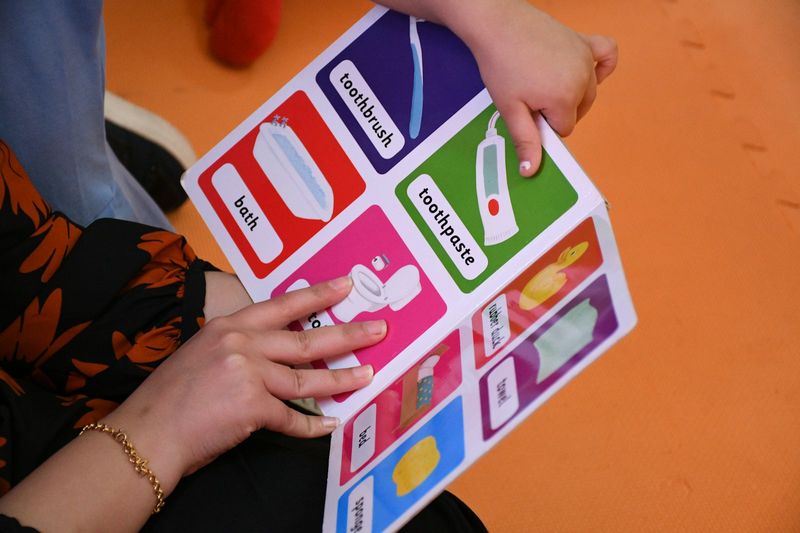
Picture cards face down on a table, word cards face down on another. Students flip one of each per turn and keep the pair if they match. Brilliant at A1 because the game does the comprehension check automatically — wrong match means wrong meaning, and the feedback is instant. Pre-made decks from British Council LearnEnglish Kids work straight out of the printer.
3. Pictionary Lite
Regular Pictionary fails at A1 because the drawer has no English to negotiate with. Lite version: drawer gets the word, draws it, and the rest of the class shouts the word in English. No turn-taking complications, no team scores, just word → drawing → word. Cycle through ten target words in five minutes.
ESL Vocabulary Games for Intermediate Classes
By B1 students can read rules off the board, follow team scoring, and tolerate a 30-second explanation. This is where game variety explodes. Build your rotation from these four and you’ll rarely repeat yourself across a 12-week course.

4. Board Race
Two teams, two markers, one whiteboard. Call a category — “kitchen items,” “feelings,” “transitive verbs” — and teams race to write as many words as they can in 90 seconds. Score one point per correctly spelled word, deduct one for repeats or errors. This is the highest-energy ESL vocabulary game in any teacher’s toolkit and works for groups of 6 to 40. For more high-energy openers, pair this with a structured warmer from the ESL warm-up activities playbook.
5. Word Association Chain
Student A says a target word. Student B says the first associated word that comes to mind in English (no L1 allowed). Student C continues the chain. The chain breaks when someone repeats, hesitates more than three seconds, or uses L1. Surprisingly addictive at B1 because students start hunting for unusual associations to stump the next player.
6. Stop the Bus
Five-column grid on the board: Food, Animal, Country, Verb, Adjective. Call a letter. Students fill all five cells with a word starting with that letter. First to finish shouts “Stop the bus!” and reads their answers — unique words score 10 points, words another team also wrote score 5. Works as a lesson closer because the energy carries students out the door talking.
7. Hot Seat
One student sits facing away from the board with their back to the target word. The rest of the class describes the word without saying it, miming it, or using the L1. Three rounds of 60 seconds each, with the hot seat student rotating through three teammates. Vocabulary review disguised as pressure-cooker speaking practice.
ESL Vocabulary Games for Adults That Skip the Eye-Roll
Adult ESL classes have a specific failure mode: any game that feels childish nukes engagement for the rest of the term. The four games below pass the eye-roll test because they use adult-relevant content and competitive scoring rather than novelty.

8. Word Auction
Hand each pair $1,000 in fake currency. Project ten sentences — half are grammatically correct using a target vocabulary item, half contain a collocation error. Pairs bid on each sentence; the winning pair must explain whether it’s correct. Bid right, win the cash. Wrong, lose it. The metacognition this forces — actually defending a word choice — is where vocabulary moves from receptive to productive.
9. Taboo
The Hasbro board game has been an ESL classic for a reason. Target word at the top of the card, four taboo words below it that the speaker cannot say. One minute to describe as many cards as possible. For business English, write your own cards with target lexis: “stakeholder” with taboo words “person, important, project, money.” Forces real synonym hunting.

10. Headlines
Project five news headlines from the past week with target vocabulary highlighted. Teams have three minutes to write the first paragraph of each story, using all five target words. Score on accuracy, creativity, and correct collocation. Adult learners take this seriously because the content respects them — no cartoons, no kids’ songs, just real English doing real work.
11. Vocab Charades for Adults
The childish version dies in adult classes. The fix: limit the word pool to genuinely tricky abstract nouns — “ambition,” “skepticism,” “compromise” — and ban any mime that takes longer than 30 seconds. The challenge of acting out abstractions resets the game as a creative problem rather than a kids’ party.
ESL Vocabulary Games for Teenagers
Teenagers will play almost anything if the scoring is loud and the stakes feel real. The mistake is treating them like adults or like kids — they’re neither. They want competition, they want their peers to see them win, and they want a clear losing condition for the other team.
12. Categories Race
Split into teams of four. Each team gets a category — “things in a refrigerator,” “ways to feel angry,” “verbs of movement” — and exactly 90 seconds to list as many target words as possible. The catch: any word also listed by another team gets crossed off both lists. Forces teams to hunt for the obscure, which is where real vocabulary expansion happens. Combine this with the level-mixing structure from the 50 no-prep ESL activities guide when your class has uneven proficiency.
13. Dictionary Bluff
You pick a genuinely obscure English word — “petrichor,” “sonder,” “defenestrate.” Each team writes a fake but plausible definition. You add the real definition to the pile. Teams vote on which is real. Score: 2 points if your team picked the real one, 1 point if another team picked your fake. Builds love of dictionary work because the game rewards plausible English style, not memorization.
Digital ESL Vocabulary Games
Tablets and laptops opened a parallel universe of vocabulary games that scale instantly and self-grade. The two below have replaced almost every paper-based review I used to run.

14. Quizlet Live
Build a vocabulary set in Quizlet, click “Live,” and students join from any device. They’re randomly grouped, each member sees four definitions, and only one member of each group has the correct answer. A wrong answer resets the team to zero. This collaborative pressure does something traditional matching cannot — it forces students to read each other’s definitions aloud before picking. Quizlet’s teacher dashboard tracks which words tripped the team, so you know exactly what to re-teach.
15. Kahoot Word Tournament
Run four rounds of ten vocabulary questions, eliminate the bottom 50% each round. Tournament-style elimination keeps tension high and forces strong students to push their accuracy under time pressure. The catch most teachers miss: don’t use Kahoot for first encounters with new vocabulary, only for review. The speed reward punishes the careful processing that new words need.
For a teacher walkthrough of how to run five of these games in a single lesson, this video is worth the watch:
How to Make Any Vocabulary Game Actually Stick
Most teachers run the game, score the game, and move on. That’s where retention dies. The fix is a two-minute consolidation immediately after — students write the five hardest words from the game in their notebooks with a self-generated example sentence. Paul Nation calls this “elaborated retrieval,” and his research at Victoria University shows it roughly doubles week-one recall over the game alone.

Three more multipliers worth running: revisit the same target word list in three different games across one week — Quizlet Live on Monday, Hot Seat on Wednesday, Headlines on Friday. The variation of context is what builds the flexible retrieval cues real vocabulary use demands. Second, end every game with a 30-second team huddle where students teach each other the word they got wrong. Third, post-game homework should be production, not recognition — write three sentences using your three weakest words from today’s game.
Common Mistakes That Kill a Vocabulary Game
The worst pattern I see in new teachers is using games as a Friday-only filler. That trains students to associate games with low-stakes time, which kills the retention edge. Run vocabulary games on Tuesday morning and Thursday afternoon — anywhere except the last block of the week.
Other mistakes that drain the value: target word lists longer than 12 items per game, mixed-level pairings without scaffolding, and reading instructions aloud instead of demonstrating the first round yourself. If your beginners spend 90 seconds confused about the rules, you’ve already lost the lesson. For a full structural framework that pairs vocabulary games with the right warmers and wrap-ups, the 50 ESL activities that actually work playbook shows where games fit in a balanced lesson stage.
The teachers who get the most out of ESL vocabulary games treat them as instruction with adrenaline, not as breaks from instruction. Pick three games from this list, run them next week, and watch which words your students start using in unprompted conversation by Friday. That’s the only metric that matters.
來源
- Cambridge ReCALL — Effects of digital game-based learning on EFL vocabulary acquisition — peer-reviewed meta-analysis on game-based vocabulary outcomes.
- Paul Nation — Victoria University of Wellington vocabulary research — foundational research on vocabulary acquisition and retrieval.
- British Council TeachingEnglish — Games in language learning — pedagogical framework for game design in language classrooms.
- Quizlet for Teachers — official teacher dashboard and Quizlet Live documentation.
- British Council LearnEnglish Kids — free printable vocabulary cards and game templates.







 ZH
ZH  EN
EN  ZH_CN
ZH_CN  KO
KO  VI
VI  FR
FR  AR
AR  ES
ES  HI
HI  PT
PT  BN
BN  RU
RU  JA
JA  TR
TR  DE
DE  IT
IT  PL
PL  ID
ID  TH
TH  FA
FA  UK
UK  TL
TL  HE
HE  UR
UR  SW
SW  RO
RO  NL
NL  MS
MS  TA
TA  PS
PS  HU
HU  EL
EL  SV
SV  NB
NB  NN
NN  DA
DA  CS
CS  SR
SR  AM
AM