

ESL Debate Activities: 9 Best Ideas to Build Speaking Fluency
The average ESL speaking drill produces three things: one student talking, twenty-nine waiting, and a collective wish the lesson would end. Debate activities break that pattern because the communication has stakes — students need language to win, defend a position, or at minimum not look foolish in front of their peers. That pressure is exactly what fluency-building requires.
After more than two decades in Taiwanese classrooms, I’d put a well-run debate among the highest-yield speaking activities available. Students use grammar and vocabulary they already know in service of a real communicative goal. This is fundamentally different from controlled practice drills, and the fluency gains show up faster.
These nine ESL debate activities range from five-minute warm-ups to full two-period formats. Most require no special materials. All of them generate actual conversation.

Debate activities work because students have a genuine reason to speak.
Before the First Debate: 3 Things Your Students Need
Running a debate without preparation is the fastest way to silence a class. Students who lack the language to agree, disagree, or build on an argument will freeze or revert to their first language. Three steps fix this reliably.
Teach a core set of debate phrases before the activity starts. Phrases like “In my opinion…”, “I see your point, but…”, “On the other hand…”, and “Could you explain what you mean by…?” give lower-level students scaffolding to participate. Write these on the board and leave them visible throughout the activity — students will glance up at them constantly for the first few sessions.
Assign positions randomly. When students know their stance isn’t their own opinion, personal risk drops. Reluctant speakers find it easier to argue a random position than to publicly defend their actual views. Random assignment also produces livelier debates — students who privately agree end up on opposite sides, which forces them to generate arguments they wouldn’t otherwise consider.
Match the topic to the level. At A2, concrete personal topics work best: “Is it better to live in a city or the countryside?” At B1-B2, social topics become viable: “Should phones be banned in schools?” At C1+, abstract policy debates are possible. A topic too complex for the level kills the activity before it starts.

Pair preparation before a full-class debate dramatically reduces anxiety.
1. Four Corners
Label the four corners of your classroom: Strongly Agree, Agree, Disagree, Strongly Disagree. Read a statement aloud — something controversial enough to split the class — and students move to the corner matching their position. Then they explain why they’re standing there.
How to run it: Start with two or three low-stakes practice statements to get students comfortable moving (“Pizza is better than hamburgers”). Once the format is clear, introduce your actual topic. After students move, ask one person from each corner to give their reason. Then read a new statement or invite a student to change it. The physical movement alone raises energy levels in ways that seated debates rarely match.
Four Corners works from A2 upward. Provide the sentence frames students will need before the activity starts. Time: 15–20 minutes including setup.
2. Devil’s Advocate
In Devil’s Advocate, students argue the opposite of what they personally believe. It sounds simple, but the results are consistently strong. When students know they’re playing a role, they take more risks with language — using argument structures they’d never attempt if their actual opinion were on the line.
Give the class a proposition and have half argue for, half against. Then switch sides. The switch is the step most teachers skip, and it’s the most important one. It doubles speaking time and forces students to generate entirely new arguments rather than restating what they already said. Run this in pairs or small groups before moving to whole-class sharing. Level: B1+. Time: 20–25 minutes.
3. Balloon Debate
Five students are in an imaginary hot-air balloon losing altitude fast. One person must jump. Each student takes on the identity of a famous person — a scientist, a musician, a historical figure, a doctor — and has two minutes to argue why they’re the most valuable person in the balloon and shouldn’t be thrown out.

The Balloon Debate gives quieter students a character to speak through.
Balloon Debate generates extraordinary engagement because it’s inherently absurd, and students quickly forget they’re working in English. After each person presents, the class votes on who goes. The voted-out person sits down; the balloon rises briefly, then starts falling again. Repeat until one person remains.
Assign famous people rather than letting students choose — unfamiliar figures will derail the activity at lower levels. Stick to people your class is likely to know: Einstein, Beyoncé, a local figure, a fictional character your students would recognize. Level: B1+. Time: 30–40 minutes.
4. Fishbowl Debate
Arrange four or five chairs in a circle at the center of the room. The students in the middle debate; everyone else watches. The outer circle isn’t passive — they have a task: recording examples of effective debate language, noting arguments they find convincing, or completing a speaking skills checklist.

Fishbowl gives watching students a structured task, not dead time.
After ten minutes, the inner and outer circles switch. The students who watched now debate, using language and arguments they observed. This structure works particularly well in large classes where whole-class debate becomes unmanageable. It also models high-quality argument structure before asking all students to attempt it.
The checklist for outer-circle students should be specific: “Did the speaker give a reason for their opinion? Did they respond directly to the other person’s point? Did they use a linking phrase?” A vague observation task produces vague notes. Level: B1+. Time: 25–35 minutes.
5. One-Minute Argument
Set a timer. One student gets sixty seconds to argue a point — no notes, no interruptions. When the timer goes off, the next student has sixty seconds to respond: agreeing, disagreeing, or adding a new angle. Rotate around the group.
One-Minute Argument is low-prep and works with any topic. It’s particularly good for intermediate students who know enough English to express ideas but haven’t built the habit of sustaining a thought for more than a sentence or two. The time pressure removes the hesitation that kills fluency. Students learn quickly that it’s better to keep talking with imperfect grammar than to pause searching for the perfect word.
This TESOL tutorial walks through how to structure speaking debates in real ESL classrooms — worth watching before you run your first Fishbowl or Oxford debate with a new class. Level: B1+. Time: 15–20 minutes with multiple rounds.
6. Spontaneous Debate
Write fifteen debate topics on slips of paper. Two students each pull one from a bag — they get the same topic but argue opposite sides. They have thirty seconds to think, then the debate begins. No notes, no preparation beyond that initial half-minute.
Spontaneous Debate is the right activity when fluency is the lesson goal, not accuracy. Students learn to push through vocabulary gaps, paraphrase when they can’t find a word, and use filler language strategically. These are exactly the skills needed for real conversation. Use delayed error correction — note errors during the activity, address them afterward. Interrupting for grammar corrections during the debate destroys the flow. Level: B2+. Time: 20–30 minutes.
7. Two-Sides Gallery Walk
Print arguments for and against a topic on separate cards. Mix them up and tape them around the room. Students walk through the gallery, read each argument, and mark it as convincing or unconvincing. When they’ve read all the cards, they choose a side and find someone who chose the opposite — then discuss.
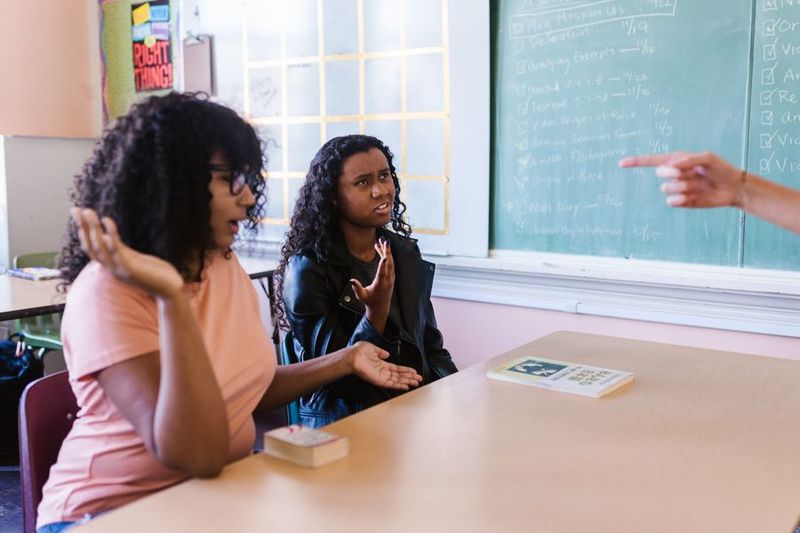
Gallery walks integrate reading and speaking without feeling like a grammar exercise.
The gallery walk solves a common problem: students don’t know enough about a topic to debate it. By reading prepared arguments first, they have material to work with. This lowers the entry barrier for lower-level classes and for topics students find genuinely unfamiliar. The card-marking step also means every student arrives at the discussion with a formed position — no one is starting from zero. Level: A2+. Time: 25–30 minutes.
8. Socratic Seminar
The Socratic Seminar is not a debate in the traditional sense — there’s no winner, and no one is trying to persuade. The goal is collaborative exploration of an open question. The teacher poses a central question and then steps back. Students drive the conversation: they respond to each other, build on ideas, and challenge claims without the teacher directing traffic.
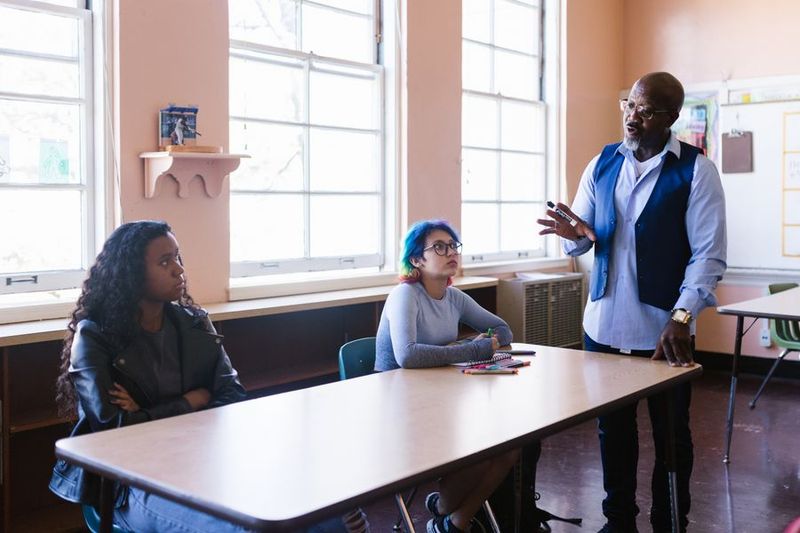
Socratic Seminar works especially well with adult learners who find competitive debate stressful.
The best questions for a Socratic Seminar are genuinely open: “Is it ever acceptable to lie?” or “What does it mean to be successful?” — not questions with a factually correct answer. The facilitating teacher can prompt with follow-up questions but doesn’t evaluate or take sides. For adult ESL students who find competitive formats stressful, Socratic Seminar often produces more total language output than any debate format. Level: B1+. Time: 20–30 minutes.
9. Mini Oxford Debate
The Oxford-style debate has a clear structure: a proposition team argues for a motion, an opposition team argues against, and the floor asks questions. A vote happens before and after — the team that changes the most minds wins. It takes more setup than the other activities here, but for advanced students, it’s the most rigorous speaking challenge available.
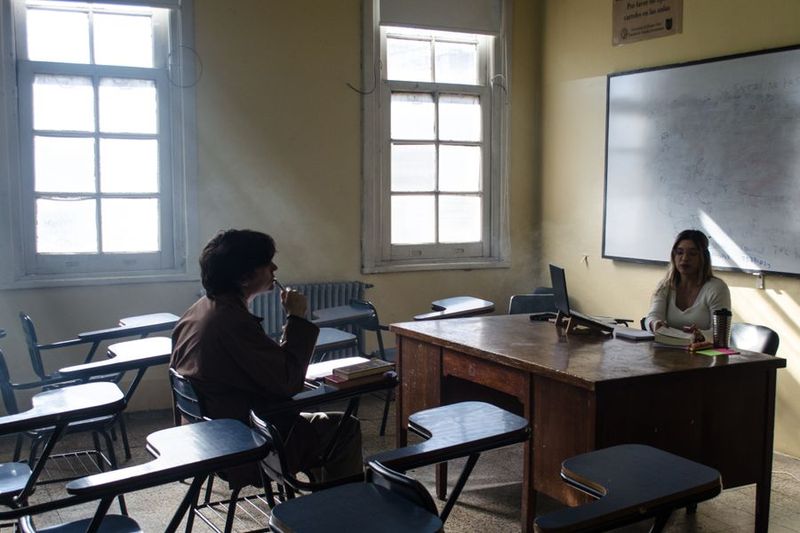
Oxford-style debate teaches argument structure that transfers directly to academic writing.
Running a Mini Oxford Debate effectively means giving students time to research and prepare opening statements — at least one class period before the debate itself. The investment pays off. The language students produce in formal structured debate is qualitatively different from discussion activities: more organized, more precise, and more transferable to academic writing tasks. Level: C1+. Time: Two class periods.
Debate Topics That Work at Every Level
The right topic matters as much as the format. Avoid topics where one answer is obviously correct — they don’t generate genuine debate. Instead, choose topics that split the class and touch on things students actually care about.
For A2-B1 students, personal and local topics generate real disagreement: “School should start at 10am”, “Homework should be banned”, “Cats are better than dogs.” These are low-stakes but students will argue them with surprising energy.
For B1-B2, move to social topics: “Social media does more harm than good”, “People should eat less meat”, “Working from home is more productive than working in an office.” These require students to reference ideas beyond their immediate experience, which naturally stretches vocabulary.
For C1+, policy and philosophical topics become viable: “Artificial intelligence should be regulated by international law”, “Economic growth and environmental protection cannot coexist.” These reward students who bring specific evidence and reward the kind of sustained argument that Oxford-style debate demands.
What to Do After the Debate
Most teachers end debate activities when the clock runs out. The ten minutes after the debate are where much of the language learning actually gets consolidated. Three follow-up steps consistently pay off.
Write two or three errors you noted during the debate on the board — anonymously, without attributing them to specific students. Ask the class to identify what went wrong and correct it together. Delayed error correction like this keeps fluency intact during the activity while still addressing accuracy afterward. Students are far more receptive to corrections when the pressure of performance is over. The ESL error correction guide covers exactly how to handle this in different class contexts.
Ask students to write three sentences about the debate: one argument they made, one argument from the other side they found convincing, and one English phrase they want to use again. This takes five minutes and significantly improves retention of the language from the session.
Building ESL speaking confidence happens most reliably when students feel they communicated something real — not just completed a task. A structured debrief reinforces that feeling and makes students more willing to take risks in future speaking activities. The debate itself builds fluency; the debrief builds the habit of reflection that accelerates all language learning.
來源
- TESOL International Association — Speaking Skills in Language Teaching — Research-based guidance on teaching speaking in ESL and EFL contexts.
- British Council Teaching English — Debate Activities — Practical debate formats and activity guides developed for English language teachers.
- Krieger, D. (2005). “Teaching Debate to ESL Students: A Six-Class Unit.” The Internet TESL Journal — A structured framework for introducing formal debate to ESL classrooms, widely cited in TEFL methodology literature.
- U.S. Department of State, American English — Teaching Speaking — Free resources for ESL teachers on developing student speaking skills in communicative contexts.







 ZH
ZH  EN
EN  ZH_CN
ZH_CN  KO
KO  VI
VI  FR
FR  AR
AR  ES
ES  HI
HI  PT
PT  BN
BN  RU
RU  JA
JA  TR
TR  DE
DE  IT
IT  PL
PL  ID
ID  TH
TH  FA
FA  UK
UK  TL
TL  HE
HE  UR
UR  SW
SW  RO
RO  NL
NL  MS
MS  TA
TA  PS
PS  HU
HU  EL
EL  SV
SV  NB
NB  NN
NN  DA
DA  CS
CS  SR
SR  AM
AM