
ESL Students With Anxiety: 8 Proven Fixes
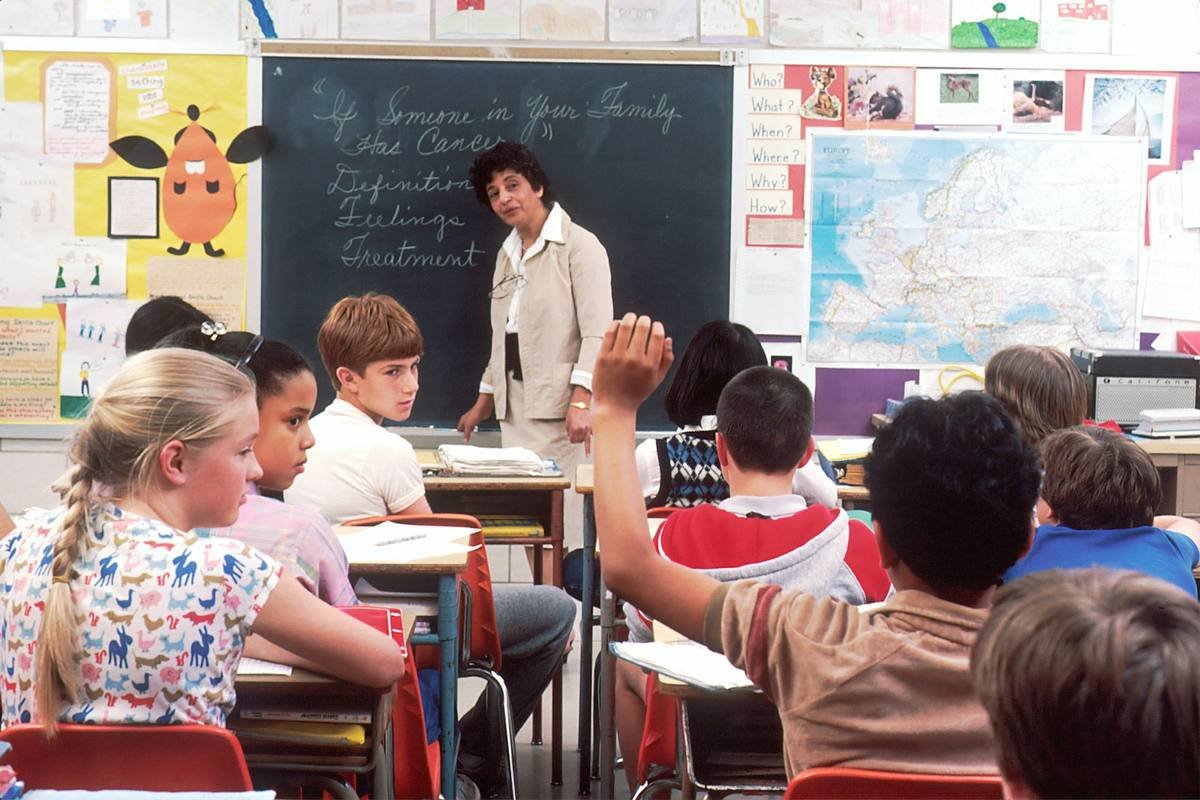
An estimated 31.9% of adolescents ages 13 to 18 will experience an anxiety disorder at some point, according to the National Institute of Mental Health — 38% of girls and 26.1% of boys. That’s not language anxiety in the general sense every learner feels before speaking a foreign language. It’s a diagnosable condition that was already running in the background before the student walked into an ESL classroom, and a cold call to answer a question in a second language can trigger the same physical response as a genuine threat.
I’ve taught ESL in Taiwan for over two decades, and the anxious kids are the ones teachers misread most often. They’re not shy, and they’re not being difficult — their body has already decided the question is dangerous before they’ve even processed the vocabulary. It’s worth separating this from ordinary foreign language anxiety, which almost every learner feels to some degree — a clinical anxiety disorder is a different, more persistent problem that doesn’t fade once a student gets comfortable with the material.
What Anxiety Looks Like in ESL Students, Specifically
A student with generalized or social anxiety disorder in an ESL classroom doesn’t usually look panicked. More often they look disengaged — eyes down, one-word answers, a sudden need to find something in their bag right when it’s their turn to speak. Research from the National Comorbidity Survey Adolescent Supplement puts social anxiety disorder at 9.1% of adolescents, and that’s the subtype most likely to collide head-on with a communicative language classroom built around speaking in front of peers.
The second-language layer changes the math. A native-speaking anxious student can often mask a blank moment by rephrasing or stalling in a language they’re fluent in. An ESL student doesn’t have that escape hatch — the panic and the vocabulary gap hit at the same time, and the freeze response gets misread as not knowing the answer rather than not being able to access it under stress.
Stop Calling on Students Cold
Cold-calling is the single biggest trigger in most ESL rooms, and it’s also the easiest one to remove without losing rigor. Horwitz, Horwitz, and Cope’s foundational 1986 research on foreign language anxiety found that extended wait time improves both the quantity and the quality of language learner participation — not just for anxious students, but across the board. Give the question, then give ten seconds of visible silence before pointing to anyone. That silence feels long to a teacher. It’s the difference between a frozen student and one who’s had time to retrieve the sentence.
Pair that with advance notice. “In two minutes I’m going to ask table three about question four” turns a surprise into a rehearsal window. The content of the lesson doesn’t change — only the amount of warning the nervous system gets before it has to perform.
Let Anxious Students Rehearse Before They Perform
Asking a student to produce a full sentence in front of 25 classmates stacks two demands on top of each other: get the grammar right, and do it while being watched. Split those apart. Have the student say the answer to a partner first, then to the room. By the time it’s public, it’s a repeat, not an improvisation — and repeats are dramatically less threatening than first attempts.

Gregersen and Horwitz’s 2002 research on error correction found that how a teacher responds to mistakes significantly shapes whether students are willing to keep taking risks with the language. An anxious student who gets corrected harshly in front of the class after finally working up the nerve to answer will often go quiet for the rest of the term. The correction itself isn’t the problem — the audience and the tone are.
Normalize Mistakes Before They Happen, Not After
Most teachers address errors reactively, after a student has already frozen or stumbled. Flip the order. At the start of a unit, say directly: “Everyone here is going to say something wrong today. That’s how this works.” It sounds like a small thing. For a student whose anxiety is specifically about being judged, hearing the teacher say it out loud, before any mistake happens, removes a layer of dread that no amount of gentle correction afterward can undo.
Some teachers go further and share their own mangled attempts at learning Mandarin or another second language. It costs nothing and tells an anxious student the room isn’t one where only the teacher gets to be competent.
Build a Routine the Student Can See Coming
Dewaele and Li’s 2020 research found that students with language anxiety perform measurably better when classroom procedures are consistent and transparent. Uncertainty is the raw material anxiety runs on — not knowing whether today is a “quiz pop-up” day or whether speaking will be required without warning keeps a chronically anxious student on alert for the entire class, which drains the working memory they need for the actual language task.
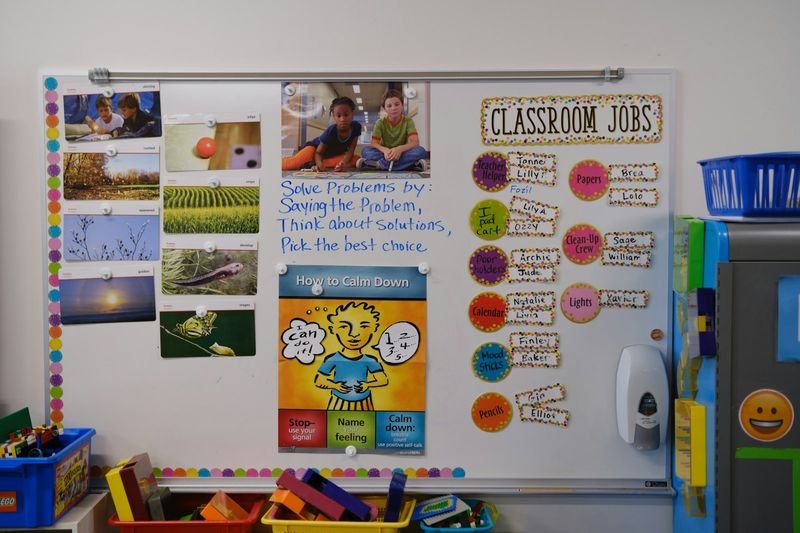
Post the lesson sequence on the board at the start of class: warm-up, vocabulary, pair work, speaking task, wrap-up. It takes thirty seconds and it tells an anxious student exactly when the speaking demand is coming, so they can mentally prepare instead of bracing for it the entire hour.
Offer a Non-Verbal Opt-In System
Forced participation backfires with anxiety in a way it doesn’t with plain shyness — pressure to perform publicly can intensify the physiological stress response rather than build confidence through exposure. A simple two-cup or color-card system at the desk (green visible means “call on me,” red means “not yet”) gives the student actual control over when they’re exposed, which is often the single biggest anxiety reducer available to a teacher who can’t individually accommodate every learner during a 50-minute class.
The point isn’t to let anxious students opt out of speaking English forever. It’s to let them choose the moment, which turns an ambush into a decision they made themselves.

Give a Written or Recorded Alternative
Not every speaking assessment needs to happen live in front of the class. A short voice memo recorded at home, or a written response read aloud only to the teacher during a quiet moment, still demonstrates the same language skill without the audience that triggers the anxiety response in the first place.
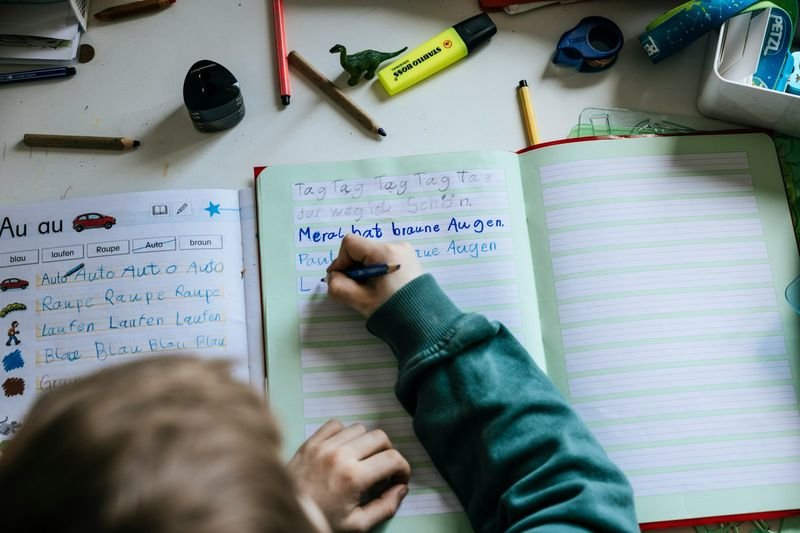
I’ve had students who stayed silent for an entire semester of group speaking tasks produce fluent, well-organized answers the moment the audience dropped to just me. That’s not a student who can’t speak English. That’s a student whose anxiety is specifically tied to the size of the audience — and once a teacher sees that distinction, the fix is usually logistics, not language instruction.
Loop In Parents and Counselors Before It Escalates
A pattern of stomachaches before class, refusal to attend on speaking-assessment days, or a sudden drop in participation that doesn’t match the student’s actual ability are signs worth raising with parents and the school counselor directly — not waiting for a parent-teacher conference three months out. In Taiwan’s buxiban and international-school settings, I’ve found parents are often relieved to be told early, because they’ve usually already seen the same avoidance at home and didn’t know whether it was normal or something to flag.

A five-minute conversation with a counselor can also surface whether a student has a documented anxiety diagnosis entitled to formal classroom accommodations — information a language teacher usually isn’t given automatically. The same loop-in-early approach applies to other conditions that get missed in a busy ESL room — see how it plays out for ESL students with ADHD 和 ESL students with autism, where the warning signs are different but the fix is the same: name the pattern early instead of waiting for it to resolve on its own.
Know the Line Between Shy and Selective Mutism
Shyness fades as a student gets comfortable with a teacher and classmates. Selective mutism doesn’t fade the same way — it’s a specific anxiety disorder where a student can speak fluently in one setting (often home) and goes completely nonverbal in another, regardless of how long they’ve known the people in the room. If a student hasn’t spoken a single word aloud in class after a full semester despite clearly understanding the material, that’s a pattern worth naming to the school’s support staff rather than continuing to wait it out. No amount of warm-up games fixes a clinical condition — but knowing which one you’re dealing with changes what you try next.
Most anxious ESL students don’t need less English. They need the version of the task that doesn’t ask them to be brave and bilingual in the same thirty seconds. Build in the rehearsal step, keep the routine visible, and the fluency usually shows up on its own timeline — not the one the syllabus assumed.
來源
- National Institute of Mental Health — Any Anxiety Disorder statistics — adolescent and adult prevalence data by sex, from the National Comorbidity Survey.
- ASCD — A Hidden Barrier for English Learners — overview of foreign language anxiety research including Horwitz et al. (1986), Gregersen & Horwitz (2002), and Dewaele & Li (2020).
- Edutopia — Easing Students’ Social Anxiety With Research-Backed Strategies — classroom strategies for reducing social anxiety triggers.







 ZH
ZH  EN
EN  ZH_CN
ZH_CN  KO
KO  VI
VI  FR
FR  AR
AR  ES
ES  HI
HI  PT
PT  BN
BN  RU
RU  JA
JA  TR
TR  DE
DE  IT
IT  PL
PL  ID
ID  TH
TH  FA
FA  UK
UK  TL
TL  HE
HE  UR
UR  SW
SW  RO
RO  NL
NL  MS
MS  TA
TA  PS
PS  HU
HU  EL
EL  SV
SV  NB
NB  NN
NN  DA
DA  CS
CS  SR
SR  AM
AM