
ESL Teaching Strategies That Actually Work in 2026: A Complete Guide for English Teachers
After more than two decades teaching English as a Second Language across Asia, I’ve watched trends come and go. Audiolingual drills gave way to communicative approaches. Grammar-translation dinosaurs were replaced by task-based learning. Now, AI tools and hybrid classrooms are reshaping how we teach yet again. But one truth has never changed: the right ESL教学策略 separate classrooms where students simply survive English from classrooms where they actually acquire it.
This guide pulls together the strategies that consistently move the needle — whether you’re teaching young learners their first phrases, prepping adults for TOEIC, or running mixed-ability classes where one student speaks fluently and another is still mastering the alphabet.

Why ESL Teaching Strategies Matter More Than Materials
New teachers often obsess over textbooks and worksheets. Veteran teachers know better. The textbook is a tool; the strategy is what makes the tool work. A brilliantly designed coursebook can fall flat when delivered through pure lecture, while a single sheet of A4 can become an unforgettable lesson in the hands of a teacher with the right method.
Effective ESL teaching strategies share three traits:
- They maximize student talking time (STT). If the teacher is talking more than 30% of the lesson, students aren’t acquiring enough.
- They lower the affective filter. Stephen Krashen’s research showed decades ago that anxiety, fear, and boredom block acquisition. Students who feel safe acquire faster.
- They produce comprehensible output, not just input. Listening and reading are necessary, but real language emerges through speaking and writing under pressure.
Hold every strategy in this guide up to those three criteria. The ones that pass deserve a permanent spot in your toolkit.
Communicative Language Teaching (CLT): The Foundation
If you only adopt one ESL teaching philosophy, make it CLT. Communicative Language Teaching shifts the goal of every lesson from “learn this grammar rule” to “use English to do something real.” Instead of conjugating verbs in isolation, students order food in a roleplay restaurant. Instead of memorizing vocabulary lists, they describe their hometown to a partner who has never visited it.
The British Council and Cambridge Assessment English have both consistently endorsed CLT as the dominant evidence-based approach for the last forty years, and modern research continues to validate its effectiveness across age groups and proficiency levels.
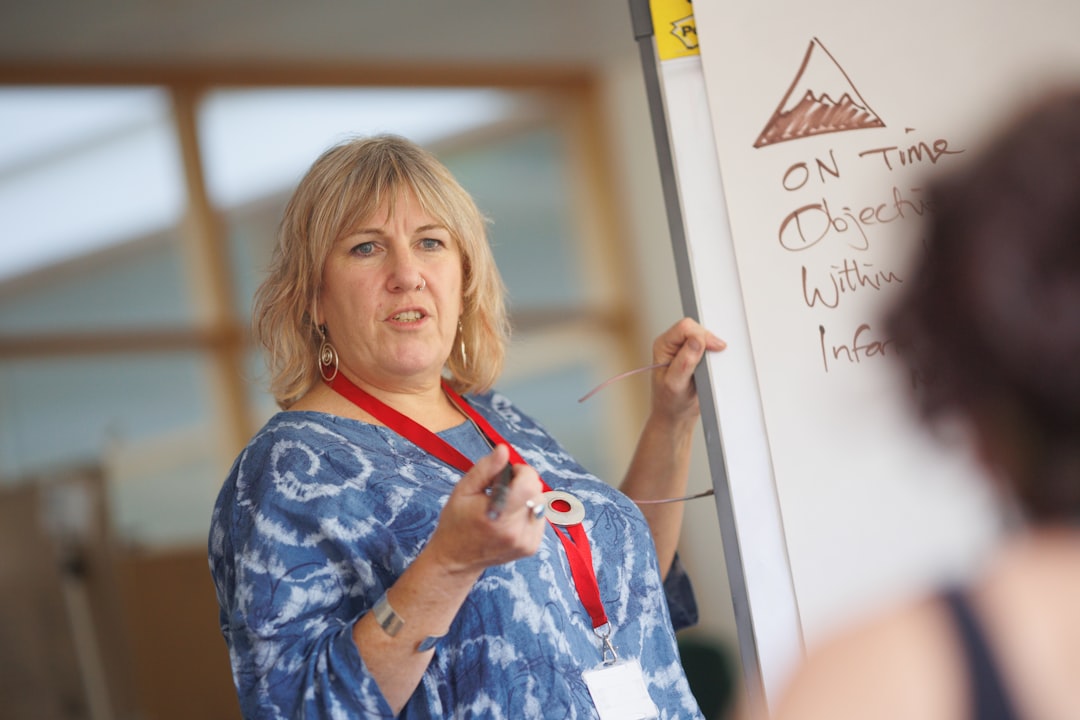
How to Apply CLT in Your Next Lesson
- Start with a real-world task — booking a hotel, complaining about a product, comparing two job offers.
- Pre-teach only the language students will actually need. Resist the urge to dump every related grammar point.
- Have students attempt the task. Expect imperfection.
- Provide feedback on language that broke down communication. Ignore minor errors that didn’t.
- Have students repeat the task with a different partner or twist.
Task-Based Language Teaching (TBLT)
TBLT is CLT’s more structured cousin. Where CLT can feel free-form, TBLT organizes every lesson around a clear, measurable task with three phases: pre-task, task cycle, and language focus. Research compiled by Rod Ellis and others has shown TBLT particularly effective for adult learners and exam preparation classes.
A practical TBLT example for an intermediate class:
- Pre-task: Brainstorm vocabulary about travel disasters. Watch a 90-second video clip.
- 任务: In pairs, share the worst travel experience you’ve ever had. Partners take notes.
- 规划: Each partner prepares to retell their partner’s story to the class.
- 报告: Students retell the stories.
- 语言重点: Teacher highlights past perfect, narrative tenses, or sequencing words from what students actually produced.
Total Physical Response (TPR) for Young Learners and Beginners
James Asher’s TPR method asks students to respond physically to spoken commands before they’re expected to speak. “Stand up. Touch your nose. Walk to the window.” It sounds almost too simple, but for young learners and absolute beginners it remains one of the most powerful ESL teaching strategies in existence — because it mirrors how children acquire their first language.
TPR isn’t only for kindergarten. Adult beginners benefit enormously from a TPR opening segment that loosens them up and bypasses the panic of “I don’t know what to say.” The body remembers what the conscious mind hasn’t yet processed.

The PPP Lesson Framework: Still the Workhorse
Presentation, Practice, Production — the PPP framework — gets criticized in academic circles, but in real classrooms it remains the most reliable structure for new teachers. The reason is simple: it works, students understand the rhythm, and it’s easy to plan.
Presentation
Introduce the target language in context. Use a story, a video, a dialogue — anything but a wall of grammar rules. Five to ten minutes maximum.
Practice
Controlled drills, gap-fills, substitution exercises, choral repetition. The goal is accuracy. Students need to hear and produce the form correctly before they can use it freely.
Production
Open-ended speaking or writing. Roleplays, debates, story creation, problem-solving tasks. The goal is fluency. Errors are noted but not interrupted.
The trap most teachers fall into is spending 80% of the lesson on Presentation and Practice, leaving five rushed minutes for Production. Flip that ratio. Production is where acquisition happens.
Differentiated Instruction in Mixed-Ability Classes
Almost every ESL classroom is mixed-ability. The student who lived in Australia for two years sits next to the student who has never left their home town. Pretending otherwise is the fastest way to bore the strong students and crush the weak ones.
Practical differentiation strategies that don’t require triple lesson planning:
- Tiered tasks — same topic, three difficulty levels. Beginners describe a picture in five sentences; advanced students write a paragraph comparing two pictures.
- Strategic pairing — sometimes pair strong with weak (peer teaching), sometimes strong with strong (challenge), sometimes weak with weak (safety to make mistakes).
- Choice menus — offer three or four ways to demonstrate the same learning outcome. Some students write, others present, others record audio.
- Extension tasks — fast finishers always have a meaningful next step ready, never busy work.
Strategies for Maximizing Student Talking Time
Most ESL teachers talk too much. Recording yourself for ten minutes is a humbling exercise — you’ll often find STT under 20%. The strategies below routinely push STT above 60%:
- Think-Pair-Share — every question gets thirty seconds of silent thinking, then pair discussion, then class share.
- Information gap activities — Student A has half the information, Student B has the other half. Communication is forced, not optional.
- Running dictation — students run, read, remember, run back, dictate. Active, loud, and surprisingly accurate.
- Find someone who… — students mingle with a question grid, finding classmates who match each criterion.
- Four corners — pose a debatable statement, students walk to the corner that matches their opinion, then defend it.

TOEIC and IELTS Preparation Strategies
Exam classes have different rules. Students don’t just need to acquire English — they need to score points on a specific format under specific conditions. The strategies that work for general English often fail for exam prep, and vice versa.
TOEIC Preparation
TOEIC rewards speed and pattern recognition above all else. The most effective TOEIC strategies focus on:
- Part-by-part timing drills — students learn the pace required for each section before doing full tests.
- Distractor analysis — every wrong answer in TOEIC is wrong for a predictable reason. Teach the patterns of distraction.
- Business vocabulary in chunks — “submit a proposal,” “meet a deadline,” “reach a consensus.” TOEIC is collocation-heavy.
- Listening for paraphrase — the answer is rarely the exact words from the audio.
IELTS Preparation
IELTS demands more genuine production, especially in Writing and Speaking. Strategies that move scores:
- Task Achievement before Lexical Resource — students obsess over fancy vocabulary while ignoring whether they answered the question. Fix the structure first.
- Paraphrase practice — every IELTS question gets paraphrased in the introduction. Drill this skill until it’s automatic.
- Speaking Part 2 timing — two minutes feels eternal until students train for it.
- Coherence and cohesion — examiners reward signposting language. Teach a bank of linkers and connectors students can deploy under pressure.
Using Technology Without Letting It Take Over
AI tools, language learning apps, and online platforms have exploded in the last few years. Used well, they’re genuine accelerators. Used badly, they replace the human interaction that drives acquisition.
My rule: technology should expand what’s possible in the classroom, never replace what students could do face to face. AI conversation partners are excellent for shy students who need low-stakes speaking practice at home. Spaced repetition apps like Anki or Quizlet are unbeatable for vocabulary retention. But none of these replace a real human being asking a real question and waiting for a real answer.
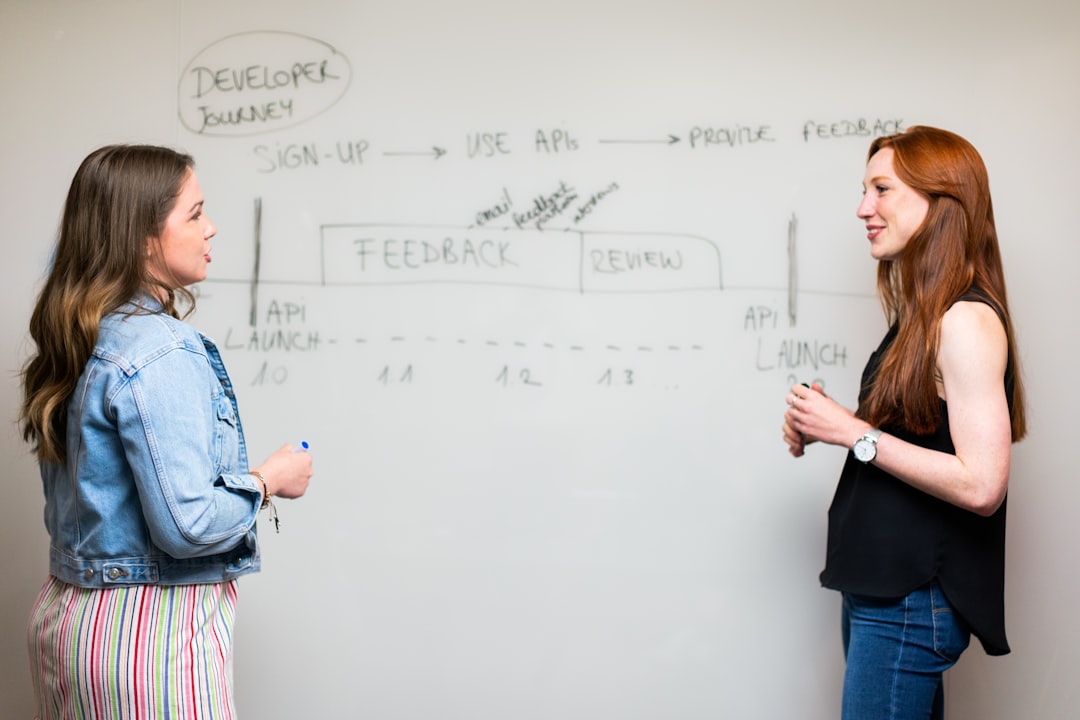
Error Correction: When, How, and How Much
One of the most contested areas in ESL methodology. Correct too much and students freeze; correct too little and errors fossilize. The best balance:
- During fluency activities: note errors silently, address two or three at the end. Never interrupt the flow.
- During accuracy activities: correct on the spot, ideally by eliciting the correction from the student rather than providing it.
- Use recasts sparingly — repeating the student’s sentence correctly is so subtle that learners often don’t notice the change.
- Train peer correction — students often spot errors in each other’s work that they miss in their own.
Watch: ESL Teaching Strategies in Action
This excellent overview from a veteran trainer pulls together many of the strategies discussed above with classroom footage:
Building Your Personal Toolkit
No teacher uses every strategy in this guide. The goal isn’t comprehensiveness — it’s a personal toolkit of fifteen or twenty techniques you can pull out reliably. Start with three this week. Try them in different classes. Notice which ones produce the energy and output you’re looking for. Keep what works, discard what doesn’t.

Common Mistakes Even Experienced Teachers Make
- Over-planning vocabulary, under-planning interaction. Students remember what they used, not what they were shown.
- Defaulting to whole-class teaching. Pair and group work nearly always produces more output.
- Using the same icebreaker for years. Refresh your warm-ups every term.
- Confusing entertainment with engagement. Students laughing isn’t the same as students learning.
- Ignoring assessment data. If half the class failed last week’s quiz, this week’s lesson should reflect that.
Strategies for Different Age Groups
Young Learners (Ages 4-10)
Movement, songs, stories, repetition. Lessons in 8-10 minute chunks. TPR every lesson. Visual support for every new word. Praise constantly.
Teenagers (Ages 11-17)
Relevance is everything. Use topics they care about — music, sports, social media, friendships. Avoid babying them. Project-based learning works exceptionally well.
Adults
Respect their existing knowledge and life experience. Connect lessons to their professional or travel goals. Adults tolerate explicit grammar instruction better than younger learners but still need plenty of production.

Assessment That Actually Improves Teaching
Assessment in ESL too often becomes a paperwork exercise. The strategies that genuinely inform teaching:
- Exit tickets — three minutes at the end of class. “Write one new thing you learned and one thing you’re still confused about.”
- Formative speaking checks — circulate during pair work with a clipboard, noting two or three errors per student.
- Self-assessment rubrics — students rate their own performance on clear criteria. Surprisingly accurate.
- Recorded speaking samples — once a month, students record a 60-second response. Track progress over a term.

Final Thoughts
The best ESL teaching strategies aren’t secret techniques only veteran teachers know. They’re well-documented, evidence-based approaches that work when applied consistently. The difference between an average classroom and a great one is rarely about the strategies a teacher knows. It’s about the strategies a teacher uses every single day, refines through experience, and adapts to the real human beings in front of them.
Pick three strategies from this guide. Use them this week. Reflect on what happened. Then pick three more. That’s how a teaching practice grows — not through grand transformations, but through small, deliberate, repeated experiments.




 ZH_CN
ZH_CN  EN
EN  ZH
ZH  KO
KO  VI
VI  FR
FR  AR
AR  ES
ES  HI
HI  PT
PT  BN
BN  RU
RU  JA
JA  TR
TR  DE
DE  IT
IT  PL
PL  ID
ID  TH
TH  FA
FA  UK
UK  TL
TL  HE
HE  UR
UR  SW
SW  RO
RO  NL
NL  MS
MS  TA
TA  PS
PS  HU
HU  EL
EL  SV
SV  NB
NB  NN
NN  DA
DA  CS
CS  SR
SR  AM
AM